
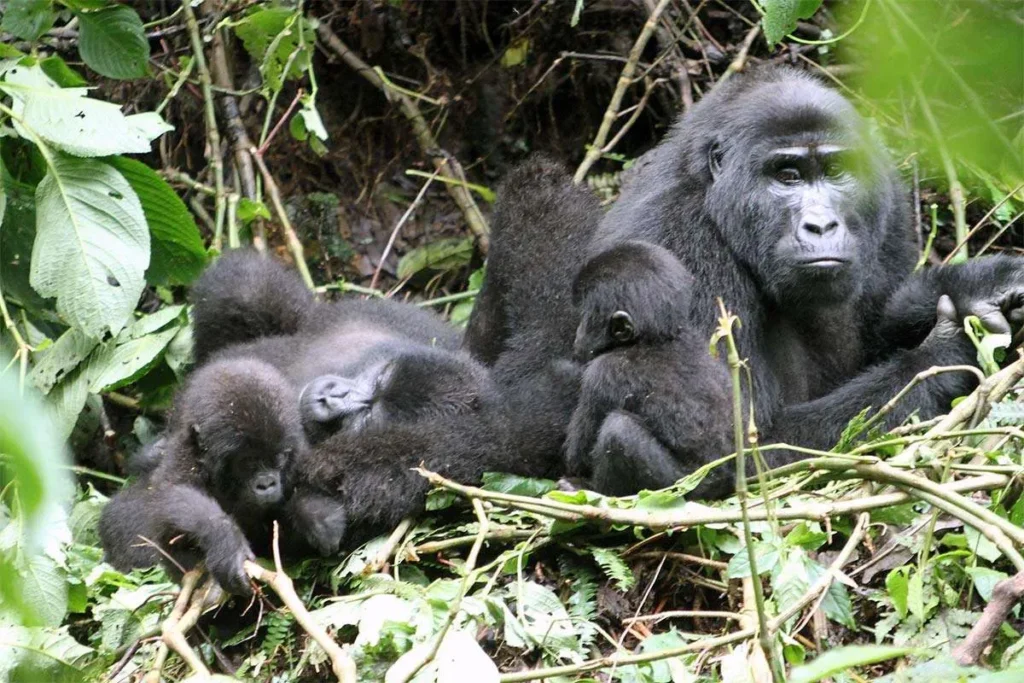
Nshongi Gorilla Family in Bwindi
Nshongi Gorilla Family in Bwindi: History, Location and Trekking Guide The Nshongi Gorilla Family holds an important place…
Read article →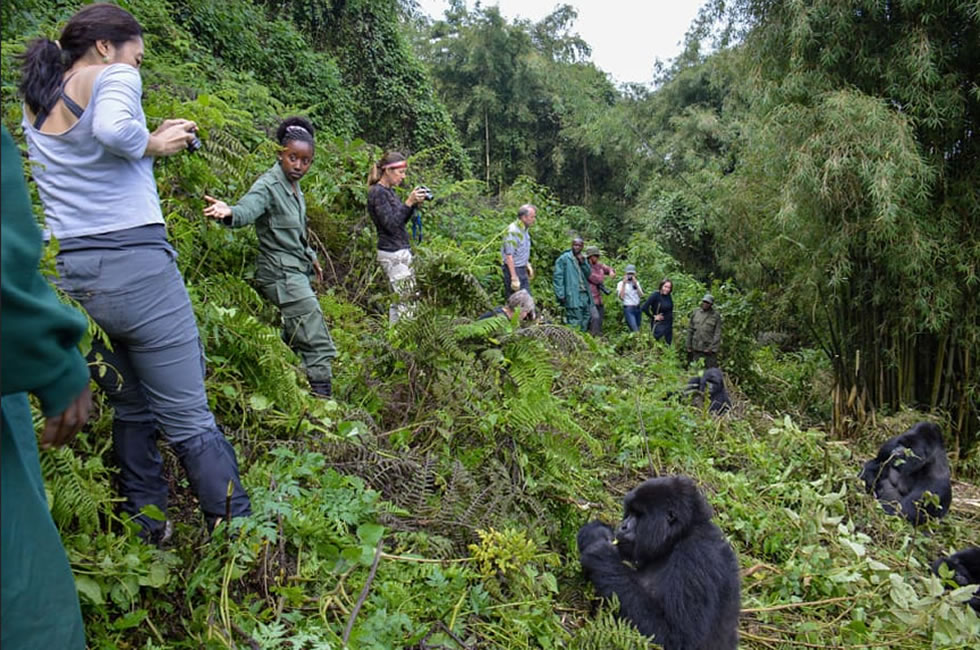
Travel Guide
Gorilla trekking takes you into dense mountain forests where trails can become steep, muddy, and difficult to follow. Unlike an ordinary hike, gorilla trekking involves finding and observing wild mountain gorillas under strict conservation rules. Because…
Gorilla trekking takes you into dense mountain forests where trails can become steep, muddy, and difficult to follow. Unlike an ordinary hike, gorilla trekking involves finding and observing wild mountain gorillas under strict conservation rules.
Because of this, you cannot undertake standard gorilla trekking independently in Uganda or Rwanda. You must join an organized trek with authorized guides and trackers.
A professional guide does much more than lead you through the forest. They help locate the gorilla family, explain gorilla behavior, enforce safety rules, and protect the animals from unnecessary disturbance.
Yes. Uganda and Rwanda require visitors to trek with authorized guides and park staff.
In Uganda, the Uganda Wildlife Authority manages gorilla trekking in Bwindi Impenetrable National Park and Mgahinga Gorilla National Park.
In Rwanda, the Rwanda Development Board manages gorilla trekking in Volcanoes National Park.
Visitors cannot simply enter the forest alone and search for gorillas.
The authorities use guided trekking to control visitor movement, protect gorilla families, and reduce risks to both wildlife and tourists.
Gorillas live in dense forests and mountainous terrain. Finding a gorilla family requires experience, knowledge of the terrain, and information from trackers.
Gorilla families also move through the forest during the day. They may travel considerable distances before visitors reach them.
Experienced trackers follow their movements and communicate with the trekking team.
Without this support, finding the gorillas would become extremely difficult and could also create unnecessary disturbance in the forest.
Your guide leads the trekking group and manages the experience from the briefing until you leave the forest.
They explain the trekking rules and help you understand what to expect during the hike.
When you reach the gorilla family, the guide monitors the interaction and tells you where to stand.
They also explain gorilla behavior, social relationships, feeding habits, and other interesting details about the family you visit.
Trackers perform a particularly important role during gorilla trekking.
They usually move ahead of the main trekking group and follow signs that indicate where the gorillas have moved.
Trackers can identify nests, footprints, broken vegetation, feeding areas, and other clues.
They use this information to locate the gorilla family before the visitors arrive.
Their knowledge of the forest can make a major difference to the trekking experience.
Guides and trackers often spend considerable time observing specific gorilla families.
They become familiar with individual animals, their personalities, family relationships, movements, and behavior.
This knowledge helps them interpret what happens during the trek.
For example, a guide may recognize when a silverback becomes uncomfortable or when a particular gorilla approaches visitors out of curiosity.
That understanding helps the guide manage the encounter responsibly.
You still need to follow the official park system even if you want a more private experience.
A private safari operator can arrange your transportation, accommodation, permits, and trekking logistics.
However, the actual gorilla trek must follow the rules established by the relevant wildlife authority.
You cannot replace the authorized park guide with your own personal guide and enter the forest independently.
In most cases, the park authority assigns the official trekking team.
Your safari operator may have relationships with local guides and can sometimes help arrange particular logistics, but the park authority controls the official guiding system.
If you have specific needs, such as mobility concerns, language preferences, or photography interests, discuss them with your tour operator before the trek.
They can advise you about the available arrangements.
The day usually begins with a briefing at the designated park headquarters or trekking center.
Park staff explain the rules and provide important information about the trek.
You learn about maintaining distance, avoiding physical contact, handling illness, photography, and appropriate behavior around the gorillas.
The guide also considers the group’s fitness levels and the expected trekking conditions.
After the briefing, trackers and guides organize the group before entering the forest.
The trekking team generally determines which gorilla family the group will visit according to the park’s management system and the family’s location.
Several factors can influence the assignment.
These can include the gorilla family’s movements, trekking difficulty, visitor management, and conservation considerations.
Travelers should not expect to choose a particular gorilla family simply because they have seen photographs of it online.
A guide can make a significant difference, especially when the terrain becomes challenging.
They understand the safest routes and can help visitors navigate steep slopes, muddy sections, and dense vegetation.
They can also adjust the pace according to the group’s needs.
If you struggle with the terrain, tell your guide. They can help you manage the trek more comfortably.
You do not need to be an experienced mountaineer to participate in gorilla trekking.
However, you should prepare for physical activity.
Some treks involve several hours of walking through steep and uneven terrain. The exact difficulty varies because gorillas move freely through their habitat.
Your guide can help you manage your pace and take appropriate breaks when necessary.
Travelers with mobility concerns should discuss their needs with their safari operator before booking.
Yes. Guides can help visitors navigate difficult sections of the trail.
They may identify safer places to step, explain where to hold vegetation, or suggest a better route.
Some trekking teams also provide additional support for visitors who need assistance.
However, you should not rely entirely on the guide for physical support. Proper hiking boots, gloves, gaiters, and appropriate clothing can make the trek much easier.
Guides and trackers may carry certain equipment required for the trekking operation.
Travelers should still carry their own personal essentials.
These normally include drinking water, snacks, rain protection, personal medication, a phone or camera, and other necessary items.
Keep your daypack lightweight because you may carry it for several hours.
Yes. Your guide can help you understand where to stand and how to photograph the gorillas without disturbing them.
They can also tell you when the gorillas begin moving and where the group should position itself.
However, guides cannot guarantee perfect photographic conditions.
The gorillas decide where they move, and the forest environment can make photography challenging.
Gorillas remain wild animals even when they have become accustomed to controlled human presence.
A guide understands warning signs and knows how to respond when a gorilla becomes uncomfortable.
They can instruct visitors to remain still, move back, lower their voices, or change position.
This professional supervision reduces unnecessary risks.
Guides help enforce rules that protect the gorillas.
They prevent visitors from approaching too closely, touching animals, feeding them, or behaving inappropriately.
They also help ensure that visitors do not damage vegetation unnecessarily.
Responsible guiding therefore supports both visitor safety and long-term gorilla conservation.
No. Standard gorilla trekking in Uganda requires an authorized trekking team.
You need a valid gorilla permit and must follow Uganda Wildlife Authority procedures.
The trekking experience includes official guides and trackers who accompany visitors into the forest.
You cannot purchase a permit and then enter Bwindi or Mgahinga alone.
No. Rwanda also requires visitors to participate in organized gorilla trekking.
Volcanoes National Park manages access to the gorilla families through a controlled system.
Visitors receive guidance and supervision throughout the trekking experience.
Independent entry into the gorilla habitat does not form part of the normal tourist trekking system.
The exact arrangement depends on the park authority and the trekking system in place.
Your safari operator can explain what the permit covers and which services form part of your organized trek.
You should also clarify what your safari package includes because transportation, accommodation, meals, porter services, and other activities can remain separate.
A porter is different from a guide.
You do not need a porter to participate in gorilla trekking, but many travelers choose to hire one.
A porter can carry your daypack and provide physical assistance on difficult sections.
Hiring a porter also directly supports local communities around the national parks.
If you do not need carrying assistance, you can still hire a porter to support the local community and make the trek easier.
A good guide should provide clear instructions, communicate well, and prioritize both visitor safety and gorilla welfare.
They should explain the forest environment and answer questions about the gorillas.
They should also enforce the park rules consistently.
Remember that the guide cannot control everything. Weather, terrain, and gorilla movements remain unpredictable.
Tipping remains a personal decision.
Many travelers choose to tip guides, trackers, porters, and other safari staff when they provide excellent service.
If you want to tip, carry some local currency or another convenient form of payment.
Your safari operator can advise you about customary tipping practices for the destination.
Ignoring instructions can create unnecessary risks.
Moving too close to a gorilla, making sudden movements, or attempting physical contact can disturb the animals.
You may also place yourself and other visitors in a difficult situation.
Always follow the guide’s instructions, especially when you reach the gorilla family.
A guide turns the trek from a simple forest walk into an educational wildlife experience.
You learn to recognize signs of gorilla activity and understand how the animals communicate.
You also gain insight into their family structures, feeding habits, conservation challenges, and relationships with the forest.
The guide’s knowledge can make the encounter much more meaningful.
You need an authorized guide for gorilla trekking in both Uganda and Rwanda. Visitors cannot independently enter the gorilla habitat and search for a gorilla family.
Guides and trackers play several important roles. They locate the gorillas, interpret their behavior, manage visitor safety, enforce trekking rules, and help protect the animals.
A good guide can also make a challenging trek easier by helping you navigate steep and muddy terrain.
If you want additional support, consider hiring a porter. Porters can carry your bag, assist on difficult sections, and provide valuable income to communities near the national parks.
Gorilla trekking works best when visitors respect the expertise of the people who protect and monitor these remarkable animals. Follow your guide’s instructions, remain calm around the gorillas, and enjoy the experience without interfering with their natural behavior.

Nshongi Gorilla Family in Bwindi: History, Location and Trekking Guide The Nshongi Gorilla Family holds an important place…
Read article →
Mishaya Gorilla Family in Bwindi: History, Trekking and What to Know The Mishaya Gorilla Family is one of…
Read article →
Semuliki Hot Springs Visit Guide: What to Expect Semuliki Hot Springs offers one of the most unusual natural…
Read article →
Kidepo Valley Remote Safari Guide: What to Expect Kidepo Valley National Park offers one of Uganda's most remote…
Read article →