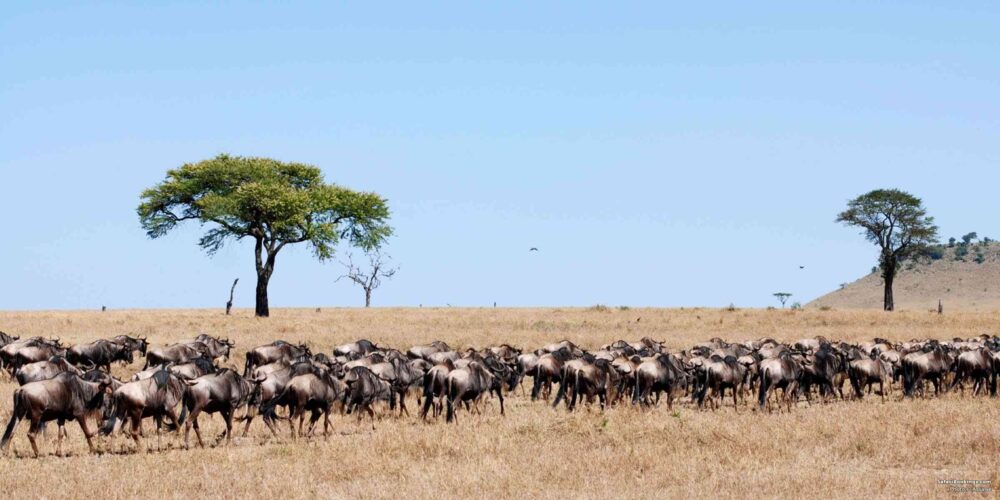

Wildebeest Migration Africa
Wildebeest Migration Africa: The Great Wildlife Journey
The wildebeest migration ranks among Africa’s greatest wildlife spectacles. More than a million wildebeest move through the Serengeti-Mara ecosystem each year.
They travel in search of fresh grass and water. Their movement also supports one of the world’s most impressive predator-prey systems.
The migration takes place mainly between Tanzania’s Serengeti and Kenya’s Maasai Mara.
What Is the Wildebeest Migration?
The Great Migration involves approximately 1.5 million wildebeest, alongside large numbers of zebras and gazelles.
The animals follow seasonal rainfall and the growth of fresh grass. Their route changes each year depending on weather conditions.
Predators follow the herds throughout the journey. Lions, cheetahs, leopards, hyenas, and crocodiles all benefit from the abundance of prey.
The Calving Season
The migration begins with a major calving period in the southern Serengeti. Thousands of wildebeest calves arrive during a relatively short period.
The abundance of young animals attracts predators. Lions, cheetahs, hyenas, and other predators take advantage of this seasonal opportunity.
The calving season provides dramatic wildlife viewing. It also demonstrates the importance of timing in the migration cycle.
The Northern Migration
As the year progresses, the herds move northward. They eventually approach the Mara River and the northern Serengeti.
The exact timing changes each year. Rainfall determines the availability of fresh grazing.
Travelers should therefore avoid treating migration dates as fixed.
Mara River Crossings
River crossings provide some of the most famous migration scenes. Wildebeest gather along the banks before attempting to cross.
The crossings can become chaotic. Crocodiles wait in the water while animals search for safe routes.
Not every herd crosses at the same location or on the same day. Patience remains essential when viewing the migration.
When Is the Best Time to See the Migration?
The migration occurs throughout the year. Different months offer different experiences.
January to March often provides excellent opportunities around the southern Serengeti during calving season.
June to October can provide opportunities around the western and northern Serengeti and Maasai Mara. River crossings remain unpredictable.
A good safari plan should focus on the specific migration stage you want to experience.
Why the Migration Matters
The migration supports an enormous ecosystem. Grazing animals influence grasslands while predators depend on the abundance of prey.
The movement also supports tourism and conservation across Tanzania and Kenya.
Responsible safari tourism can help protect these landscapes and provide income for local communities.