

Nshongi Gorilla Family in Bwindi
Nshongi Gorilla Family in Bwindi: History, Location and Trekking Guide The Nshongi Gorilla Family holds an important place…
Read article →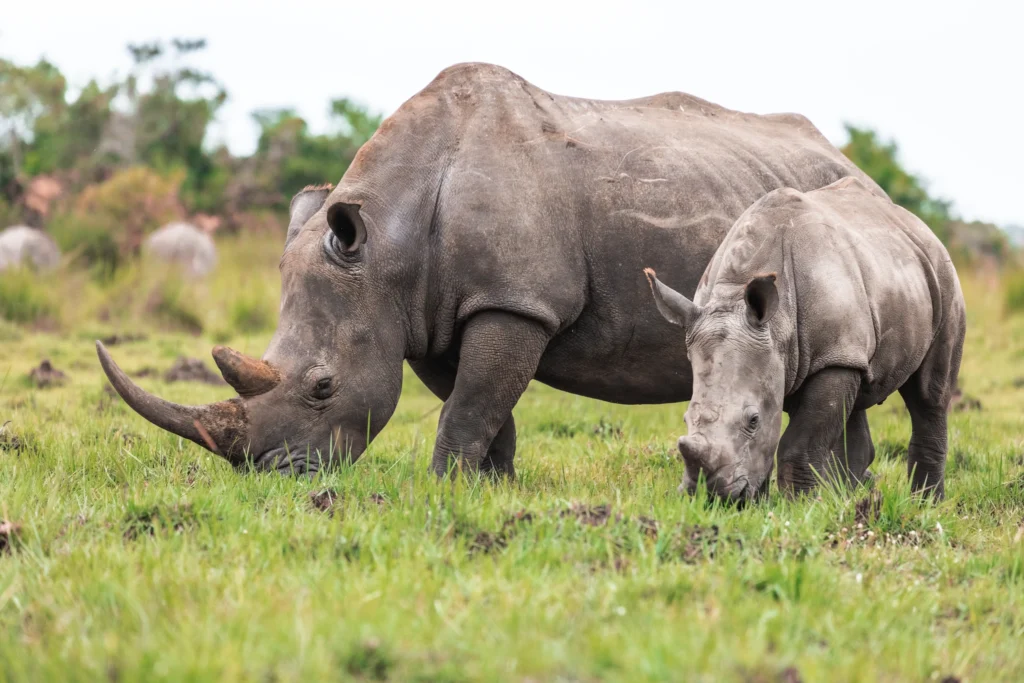
Travel Guide
Discover white rhino Ziwa Sanctuary, Uganda's rhino conservation program, guided rhino walks, wildlife, history, and safari planning tips.
A visit centered on White rhino Ziwa Sanctuary offers travelers an opportunity to learn about rhino conservation in Uganda while experiencing wildlife through guided activities. The source frames the destination around five main subjects: Uganda’s rhino conservation program, guided rhino walks, wildlife, history, and practical safari planning.
This combination gives the experience a different character from a conventional game drive. Rather than viewing rhinos only from a vehicle, travelers can learn why conservation work matters and how professional guidance makes wildlife observation possible.
The sanctuary can therefore be approached as both a wildlife destination and an educational stop within a broader Uganda safari.
Conservation is central to the White rhino Ziwa Sanctuary experience described in the source.
For travelers, this means a rhino sighting should be understood in a wider context. The animals are not simply another species to add to a safari checklist. Their presence is connected with conservation efforts that form part of Uganda’s wildlife story.
The source specifically refers to Uganda’s rhino conservation program and history.
Visitors interested in that history can benefit from professional interpretation during their visit. A knowledgeable guide can explain the conservation context supported by the sanctuary’s current visitor program.
Travelers should avoid relying on old statistics or outdated descriptions when discussing conservation progress. Wildlife numbers, management arrangements, and operating conditions can change. Current figures should therefore be obtained from reliable sanctuary or conservation sources when required.
The conservation theme can make the experience especially valuable for families and students.
Seeing a rhino in person can make discussions about wildlife protection more tangible. Instead of conservation remaining an abstract idea, visitors can connect it with an actual animal and landscape.
Responsible tourism also means understanding that conservation rules may limit what visitors are permitted to do.
A traveler should not expect unrestricted access simply because an entrance or activity fee has been paid. Wildlife welfare and visitor safety remain more important than convenience.
Guided rhino walks are specifically highlighted in the source and can be one of the defining aspects of a visit.
Walking in an environment containing large wild animals requires discipline.
Visitors should never attempt to locate or approach rhinos independently.
The experience should take place only through the authorized arrangements applicable at the time of travel.
Professional guides understand how to manage the activity and interpret animal behavior.
Travelers should listen carefully during the briefing and follow instructions immediately.
If a guide asks the group to stop, change position, lower noise, or move away, visitors should comply rather than trying to obtain another photograph.
Clothing should be practical.
Comfortable closed footwear is useful for walking on natural ground. Lightweight clothing suitable for the day’s conditions can improve comfort, while sun protection may also be important.
Travelers should ask for current recommendations before departure.
A small daypack can carry water, personal medication, and essential camera equipment. Carrying too much can make a walking experience unnecessarily uncomfortable.
Photography should remain secondary to safety.
A long lens can help visitors obtain detailed images without attempting to reduce the distance between themselves and the animals.
Wide photographs are equally valuable because they show rhinos within their environment.
Visitors should avoid loud conversation and sudden movement when instructed to remain quiet.
The quality of a wildlife encounter often improves when the group behaves calmly.
A rhino that continues feeding, resting, or moving naturally provides a more authentic observation than one reacting to visitor disturbance.
Although rhinos are the main focus identified by the source, the broader wildlife environment can also contribute to the experience.
Travelers should remain observant rather than ignoring everything that is not a rhino.
Birds, vegetation, landscapes, and other wildlife can make the visit more complete.
Binoculars can be useful, particularly for travelers interested in birdlife.
A knowledgeable guide can help visitors notice details they might otherwise overlook.
Planning is particularly important when incorporating White rhino Ziwa Sanctuary into a longer Uganda safari.
The source does not provide exact opening hours, current activity fees, accommodation arrangements, or transfer times. These details should be confirmed for the actual travel date.
Travelers should also establish how the visit fits with the destination before or after Ziwa.
A well-planned stop can break up a road journey while adding a distinct conservation experience.
A poorly timed stop can make an already long travel day exhausting.
The overall route should therefore determine how much time is allocated.
Families should confirm whether the guided activities they intend to book have age or other participation requirements.
Travelers with mobility concerns should discuss the nature of the walking activity before arrival.
Not every wildlife activity is equally suitable for every visitor.
The conservation focus of White rhino Ziwa Sanctuary should influence visitor behavior throughout the experience.
Wildlife should never be fed or touched.
Visitors should not leave litter.
Plants and natural features should not be damaged for photographs.
Travelers should follow instructions about where they are allowed to walk.
Supporting conservation also involves using legitimate tourism arrangements.
Anyone interested in making an additional financial contribution should verify the appropriate channels rather than responding to unconfirmed requests.
Visitors can also support conservation through responsible storytelling.
Photographs shared online should not encourage others to approach rhinos independently or ignore safety rules.
Captions can provide context about conservation instead of presenting the animals merely as trophies.
The source presents Ziwa through conservation, guided rhino walks, wildlife, history, and safari planning. These elements work together.
A traveler may arrive primarily hoping to see a white rhino but leave with a stronger understanding of the work required to protect wildlife.
The White rhino Ziwa Sanctuary experience is therefore most meaningful when the sighting is placed within its conservation context.
With professional guidance, realistic planning, appropriate clothing, and respect for wildlife rules, visitors can experience rhinos while learning why their protection remains an important part of Uganda’s wildlife story.

Nshongi Gorilla Family in Bwindi: History, Location and Trekking Guide The Nshongi Gorilla Family holds an important place…
Read article →
Mishaya Gorilla Family in Bwindi: History, Trekking and What to Know The Mishaya Gorilla Family is one of…
Read article →
Semuliki Hot Springs Visit Guide: What to Expect Semuliki Hot Springs offers one of the most unusual natural…
Read article →
Kidepo Valley Remote Safari Guide: What to Expect Kidepo Valley National Park offers one of Uganda's most remote…
Read article →