
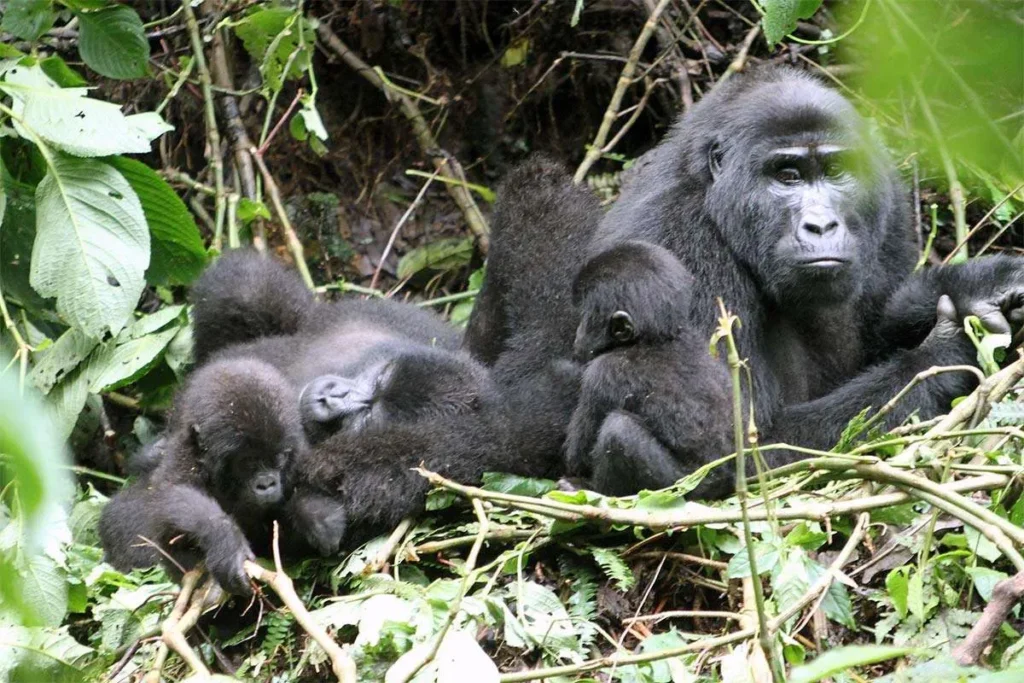
Nshongi Gorilla Family in Bwindi
Nshongi Gorilla Family in Bwindi: History, Location and Trekking Guide The Nshongi Gorilla Family holds an important place…
Read article →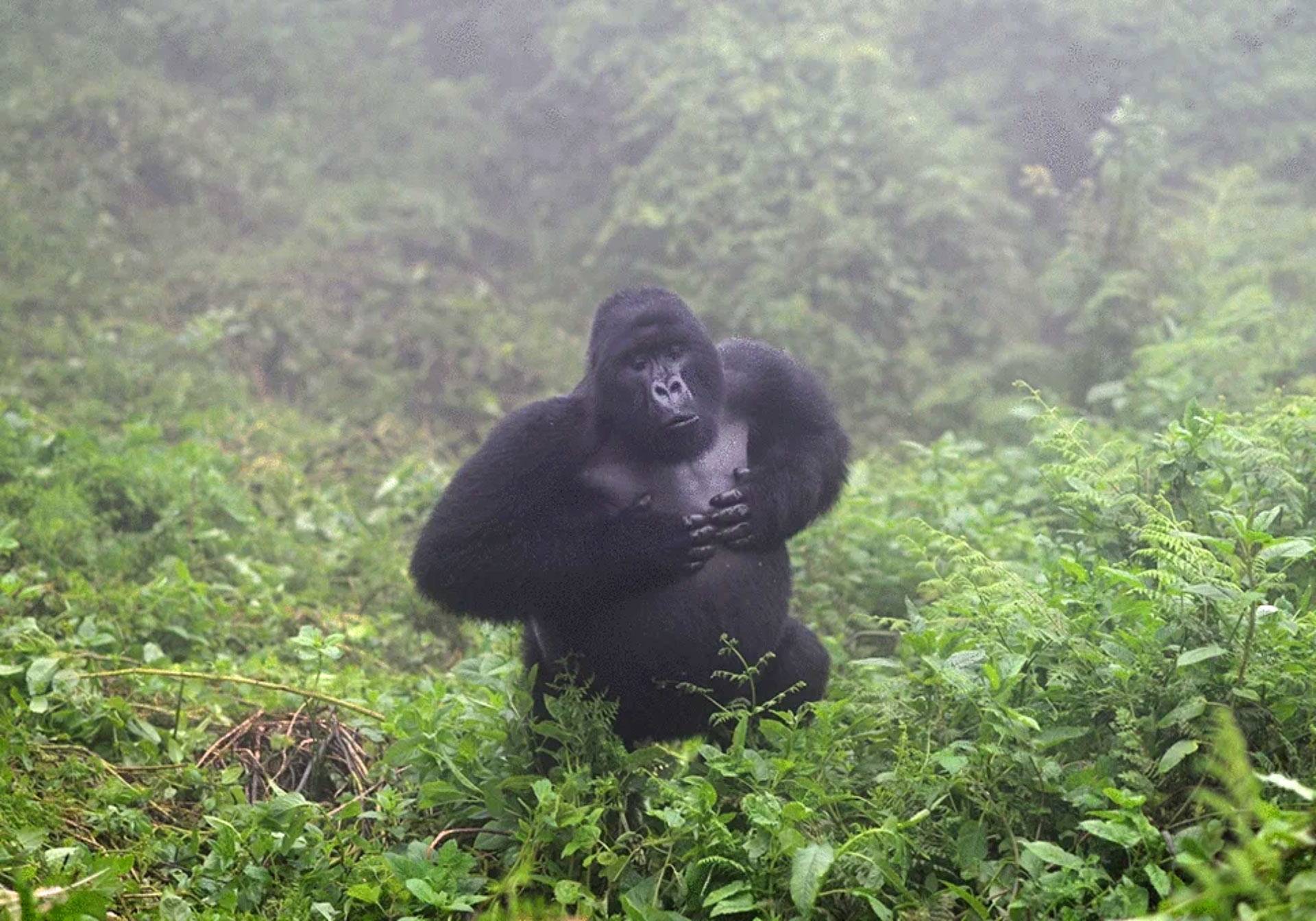
Travel Guide
Seeing a mountain gorilla in the wild can create an unforgettable moment. However, visitors sometimes worry about what might happen if a gorilla suddenly moves toward them or appears to charge. A gorilla charge can look…
Seeing a mountain gorilla in the wild can create an unforgettable moment. However, visitors sometimes worry about what might happen if a gorilla suddenly moves toward them or appears to charge.
A gorilla charge can look frightening, especially when a large silverback beats its chest, makes loud vocalizations, or moves quickly toward a person. Despite the dramatic display, a charge does not always mean that the gorilla intends to attack.
Mountain gorillas use displays and charges as part of their natural communication. Your guide understands these behaviors and knows how to respond. The most important thing you can do involves staying calm and following the guide’s instructions.
Gorillas can charge when they feel threatened, disturbed, or uncertain about a situation. A silverback may also charge to protect its family from something it considers a threat.
Gorillas have powerful bodies and strong social instincts. The dominant silverback often takes responsibility for protecting the group, especially when another animal or unfamiliar presence creates concern.
A charge can therefore communicate a warning rather than an intention to cause physical harm.
Serious attacks on tourists remain uncommon during properly managed gorilla trekking.
Guides and trackers monitor the gorilla group’s behavior and understand the personalities of individual animals. They also maintain rules that reduce the chances of visitors causing unnecessary stress.
Habituated gorilla groups have become accustomed to controlled human presence. However, habituation does not make them tame or domesticated.
They remain wild animals, and visitors must always respect their space.
A charge can happen very quickly.
A gorilla may suddenly stand upright, beat its chest, make loud vocalizations, slap vegetation, or move rapidly toward visitors. A silverback can appear extremely intimidating because of its size and strength.
Sometimes the gorilla stops before reaching the group. In other situations, it may move closer before changing direction.
These behaviors can serve as warnings or displays of dominance.
No. Do not run.
Running can create a dangerous reaction because it may trigger pursuit or make you appear unpredictable.
Instead, remain calm and follow your guide’s instructions. Your guide may tell you to stay still, lower your posture, or avoid direct eye contact.
The guide knows the gorilla group’s behavior and can determine the safest response.
Avoid staring directly at a gorilla during an aggressive display.
Direct and prolonged eye contact can appear confrontational in some animal interactions. Your guide may instruct you to lower your gaze or look away.
Remain aware of where the gorilla is without challenging it.
The goal involves showing that you do not pose a threat.
Your guide may instruct you to lower your body if a gorilla approaches aggressively.
A lower posture can communicate submission rather than confrontation. However, do not suddenly drop to the ground unless your guide instructs you to do so.
Different situations require different responses, so listen carefully to the person leading the trek.
Absolutely not.
Do not imitate the gorilla by beating your chest, shouting, or making aggressive gestures.
Such actions could confuse the animal or make the situation worse.
Remain quiet and allow the guide to manage the encounter.
Keep your hands calm and close to your body.
Do not reach toward the gorilla or attempt to push it away. Never try to touch the animal during a charge.
Sudden movements can attract attention and increase tension.
If you carry a camera, avoid making rapid movements to take photographs.
A gorilla may approach within a few metres or even pass extremely close to visitors.
If this happens, stay calm.
Do not attempt to move away suddenly unless your guide tells you to do so. Let the gorilla choose its path.
If it walks past you, remain still and allow it to continue.
A close encounter can feel intense, but remaining calm usually provides the best response.
Yes. A silverback has enormous physical strength and can cause serious injuries if it attacks.
However, the existence of this physical power does not mean that gorillas routinely attack people.
Gorilla trekking rules aim to prevent situations that could provoke or stress the animals. Guides also understand warning signs and can intervene before a situation escalates.
Visitors should never test a gorilla’s tolerance.
Silverbacks protect their families and maintain social order within their groups.
A silverback may react strongly when it perceives a threat. It may display strength through chest beating, vocalizations, vegetation slapping, or short charges.
These behaviors can make the gorilla appear aggressive even when it does not intend to make physical contact.
Understanding this behavior helps visitors remain calm.
Chest beating represents one of the most recognizable gorilla behaviors.
A silverback may beat its chest to communicate strength, excitement, warning, or dominance.
The sound can carry through the forest and create an impressive experience for visitors.
Do not interpret every chest-beating display as an imminent attack.
Your guide can explain what the behavior means in the context of the encounter.
Yes.
A gorilla can charge toward visitors and stop before making contact. It may then return to its group or move away.
This behavior can function as a warning.
The gorilla communicates that it wants space without necessarily intending to hurt anyone.
This explains why visitors should not panic when they see a charging silverback.
Your guide plays a central role during a gorilla encounter.
Guides receive training in gorilla behavior and spend considerable time working with the animals and tracking their movements.
They can recognize changes in body language and vocalizations.
If a gorilla becomes agitated, the guide may use calm verbal communication or specific body language to reduce tension.
Visitors should follow the guide rather than making independent decisions.
A guide knows the individual gorilla group better than visitors do.
They understand the group’s social structure, usual movements, and behavioral patterns. They also know the park’s safety procedures.
If the guide tells you to remain still, move back, lower your head, or change position, follow the instruction immediately.
Do not rely on advice from another visitor who may not understand the situation.
A gorilla may occasionally come close enough to make physical contact.
If this happens, do not reach back or attempt to touch the animal.
Remain calm and follow your guide’s instructions.
Allow the gorilla to move away naturally.
You should never encourage physical contact, even when the animal appears curious or friendly.
This situation remains extremely uncommon during properly managed trekking.
If a gorilla makes physical contact and knocks you down, remain calm and follow your guide’s instructions.
Do not fight the animal or make sudden movements.
Your guide will assess the situation and help manage the encounter.
The best protection comes from preventing escalation in the first place.
Cameras do not normally cause gorillas to become aggressive, but visitors should still use them responsibly.
Avoid sudden movements, loud shutter sounds, flash photography, or attempts to move closer for a better photograph.
Keep your camera ready before approaching the gorilla family so you do not need to make unnecessary movements.
Your guide can tell you when photography is appropriate.
Gorilla habituation experiences involve spending more time with a gorilla group under controlled conditions.
Researchers, guides, and trackers remain involved throughout the experience.
The longer observation period does not mean visitors can behave more freely around the animals.
You still need to follow the same principles of respect, distance, and calm behavior.
Yes. Tourism creates risks for gorillas as well as visitors.
Human diseases can affect gorillas because of their biological similarities to people. Human behavior can also create unnecessary stress.
This explains why authorities regulate gorilla tourism carefully.
Visitor numbers remain controlled, and guides enforce strict rules around distance, behavior, photography, and health.
In many cases, the gorilla simply returns to normal behavior after the display.
It may move back toward its family, continue feeding, or walk deeper into the forest.
Visitors often find that the situation feels much more dramatic than it actually becomes.
The key involves allowing the gorilla to regain a comfortable distance without interference.
Following the trekking rules provides the best protection.
Keep the required distance, avoid loud noises, never feed the gorillas, and do not attempt to touch them.
Do not use flash photography or make sudden movements.
Most importantly, follow your guide’s instructions throughout the encounter.
You should respect gorillas, but you do not need to approach trekking with fear.
Thousands of visitors experience gorilla trekking under professional guidance each year.
Guides and trackers work hard to keep encounters safe and controlled. They understand gorilla behavior and monitor the animals throughout the experience.
A respectful visitor who follows the rules greatly reduces the risk of a dangerous encounter.
If a gorilla charges, stay calm, do not run, do not scream, and do not challenge the animal.
Follow your guide’s instructions and avoid sudden movements. Do not imitate the gorilla or attempt to touch it.
Remember that a charge can function as a warning or display rather than an attempt to attack.
Allow the gorilla to decide when the encounter ends.
A gorilla charge can look frightening, but it does not automatically mean that a gorilla intends to attack. Silverbacks use displays, chest beating, vocalizations, and charges to communicate and protect their families.
Your response matters. Never run, shout, beat your chest, reach toward the gorilla, or try to fight it. Stay calm and follow your guide’s instructions.
Gorilla trekking takes place under strict rules that protect both visitors and gorillas. Guides understand the animals they track and can recognize important changes in their behavior.
The best way to enjoy the experience involves respecting the gorillas as wild animals. Give them space, remain calm, and let your guide manage close encounters. When visitors follow these principles, gorilla trekking can remain a safe and deeply rewarding wildlife experience.

Nshongi Gorilla Family in Bwindi: History, Location and Trekking Guide The Nshongi Gorilla Family holds an important place…
Read article →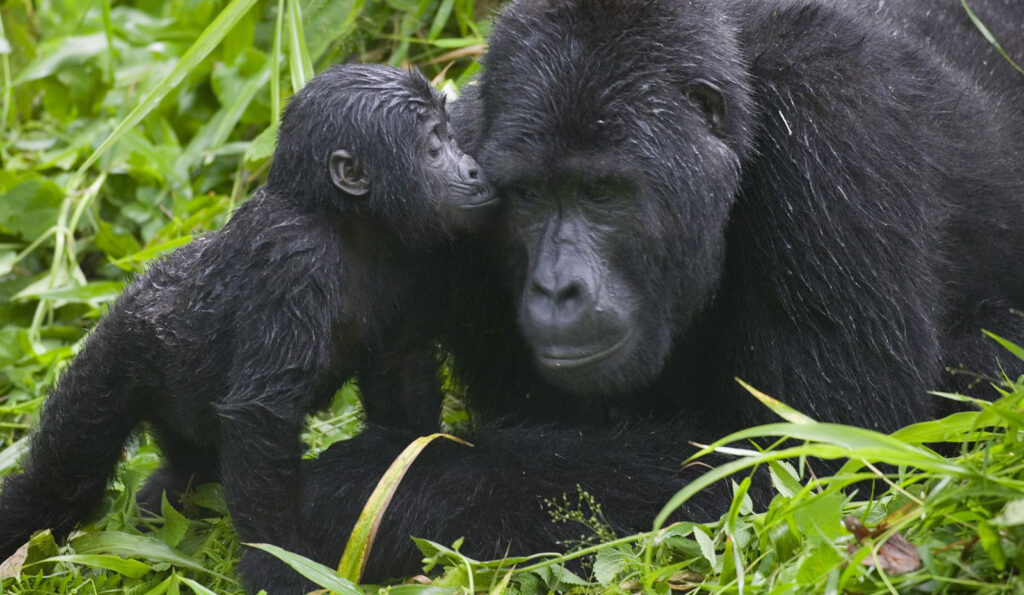
Mishaya Gorilla Family in Bwindi: History, Trekking and What to Know The Mishaya Gorilla Family is one of…
Read article →
Semuliki Hot Springs Visit Guide: What to Expect Semuliki Hot Springs offers one of the most unusual natural…
Read article →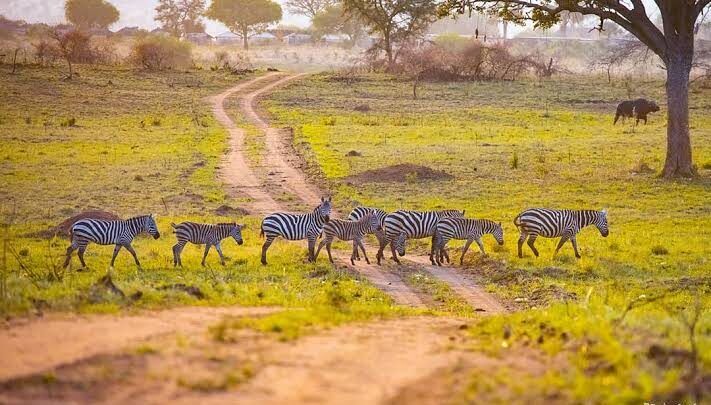
Kidepo Valley Remote Safari Guide: What to Expect Kidepo Valley National Park offers one of Uganda's most remote…
Read article →