

Nshongi Gorilla Family in Bwindi
Nshongi Gorilla Family in Bwindi: History, Location and Trekking Guide The Nshongi Gorilla Family holds an important place…
Read article →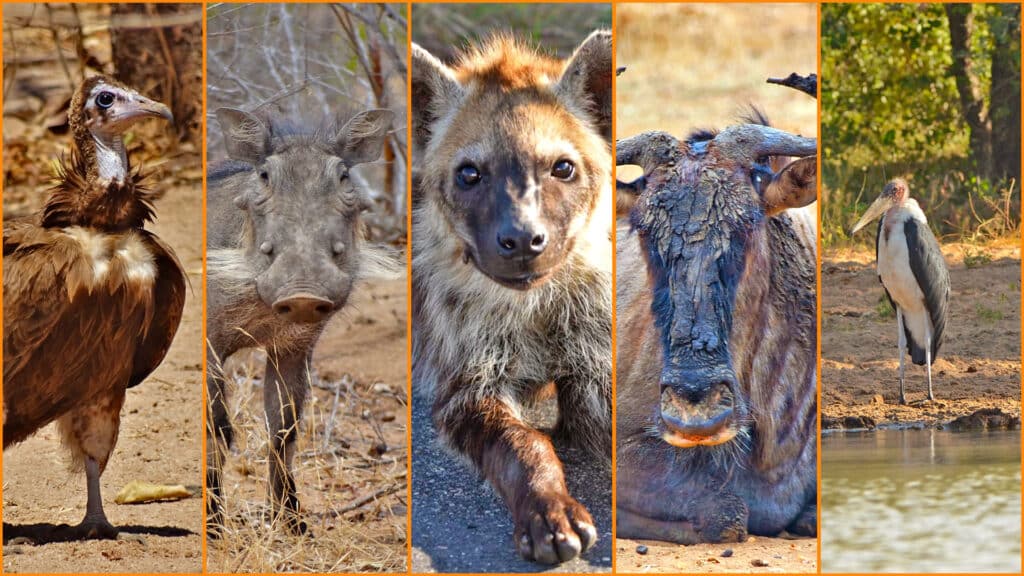
Travel Guide
Discover the Ugly Five Africa, including wildebeest, warthog, hyena, marabou stork, and vultures, and learn why they matter.
The Ugly Five Africa label refers in the source to wildebeest, warthog, hyena, marabou stork, and vultures. The name is deliberately memorable, but it should not be interpreted as a scientific judgment about the value of these animals. Each has a place within the environments where it occurs, and a safari becomes far more interesting when travelers look beyond conventional ideas of which species are beautiful or prestigious.
Wildlife tourism often places enormous attention on famous mammals. Visitors may arrive determined to see lions, elephants, or other headline species while overlooking animals they encounter repeatedly.
The Ugly Five concept can encourage travelers to reverse that habit.
Instead of treating wildebeest, warthogs, hyenas, marabou storks, and vultures as secondary sightings, visitors can watch how they behave and consider why they matter within their ecosystems.
Wildebeest are one of the animals specifically included in the source. Their appearance may have contributed to the humorous label, but they can be central to some of Africa’s most dramatic wildlife landscapes.
For safari travelers, wildebeest are worth watching as individuals rather than only as part of enormous groups. Their movement, interactions, and response to the surrounding environment can provide interesting observations.
Photographers can use both close and wide compositions. A single animal may produce an expressive portrait, while a wider scene can show how wildebeest fit into the landscape.
Warthogs are another member of the Ugly Five Africa. They are often encountered moving across open areas or feeding close to the ground.
Their distinctive appearance makes them easy for many first-time visitors to recognize.
Rather than taking one photograph and moving on, travelers can spend time watching behavior. Smaller or more commonly encountered species can reveal just as much about wildlife as a distant predator.
Hyenas are frequently misunderstood. Their reputation in popular culture can influence how visitors interpret them before they have observed them in the wild.
A safari provides an opportunity to replace stereotypes with direct observation.
Travelers should listen to guides explain behavior rather than judging an animal according to fictional portrayals.
Marabou storks create another striking visual contrast. Their appearance fits easily within the humorous theme of the Ugly Five, but birds should not be considered ecologically unimportant simply because travelers do not find them conventionally attractive.
Birdlife is a major part of African ecosystems, and safari visitors can gain a great deal by paying attention to species beyond mammals.
Vultures complete the group identified in the source.
They are often associated with carcasses, which may make some visitors uncomfortable. Yet this association is precisely why they deserve attention.
Animals that consume remains form part of the wider ecological process. A safari is not only about the moments humans find beautiful. It includes feeding, competition, death, decomposition, and the recycling of resources through an ecosystem.
The source explicitly asks travelers to learn why the Ugly Five matter.
That question is more important than the humorous label.
Every wildlife species exists within a network of ecological relationships. Animals may influence vegetation, provide food for predators, consume remains, compete for resources, or interact with other species in ways that help shape the ecosystem.
Travelers do not need to become professional ecologists to appreciate this principle.
A guide can help explain what is happening during sightings.
If hyenas are observed, visitors can ask about their behavior rather than relying on myths. If vultures are gathering, a guide may explain what they are responding to.
If wildebeest are moving across a landscape, the observation can become part of a wider discussion about grazing and wildlife movement.
This educational approach makes a safari more engaging.
It also reduces the tendency to divide wildlife into “good” and “bad” animals according to appearance.
The word “ugly” is subjective. What one visitor considers unattractive, another photographer may find fascinating.
Warthog faces, vulture profiles, and the posture of a marabou stork can produce distinctive images precisely because they differ from conventional ideas of beauty.
The Ugly Five Africa can be excellent photography subjects.
Because travelers may feel less pressure than they do around lions or elephants, they can sometimes experiment more with composition.
A portrait can emphasize unusual features, while a wide image can show the animal’s habitat.
Behavior should remain the priority.
A photograph of a warthog feeding or interacting naturally can tell more of a story than a static close-up.
Similarly, images of vultures performing their ecological role can communicate more than an isolated bird portrait.
Visitors should never attempt to manipulate wildlife for a photograph. Feeding animals is inappropriate, and guides should not be pressured to disturb them.
The safari vehicle should remain at an appropriate position.
Travelers should also be careful with captions when sharing photographs online. Humorous terminology can be used without encouraging cruelty or presenting wildlife as worthless.
The animals’ ecological significance should remain clear.
Children on family safaris may particularly enjoy the concept because it gives them another group of species to look for.
Parents and guides can turn the Ugly Five into an educational activity, encouraging children to identify each animal and learn something about its role.
This can reduce the frustration children sometimes feel when famous predators are difficult to locate.
One of the greatest advantages of learning about the Ugly Five Africa is that it encourages broader wildlife appreciation.
A safari becomes much richer when every drive does not depend on finding a lion.
Visitors begin to notice birds, scavengers, herbivores, tracks, behavior, and interactions between species.
This broader attention can also improve the relationship between travelers and guides.
Instead of constantly asking where the next famous animal is, visitors can ask what they are currently seeing and why it matters.
A knowledgeable guide can then interpret the ecosystem rather than simply driving from one headline sighting to another.
The source specifically identifies five members of the group: wildebeest, warthog, hyena, marabou stork, and vultures.
Travelers can use this memorable category as a starting point, but they should not let the humorous name become a value judgment.
These animals matter because African ecosystems are built from many interconnected species, not only the ones featured most often in safari advertising.
A vulture performing its role, a hyena moving through its environment, or a warthog feeding naturally can be just as authentic a safari moment as watching a more celebrated animal.
The Ugly Five Africa therefore provide a useful reminder that wildlife appreciation should extend beyond conventional beauty.
By slowing down, listening to guides, observing behavior, and understanding ecological roles, travelers can transform animals that might initially seem like secondary sightings into some of the most interesting encounters of an African safari.

Nshongi Gorilla Family in Bwindi: History, Location and Trekking Guide The Nshongi Gorilla Family holds an important place…
Read article →
Mishaya Gorilla Family in Bwindi: History, Trekking and What to Know The Mishaya Gorilla Family is one of…
Read article →
Semuliki Hot Springs Visit Guide: What to Expect Semuliki Hot Springs offers one of the most unusual natural…
Read article →
Kidepo Valley Remote Safari Guide: What to Expect Kidepo Valley National Park offers one of Uganda's most remote…
Read article →