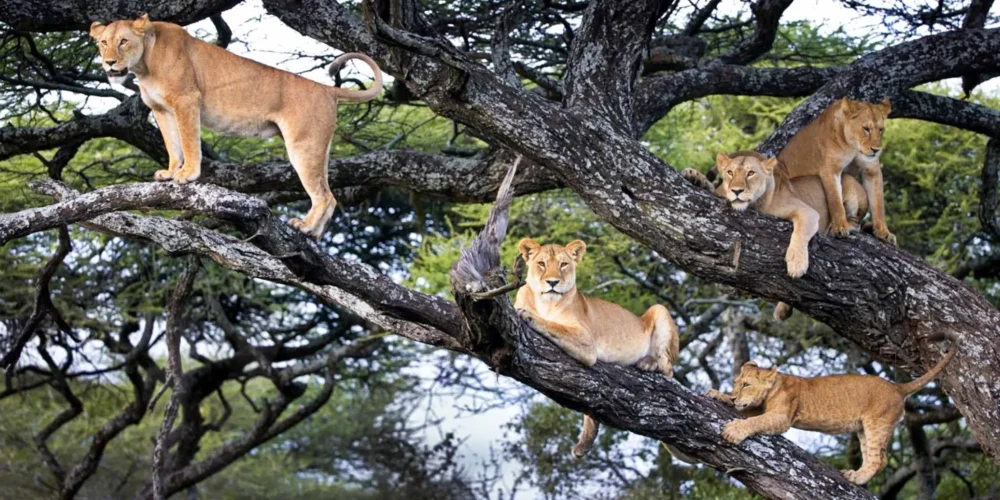

Tree-Climbing Lions Ishasha
Tree-Climbing Lions Ishasha: Uganda’s Famous Lions in the Fig Trees
The tree-climbing lions Ishasha population has made southern Queen Elizabeth National Park famous. These unusual lions often rest high in large fig and acacia trees.
Ishasha lies in the southern part of Queen Elizabeth National Park. The area offers a different safari experience from the park’s northern sector.
Seeing a lion resting in a tree creates a memorable wildlife encounter. It also raises an interesting question about why these lions climb trees.
Where Is Ishasha?
Ishasha lies in southwestern Uganda near the border with the Democratic Republic of the Congo. The sector forms part of Queen Elizabeth National Park.
The landscape includes open savannah, woodland, rivers, and large fig trees. These habitats support lions, elephants, buffaloes, hippos, topis, and other wildlife.
The area’s remote character also creates a quieter safari experience.
Why Do Lions Climb Trees?
Scientists and guides have proposed several explanations for tree-climbing behavior in Ishasha. Lions may climb trees to escape insects, enjoy cooler breezes, or obtain a better view of their surroundings.
Trees can also provide shade during hot periods. From elevated branches, lions may rest away from ground-level disturbances.
Not every lion in Ishasha climbs trees. The behavior depends on individual lions and local conditions.
Are Tree-Climbing Lions Unique to Uganda?
No. Lions in other parts of Africa also climb trees.
However, the Ishasha lions have become particularly famous for this behavior. Tanzania’s Lake Manyara National Park also has a well-known population of tree-climbing lions.
These sightings remain relatively unusual compared with typical lion behavior.
Best Time to See Tree-Climbing Lions
Lions can climb trees throughout the year. However, sightings depend on weather, food availability, and the animals’ behavior on the day.
Dry periods can provide good wildlife viewing because vegetation becomes thinner. Lions may also seek shade during hotter periods.
A skilled guide can help locate the prides and identify likely resting places.
Other Wildlife in Ishasha
The tree-climbing lions Ishasha experience forms only part of the sector’s wildlife appeal. Ishasha supports large herds of Uganda kob and topi.
Elephants and buffaloes also move through the savannah. Hippos can be found around rivers and water sources.
The sector also provides an important connection between Uganda’s protected areas and the wider Albertine Rift ecosystem.
Combining Ishasha With Gorilla Trekking
Ishasha provides a convenient addition to a southwestern Uganda itinerary. Travelers can combine a game drive with gorilla trekking in Bwindi Impenetrable National Park.
The journey between the two areas offers beautiful landscapes and rural scenery.
This combination creates a safari that blends wildlife and primate experiences.