
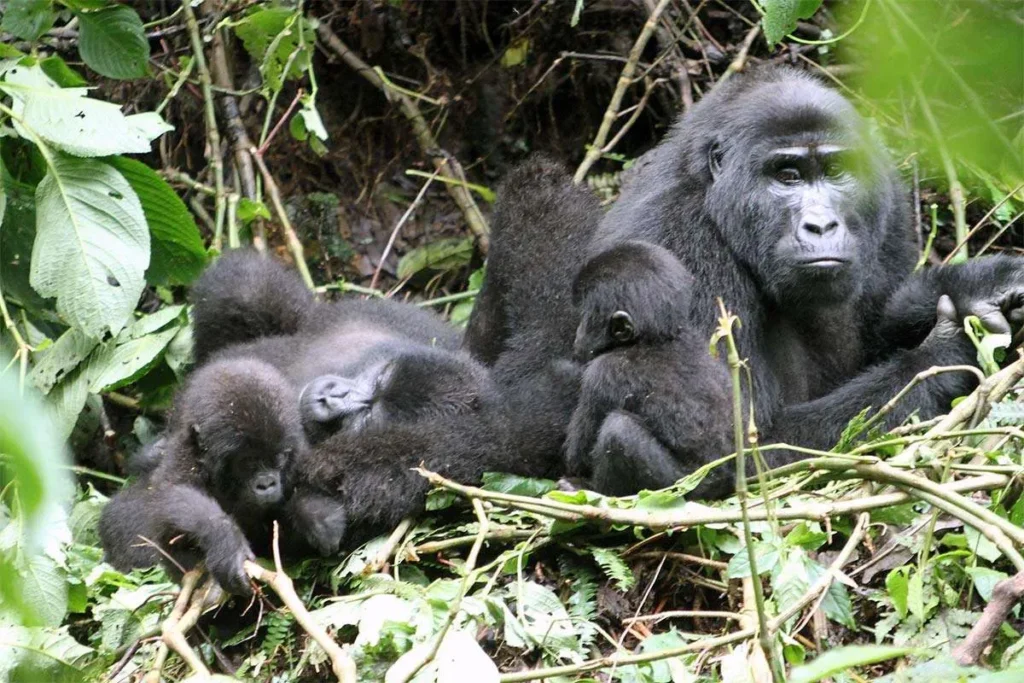
Nshongi Gorilla Family in Bwindi
Nshongi Gorilla Family in Bwindi: History, Location and Trekking Guide The Nshongi Gorilla Family holds an important place…
Read article →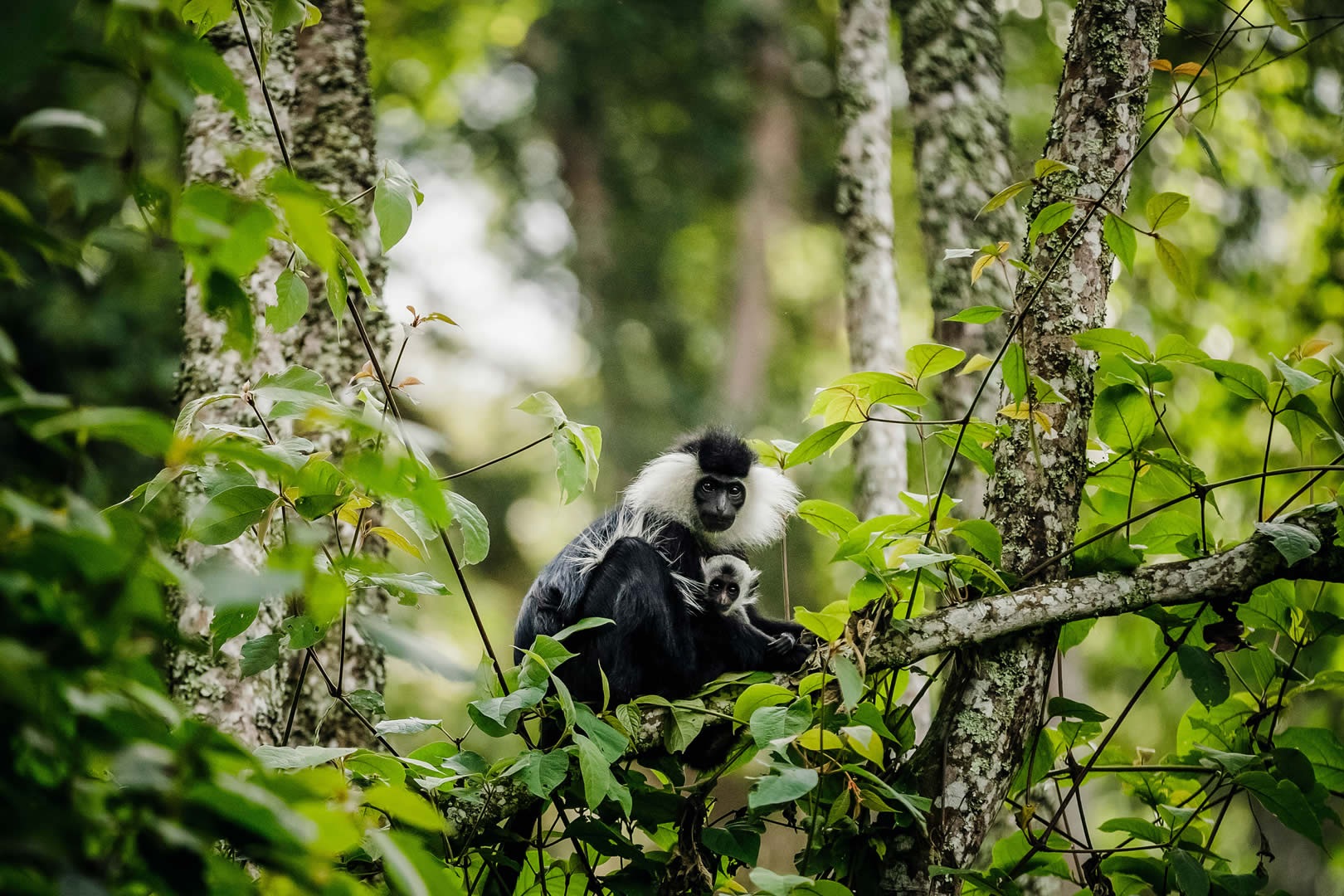
Travel Guide
Nyungwe Forest National Park offers one of Rwanda's best wildlife experiences for primate enthusiasts. The ancient montane rainforest covers a vast landscape in southwestern Rwanda and supports an impressive variety of primates. The forest provides habitat…
Nyungwe Forest National Park offers one of Rwanda’s best wildlife experiences for primate enthusiasts. The ancient montane rainforest covers a vast landscape in southwestern Rwanda and supports an impressive variety of primates.
The forest provides habitat for several monkey species, chimpanzees, and other forest wildlife. Some species appear regularly during guided walks, while others require patience and luck.
A Nyungwe primates checklist can help you prepare for your visit and keep track of the species you encounter. Whether you enjoy wildlife photography, birdwatching, or primate tracking, Nyungwe offers plenty to discover.
Nyungwe protects one of the largest remaining montane forests in the region. Its dense vegetation provides food, shelter, and breeding areas for numerous wildlife species.
The forest’s altitude, rivers, wetlands, and varied vegetation create different habitats for primates. These conditions allow several species to share the same ecosystem.
Conservation programs also protect the forest from pressures such as habitat loss and illegal activities.
Chimpanzees rank among Nyungwe’s most sought-after primates.
Chimpanzee trekking allows visitors to follow habituated chimpanzee communities through the forest. Unlike gorillas, chimpanzees move quickly and often travel through the treetops.
You may hear them calling before you see them. Their loud vocalizations can travel considerable distances through the forest.
Keep your camera ready because chimpanzees may appear briefly before moving deeper into the canopy.
Checklist: Chimpanzee ✓
The Ruwenzori colobus represents one of Nyungwe’s most distinctive monkeys.
These black-and-white monkeys often live in large groups and move through the forest canopy. Their long white hair creates a striking appearance when they leap between branches.
Nyungwe supports some of the largest remaining populations of this species.
Visitors can sometimes encounter large groups during primate tracking and forest walks.
Checklist: Ruwenzori colobus ✓
L’Hoest’s monkey has a distinctive appearance, with dark fur and a pale or white throat.
This forest monkey usually stays closer to the ground than some other primate species.
It can prove difficult to photograph because it may move quickly through dense vegetation.
A patient observer can often spot L’Hoest’s monkeys moving quietly through the undergrowth.
Checklist: L’Hoest’s monkey ✓
The red-tailed monkey remains another interesting species to add to your Nyungwe checklist.
It gets its name from the reddish or copper-colored underside of its tail.
These monkeys can move through the canopy and lower vegetation while searching for fruits, leaves, and other foods.
They may appear in mixed groups with other monkey species, creating excellent opportunities for wildlife observers.
Checklist: Red-tailed monkey ✓
Blue monkeys occur in several forest habitats across East Africa, including Nyungwe.
Despite the name, these monkeys do not appear bright blue. Their fur usually has subtle grey, blue, or olive tones that blend with the forest.
They often move through the canopy in groups.
Look carefully among the branches because their coloration can make them surprisingly difficult to spot.
Checklist: Blue monkey ✓
Mona monkeys also occur in Nyungwe’s primate community.
They have expressive faces and contrasting facial markings that make identification easier once you know what to look for.
They often travel through trees while searching for food.
Your guide can help distinguish them from other small forest monkeys.
Checklist: Mona monkey ✓
Dent’s mona monkey forms part of the diverse primate community within Nyungwe.
This monkey resembles other mona monkey species, so accurate identification can prove difficult for first-time visitors.
A knowledgeable guide can help you distinguish it from similar species.
For serious wildlife enthusiasts, this makes a good species to add to a detailed Nyungwe checklist.
Checklist: Dent’s mona monkey ✓
The owl-faced monkey gets its common name from its distinctive facial appearance.
It has a darker face and characteristic facial features that create an owl-like impression.
The species remains elusive and may not appear during every forest visit.
If you see one, take the opportunity to observe its behavior carefully rather than focusing only on photography.
Checklist: Owl-faced monkey ✓
Angola colobus represents another colobus species associated with the forests of the region.
Like other colobus monkeys, it relies heavily on the forest canopy and spends much of its time feeding and moving among branches.
Seeing colobus monkeys in Nyungwe provides an excellent opportunity to observe complex social behavior.
Checklist: Angola colobus ✓
Vervet monkeys can also occur around parts of the Nyungwe landscape.
They adapt to a variety of habitats and often appear more comfortable near open areas than some deep-forest species.
Their grey fur, dark faces, and expressive behavior make them relatively recognizable.
However, sightings can depend heavily on where you travel within the park.
Checklist: Vervet monkey ✓
Golden monkeys deserve special attention when planning a Rwanda primate itinerary.
However, golden monkey trekking takes place in Volcanoes National Park, not Nyungwe Forest.
The species lives in the Virunga mountain region and does not form part of the standard Nyungwe primate checklist.
Travelers interested in both species can combine Nyungwe chimpanzee trekking with golden monkey trekking in northern Rwanda.
Checklist: Golden monkey — Volcanoes National Park, not Nyungwe
The grey-cheeked mangabey is another primate associated with Rwanda’s forest ecosystems.
Mangabeys spend much of their time in forest environments and can travel through both the canopy and lower vegetation.
Sightings require patience because dense vegetation can hide them from visitors.
A local guide can improve your chances of finding this species.
Checklist: Grey-cheeked mangabey ✓
Red colobus monkeys represent an important part of Africa’s forest biodiversity.
They usually spend considerable time in the canopy and feed mainly on leaves and other plant material.
Nyungwe’s forests provide important habitat for colobus populations.
However, visitors should not assume that every primate species appears on every trek. Forest wildlife sightings always depend on animal movements and conditions.
Checklist: Red colobus ✓
Nyungwe supports a remarkable diversity of primates, with commonly cited figures describing around 13 primate species in the forest.
Different sources can classify or list species differently, particularly when taxonomic classifications change.
For travelers, the important point remains clear: Nyungwe offers one of the richest primate-watching experiences in Rwanda.
A single forest walk can produce several different monkey sightings.
Guided forest activities offer the best way to search for primates.
Chimpanzee trekking provides the most focused experience because trackers actively search for habituated chimpanzee communities.
Forest walks can provide opportunities to encounter several monkey species.
Your guide can also identify vocalizations, feeding signs, movement patterns, and other clues that visitors might miss.
Nyungwe supports wildlife throughout the year.
Dry periods can make some trails easier to navigate, but rain can occur at any time because Nyungwe forms a rainforest ecosystem.
Wet conditions can also create lush vegetation and active wildlife.
Rather than choosing your travel dates solely around weather, consider your preferred activities and overall Rwanda itinerary.
Carry lightweight hiking equipment because forest trails can become steep and muddy.
Waterproof hiking boots provide better grip and protect your feet from wet conditions.
A lightweight rain jacket remains essential because rain can arrive unexpectedly.
Bring binoculars if you want to observe monkeys in the canopy. A camera with a good zoom lens can also improve your photography opportunities.
Protect electronics with waterproof bags.
Protecting Nyungwe’s primates requires protecting the entire forest ecosystem.
The forest provides food and shelter for primates while also supporting birds, reptiles, insects, plants, and other wildlife.
Tourism contributes to conservation by creating income linked to protected areas and local communities.
Visitors also contribute by following park rules and avoiding actions that disturb wildlife.
Patience remains one of the most important skills for primate watching.
Do not expect every monkey to remain in one place for photographs. Primates move through the forest constantly.
Listen for calls and watch the canopy carefully.
Your guide may stop frequently to identify sounds or movement that you cannot immediately recognize.
Taking your time can produce more sightings than rushing along the trail.
Keep Your Nyungwe Primate Checklist Ready
Nyungwe Forest offers an exceptional opportunity to explore Rwanda’s primate diversity. Chimpanzees attract most visitors, but the forest supports many other fascinating species.
Your checklist can include chimpanzees, Ruwenzori colobus, L’Hoest’s monkeys, red-tailed monkeys, blue monkeys, mona monkeys, Dent’s mona monkeys, owl-faced monkeys, Angola colobus, vervet monkeys, grey-cheeked mangabeys, and other species recorded within the forest ecosystem.
Remember that sightings remain unpredictable. Even experienced guides cannot guarantee that you will see every species on your list.
The best approach involves slowing down, listening carefully, watching the canopy, and trusting your guide’s experience. Nyungwe rewards patient travelers with an intimate look at one of Africa’s most remarkable forest ecosystems.

Nshongi Gorilla Family in Bwindi: History, Location and Trekking Guide The Nshongi Gorilla Family holds an important place…
Read article →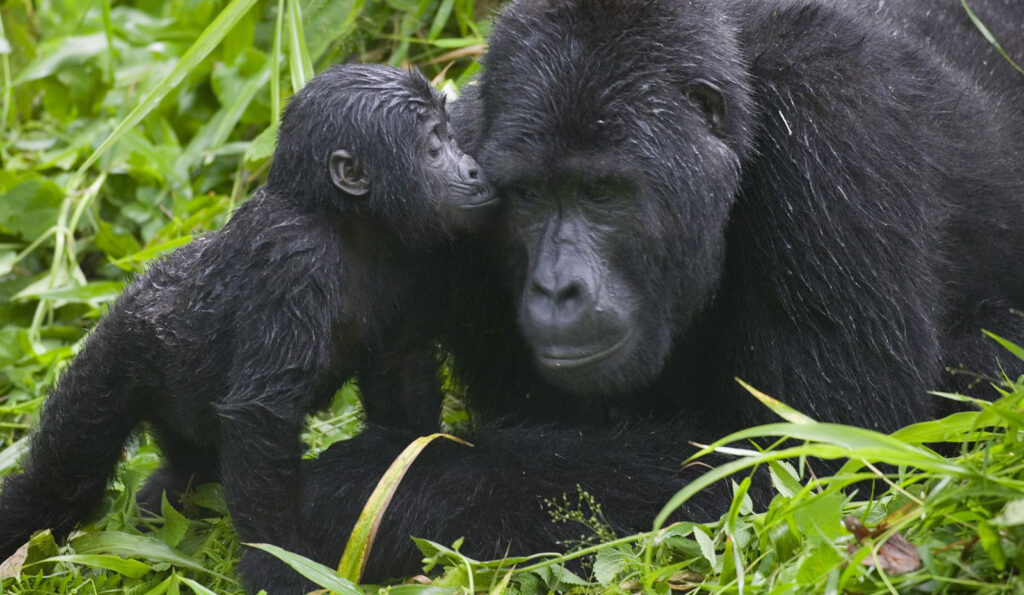
Mishaya Gorilla Family in Bwindi: History, Trekking and What to Know The Mishaya Gorilla Family is one of…
Read article →
Semuliki Hot Springs Visit Guide: What to Expect Semuliki Hot Springs offers one of the most unusual natural…
Read article →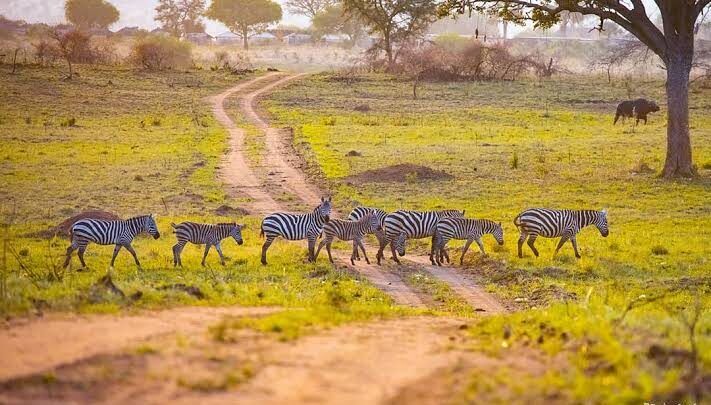
Kidepo Valley Remote Safari Guide: What to Expect Kidepo Valley National Park offers one of Uganda's most remote…
Read article →