

Nshongi Gorilla Family in Bwindi
Nshongi Gorilla Family in Bwindi: History, Location and Trekking Guide The Nshongi Gorilla Family holds an important place…
Read article →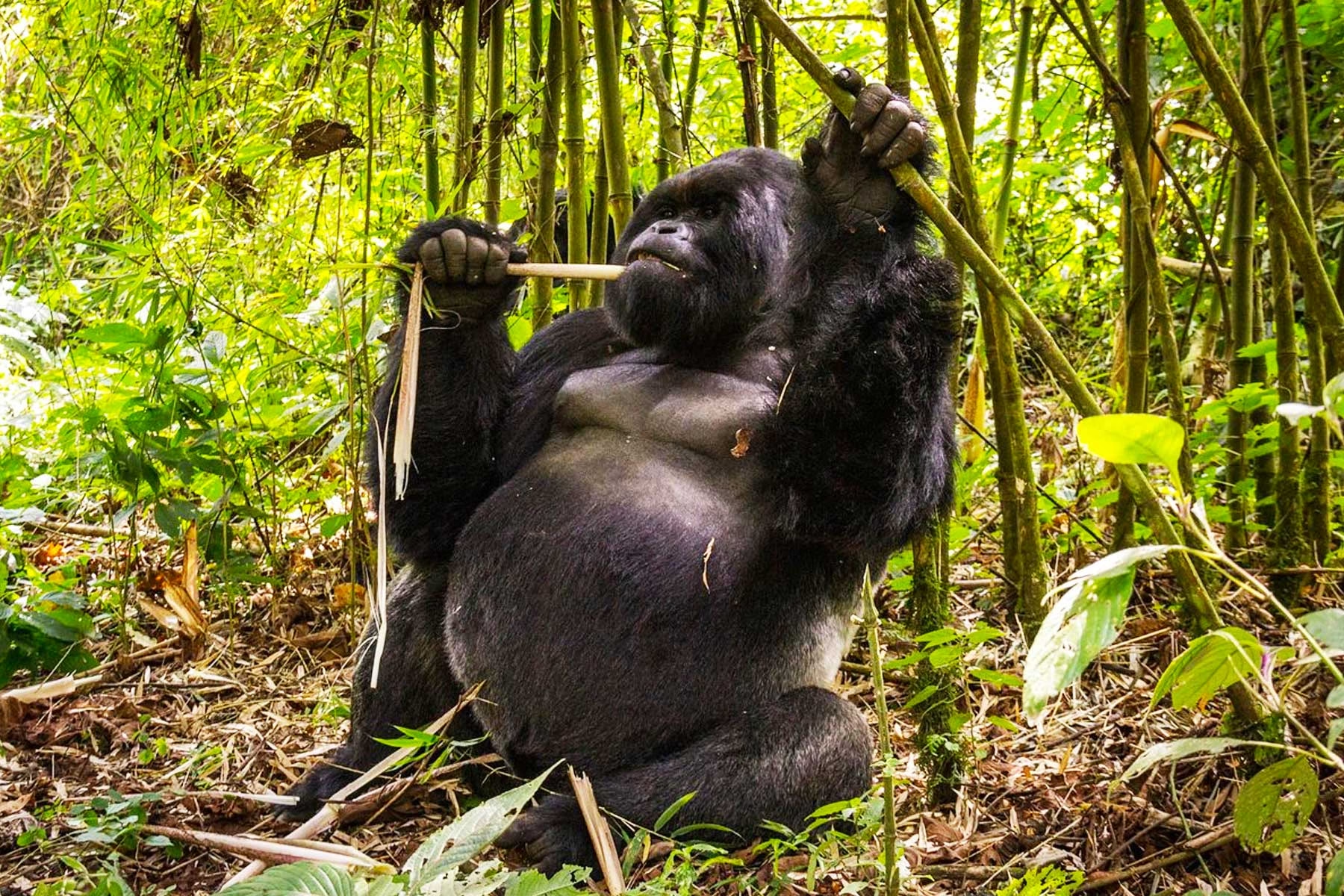
Travel Guide
Explore the top national parks in the Democratic Republic of Congo, including Virunga, Kahuzi-Biega, Garamba, and Salonga. Discover wildlife, gorilla trekking, and eco-tourism tips.
The Congo national parks described in the supplied source protect some of the Democratic Republic of Congo’s most significant forests, savannahs, wetlands, primates, birds, and other wildlife. The source focuses particularly on Virunga, Kahuzi-Biega, Garamba, Salonga, Upemba, and Kundelungu, demonstrating the extraordinary ecological variety found across the country.
These protected areas differ dramatically from one another.
Virunga is associated with mountain gorillas and volcanic landscapes. Kahuzi-Biega is known for eastern lowland gorillas and rainforest. Garamba introduces broad savannah ecosystems, while Salonga protects an enormous tropical forest landscape. Upemba and Kundelungu add wetlands, waterfalls, and further habitat diversity.
The supplied source also emphasizes that visiting these parks can involve substantial logistical challenges.
Travelers should therefore approach the DRC as a destination requiring careful, current planning rather than assuming that park access works like a conventional safari circuit.
Among the Congo national parks, Virunga is one of the most internationally recognized.
The supplied source describes it as Africa’s oldest national park and a UNESCO World Heritage Site in eastern DRC near Rwanda and Uganda.
Its landscapes are associated with mountains, forests, volcanoes, and wildlife.
Virunga is particularly famous for mountain gorillas.
The supplied source presents gorilla trekking as one of the park’s major tourism experiences.
Any traveler considering a visit should verify current park access, permit arrangements, and security conditions directly before making plans.
The source also emphasizes Virunga’s active volcanic environment.
It specifically mentions Nyiragongo Volcano as an attraction.
Because volcanic conditions and park access can change, the existence of a historically promoted activity should not be interpreted as confirmation that it is currently open.
The supplied material mentions lions, elephants, and chimpanzees among wildlife associated with Virunga.
This demonstrates the park’s ecological diversity.
It is not simply a gorilla destination.
Its varied habitats support a broader wildlife community.
The source identifies Goma as an important gateway and notes the park’s position close to Rwanda and Uganda.
Geographic proximity does not automatically mean straightforward access.
Border procedures, park operations, transportation, and security conditions all need current verification.
Kahuzi-Biega National Park in South Kivu provides a different primate experience.
The supplied source emphasizes its eastern lowland gorillas and lush rainforest environment.
This gives travelers an opportunity to learn about a gorilla population distinct from the mountain gorillas associated with Virunga.
The source identifies eastern lowland gorillas as the park’s signature wildlife attraction.
Gorilla trekking allows visitors to enter forest habitat with guides while learning about conservation.
As with all wildlife encounters, access and sightings depend on current park operations and natural conditions.
Kahuzi-Biega’s rainforest is an important part of the experience.
Visitors are not merely traveling to a point where gorillas are found.
They enter a complex forest environment supporting birds, plants, antelopes, primates, and many other organisms.
The supplied source emphasizes the park’s role in teaching visitors about gorilla conservation and the challenges of protecting endangered species.
Tourism can help make conservation more tangible.
Seeing the habitat directly gives greater meaning to discussions about threats and protection.
In northeastern DRC, Garamba National Park represents a major change in landscape.
The source describes it as one of Africa’s older protected areas and emphasizes savannah wildlife rather than dense gorilla forest.
This illustrates the ecological range of the country.
The supplied material highlights elephants among Garamba’s wildlife.
Large mammals moving across open landscapes create a safari experience different from rainforest trekking.
The environment allows travelers to appreciate another side of Congolese biodiversity.
Giraffes and lions are also mentioned in the source.
These species reinforce Garamba’s savannah character.
Wildlife populations and visitor access should always be understood according to current conservation information rather than assumed from a general destination description.
The source emphasizes anti-poaching education and conservation projects in connection with Garamba.
This reflects the serious challenges involved in protecting wildlife across remote landscapes.
Visitors interested in conservation can learn about the work required beyond ordinary tourism activities.
Garamba is described as more remote and suitable for travelers interested in an off-the-beaten-path experience.
Remoteness can create a powerful wilderness atmosphere, but it also increases logistical complexity.
Transport, accommodation, communication, and emergency planning need careful organization.
The supplied source describes Salonga National Park as the largest tropical rainforest park in Africa.
Located in central DRC, it represents an enormous protected forest landscape.
Its isolation is central to both its conservation value and the difficulty of visiting.
The source mentions okapis, Congo peafowl, primates, and birds among wildlife associated with Salonga.
The park’s value extends far beyond large mammals.
Its rainforest protects complex biological communities that remain difficult for most travelers to access.
The supplied material explicitly notes that access to Salonga is limited because of its remoteness.
This is important for realistic travel planning.
A destination can be ecologically extraordinary without functioning as a readily accessible tourism park.
Where appropriate access exists, the source refers to guided forest walks and wildlife observation.
Travelers should not interpret this as guaranteed general availability.
Current access needs to be established through authorized operators and park authorities.
The source suggests that Salonga’s isolation has helped preserve biodiversity.
Remoteness can reduce certain forms of visitor pressure, although conservation in remote areas also faces significant management challenges.
For travelers, this means the park should be approached primarily as an important protected ecosystem rather than assumed to be an easy safari destination.
The supplied source also identifies Upemba National Park as a significant protected area.
It highlights wetlands and birdlife.
This provides another example of how varied the DRC’s national parks are.
Wetlands perform important ecological functions and support species that differ from those of rainforest or savannah.
Travelers interested in birds and landscapes may therefore find such ecosystems particularly significant.
The source does not provide detailed tourism logistics for Upemba.
Kundelungu National Park is also mentioned.
The source emphasizes waterfalls and savannah ecosystems.
This combination adds scenic diversity to the national-park network.
Again, the supplied material provides only a broad overview rather than detailed current visitor information.
Waterfalls can become important scenic features within a safari itinerary.
However, visitors should avoid assuming that all named attractions have developed tourism infrastructure.
Current local planning is essential in remote protected areas.
The supplied source connects these parks with eco-tourism, research, and community-based conservation.
Protected areas can serve several purposes simultaneously.
They conserve wildlife, create opportunities for scientific study, and potentially support livelihoods through carefully managed tourism.
The source strongly recommends using licensed operators familiar with permits, park access, guides, and local logistics.
This is particularly important in the DRC because travel conditions can change.
A generic itinerary created far in advance may not reflect current access.
The supplied source specifically notes that park access can vary because of security conditions.
Travelers should therefore obtain current official travel advice and direct park information before making arrangements.
Historical availability does not prove that a destination is currently accessible.
Weather can also affect travel.
Heavy rain may influence roads, forest trails, rivers, and transfer times.
A flexible schedule is more realistic than tightly connecting multiple remote destinations.
The source recommends hiking boots, rain gear, insect repellent, and sufficient supplies.
The exact packing list should depend on the park and activity.
Rainforest trekking requires different preparation from a savannah safari.
Passports, visas, and yellow fever documentation are among the items mentioned by the source.
Entry and health requirements are time-sensitive.
Travelers should verify them through current official channels rather than relying on older travel content.
Protected-area rules may change according to wildlife, security, environmental, or operational needs.
Travelers should remain flexible and follow park-authority instructions.
A permit or previous itinerary should never be treated as permission to ignore current restrictions.
The National Parks in Congo highlighted by the supplied source demonstrate the extraordinary ecological diversity of the Democratic Republic of Congo. Virunga protects mountain gorillas and volcanic landscapes, Kahuzi-Biega is associated with eastern lowland gorillas and rainforest, Garamba introduces savannah wildlife, and Salonga protects an immense tropical forest ecosystem.
Upemba contributes wetlands and birdlife, while Kundelungu adds waterfalls and savannah landscapes.
Together, these protected areas demonstrate why the DRC is so significant for African biodiversity and conservation.
They also require realistic planning. Remoteness, infrastructure, weather, park regulations, and security conditions can affect whether particular areas are accessible at a given time.
Travelers interested in the Congo national parks should therefore work with authorized operators, verify current official information, prepare carefully for remote travel, and approach these extraordinary protected landscapes with flexibility and respect for the conservation conditions governing access.

Nshongi Gorilla Family in Bwindi: History, Location and Trekking Guide The Nshongi Gorilla Family holds an important place…
Read article →
Mishaya Gorilla Family in Bwindi: History, Trekking and What to Know The Mishaya Gorilla Family is one of…
Read article →
Semuliki Hot Springs Visit Guide: What to Expect Semuliki Hot Springs offers one of the most unusual natural…
Read article →
Kidepo Valley Remote Safari Guide: What to Expect Kidepo Valley National Park offers one of Uganda's most remote…
Read article →