
Nshongi Gorilla Family in Bwindi
Nshongi Gorilla Family in Bwindi: History, Location and Trekking Guide The Nshongi Gorilla Family holds an important place…
Read article →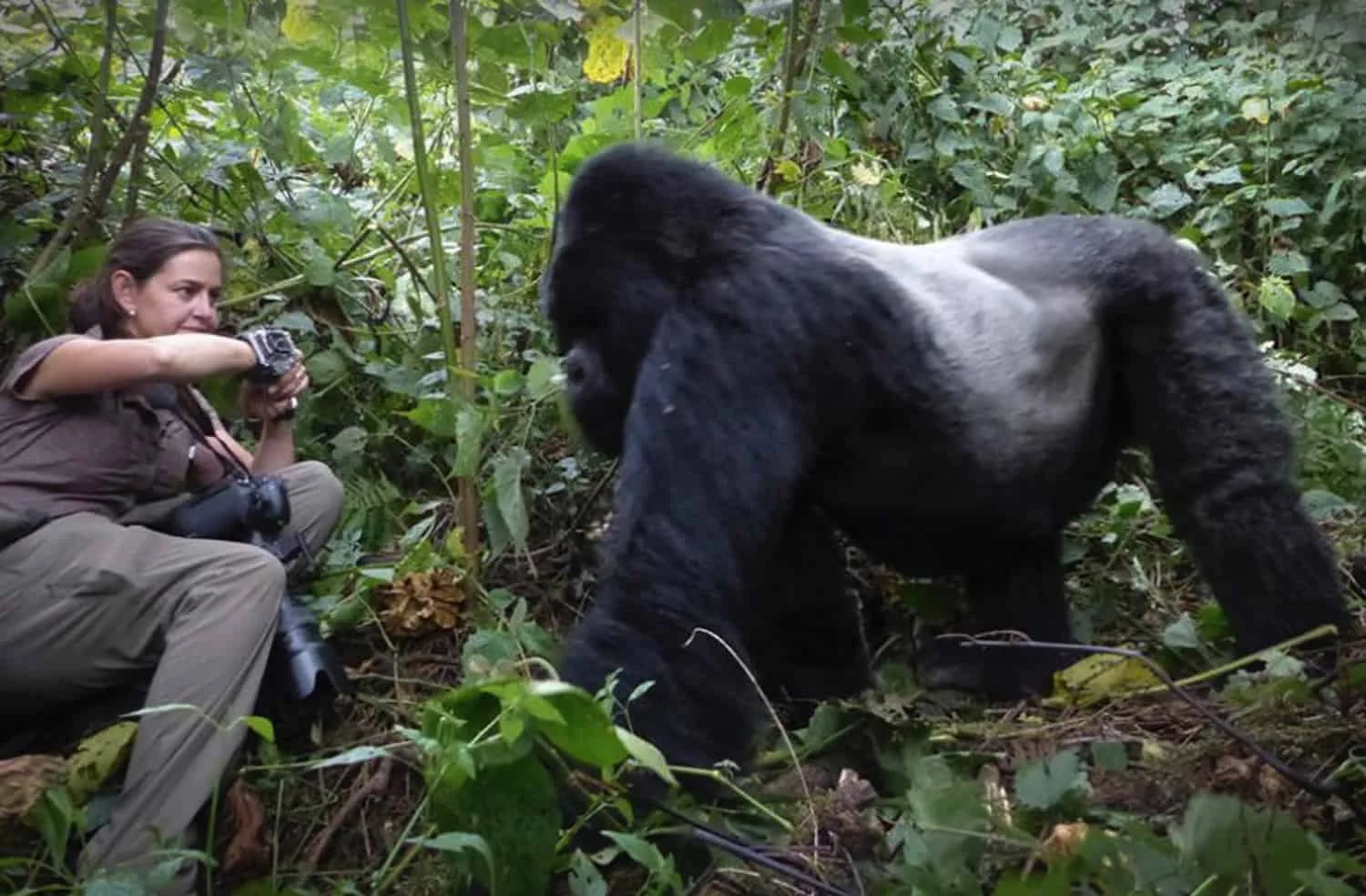
Travel Guide
Gorilla trekking offers one of Africa's most unforgettable wildlife experiences. Standing close to a wild mountain gorilla can feel incredibly personal, especially when a curious gorilla approaches your group. However, visitors must never touch gorillas during…
Gorilla trekking offers one of Africa’s most unforgettable wildlife experiences. Standing close to a wild mountain gorilla can feel incredibly personal, especially when a curious gorilla approaches your group.
However, visitors must never touch gorillas during a normal trekking experience. Even when a gorilla comes close, you should maintain the required distance and follow your guide’s instructions.
The rule protects both visitors and gorillas. Human contact can expose gorillas to diseases, while unexpected movements can also cause stress or defensive behavior.
Gorillas share many biological similarities with humans. This similarity creates a conservation concern because some human illnesses can affect gorillas.
A person may carry an infection without showing obvious symptoms. Close physical contact could therefore expose a gorilla to illness.
Avoiding physical contact reduces this risk and helps protect the health of individual gorillas and the wider population.
The rule also helps maintain natural behavior. Gorillas should continue to see humans as visitors rather than sources of physical interaction.
This situation can happen during gorilla trekking.
A gorilla may walk toward your group, pass nearby, or even move through the area where you stand. You should never reach out to touch it.
Remain calm and listen to your guide. Avoid sudden movements, loud noises, or attempts to attract the gorilla’s attention.
If the gorilla comes closer than the recommended viewing distance, your guide will advise you on what to do.
Gorilla trekking authorities generally require visitors to maintain a minimum distance from the gorillas.
The commonly applied rule in Uganda and Rwanda requires visitors to keep about 7 metres from the gorillas.
However, gorillas do not always respect human boundaries.
A gorilla may approach the group despite everyone’s efforts to maintain the distance. In that situation, visitors should remain calm and allow the animal to move naturally.
Do not try to restore the distance by pushing the gorilla away or reaching toward it.
A gorilla may occasionally come close enough to touch a person.
This does not mean you should touch it back.
Keep your hands still and follow your guide’s instructions. Avoid reaching toward the animal, even if it appears calm or curious.
The responsibility remains with the visitor to avoid initiating physical contact.
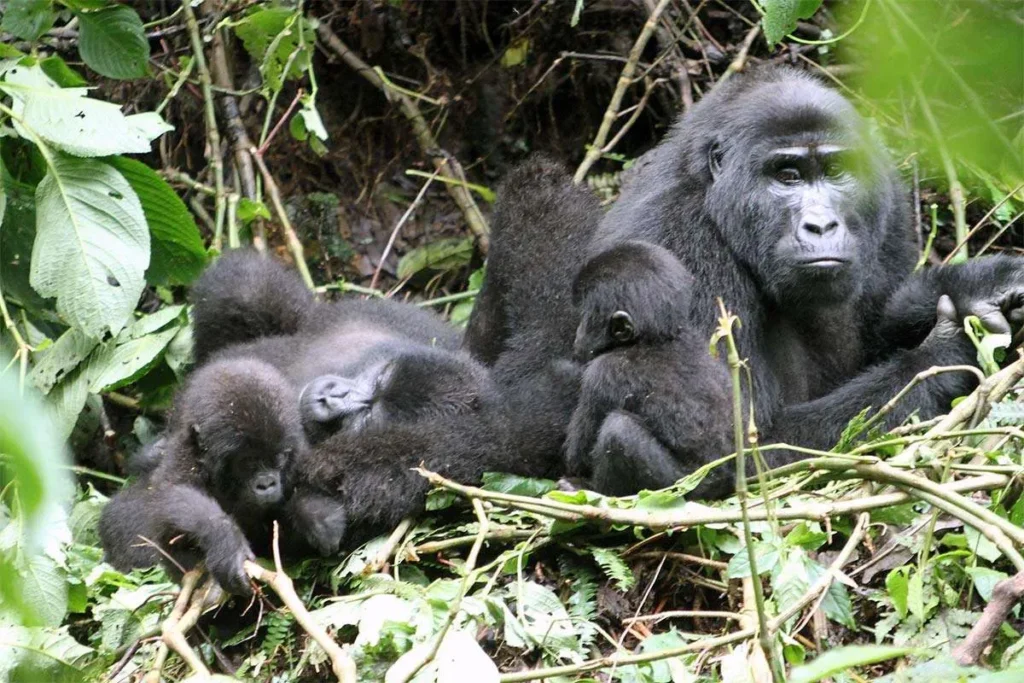
Young gorillas often display playful and curious behavior.
A youngster may move toward visitors, watch the group closely, or approach someone who stands nearby.
Despite its innocent behavior, you should not touch, feed, call, or encourage the young gorilla.
Allow it to interact naturally with its family while you observe quietly.
You can take photographs during gorilla trekking, but you should not move closer to a gorilla simply to take a better selfie.
Do not stretch your arm toward the animal or attempt to position yourself directly beside it.
Your guide will help you maintain an appropriate position while taking photographs.
Turn off your flash because sudden flashes can disturb the gorillas.
Gorilla tourism supports conservation in several important ways.
Permit revenue helps fund protected areas, ranger operations, monitoring, community programs, and other conservation activities.
However, tourism must also minimize the risks that visitors create.
Maintaining distance and preventing physical contact help reduce disease transmission and human influence on gorilla behavior.
Responsible tourism therefore protects the same animals that visitors travel thousands of kilometres to see.
Yes. Disease transmission represents one of the major concerns associated with close human-gorilla contact.
Gorillas can contract certain respiratory infections and other illnesses that affect humans.
Even a mild illness in a person can pose a serious concern for a gorilla population with limited numbers.
For this reason, visitors should never trek when they have symptoms of an infectious illness.
Tell your safari operator or park authorities if you become sick before your trek.
Respiratory symptoms such as coughing, sneezing, or fever deserve particular attention because of the risk of transmitting infections to gorillas.
Do not hide your symptoms simply because you have already paid for your permit.
Your guide or park authority can advise you according to the applicable health and trekking rules.
Gorilla guides and trackers play an important role in protecting both visitors and animals.
They understand gorilla behavior and know how individual groups usually respond to people.
They can tell visitors when to remain still, when to move back, and how to behave if a gorilla approaches.
Following their instructions helps keep the encounter safe and respectful.
Stay calm and avoid sudden movements.
Do not scream, run, reach out, or attempt to touch the gorilla.
Keep your voice low and follow the guide’s instructions.
The gorilla may simply pass by or stop briefly before continuing with its normal activity.
Your calm behavior helps prevent unnecessary stress.
You should not eat or drink while directly viewing the gorillas unless your guide specifically tells you otherwise.
Food can attract unwanted attention and encourage animals to associate humans with food.
Never offer food to a gorilla.
Wild gorillas should continue to forage naturally in their forest habitat.
No. Avoid flash photography during gorilla trekking.
Bright flashes can startle or disturb the animals, particularly when visitors take photographs at close range.
Use your camera’s natural-light settings instead.
A fast lens, higher ISO, and good image stabilization can help you capture better photographs without using flash.
Brief eye contact can happen naturally during a gorilla encounter.
However, avoid prolonged staring or deliberately trying to attract the gorilla’s attention.
Your guide can explain the appropriate behavior if a gorilla looks directly at you.
The goal involves observing the animals without encouraging unnatural interaction.
Your guide may instruct you to remain in a particular position while the gorillas move around the group.
You should not deliberately move closer to a gorilla to sit beside it.
Allow the gorilla to determine its own movements.
If an animal approaches you, remain where your guide tells you to stay.
Habituated gorilla groups have become accustomed to limited human presence through carefully managed conservation programs.
However, habituation does not mean that gorillas have become domesticated.
They remain wild animals with their own social structures, emotions, and behaviors.
Visitors must respect that distinction throughout the trekking experience.
Guides discourage physical contact and can intervene when necessary.
A visitor who deliberately touches a gorilla may violate park regulations.
The exact consequences depend on the destination and the circumstances.
More importantly, the action can create unnecessary health risks for the gorilla.
Always follow the rules instead of trying to create a more personal encounter.
A gorilla habituation experience offers a longer period with a gorilla group under controlled research and tourism conditions.
However, it does not give visitors permission to touch the gorillas.
Participants still need to follow the instructions of researchers, guides, and park authorities.
The animals remain wild, and physical contact can create the same health and behavioral concerns.
Gorilla trekking rules may seem strict, but they exist for important reasons.
Gorilla populations remain vulnerable, and every effort to reduce disease transmission and unnecessary stress matters.
Rules also help maintain a sustainable relationship between tourism and conservation.
When visitors respect the rules, tourism can continue supporting the protection of mountain gorillas and their habitat.
The best gorilla encounter does not involve touching an animal.
Instead, focus on observing its behavior, family relationships, feeding patterns, movements, and interactions.
Keep your voice low, follow your guide, maintain the required distance, and avoid sudden movements.
These simple actions allow you to enjoy an extraordinary wildlife experience without interfering with the gorillas’ natural behavior.
You cannot touch gorillas during normal gorilla trekking. Even when a gorilla approaches you, remain calm and let the animal move naturally.
Maintain the required viewing distance whenever possible and follow your guide’s instructions throughout the encounter. Never reach toward a gorilla, feed it, call it, or attempt to take a close selfie.
The no-touching rule protects gorillas from human diseases and helps prevent unnecessary changes in their natural behavior. It also protects visitors from unpredictable interactions with powerful wild animals.
Gorilla trekking becomes most meaningful when you observe these remarkable animals without disturbing them. Respect the rules, listen to your guide, and allow the gorillas to remain wild.

Nshongi Gorilla Family in Bwindi: History, Location and Trekking Guide The Nshongi Gorilla Family holds an important place…
Read article →
Mishaya Gorilla Family in Bwindi: History, Trekking and What to Know The Mishaya Gorilla Family is one of…
Read article →
Semuliki Hot Springs Visit Guide: What to Expect Semuliki Hot Springs offers one of the most unusual natural…
Read article →
Kidepo Valley Remote Safari Guide: What to Expect Kidepo Valley National Park offers one of Uganda's most remote…
Read article →