
Birdwatching Tour Uganda
Birdwatching Tour Uganda: The Ultimate Guide for Birding Safaris
Uganda ranks among the world’s finest birdwatching destinations. The country hosts more than 1,090 recorded bird species, making it one of Africa’s richest birding hotspots. From tropical rainforests and vast wetlands to open savannahs and alpine mountains, Uganda offers an incredible variety of habitats that support both resident and migratory birds.
A birdwatching tour in Uganda allows travelers to observe colorful kingfishers, magnificent shoebills, graceful cranes, tiny sunbirds, powerful eagles, and hundreds of other species in their natural environments. Every region of the country offers unique birdlife, giving birders the opportunity to build an impressive life list during a single safari.
Uganda also combines birdwatching with wildlife viewing and primate experiences. Visitors can track mountain gorillas in Bwindi, search for chimpanzees in Kibale, and enjoy game drives in Queen Elizabeth National Park while continuing to spot remarkable bird species along the way.
Whether you are an experienced birder or a beginner with a passion for nature, Uganda offers one of Africa’s most rewarding birdwatching adventures.
Why Choose Uganda for a Birdwatching Tour?
Uganda’s exceptional biodiversity makes it one of Africa’s premier birding destinations. Few countries offer such a remarkable concentration of bird species within a relatively small area.
The country’s varied landscapes support forest birds, wetland species, waterbirds, raptors, grassland specialists, and Albertine Rift endemics. This diversity allows birdwatchers to experience different habitats without traveling long distances.
Uganda also provides excellent accessibility to many birding locations. Well-established national parks, community reserves, and protected wetlands make birdwatching both enjoyable and productive.
Friendly local guides add tremendous value to every tour. Their knowledge of bird calls, habitats, and seasonal movements greatly increases the chances of finding rare species.
How Many Bird Species Live in Uganda?
Uganda records over 1,090 bird species, representing nearly half of Africa’s bird species and about eleven percent of the world’s recorded birds.
The country’s strategic location along the equator contributes to this remarkable diversity. Tropical forests, freshwater lakes, rivers, mountains, wetlands, and savannah ecosystems all support different bird communities.
Several species occur only within the Albertine Rift, making Uganda especially attractive for birders seeking endemic birds.
Many migratory birds also visit Uganda during different times of the year, adding even more variety to the country’s impressive bird checklist.
Best National Parks for Birdwatching in Uganda
Uganda offers outstanding birdwatching opportunities throughout its protected areas. Every national park provides different habitats and unique bird species.
Mabamba Swamp remains famous for shoebill sightings, while Bwindi Impenetrable National Park attracts birders searching for Albertine Rift endemics.
Queen Elizabeth National Park combines excellent birding with classic wildlife safaris. Murchison Falls National Park offers spectacular river birdlife, while Kibale National Park excels in forest birding.
A well-planned itinerary can combine several parks, allowing birdwatchers to observe hundreds of species within one safari.
Mabamba Swamp: Home of the Shoebill
Mabamba Swamp ranks among Uganda’s most famous birdwatching destinations. Located near Entebbe on the shores of Lake Victoria, the wetland attracts birders from around the world.
The shoebill remains the main attraction. This prehistoric-looking bird stands over one meter tall and often hunts quietly among floating vegetation.
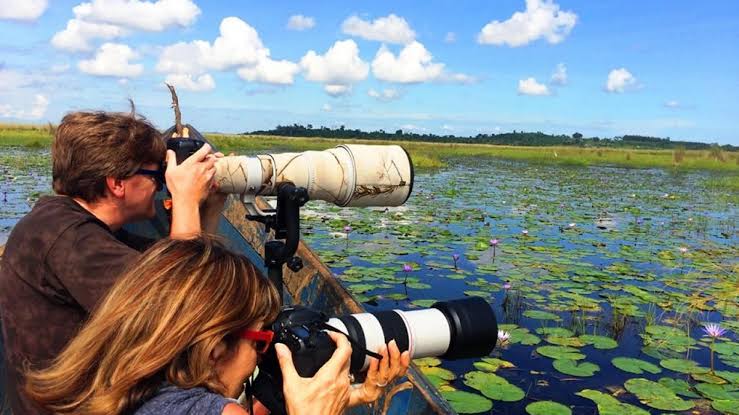
Local guides navigate narrow channels using traditional boats while searching carefully for shoebills and other wetland birds.
Besides the shoebill, Mabamba hosts jacanas, kingfishers, herons, egrets, papyrus gonoleks, swamp flycatchers, African fish eagles, and many other species.
Bwindi Impenetrable National Park
Bwindi attracts visitors primarily for mountain gorilla trekking, but the forest also ranks among Africa’s finest birdwatching destinations.
The park protects more than 350 bird species, including numerous Albertine Rift endemics that birders rarely find elsewhere.
Species such as the African Green Broadbill, Shelley’s Crimsonwing, Grauer’s Broadbill, Handsome Francolin, and Regal Sunbird make Bwindi especially rewarding.
Birdwatchers often combine morning birding walks with gorilla trekking, creating one of Uganda’s most complete wildlife experiences.
Queen Elizabeth National Park
Queen Elizabeth National Park supports over 600 bird species, making it one of Africa’s richest protected areas for birdlife.
The park’s diverse habitats include savannah, wetlands, forests, lakes, rivers, and crater landscapes. Each ecosystem attracts different bird species throughout the year.
Birdwatchers regularly encounter African skimmers, pelicans, kingfishers, bee-eaters, storks, eagles, vultures, and numerous waterbirds.
The Kazinga Channel boat safari provides exceptional opportunities to photograph birds at close range while enjoying beautiful scenery.
Murchison Falls National Park
Murchison Falls National Park combines spectacular scenery with outstanding birdwatching opportunities. The Nile River supports numerous aquatic bird species throughout the park.
The famous waterfall creates dramatic photographic opportunities while attracting birds that thrive near fast-moving water.
Birders frequently search for the rare shoebill in the Nile Delta. The delta also supports herons, storks, kingfishers, fish eagles, cormorants, and countless other waterbirds.
Game drives add even more species to the checklist. Raptors, bustards, hornbills, rollers, and weavers often appear across the savannah.
Kibale National Park
Kibale National Park protects one of East Africa’s finest tropical rainforests. The forest supports more than 375 bird species, making it a rewarding destination for forest birding.
The park attracts birders searching for green-breasted pitta, African pitta, black bee-eater, Nahan’s francolin, and numerous colorful forest species.
Guided nature walks provide excellent opportunities to identify birds by both sight and sound.
Chimpanzee trekking also complements the birdwatching experience. Many visitors enjoy observing primates while searching for forest birds along the same trails.
Semuliki National Park
Semuliki National Park offers one of Uganda’s most unique birdwatching experiences. The lowland rainforest shares many bird species with the Congo Basin.
Birders visit Semuliki to search for species rarely found elsewhere in East Africa. Several birds reach the eastern limit of their distribution within this forest.
Species such as the white-crested hornbill, lyre-tailed honeyguide, piping hornbill, and Congo serpent eagle attract dedicated birdwatchers.
The park provides a completely different birding experience from Uganda’s montane forests and savannahs.
Lake Mburo National Park
Lake Mburo National Park offers excellent birdwatching in a peaceful setting. The park supports more than 350 bird species across lakes, wetlands, woodlands, and grasslands.
Birders often search for African finch, red-faced barbet, papyrus yellow warbler, brown-chested lapwing, and African wattled lapwing.
Boat cruises provide close views of waterbirds, while game drives add opportunities to photograph raptors and savannah specialists.
The park also allows walking safaris, giving birdwatchers another way to explore different habitats.
Mgahinga Gorilla National Park
Mgahinga Gorilla National Park offers rewarding birdwatching alongside gorilla trekking and golden monkey tracking.
The volcanic landscape supports several Albertine Rift endemic birds. Birders often search for Rwenzori Turaco, Scarlet-tufted Malachite Sunbird, Dusky Crimsonwing, and Archer’s Robin-Chat.
The park’s smaller size allows focused birdwatching while enjoying spectacular mountain scenery.
Many visitors combine Mgahinga with Bwindi to maximize opportunities for endemic species.
Best Time for Birdwatching in Uganda
Uganda offers excellent birdwatching throughout the year. However, some seasons provide better conditions for specific species and photography.
The dry seasons from June to September and December to February generally offer comfortable walking conditions and easier access to forest trails.
The wetter months produce lush vegetation and active breeding behavior. Many birds display bright breeding plumage and engage in courtship during these periods.
Migratory birds also visit Uganda between November and April, increasing the total number of species available.
Choose your travel dates according to your target species and preferred weather conditions.
The Famous Shoebill Experience
Many birdwatchers travel to Uganda specifically to see the shoebill. This remarkable bird remains one of Africa’s most sought-after species.
Early morning boat excursions usually provide the best opportunities. Calm conditions allow guides to navigate quietly through papyrus wetlands while searching for feeding birds.
The shoebill often stands motionless while waiting for fish. Patience rewards birdwatchers with unforgettable observations and excellent photography opportunities.
Respectful observation remains essential. Keep a suitable distance and follow your guide’s instructions throughout the excursion.
Bird Photography in Uganda
Uganda provides outstanding opportunities for bird photography. Colorful species, diverse habitats, and beautiful natural lighting create ideal conditions for photographers.
Early mornings often produce the best light. Birds also become more active during the cooler hours after sunrise.
Carry a telephoto lens if possible. A focal length between 300mm and 600mm allows detailed photographs without disturbing the birds.
Patience remains the most valuable photography skill. Quiet observation often leads to natural behavior and exceptional images.
What to Pack for a Birdwatching Tour
Pack lightweight clothing in neutral colors that blends naturally with the environment. Comfortable hiking shoes work well for forest walks and nature trails.
Bring binoculars with good optical quality because they greatly improve bird identification. A field guide or bird identification app also proves useful.
Carry a notebook for recording species, locations, and observations. Many birders enjoy building detailed life lists during their safari.
Sunscreen, insect repellent, rain protection, reusable water bottles, and personal medication should also remain part of your packing list.
Combining Birdwatching With Wildlife Safaris
Uganda allows travelers to enjoy much more than birdwatching alone. Many itineraries combine birding with wildlife viewing, primate tracking, and cultural experiences.
Queen Elizabeth National Park offers game drives alongside exceptional birding. Murchison Falls combines river safaris with large mammals and abundant birdlife.
Bwindi allows visitors to enjoy both gorilla trekking and birdwatching. Kibale combines chimpanzees with forest birding.
This diversity makes Uganda an outstanding destination for couples, families, photographers, and wildlife enthusiasts.
Suggested 10-Day Birdwatching Tour Uganda
Day 1: Arrival in Entebbe
Arrive at Entebbe International Airport and transfer to your hotel. Relax after your journey and prepare for your birdwatching adventure.
Accommodation: Hotel in Entebbe
Meal Plan: Dinner
Day 2: Mabamba Swamp
Take an early morning boat excursion in search of the shoebill and other wetland birds before returning to Entebbe.
Accommodation: Hotel in Entebbe
Meal Plan: Breakfast, Lunch, and Dinner
Day 3: Transfer to Kibale National Park
Travel through western Uganda while watching for roadside bird species before arriving at Kibale.
Accommodation: Lodge near Kibale National Park
Meal Plan: Breakfast, Lunch, and Dinner
Day 4: Birdwatching in Kibale
Spend the day exploring forest trails in search of green-breasted Pitta, Nahan’s Francolin, and other rainforest species.
Accommodation: Lodge near Kibale National Park
Meal Plan: Breakfast, Lunch, and Dinner
Day 5: Queen Elizabeth National Park
Travel to Queen Elizabeth National Park and enjoy an afternoon birdwatching game drive.
Accommodation: Safari lodge
Meal Plan: Breakfast, Lunch, and Dinner
Day 6: Kazinga Channel
Enjoy a morning game drive followed by an afternoon boat safari on the Kazinga Channel.
Accommodation: Safari lodge
Meal Plan: Breakfast, Lunch, and Dinner
Day 7: Bwindi Impenetrable National Park
Travel to Bwindi while birdwatching along the scenic route.
Accommodation: Forest lodge
Meal Plan: Breakfast, Lunch, and Dinner
Day 8: Birdwatching in Bwindi
Spend the day searching for Albertine Rift endemic bird species with an experienced guide.
Accommodation: Forest lodge
Meal Plan: Breakfast, Lunch, and Dinner
Day 9: Return to Entebbe
Travel back to Entebbe while enjoying birdwatching stops along the journey.
Accommodation: Hotel in Entebbe
Meal Plan: Breakfast, Lunch, and Dinner
Day 10: Departure
Enjoy breakfast before transferring to Entebbe International Airport for your departure flight.
Meal Plan: Breakfast
Plan Your Birdwatching Tour in Uganda
Uganda offers one of Africa’s richest birdwatching experiences. With more than 1,090 bird species, diverse habitats, experienced bird guides, and excellent national parks, the country rewards both beginner and experienced birders.
From searching for the iconic shoebill in Mabamba Swamp to discovering rare Albertine Rift endemics in Bwindi, every destination introduces new species and unforgettable encounters. Adding chimpanzees, mountain gorillas, wildlife safaris, and boat cruises creates an even more rewarding journey.
Whether your goal involves building a life list, improving bird photography, or simply enjoying nature, Uganda provides exceptional opportunities throughout the year.
Book your birdwatching tour with an experienced safari operator, travel with knowledgeable local guides, and prepare for one of Africa’s greatest birding adventures.