

Nshongi Gorilla Family in Bwindi
Nshongi Gorilla Family in Bwindi: History, Location and Trekking Guide The Nshongi Gorilla Family holds an important place…
Read article →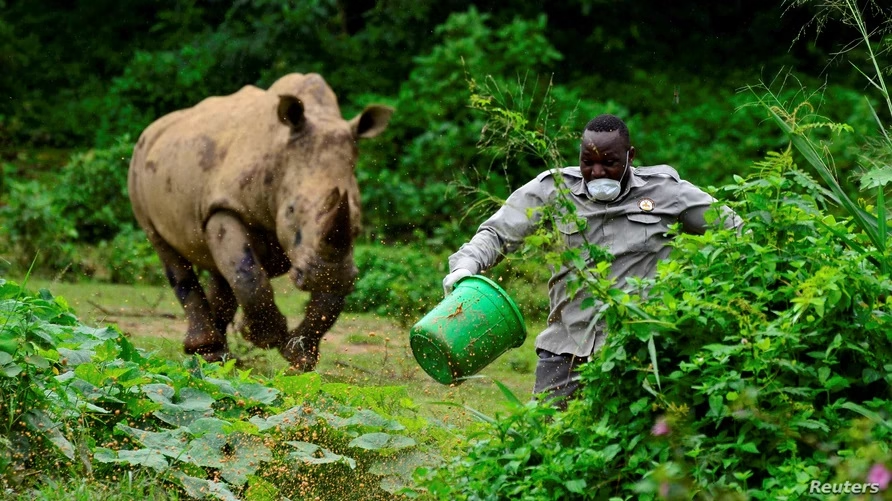
Travel Guide
Explore key wildlife conservation projects in Uganda that protect endangered species, habitats, and promote sustainable tourism across the country.
Wildlife Conservation Projects in Uganda You Should Know About extend far beyond protecting individual animals. Conservation in Uganda involves national parks, forests, wetlands, community initiatives, wildlife monitoring, research, anti-poaching work and tourism programs designed to create economic value around healthy ecosystems.
Uganda’s biodiversity includes mountain gorillas, chimpanzees, elephants, lions, giraffes, rhinoceroses, birds, reptiles and countless smaller species.
Protecting this wildlife requires cooperation between government institutions, conservation organizations, researchers, tourism businesses and communities living around protected areas.
Tourism can support this system when visitors use legitimate services, respect park rules and recognize that conservation must benefit both wildlife and people.
Mountain gorilla conservation is among Uganda’s best-known wildlife success stories.
Bwindi Impenetrable National Park and Mgahinga Gorilla National Park protect critical gorilla habitat.
Conservation involves regular monitoring, ranger patrols, research, veterinary support where appropriate and carefully regulated tourism.
Visitors participate through official gorilla permits and by following strict trekking regulations.
These controls reduce disturbance and help protect gorillas from disease transmission.
Uganda’s standard gorilla trekking permit costs USD 800 per person.
Tourism associated with these permits creates substantial economic value around maintaining gorilla populations and their forest habitat.
The conservation impact extends beyond gorillas.
Protecting Bwindi and Mgahinga also protects birds, plants, smaller mammals and other organisms living within these ecosystems.
Gorillas effectively act as flagship species for much broader habitat conservation.
Conservation cannot succeed through ranger patrols alone.
People live close to protected forests and experience the effects of conservation decisions.
Tourism can create employment through guiding, accommodation, transportation, crafts and porter services.
Community projects can strengthen the relationship between protected areas and neighboring residents.
Long-term wildlife protection becomes more sustainable when local people receive meaningful economic opportunities connected with conservation.
Uganda also protects important chimpanzee populations.
Forests such as Kibale and Budongo provide habitat for these highly intelligent primates.
Conservation includes habitat protection, monitoring and regulated visitor experiences.
Chimpanzee tourism creates another reason to maintain forests that might otherwise face pressure from agricultural expansion or resource extraction.
The forests themselves protect much more biodiversity than chimpanzees alone.
Rhinoceros conservation demonstrates a different approach.
Uganda’s rhino story includes the loss of wild populations and subsequent efforts to restore rhinoceroses through managed conservation initiatives.
Such projects require security, veterinary expertise, habitat management and long-term planning.
For visitors, learning about rhinoceros conservation reveals that restoring a species is much more complicated than simply moving animals into an area.
Uganda’s giraffes have also been the focus of conservation management.
Wildlife managers may use population monitoring and carefully planned interventions where necessary to strengthen conservation outcomes.
Giraffes are visually familiar safari animals, but their protection still depends on habitat security and scientific information.
Tourism provides another economic reason to conserve landscapes where they survive.
Large carnivores create particular conservation challenges.
Lions need substantial habitat and can come into conflict with livestock owners around protected areas.
Conservation therefore requires more than preventing poaching.
Human-wildlife conflict must be addressed.
Community engagement, livestock-management strategies, research and responsible tourism can all contribute to reducing pressure on predators.
Elephants require large landscapes and access to resources.
Their movements can bring them close to farms and communities, creating conflict.
At the same time, elephants are extremely important to Uganda’s safari tourism.
Conservation strategies need to protect elephant populations while recognizing the legitimate concerns of people whose crops or property may be affected.
This balance is one of the central challenges of modern conservation.
Law enforcement remains an important component of wildlife protection.
Rangers patrol protected areas, monitor suspicious activity and respond to threats.
Their work can be physically demanding and sometimes dangerous.
Modern conservation may also involve communication technology, intelligence gathering and improved monitoring.
Visitors usually see rangers during guided activities but may not realize how much work happens away from tourist routes.
Snares can injure wildlife even when the trapped animal was not the intended target.
Conservation teams may locate and remove illegal devices during patrols.
Primates and other species can suffer severe injuries from snares.
This demonstrates how a relatively simple object can create serious conservation consequences.
Preventing snaring requires both enforcement and engagement with underlying economic pressures.
Scientific research helps conservation managers make informed decisions.
Researchers may study animal numbers, movement, health, genetics, habitat use and behavior.
Long-term data is particularly valuable because short observations can give misleading impressions.
Research allows conservation strategies to adapt as populations and environmental conditions change.
Visitors benefit indirectly every time tourism management is informed by better knowledge.
Wildlife veterinary work is another specialized field.
Intervention decisions depend on species, circumstances and conservation objectives.
Wild animals are not treated exactly like domestic pets.
In some cases, human-related injuries or disease concerns may justify intervention.
In other situations, natural processes are allowed to continue.
Professional conservation teams make these decisions according to established principles.
Uganda’s wetlands support birds, fish, reptiles and numerous other organisms.
They also provide ecosystem services important to people.
Conservation therefore extends beyond famous national parks.
Wetland degradation can affect water systems and biodiversity.
Responsible tourism can create interest in protecting these environments through birding, boat experiences and nature tourism.
Restoration projects can help recover degraded habitats.
Tree planting is one component, but successful forest restoration involves more than putting seedlings into the ground.
Native species selection, long-term maintenance and ecological connectivity matter.
Restoration can create habitat while also contributing to watershed and landscape protection.
Among the most important Wildlife Conservation Projects in Uganda You Should Know About are initiatives that involve local residents directly.
Community guides, cultural tourism, crafts and conservation-linked enterprises can diversify income.
These approaches recognize that people living beside wildlife should not carry conservation costs while distant visitors receive all the benefits.
Effective conservation requires social as well as ecological sustainability.
Every legitimate safari generates economic activity.
Park fees, permits, accommodation, guiding and transportation contribute to a tourism economy based partly on wildlife.
This creates financial reasons to protect natural areas.
However, tourism must remain controlled.
Too many visitors, irresponsible driving or poor waste management can create environmental pressure.
Conservation tourism succeeds only when tourism itself is managed responsibly.
Visitors can support conservation through simple decisions.
Purchase official permits.
Use responsible operators.
Follow ranger instructions.
Do not buy products made from protected wildlife.
Avoid feeding animals.
Respect viewing distances.
Hire local porters and guides where appropriate.
Support genuine community enterprises.
These choices may appear small, but collectively they influence the type of tourism the market rewards.
Wildlife populations and habitats cannot be protected through one short project.
Conservation requires years of monitoring, funding and adaptation.
Political, economic and environmental conditions change.
Climate pressures may create new challenges.
Communities’ needs also evolve.
Successful projects must therefore be capable of learning and changing rather than following one fixed strategy forever.
Wildlife Conservation Projects in Uganda You Should Know About demonstrate that protecting biodiversity requires many connected approaches.
Gorilla tourism helps support forest conservation. Chimpanzee protection preserves important ecosystems. Rhino programs demonstrate species restoration efforts. Ranger patrols combat wildlife crime, while community initiatives strengthen local incentives for conservation.
For travelers, understanding these projects changes the meaning of a safari.
Wildlife sightings do not happen in isolation. Behind every gorilla trek, game drive and forest walk is a much larger system working to keep animals and habitats protected for future generations.

Nshongi Gorilla Family in Bwindi: History, Location and Trekking Guide The Nshongi Gorilla Family holds an important place…
Read article →
Mishaya Gorilla Family in Bwindi: History, Trekking and What to Know The Mishaya Gorilla Family is one of…
Read article →
Semuliki Hot Springs Visit Guide: What to Expect Semuliki Hot Springs offers one of the most unusual natural…
Read article →
Kidepo Valley Remote Safari Guide: What to Expect Kidepo Valley National Park offers one of Uganda's most remote…
Read article →