

Nshongi Gorilla Family in Bwindi
Nshongi Gorilla Family in Bwindi: History, Location and Trekking Guide The Nshongi Gorilla Family holds an important place…
Read article →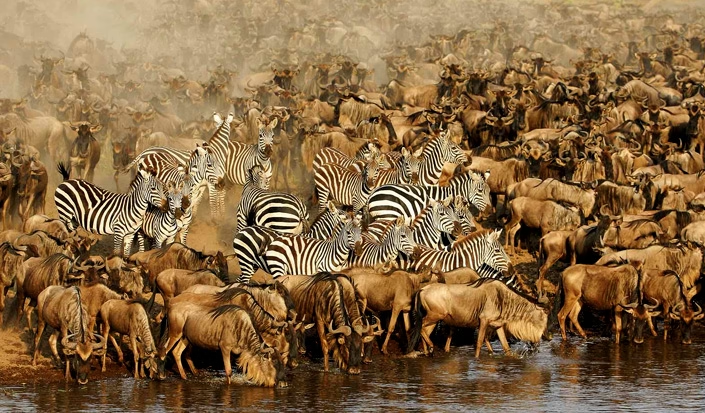
Travel Guide
Discover why Tanzania ranks as Africa’s ultimate safari destination. Explore Serengeti, Ngorongoro Crater, and more in this comprehensive guide.
Travelers wondering why go on safari in Tanzania only need to consider the variety contained within the country. Tanzania combines vast wildlife areas, famous national parks, volcanic landscapes, diverse cultures, primate destinations, mountains, and Indian Ocean beaches. A single journey can therefore move from classic savannah game drives to cultural encounters and eventually to a completely different experience on Zanzibar.
The supplied source places the Serengeti National Park and Ngorongoro Crater at the center of Tanzania’s safari appeal. It also highlights Tarangire, Lake Manyara, Gombe, Mahale Mountains, Mount Kilimanjaro, and Zanzibar.
This variety makes Tanzania particularly suitable for travelers who do not want every safari day to feel the same. Open plains, crater landscapes, baobab country, lakes, mountains, and beaches can all become part of a broader itinerary.
Wildlife remains the central attraction, but Tanzania’s appeal extends well beyond wildlife viewing alone.
The supplied source describes Serengeti National Park as Tanzania’s crown jewel.
The park is particularly associated with the Great Migration, when enormous herds of wildebeest move through the wider Serengeti ecosystem in search of fresh grazing.
Zebras and gazelles also participate in this movement.
For safari travelers, the scale is one of the defining features of the experience. Wildlife may spread across broad plains, creating scenes that communicate the size of the ecosystem rather than focusing on one isolated animal.
The migration also supports extensive predator activity. Where large concentrations of prey move, carnivores can take advantage of the opportunities created by the herds.
The Serengeti is not valuable only when travelers are watching migrating wildebeest.
The source highlights the presence of lion, leopard, elephant, buffalo, and rhino, together with cheetahs and hyenas.
This means a Serengeti safari can remain rewarding even when the main migration herds are concentrated in another part of the wider ecosystem.
Different habitats support different animals.
Some visitors may spend time searching for big cats, while others become interested in elephants, giraffes, antelopes, birds, or smaller predators.
The strongest safari experience often comes from allowing time to observe behavior rather than treating wildlife viewing as a checklist.
The Great Migration is one reason travelers repeatedly ask why go on safari in Tanzania.
The spectacle is not confined to a single event or location.
Herds move according to seasonal conditions and the availability of fresh grazing.
Different stages therefore create different safari experiences.
At one point travelers may see large groups spread across open grasslands. At another, attention may shift to predators or movement toward river systems.
This variability is part of the attraction.
The migration is a natural process responding to environmental conditions rather than a scheduled performance.
Visitors should therefore approach it with realistic expectations and enough flexibility to appreciate whichever stage is occurring during their trip.
The Ngorongoro Crater provides a dramatic contrast to the open Serengeti.
The supplied source describes it as an ancient volcanic caldera containing a rich concentration of wildlife.
Descending into the crater creates a distinctive safari experience because the surrounding walls provide a powerful sense of landscape.
Wildlife viewing takes place against this geological setting.
The source identifies rhinos, elephants, lions, and flamingos among the animals associated with the crater environment.
The soda lake adds another habitat to the landscape and can attract birdlife.
For travelers combining Serengeti and Ngorongoro, the two areas complement each other rather than repeating the same experience.
Tanzania’s safari appeal is not only about how many animals a visitor sees.
Landscape strongly influences the experience.
The Serengeti creates a sense of openness and scale.
Ngorongoro provides the visual drama of a volcanic caldera.
Tarangire is associated with baobabs, while Lake Manyara introduces a lake environment.
Moving between these destinations reveals how varied northern Tanzania can be.
Photography also changes with the landscape.
A lion on an open plain creates a different image from an elephant moving through baobab country or flamingos associated with a lake environment.
The supplied source highlights Tarangire National Park for its towering baobab trees and large elephant herds.
This creates another reason to extend a Tanzania safari beyond the most famous destinations.
Baobabs give the landscape a recognizable character.
Their massive trunks and unusual silhouettes can become as memorable as the wildlife itself.
Elephants add another dimension.
Watching them within a landscape dominated by large trees can produce classic safari scenes and rewarding photography.
Including Tarangire can therefore add ecological and visual variety to an itinerary that also includes Serengeti and Ngorongoro.
The source also identifies Lake Manyara for its flamingos and tree-climbing lions.
Whether visitors are interested primarily in birds, predators, or scenery, a lake environment provides another contrast to open grasslands.
Wetlands and surrounding vegetation can support wildlife that may be less prominent elsewhere on the itinerary.
This variety is one of Tanzania’s strengths.
Rather than spending every day in one type of habitat, travelers can move through different ecosystems and observe how wildlife communities change with the landscape.
Tanzania’s attraction is not limited to national parks.
The supplied source highlights cultural encounters involving Maasai villages, Hadzabe hunter-gatherers, and local markets.
These experiences can help travelers understand the human landscape surrounding wildlife areas.
A safari that focuses exclusively on animals may miss an important part of the destination.
Communities have their own histories, livelihoods, traditions, and relationships with the surrounding environment.
Cultural activities should be approached respectfully and should provide meaningful interaction rather than treating people as part of a staged wildlife itinerary.
The Maasai are among the communities most strongly associated with East Africa in the minds of international travelers.
A thoughtfully organized visit can provide opportunities to learn about aspects of local culture and daily life.
The value of such an experience comes from listening and learning.
Travelers should avoid approaching cultural encounters merely as opportunities for photographs.
Conversation, explanation, and respectful participation can provide a deeper understanding of the region.
This adds a human dimension to a safari that may otherwise focus primarily on landscapes and wildlife.
The source also mentions the Hadzabe hunter-gatherers.
Including a cultural experience of this kind can broaden a Tanzania itinerary considerably.
It introduces visitors to a way of life very different from lodge-based safari travel.
As with any community visit, the experience should be organized responsibly.
The objective should be understanding rather than intrusion.
When approached respectfully, cultural experiences can become some of the most memorable parts of a journey because they provide context for the wider country beyond its national parks.
Another reason travelers choose Tanzania is the range of safari accommodation identified in the source.
Options include luxury lodges, tented camps, and budget-friendly properties.
This allows itineraries to be adjusted according to budget and preferred travel style.
Some visitors want highly comfortable lodges with extensive facilities.
Others prefer tented camps that create a stronger sense of being within the safari environment.
Budget-conscious travelers may prioritize wildlife experiences and choose simpler accommodation.
The important consideration is matching the property to the itinerary rather than assuming the most expensive option is automatically necessary.
The supplied source emphasizes Tanzania’s well-established safari industry.
Experienced operators, guides, lodges, camps, and transportation networks make it possible to connect multiple wildlife areas.
Many parks also have nearby airstrips.
Flights can reduce long road transfers when an itinerary covers large distances or when travelers have limited time.
Road travel still has advantages because it reveals landscapes and communities between destinations.
The appropriate balance between driving and flying depends on budget, available time, and the desired pace.
Tanzania is best known internationally for savannah safaris, but the source also highlights chimpanzee trekking in Gombe and Mahale Mountains National Parks.
These destinations introduce a very different wildlife experience.
Instead of watching animals from a safari vehicle, primate experiences involve entering forest environments and searching for chimpanzees.
This contrast can add significant variety to a longer Tanzania itinerary.
Travelers particularly interested in primates can therefore look beyond the country’s famous plains and explore destinations where forest ecosystems become the central attraction.
The source notes that travelers interested in mountain gorillas can combine Tanzania with Uganda or Rwanda.
This creates an ambitious but rewarding East African journey.
One part of the itinerary can focus on classic savannah wildlife in Tanzania, while another centers on trekking through forest habitat to see mountain gorillas.
The experiences are fundamentally different.
Combining them can therefore provide greater diversity than simply adding another savannah park.
Such itineraries require careful planning because flights, permits, transfers, and accommodation must be coordinated across countries.
Wildlife is not the only reason to visit Tanzania.
The source highlights Mount Kilimanjaro, Africa’s highest peak, as a major attraction for trekking enthusiasts.
A Kilimanjaro climb can become the central focus of a trip or be combined with a safari.
The contrast is substantial.
Climbing emphasizes physical challenge and changing mountain environments, while safari days are largely focused on wildlife observation.
Travelers considering both should allow enough time and energy for each rather than compressing the itinerary unnecessarily.
The supplied source also identifies Zanzibar as a destination for beaches, spice experiences, and historic Stone Town.
This creates one of Tanzania’s most attractive combinations.
After early safari mornings and days spent exploring national parks, travelers can continue to the coast for a slower conclusion.
Zanzibar introduces beaches and Indian Ocean scenery, but the island is more than a place to relax.
Spice farms and Stone Town provide cultural and historical experiences that add depth to the beach extension.
Combining safari with Zanzibar can make a Tanzania holiday feel particularly complete.
The safari portion provides wildlife, landscapes, and active exploration.
The beach portion creates time to rest.
Travelers can therefore finish their journey at a different pace from the way it began.
This is particularly attractive for honeymoons, couples, families, and travelers making a long international journey who want more than one style of holiday.
The key is allocating enough time to both parts rather than rushing through several destinations simply to include them.
The question why go on safari in Tanzania has no single answer because different travelers value different experiences.
Wildlife enthusiasts may focus on the Serengeti and Ngorongoro.
Photographers may appreciate the diversity of landscapes and animals.
Birdwatchers can explore lake and woodland habitats.
Cultural travelers can incorporate community experiences and markets.
Adventure travelers can consider Kilimanjaro, while primate enthusiasts may look toward Gombe or Mahale.
Those wanting relaxation can finish on Zanzibar.
The country therefore supports itineraries with very different priorities.
A strong itinerary should not simply include as many destinations as possible.
Travelers should decide what matters most and allow enough time to experience it properly.
Serengeti, Ngorongoro, Tarangire, Lake Manyara, cultural activities, primate destinations, Kilimanjaro, and Zanzibar all provide compelling experiences, but they do not need to appear in the same trip.
The available number of days should determine the route.
A carefully paced itinerary usually creates better wildlife viewing and more enjoyable travel than a schedule built around constant movement.
Ultimately, the strongest answer to why go on safari in Tanzania is variety.
The supplied source presents a destination containing the wildlife-rich Serengeti, the dramatic Ngorongoro Crater, elephant country in Tarangire, the distinctive environment of Lake Manyara, cultural experiences, chimpanzee destinations, Mount Kilimanjaro, and Zanzibar.
Few journeys need to rely on a single attraction.
A traveler can watch wildlife on open plains, explore a volcanic landscape, learn from local communities, trek in a forest, climb a mountain, or finish beside the Indian Ocean.
That combination of wildlife, scenery, culture, and adventure is what gives a Tanzania safari its enduring appeal.

Nshongi Gorilla Family in Bwindi: History, Location and Trekking Guide The Nshongi Gorilla Family holds an important place…
Read article →
Mishaya Gorilla Family in Bwindi: History, Trekking and What to Know The Mishaya Gorilla Family is one of…
Read article →
Semuliki Hot Springs Visit Guide: What to Expect Semuliki Hot Springs offers one of the most unusual natural…
Read article →
Kidepo Valley Remote Safari Guide: What to Expect Kidepo Valley National Park offers one of Uganda's most remote…
Read article →