

Nshongi Gorilla Family in Bwindi
Nshongi Gorilla Family in Bwindi: History, Location and Trekking Guide The Nshongi Gorilla Family holds an important place…
Read article →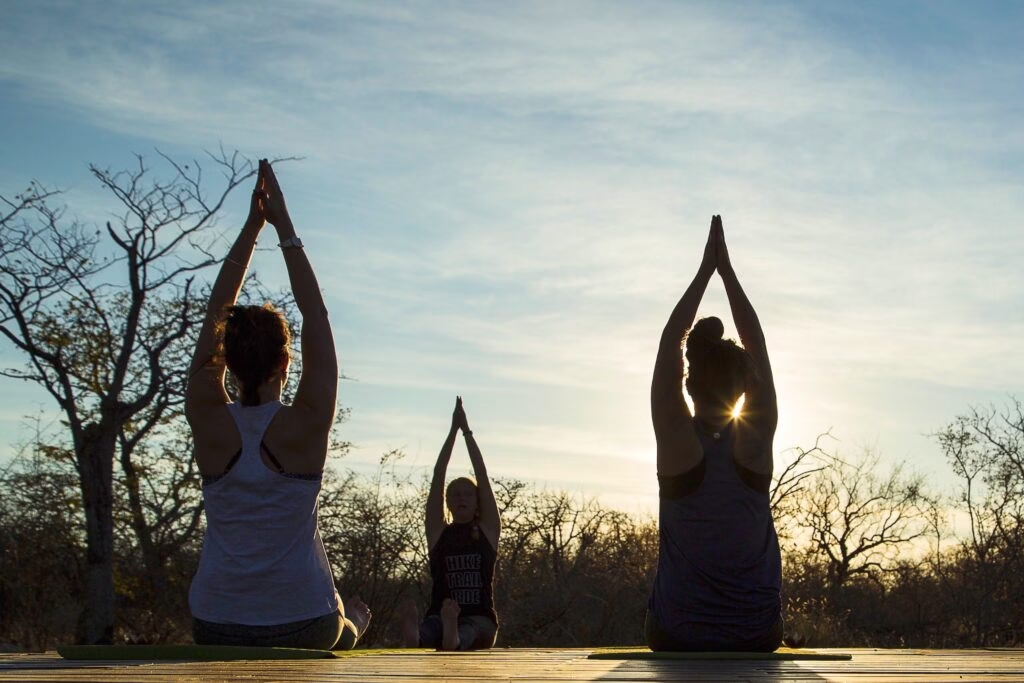
Travel Guide
Discover what a wellness safari is and how it combines African wildlife with yoga, spa treatments, and nature-based healing. Explore the ultimate travel experience for mind, body, and soul.
A Wellness Safari combines the traditional attractions of an African wildlife journey with a slower approach to travel that makes room for rest, physical wellbeing and meaningful time in nature. Instead of filling every day with dawn-to-dusk game drives, travelers deliberately balance wildlife viewing with activities such as yoga, massage, gentle walks, healthy meals, quiet afternoons and unstructured time.
The idea does not require sacrificing the excitement of safari.
Guests can still watch elephants at a waterhole, search for lions on a morning game drive or trek through a rainforest. The difference lies in how the itinerary is paced.
A wellness-oriented safari recognizes that a holiday can be memorable without becoming physically exhausting.
Traditional safari schedules often begin before sunrise.
After several hours on a game drive, guests return for breakfast or lunch before departing again later in the day.
This schedule can be excellent for wildlife viewing, but repeating it continuously for a long itinerary can become tiring.
A Wellness Safari creates breathing room.
One morning might begin with a game drive, while the following morning starts slowly with breakfast overlooking the landscape.
An afternoon may be deliberately left free.
The result is a journey that allows travelers to enjoy wildlife without feeling that every hour must be occupied.
Nature itself is one of the most important elements of a wellness-oriented safari.
Safari lodges are often located far from dense urban environments.
Instead of traffic and crowded streets, guests may hear birds, wind, insects and distant animal calls.
Simply sitting quietly in this environment can become an experience.
Travelers do not always need a formal activity to appreciate wilderness.
Watching changing light across a savannah or forest can provide a powerful sense of distance from everyday routines.
Some lodges incorporate yoga into their wellness offerings.
Sessions may take place on terraces, decks or other quiet spaces.
The experience can be particularly appealing in the morning when temperatures are cooler.
Travelers should choose activities appropriate to their own physical ability.
A safari holiday is not the time to attempt demanding exercise simply because it looks attractive in photographs.
Where instruction is offered, qualified guidance and individual comfort should take priority.
Massage and spa treatments are common wellness additions at higher-end safari properties.
After long flights or several days in safari vehicles, a massage can provide welcome relaxation.
Some lodges design treatment areas around views of natural landscapes.
Travelers should check available treatments when booking because facilities differ substantially between properties.
Anyone with medical conditions, pregnancy or other health considerations should seek appropriate professional advice before participating in treatments that may not be suitable.
Food is another important component of a Wellness Safari.
Wellness-oriented travel does not necessarily mean restrictive eating.
Instead, it can involve fresh ingredients, balanced meals and the flexibility to accommodate dietary requirements.
Safari lodges often need advance notice for specialized diets because they operate far from major towns.
Travelers with allergies or important dietary restrictions should communicate them clearly before arrival.
Hydration is equally important, particularly in warm environments.
Good sleep is fundamental to wellbeing.
Yet safari schedules can sometimes work against it.
Very early departures followed by late dinners can become tiring after several consecutive days.
A wellness-focused itinerary recognizes that travelers may occasionally benefit from sleeping later.
Comfortable accommodation, quiet surroundings and fewer hotel changes can also improve rest.
Spending three nights at one lodge may feel substantially more restorative than changing accommodation every day.
Slow travel and wellness naturally complement each other.
Instead of attempting to visit six parks in a week, travelers might select two or three destinations and explore them properly.
This reduces packing, road transfers and check-in procedures.
It also allows guests to develop a stronger connection with each landscape.
Guides become familiar faces, lodge staff learn preferences and wildlife experiences feel less rushed.
The safari becomes a journey rather than a race between attractions.
Where permitted and appropriately guided, walking can add a valuable wellness dimension.
A walk encourages visitors to pay attention to details overlooked from vehicles.
Tracks, plants, insects and bird calls become important.
Walking also provides gentle physical activity after hours spent sitting during flights and transfers.
Activities must always be conducted according to park rules and safety requirements.
Travelers should never walk independently in wildlife areas where guides are required.
Rainforest destinations can work particularly well within a wellness itinerary.
The sounds and visual complexity of a forest provide a very different atmosphere from open savannah.
Uganda and Rwanda can combine forest experiences with primate trekking.
However, gorilla and chimpanzee trekking can be physically demanding.
A wellness-oriented itinerary should allow recovery time afterward rather than immediately scheduling another long transfer.
The balance between activity and rest is what makes the journey wellness-focused.
Lakes and rivers can create natural breaks in a safari.
Boat excursions offer wildlife viewing without the constant movement of a game-drive vehicle.
Lakeside accommodation can provide opportunities for quiet afternoons.
Destinations such as Lake Kivu can be incorporated into Rwanda itineraries to add relaxation after gorilla trekking.
In Uganda, water-based safari experiences can complement road-based wildlife viewing.
The objective is variety.
Changing the pace prevents safari fatigue.
Remote safari environments can encourage travelers to spend less time looking at phones and laptops.
Some guests deliberately limit work email and social media.
A digital detox does not have to mean completely disconnecting.
Travelers can simply designate certain periods as screen-free.
Watching a sunset without immediately posting it online can change the way the experience feels.
For people arriving from demanding professional environments, this mental separation may become one of the most valuable parts of the trip.
Private guiding can support wellness because it provides greater flexibility.
Guests may be able to shorten a game drive when tired or extend a peaceful sighting when there is no reason to rush.
Private arrangements are particularly valuable for couples, families and travelers with specific mobility considerations.
They can also reduce the pressure to follow the preferences of a larger group.
Flexibility is a core part of wellness travel.
A wellness-oriented safari does not need to chase every reported sighting.
Driving rapidly across a park because another vehicle has found a lion can sometimes create unnecessary stress.
Instead, travelers can spend longer observing whatever wildlife is already nearby.
Watching elephants feed for thirty minutes may ultimately be more rewarding than seeing five species for two minutes each.
This approach also encourages more thoughtful wildlife observation.
Photography is an important part of safari travel for many guests.
However, constantly viewing wildlife through a camera can reduce direct engagement with the experience.
A Wellness Safari can encourage a balance.
Take photographs, then lower the camera.
Listen to the environment.
Watch how animals interact.
Notice the light and landscape.
Some of the most memorable moments may never become photographs.
Accommodation strongly influences a wellness safari.
Look beyond room size and interior design.
Consider the property’s setting, privacy, views and available spaces for relaxation.
Ask whether there is a spa, swimming pool, yoga area or nature-focused activity program if those features matter.
Also consider the number of nights.
Even an excellent wellness lodge cannot feel relaxing if the itinerary requires arriving late and departing immediately after breakfast.
Wellness travel does not need to eliminate adventure.
A traveler can trek mountain gorillas one morning and spend the afternoon relaxing.
Another day might involve a hike followed by a massage.
A savannah game drive can be followed by a quiet dinner under the stars where appropriately arranged.
The contrast can make both sides of the experience more enjoyable.
Active experiences feel more exciting when the body has time to recover.
Rest feels more rewarding after meaningful exploration.
A Wellness Safari can appeal to couples, honeymooners, busy professionals, solo travelers and anyone wanting a less rushed holiday.
It may also suit returning safari visitors who no longer feel pressure to see every major species.
Travelers with particular medical or mobility needs should discuss requirements with professionals and safari operators before travel.
Wellness should never be confused with medical treatment.
Safari lodges may provide relaxation and fitness activities, but they are not substitutes for professional healthcare.
Begin with fewer destinations.
Stay several nights at each property.
Alternate early wildlife activities with slower mornings.
Include activities that genuinely interest you rather than adding them because they are fashionable.
Leave some afternoons completely unscheduled.
Choose accommodation where the setting itself is enjoyable enough that staying at the lodge does not feel like missing out.
This structure creates a safari with room to breathe.
What ultimately makes a safari wellness-oriented is not the number of spa treatments or yoga sessions.
It is the overall philosophy of the journey.
A Wellness Safari balances discovery with recovery, wildlife with stillness and adventure with comfort.
Africa’s wild spaces provide an extraordinary setting for this kind of travel.
The call of birds at sunrise, distant wildlife across a plain, the sound of rain in a forest and a quiet evening beneath an open sky can all become part of the wellness experience.
Instead of returning home exhausted from trying to see everything, travelers can return with memories of wildlife and a genuine sense that they had time to experience where they were.

Nshongi Gorilla Family in Bwindi: History, Location and Trekking Guide The Nshongi Gorilla Family holds an important place…
Read article →
Mishaya Gorilla Family in Bwindi: History, Trekking and What to Know The Mishaya Gorilla Family is one of…
Read article →
Semuliki Hot Springs Visit Guide: What to Expect Semuliki Hot Springs offers one of the most unusual natural…
Read article →
Kidepo Valley Remote Safari Guide: What to Expect Kidepo Valley National Park offers one of Uganda's most remote…
Read article →