

Nshongi Gorilla Family in Bwindi
Nshongi Gorilla Family in Bwindi: History, Location and Trekking Guide The Nshongi Gorilla Family holds an important place…
Read article →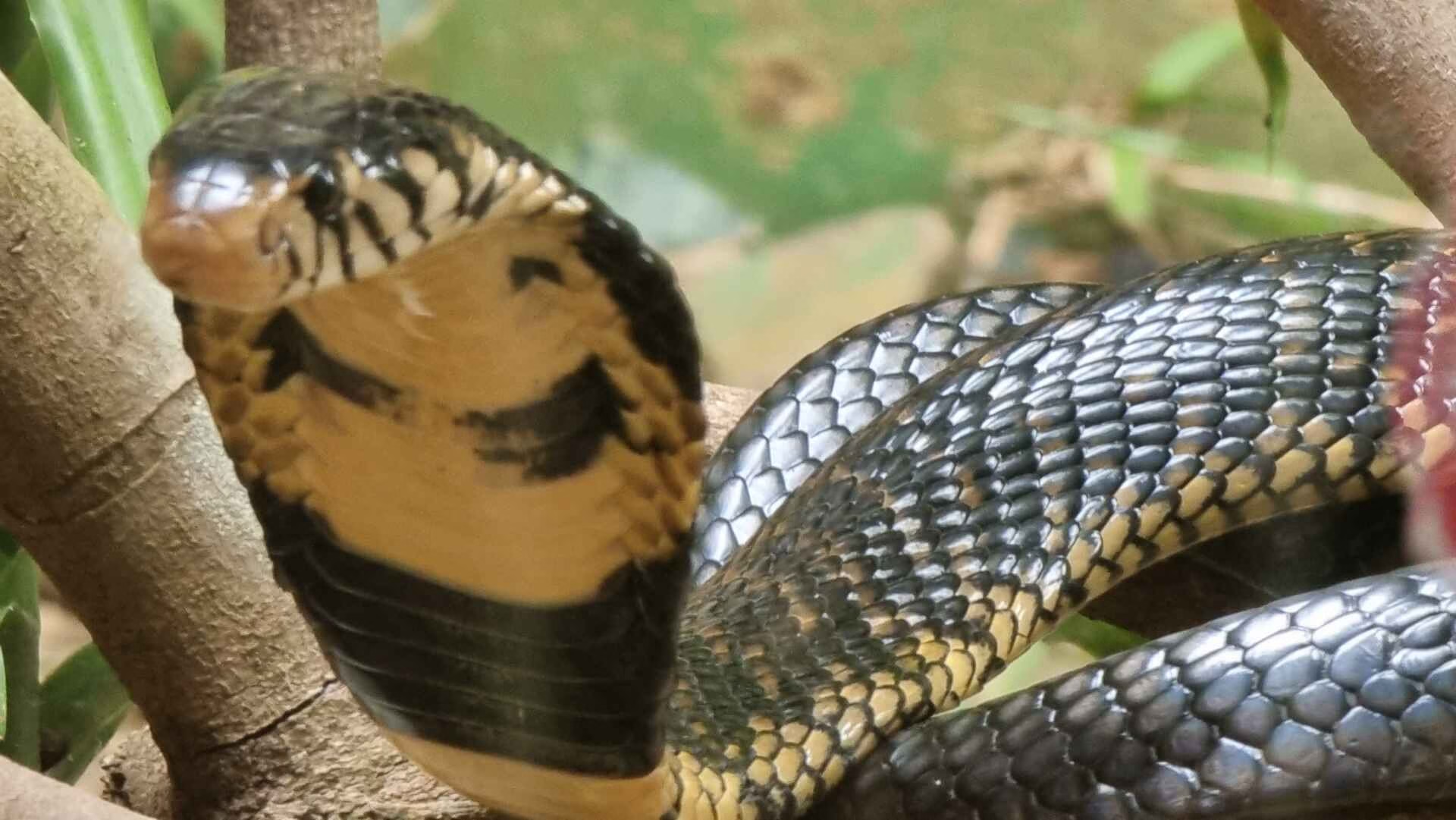
Travel Guide
Discover Uganda Reptile Village near Entebbe, its snakes, crocodiles, tortoises and conservation education for travelers visiting Uganda.
Uganda Reptile Village offers travelers an opportunity to learn about snakes, crocodiles, tortoises and other reptiles while staying within convenient reach of Entebbe. For visitors who normally associate Uganda with mountain gorillas, chimpanzees, lions and elephants, the center provides a different perspective on the country’s wildlife.
Reptiles are important components of natural ecosystems, yet they are frequently misunderstood or feared. Educational facilities can help visitors distinguish between species, understand their ecological roles and learn how human behavior affects reptile conservation.
Uganda Reptile Village is located in the Entebbe area, making it relatively accessible to travelers beginning or ending a Uganda safari.
Entebbe is home to Uganda’s main international airport and is therefore the first destination encountered by many international visitors.
Travelers frequently spend a night in Entebbe after a late arrival or before an early departure.
A reptile-focused excursion can be incorporated into this spare time, especially when visitors have several hours available but not enough time for a distant day trip.
Uganda’s varied habitats support numerous reptile species.
Wetlands, forests, savannahs, rivers and lakes provide ecological niches for snakes, crocodiles, lizards, tortoises and other reptiles.
Some species are widely distributed, while others depend on more specialized habitats.
Despite their ecological importance, reptiles often receive less tourism attention than mammals and birds.
Visiting an educational center can therefore broaden a traveler’s understanding of Uganda’s biodiversity.
Snakes are among the principal animals that attract visitors to reptile centers.
Uganda supports both venomous and non-venomous snake species.
Visitors may learn about the physical characteristics used to distinguish different snakes, although people without specialist training should never attempt to identify or handle wild snakes themselves.
The safest approach when encountering a snake is generally to maintain distance and allow the animal an escape route.
Attempting to kill or capture snakes can increase the risk of bites.
Uganda is home to medically significant venomous snakes.
Educational presentations can help visitors understand that venom is primarily an adaptation used for capturing prey and defense rather than evidence that snakes actively seek humans.
Snakebite remains a serious medical issue, especially in rural communities where access to treatment can be limited.
Responsible education should therefore combine conservation messages with practical safety information.
Travelers bitten by a snake should seek professional medical treatment urgently rather than relying on traditional cutting, sucking or other unproven interventions.
The Nile crocodile is one of Africa’s largest reptiles and occurs in aquatic environments across parts of Uganda.
Wild crocodiles can be observed in destinations such as Murchison Falls National Park and Queen Elizabeth National Park, where they inhabit major rivers and channels.
A reptile center allows visitors to examine these animals from controlled viewing areas.
Seeing crocodiles at closer range can help travelers appreciate their powerful anatomy.
However, captive viewing should never encourage people to underestimate wild crocodiles.
They are formidable predators and should always be treated with considerable caution around natural waterways.
Tortoises provide a gentler contrast to snakes and crocodiles.
Their protective shells, slow movement and long lifespans make them particularly interesting to younger visitors.
Lizards and other reptiles may also form part of the educational experience depending on the animals currently being cared for.
Each group illustrates a different evolutionary adaptation.
Understanding this diversity helps visitors move beyond the tendency to treat all reptiles as one category.
Wildlife centers can play important roles when animals are rescued from inappropriate captivity, conflict situations or other circumstances requiring intervention.
Where possible and appropriate, rehabilitation and release may be considered according to professional assessment.
Not every animal can automatically be returned to the wild.
Injury, habituation, origin and health can all influence the decision.
Visitors should therefore understand that wildlife rescue is more complex than simply opening a cage and releasing an animal.
Human-reptile conflict occurs when people and wildlife occupy the same landscapes.
Snakes may enter houses or farms while searching for shelter or prey.
Crocodiles can create risks around water sources used by people and livestock.
Fear can lead to animals being killed even when they have not attacked anyone.
Education can reduce unnecessary conflict by teaching communities and visitors how to respond more safely.
Uganda Reptile Village can be particularly interesting for families.
Children often respond strongly to seeing animals they have previously encountered only in books or documentaries.
A guided explanation can turn curiosity into meaningful learning.
Parents should ensure children follow all safety instructions and do not attempt to touch animals unless explicitly permitted and professionally supervised.
The purpose should be education rather than creating risky wildlife interactions.
Entebbe contains several attractions that can be combined within a relaxed day.
Travelers interested in nature may visit the botanical gardens or explore Lake Victoria’s shoreline.
Other wildlife and conservation facilities may also be incorporated depending on current opening arrangements.
Restaurants and lakeside hotels provide opportunities for a relaxed meal between activities.
This makes Entebbe more than simply an airport transit point.
A reptile visit can work particularly well before or after a longer Uganda safari.
Travelers arriving from Europe, North America or Asia may prefer a gentle first day rather than immediately undertaking a long road journey.
After a safari, Entebbe can provide a relaxed final night before departure.
The reptile experience requires considerably less physical effort than gorilla trekking or long game drives.
It can therefore fill an otherwise unused portion of the itinerary.
Photography can help visitors document species and remember information learned during the visit.
However, flash or close physical positioning may be restricted around certain animals.
Visitors should follow instructions from staff.
Photographers should also avoid tapping enclosures or provoking animals simply to obtain movement or a particular image.
Responsible wildlife photography requires respecting the subject regardless of whether it is wild or under managed care.
Travelers should approach Uganda Reptile Village as an educational wildlife facility rather than a conventional safari park.
The experience focuses on reptiles and conservation awareness rather than large-scale wilderness.
A visit can often be completed within part of a day, making it suitable for flexible Entebbe itineraries.
Current opening hours, entry arrangements and available activities should be confirmed before traveling.
Visitors occasionally encounter reptiles elsewhere during their journeys.
Most sightings are brief and harmless when appropriate distance is maintained.
Travelers should avoid placing hands into holes, thick vegetation or beneath rocks where visibility is poor.
Closed shoes can provide additional protection when walking outdoors.
At lodges, staff should be informed if a snake is found near accommodation.
Guests should not attempt to capture it themselves.
Safari tourism naturally concentrates on charismatic mammals.
Yet ecosystems depend on animals of every size and category.
Snakes help control prey populations. Crocodiles occupy important roles in aquatic food webs. Tortoises and lizards contribute in their own ecological ways.
Learning about these animals creates a more complete understanding of African wildlife.
A lion may be easier to celebrate, but reptiles are equally authentic components of Uganda’s natural heritage.
Uganda Reptile Village provides an accessible introduction to a category of wildlife that many travelers know relatively little about.
Its location near Entebbe makes it particularly convenient at the beginning or end of a Uganda safari.
Through observation and education, visitors can gain a better understanding of snakes, crocodiles, tortoises and the conservation issues affecting reptiles.
For travelers with spare time around Entebbe, the experience can complement Uganda’s better-known gorilla, chimpanzee and savannah safaris while encouraging greater respect for animals that are often misunderstood.

Nshongi Gorilla Family in Bwindi: History, Location and Trekking Guide The Nshongi Gorilla Family holds an important place…
Read article →
Mishaya Gorilla Family in Bwindi: History, Trekking and What to Know The Mishaya Gorilla Family is one of…
Read article →
Semuliki Hot Springs Visit Guide: What to Expect Semuliki Hot Springs offers one of the most unusual natural…
Read article →
Kidepo Valley Remote Safari Guide: What to Expect Kidepo Valley National Park offers one of Uganda's most remote…
Read article →