

Nshongi Gorilla Family in Bwindi
Nshongi Gorilla Family in Bwindi: History, Location and Trekking Guide The Nshongi Gorilla Family holds an important place…
Read article →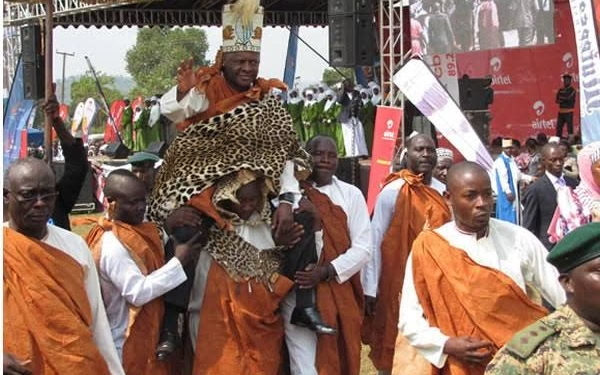
Travel Guide
Explore the rich cultural heritage of Uganda’s tribes, from the Baganda to the Karamojong. Learn about their traditions, languages, and customs.
The Tribes of Uganda reflect the country’s extensive cultural and linguistic diversity. Uganda contains many ethnic communities whose histories, languages, political traditions, livelihoods and cultural practices have developed through different regional experiences.
For travelers, learning about this diversity provides essential context.
Uganda should not be imagined as having one uniform culture. Life in Buganda around central Uganda differs from traditions associated with pastoral and agro-pastoral communities in the northeast, while western and northern regions have their own histories and cultural institutions.
At the same time, modern Ugandans participate in a shared national society. People move between regions, live in cities, intermarry and adapt traditions to contemporary circumstances.
Cultural tourism should therefore avoid presenting communities as if they exist unchanged from the past.
The term “tribe” is widely used in tourism and everyday conversation, but it can simplify complex identities.
Communities may identify through language, kingdom traditions, clan relationships, regional history and other social connections.
Travelers should use the names people use for themselves and listen to local explanations.
The goal is understanding rather than forcing every community into a rigid category.
The Baganda are closely associated with central Uganda and the Buganda Kingdom.
Kampala lies within the historical Buganda region, meaning many visitors encounter aspects of Buganda culture soon after arriving in the country.
The kingdom has a long political and cultural history.
Royal institutions, clan structures, language and heritage sites contribute to Buganda identity.
Luganda is widely spoken in central Uganda and is also heard extensively beyond the region.
International visitors may encounter it in Kampala alongside English and other Ugandan languages.
Learning a few appropriate greetings can create friendly interactions, although travelers should avoid assuming that every Ugandan they meet speaks Luganda as a first language.
The country’s linguistic diversity is much broader.
Travelers interested in Buganda history can visit appropriate cultural and historical sites around Kampala and surrounding areas.
A knowledgeable guide can explain the role of the kingdom and the importance of individual locations.
Visitors should behave respectfully because some sites remain culturally or spiritually significant.
Heritage places are not simply backgrounds for photographs.
The Banyankole are associated particularly with southwestern Uganda.
Cattle have played an important role in aspects of Ankole culture and economy.
The region is also strongly agricultural.
Travelers passing through southwestern Uganda toward Lake Mburo, Queen Elizabeth National Park or gorilla destinations may encounter cultural experiences connected with local farming and cattle traditions.
Long-horned Ankole cattle are visually distinctive and frequently associated with southwestern Uganda.
Their cultural importance extends beyond their appearance.
Livestock can represent livelihood, heritage and social value.
Visitors should learn about the relationship between people and cattle rather than treating the animals only as unusual photographic subjects.
The Bakiga are strongly associated with the highland areas of southwestern Uganda, including regions around Kabale and the broader Kigezi landscape.
Agriculture has historically been important in these densely cultivated highlands.
Travelers heading toward Bwindi or Mgahinga may pass through landscapes shaped by generations of farming.
Terraced and hillside cultivation demonstrates how communities have adapted to mountainous terrain.
Southwestern Uganda’s gorilla tourism takes place within landscapes where communities live close to protected forests.
Tourism therefore intersects with local livelihoods.
Guides, porters, accommodation staff and community enterprises can benefit economically from visitors.
Responsible travelers should understand that conservation occurs within a human landscape rather than an empty wilderness.
The Batooro are associated with the Tooro region of western Uganda.
Fort Portal is an important urban center within this cultural landscape.
The Tooro Kingdom forms part of the region’s historical identity.
Travelers using Fort Portal as a base for Kibale and surrounding attractions can add cultural context to their primate-focused itinerary.
Western Uganda contains crater landscapes, tea-growing areas, forests and wildlife destinations.
Understanding Tooro culture helps visitors see the region as more than a collection of natural attractions.
Cultural and ecological experiences can complement one another when tourism is designed respectfully.
The strongest itineraries explain both the landscape and the communities living within it.
The Banyoro are associated with the historical Bunyoro-Kitara region of western Uganda.
Bunyoro has an important history connected with political organization and regional power.
Travelers visiting Murchison Falls and areas around western Uganda may benefit from learning how the region’s human history relates to the landscapes through which they travel.
A safari does not need to focus exclusively on wildlife.
The Basoga are associated with eastern Uganda and the Busoga region.
Jinja lies within this broader cultural area.
Visitors traveling to Jinja for Nile adventures can therefore combine rafting or river activities with cultural learning.
This creates a more complete experience than treating the region solely as an adventure-sports destination.
The Karamojong are strongly associated with northeastern Uganda and the Karamoja region.
Pastoralism and livestock have historically played important roles within many communities.
Karamoja’s cultural identity is distinct from central and southwestern Uganda.
Travelers increasingly visit the region as part of journeys involving Kidepo Valley and Mount Moroto.
Cultural tourism in Karamoja should be organized with community participation.
Visitors should avoid photographing people without permission or treating traditional clothing and settlements as staged curiosities.
A good local guide can explain changing livelihoods, traditions and contemporary challenges.
Karamoja is a living region, not a museum representing an unchanging past.
The Acholi are associated particularly with northern Uganda.
Language, clan relationships, music, dance and historical experiences contribute to Acholi identity.
Gulu is one of the major urban centers in northern Uganda.
Travelers passing through the region can gain a deeper understanding by learning about both historical traditions and contemporary life.
The Langi are another important community in northern Uganda, particularly associated with the Lango sub-region.
Their history and language distinguish them from neighboring groups even though communities have interacted over long periods.
This illustrates why Uganda’s cultural geography cannot be reduced to broad labels such as north, west or east.
Each region contains internal diversity.
The Iteso are associated with parts of eastern Uganda and neighboring areas of Kenya.
Agriculture and cattle have played important roles in community life.
Their presence across a modern international boundary demonstrates how ethnic and linguistic communities can predate today’s national borders.
This pattern occurs in several parts of East Africa.
The Bagisu are strongly associated with the Mount Elgon region of eastern Uganda.
Agriculture, including coffee cultivation, is important in the region.
Travelers visiting Mount Elgon or Sipi Falls can learn about local communities alongside hiking and landscape experiences.
Cultural traditions should be discussed respectfully and within their contemporary context.
The Tribes of Uganda speak languages belonging to different linguistic groupings.
English serves important national and official functions, while numerous Ugandan languages remain central to family and community life.
Visitors should not assume that one local language represents the whole country.
Language is one of the clearest expressions of Uganda’s diversity.
Music and dance feature in cultural traditions across Uganda, but styles vary significantly.
Instruments, rhythms, performance contexts and meanings differ between communities.
Tourism performances can provide an introduction, but visitors should understand who is performing and what the presentation represents.
Not every dance should be described generically as “traditional African dance.”
Uganda’s food also reflects regional variation.
Staples and preparation methods differ according to agriculture and cultural tradition.
Travelers moving between regions may notice changes in dishes and ingredients.
Food experiences become more meaningful when guides explain how crops, livestock and environment influence local cuisine.
Photography requires consent.
A colorful outfit, homestead or ceremony does not automatically become public property because a visitor has a camera.
Travelers should ask before taking close portraits and respect refusals.
Where cultural tourism programs organize photography, visitors should still treat participants as people rather than props.
One of the most important things to understand about the Tribes of Uganda is that culture continues to evolve.
Ugandans work in technology, tourism, agriculture, education, finance, arts and numerous other sectors while maintaining different relationships with language and heritage.
Urban residents may identify strongly with ancestral communities while living far from their historical regions.
Tradition and modernity are not opposites.
Learning about Uganda’s cultural diversity transforms the way travelers understand the country.
The Baganda, Banyankole, Bakiga, Batooro, Banyoro, Basoga, Karamojong, Acholi, Langi, Iteso, Bagisu and many other communities contribute to Uganda’s social landscape.
No short article can represent every community fully.
The most respectful approach is therefore to use cultural knowledge as a starting point for listening.
Travelers who combine wildlife and landscapes with meaningful encounters, local guides and historical interpretation leave with a far more complete understanding of Uganda than those who experience the country only through national parks.

Nshongi Gorilla Family in Bwindi: History, Location and Trekking Guide The Nshongi Gorilla Family holds an important place…
Read article →
Mishaya Gorilla Family in Bwindi: History, Trekking and What to Know The Mishaya Gorilla Family is one of…
Read article →
Semuliki Hot Springs Visit Guide: What to Expect Semuliki Hot Springs offers one of the most unusual natural…
Read article →
Kidepo Valley Remote Safari Guide: What to Expect Kidepo Valley National Park offers one of Uganda's most remote…
Read article →