

Nshongi Gorilla Family in Bwindi
Nshongi Gorilla Family in Bwindi: History, Location and Trekking Guide The Nshongi Gorilla Family holds an important place…
Read article →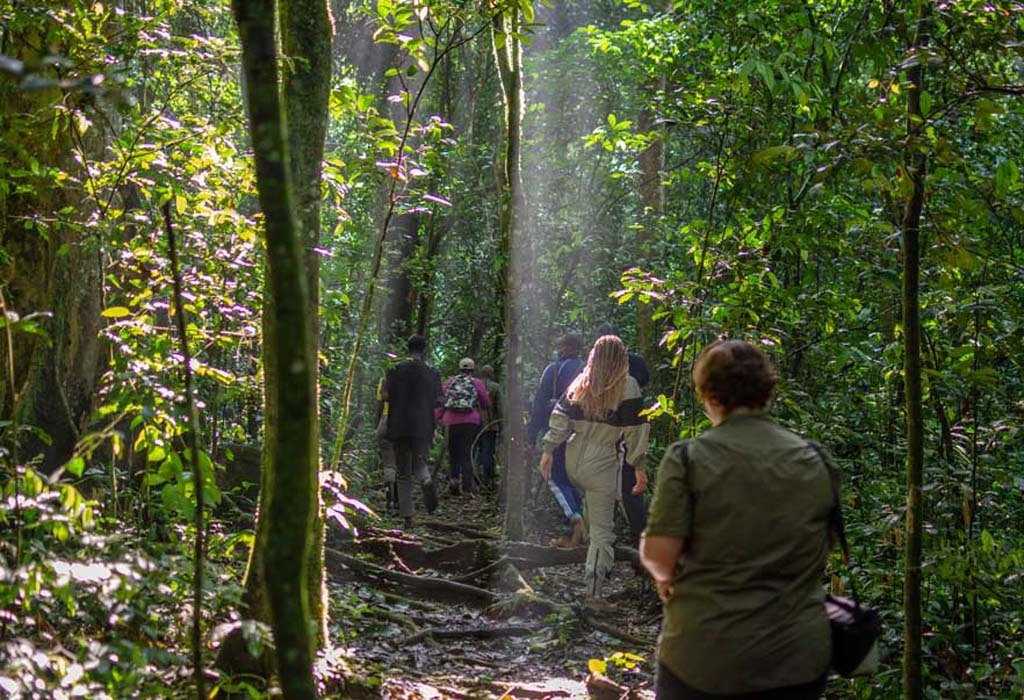
Travel Guide
Discover the top five family-friendly activities in Rwanda, including safaris, forest walks, museums, lakeside fun, and cultural tours for all ages.
Choosing the right Family Activities in Rwanda allows parents and children to experience the country’s wildlife, landscapes and culture without designing every day around demanding adult activities. Rwanda’s compact geography makes it possible to combine Kigali, national parks, lakes and cultural experiences within one journey, although driving times and children’s energy levels still need careful consideration.
Families should select activities according to the ages and interests of their children.
Gorilla trekking, for example, has a minimum age of 15, so families with younger children need alternatives. Fortunately, Rwanda provides many experiences that do not depend on participating in a mountain gorilla trek.
A balanced family itinerary combines wildlife with education, outdoor activity and enough free time for everyone to rest.
A wildlife safari is one of the most accessible Family Activities in Rwanda because animals can generally be viewed from a vehicle.
Akagera National Park protects a landscape of savannah, woodland and wetlands in eastern Rwanda.
Game drives allow families to search for wildlife without requiring children to complete long hikes.
The experience can also become educational when guides explain animal behavior, habitats and conservation.
Children may become restless during very long drives.
Families should discuss game-drive duration with their guide.
Short breaks and realistic schedules can improve the experience.
Carry water and appropriate snacks where permitted.
Binoculars can be particularly useful because children enjoy searching for animals themselves instead of waiting for adults to point everything out.
A safari can become a natural classroom.
Children can learn how different herbivores feed, why birds occupy particular habitats and how predators fit into ecosystems.
Instead of focusing exclusively on famous animals, encourage younger travelers to notice tracks, insects and birds.
This makes quiet periods between major sightings much more interesting.
Where a suitable boat safari forms part of the Akagera itinerary, families can experience the park from another perspective.
Water-associated wildlife and birds become the focus.
Children must follow safety instructions carefully.
Life jackets and responsible boat operation are essential.
Parents should choose activities appropriate to the age and behavior of their children.
Kigali provides families with opportunities to learn about Rwanda before or after visiting national parks.
Museums and cultural institutions can introduce children to history, art and society.
Parents should choose sites according to age.
Some historical subjects, particularly those relating to the 1994 Genocide against the Tutsi, involve extremely difficult material.
Adults should decide how to introduce this history appropriately.
Children often understand a destination better when they know something about the people who live there.
Museums can provide context for traditions, political history, art and everyday life.
A guided visit can make exhibits more accessible.
Rather than attempting several institutions in one day, families may find that one carefully selected visit produces a stronger educational experience.
A family-friendly city tour can also include suitable markets, craft centers and viewpoints.
Busy urban environments require normal supervision.
Children should remain close to adults, particularly around traffic and crowded markets.
A private vehicle can provide flexibility for families who need breaks during the day.
Lake Kivu provides an excellent change of pace after safari or city activities.
Destinations such as Gisenyi offer lakeside scenery and opportunities for relaxation.
Families can spend time enjoying their accommodation, walking in appropriate waterfront areas or participating in suitable water activities.
The slower environment is especially useful in itineraries that otherwise involve several early mornings.
Kayaking or boat trips may be available through appropriate operators.
Parents should confirm age restrictions and safety standards before booking.
Children need suitable flotation equipment and close supervision.
Swimming should only take place where current local advice confirms it is appropriate.
Never assume that every attractive section of shoreline is suitable for recreational swimming.
Not every day needs a formal excursion.
A relaxed afternoon beside the lake can become one of the most enjoyable parts of a family holiday.
Children have time to rest, while parents can enjoy the scenery.
Building this unstructured time into the itinerary helps prevent travel fatigue.
Cultural visits can introduce families to music, dance, crafts, food and community traditions.
These experiences are most valuable when local participants explain their own culture.
Children often respond well to interactive activities because they can learn through participation rather than listening to long explanations.
Parents should choose genuine community-based programs where residents play an active role.
Craft demonstrations can help children understand the time and skill involved in making baskets or other handmade products.
Where participation is offered, children may be able to try simple techniques under guidance.
Buying directly from artisans can also support local enterprises.
Families should avoid turning workshops into photo sessions without engaging with the people involved.
Music and dance can create memorable cultural encounters.
Children may be invited to participate where appropriate.
Parents should follow the hosts’ lead rather than assuming participation is always expected.
The goal is cultural exchange, not treating performers as entertainment detached from their community.
Trying Rwandan food can be another family activity.
Children may enjoy learning about ingredients or participating in an organized cooking experience.
Families with allergies should communicate them clearly beforehand.
Food can provide an accessible introduction to culture because it connects agriculture, family life and hospitality.
Rwanda’s hills and forests provide numerous opportunities for walking.
Families with younger children should select routes according to fitness and age.
A short guided nature walk can be more enjoyable than an ambitious hike that leaves everyone exhausted.
Guides can point out birds, plants, insects and landscape features.
Some forest activities have age or access restrictions, so parents need to confirm the requirements for the exact activity.
Even when children are too young for specialized primate trekking, other nature experiences may be available.
A family itinerary should be designed around activities everyone can genuinely enjoy rather than forcing younger travelers to wait repeatedly while adults trek.
Mountain gorilla trekking is one of Rwanda’s signature activities, but the minimum age is 15.
Standard international gorilla permits in Rwanda cost USD 1,500 per person.
Families with teenagers aged 15 or older can consider trekking together if everyone is physically prepared.
Those with younger children should arrange suitable alternatives and supervision.
Eligible teenagers should understand that trekking can be physically demanding.
Trails may be muddy or steep.
Strong hiking footwear, long trousers, rain protection and water are important.
The trek is not a zoo visit.
Gorillas move naturally, so the time required to locate them varies.
One of the biggest challenges in family travel is trying to cover too much.
Rwanda may be relatively compact, but children can still become tired after repeated transfers.
Avoid changing accommodation every night.
Two-night stays provide families with more stability and reduce constant packing.
A slower itinerary often produces a happier trip.
Ask about room configuration before booking.
Some lodges may have separate units unsuitable for very young children unless parents split between rooms.
Families should also ask about meal flexibility and swimming-pool supervision where relevant.
The most luxurious lodge is not automatically the most practical property for a family.
The best Family Activities in Rwanda are more enjoyable when children are rested.
A morning game drive followed by a free afternoon may work better than two demanding activities every day.
Allow time for meals and sleep.
Parents often underestimate how tiring travel itself can be for younger family members.
Rwanda offers far more for families than one famous gorilla experience.
Akagera provides wildlife viewing from a vehicle. Kigali adds educational and cultural activities. Lake Kivu creates space for relaxation, while community experiences and nature walks introduce children to landscapes and local traditions.
The key is matching activities to age.
When parents respect minimum-age rules, limit exhausting transfers and allow free time, Family Activities in Rwanda can create a journey that is enjoyable for both adults and children.
A successful family safari is not measured by how many attractions are completed. It is measured by whether everyone returns home with meaningful experiences and a greater understanding of the country they visited.

Nshongi Gorilla Family in Bwindi: History, Location and Trekking Guide The Nshongi Gorilla Family holds an important place…
Read article →
Mishaya Gorilla Family in Bwindi: History, Trekking and What to Know The Mishaya Gorilla Family is one of…
Read article →
Semuliki Hot Springs Visit Guide: What to Expect Semuliki Hot Springs offers one of the most unusual natural…
Read article →
Kidepo Valley Remote Safari Guide: What to Expect Kidepo Valley National Park offers one of Uganda's most remote…
Read article →