

Nshongi Gorilla Family in Bwindi
Nshongi Gorilla Family in Bwindi: History, Location and Trekking Guide The Nshongi Gorilla Family holds an important place…
Read article →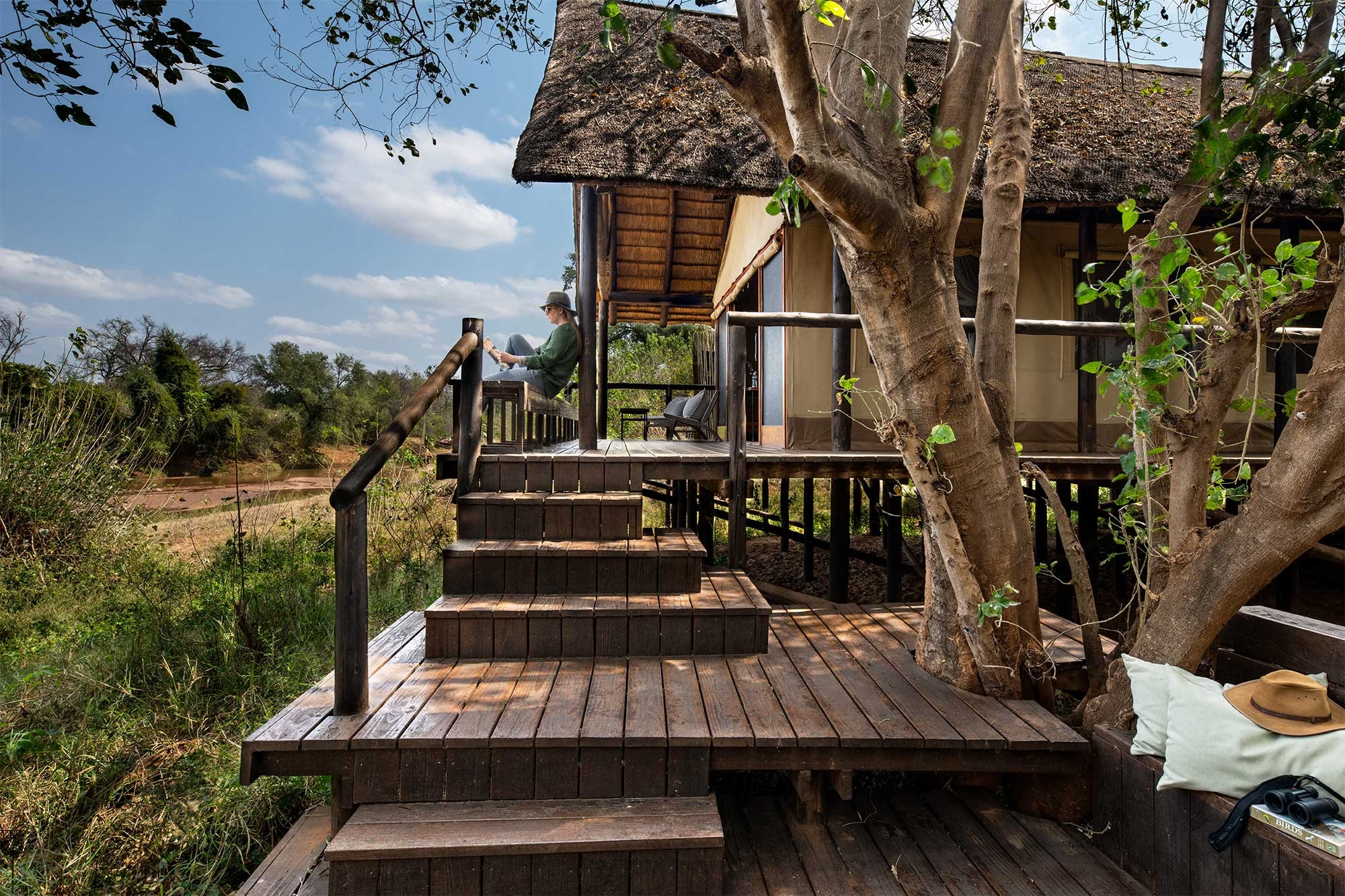
Travel Guide
Discover the top 5 eco-friendly lodges in Kruger National Park. Experience luxury while supporting conservation and sustainability.
Eco-friendly lodges Kruger National Park can appeal to travelers who want to combine a comfortable safari with greater attention to conservation and sustainability. The source frames the topic around five eco-friendly lodge choices and the possibility of experiencing luxury while supporting conservation.
The supplied source does not name the five individual lodges or provide property-specific sustainability details. For that reason, individual lodge names should not be invented. Instead, travelers can use five practical categories to evaluate the properties they are considering and identify which lodges genuinely match their expectations for responsible safari accommodation.
Sustainability claims should be checked carefully. The strongest choice is not simply the property using the word “eco” most prominently in its marketing.
The first category to consider is accommodation with clearly explained conservation initiatives.
A safari lodge depends on the surrounding natural environment.
Responsible properties should therefore demonstrate how they contribute to protecting that environment.
Travelers can ask what conservation programs the lodge supports and how those programs operate.
Specific information is more useful than vague statements about loving nature.
Visitors should look for evidence that conservation is integrated into the property’s operations rather than added only as a marketing message.
Conservation support can take different forms.
A lodge may participate in habitat-related initiatives, wildlife programs or partnerships relevant to its operating area.
Travelers should ask how guest stays connect with these efforts.
If a conservation contribution is included in the rate, the property should ideally explain it clearly.
Guests do not need to become conservation experts, but asking a few informed questions can help distinguish meaningful programs from broad promotional claims.
A second category includes properties actively working to reduce unnecessary resource consumption.
Safari accommodation operates in environments where water, energy and waste management matter.
Travelers can ask how the lodge approaches these issues.
Simple operational choices can be significant when repeated across many rooms and guests.
Visitors should also participate responsibly.
Leaving lights, cooling systems or water running unnecessarily undermines sustainability even at a property with strong environmental policies.
Water management is particularly important in many safari environments.
Guests can support lodge efforts by using water thoughtfully.
Towels and linens do not necessarily need to be replaced every day unless required.
Showers can be comfortable without being excessively long.
Travelers should follow any property guidance regarding water use.
An eco-conscious stay involves cooperation between the accommodation provider and the guest.
Travelers interested in Eco-friendly lodges Kruger National Park can ask how a property manages energy.
Some accommodations may use renewable systems or other measures to reduce dependence on conventional energy sources.
The specific technology varies.
Visitors should avoid assuming that one visible feature automatically makes the entire lodge sustainable.
Environmental performance should be considered across the full operation, including guest rooms, kitchens, transport and other facilities.
Waste is another important category.
Remote safari properties must consider what happens to packaging, food waste, plastics and other materials.
Travelers can ask whether a lodge has systems for reducing, separating or responsibly handling waste.
Guests can also reduce what they bring.
Single-use plastics and excessive packaging create unnecessary pressure.
Reusable water solutions, where safely provided, can help reduce disposable bottles.
Guests should never discard waste during game drives or nature activities.
Even small items can affect wildlife and landscapes.
Everything carried into a natural area should be managed appropriately.
Travelers should follow guide instructions about waste.
A lodge’s sustainability program is weakened if guests behave carelessly outside their rooms.
Responsible safari travel extends across the entire experience.
A fourth category involves accommodation that demonstrates meaningful connections with nearby communities.
Tourism can create employment and support local businesses when managed fairly.
Travelers can ask how the lodge recruits staff, sources suitable products or works with community initiatives.
Community involvement should not be reduced to staged performances for visitors.
The strongest relationships are built around dignity, participation and long-term benefit.
If a lodge offers community visits, travelers should approach them respectfully.
Permission should be requested before photographing individuals.
Guests should listen to local guidance and avoid treating homes or community spaces as open tourist attractions.
Purchasing legitimate locally produced items can support livelihoods.
However, visitors should not assume that every community encounter needs to involve buying something.
Respectful engagement is the priority.
The fifth category is accommodation that takes wildlife viewing ethics seriously.
A luxury safari should not depend on disturbing animals.
Guides should respect appropriate viewing distances and avoid chasing wildlife for photographs.
Travelers should be cautious if a property appears to promise unrealistically close encounters.
Wildlife is unpredictable.
Responsible lodges should value animal welfare and habitat protection above guest pressure for dramatic sightings.
Guests also influence safari behavior.
A traveler should not pressure a guide to move closer simply because another vehicle has a better angle.
Noise should remain controlled.
Wildlife should never be fed.
Visitors should follow instructions when animals change position.
A memorable sighting does not require interfering with natural behavior.
Responsible game viewing is one of the clearest ways guests can support the conservation values they claim to prioritize.
Luxury and sustainability do not have to be opposites.
Comfort can coexist with thoughtful resource management.
The important question is how the property defines luxury.
A lodge may focus on privacy, high-quality guiding, comfortable rooms and strong service without relying on unnecessary waste.
Travelers should examine the complete experience rather than assuming that environmental responsibility requires sacrificing comfort.
Because the supplied source does not identify individual properties, travelers should verify sustainability claims directly.
Ask how the lodge supports conservation.
Ask about energy, water and waste management.
Ask how local communities participate in tourism.
Ask about wildlife viewing policies.
Clear answers can help travelers understand whether environmental claims are specific and measurable or mainly promotional.
Terms such as eco-friendly and sustainable are widely used.
They can mean different things.
Travelers should look beyond labels.
A property should be able to explain what it actually does.
Specific practices are more useful than broad slogans.
Independent certification or transparent reporting can provide additional context where available, but visitors should still consider the complete operation.
No single feature proves that a lodge is environmentally responsible in every area.
Guests can reduce their own impact by packing thoughtfully.
Reusable items can help reduce waste.
Travelers should avoid bringing excessive disposable packaging.
Wildlife-safe behavior is equally important.
Nothing should be left in the bush.
Visitors should use water and energy responsibly at the lodge.
Responsible travel begins before arrival and continues throughout the safari.
Photographers should choose responsible behavior even when it limits a potential image.
Animals should not be pressured into changing position.
Visitors should remain in permitted areas.
A longer lens can help create photographs without demanding unnecessary proximity.
Wide images showing wildlife within the landscape can also be powerful.
Ethical photography supports the same conservation principles travelers expect from an eco-friendly lodge.
Another way to think about sustainability is itinerary design.
Moving between many properties can create additional transport and reduce the depth of the experience.
Travelers may prefer spending several nights at a carefully selected lodge.
This creates more time for wildlife observation and reduces constant packing.
A slower safari can also feel more luxurious because guests have time to enjoy the property rather than treating it as a place to sleep between transfers.
The source promises a discussion of the top five eco-friendly lodges, but it does not provide the names or property-level evidence needed to produce a factual five-lodge list.
Travelers can nevertheless evaluate Eco-friendly lodges Kruger National Park through five meaningful categories: conservation involvement, resource management, responsible waste practices, community connections and ethical wildlife experiences.
These criteria help visitors look beyond marketing language.
A genuinely responsible safari property should be able to explain how sustainability influences everyday operations.
By asking specific questions and behaving responsibly during the stay, travelers can combine comfort with greater awareness of the landscapes, wildlife and communities that make a Kruger safari possible.

Nshongi Gorilla Family in Bwindi: History, Location and Trekking Guide The Nshongi Gorilla Family holds an important place…
Read article →
Mishaya Gorilla Family in Bwindi: History, Trekking and What to Know The Mishaya Gorilla Family is one of…
Read article →
Semuliki Hot Springs Visit Guide: What to Expect Semuliki Hot Springs offers one of the most unusual natural…
Read article →
Kidepo Valley Remote Safari Guide: What to Expect Kidepo Valley National Park offers one of Uganda's most remote…
Read article →