

Nshongi Gorilla Family in Bwindi
Nshongi Gorilla Family in Bwindi: History, Location and Trekking Guide The Nshongi Gorilla Family holds an important place…
Read article →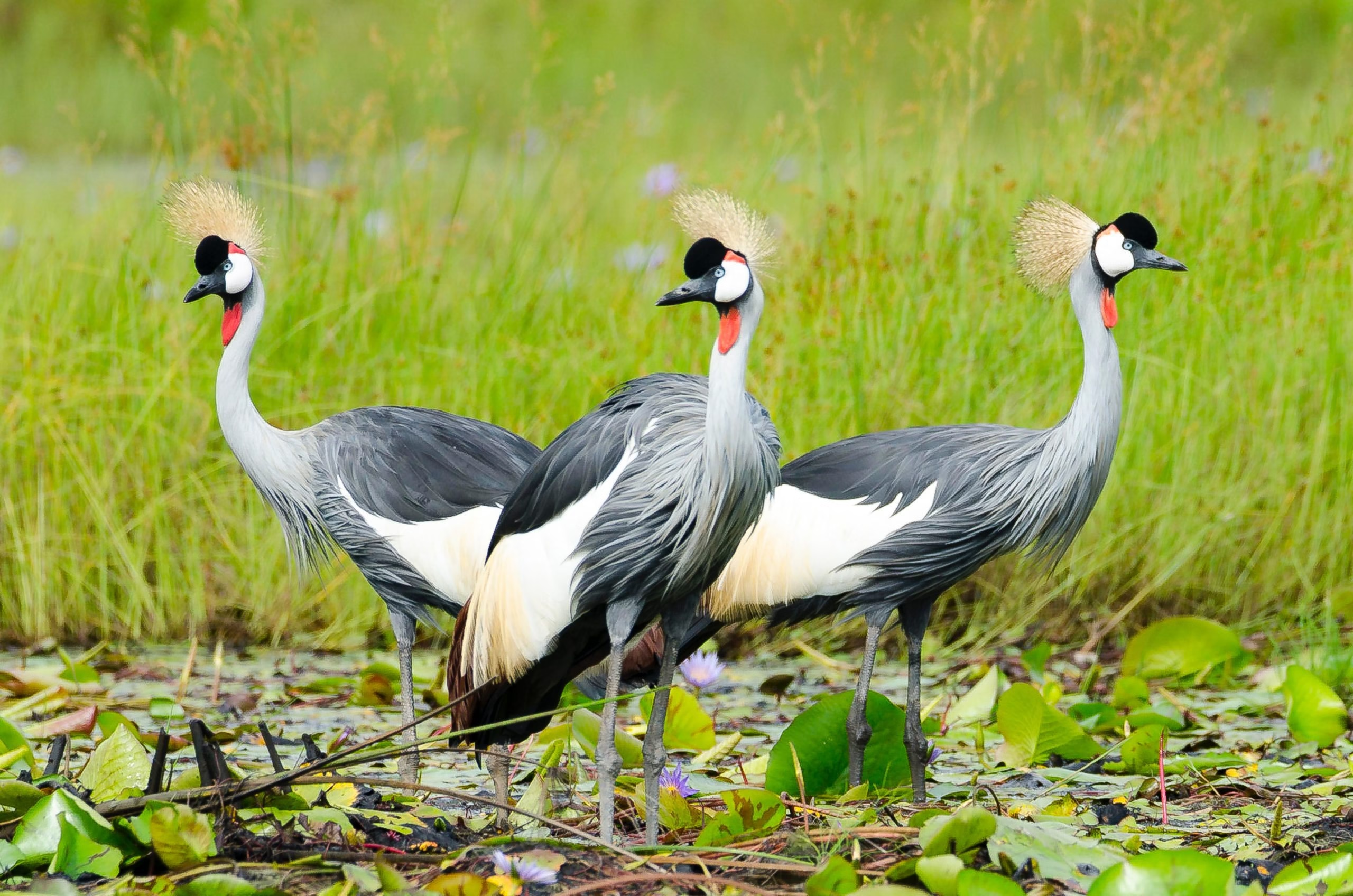
Travel Guide
Learn about the Crested Crane, Uganda’s national bird, its symbolism, and significance in the country’s culture and heritage.
The Crested Crane Uganda’s National Emblem Bird is presented in the supplied source as one of the country’s most recognizable symbols. Scientifically identified in the material as Balearica regulorum, the bird is associated with Uganda’s heritage, national identity, beauty, unity, peace, and freedom.
Its distinctive appearance helps explain why it is immediately memorable. A golden crown of stiff feathers rises from the head, while its long legs, slender neck, contrasting plumage, and deep red facial patch create an elegant profile.
The crane is also known for elaborate dancing and a distinctive trumpet-like call.
For travelers, seeing a crested crane in the wild offers more than another bird species to add to a checklist. It provides an opportunity to encounter an animal closely associated with Uganda’s national symbolism while observing the wetlands and grasslands on which the species depends.
The supplied source emphasizes the crane’s golden crest as its most recognizable characteristic.
Stiff golden feathers form a crown around the top of the head.
This feature gives the bird the regal appearance commonly associated with cranes.
Even from a distance, the crest can help distinguish it from many other large birds.
The crane’s long legs suit the open and wet environments described in the source.
They allow the bird to move through grasslands and shallow wetland areas.
Its tall posture also contributes to its graceful appearance.
Watching a crane walk slowly through vegetation can be as visually impressive as seeing it fly.
The long, slender neck reinforces the bird’s elegant profile.
It allows the crane to search for food while remaining upright and alert.
The combination of long legs and neck gives the species its characteristic crane shape.
The supplied source describes contrasting white plumage, black wings, and a deep red face patch.
Together with the golden crown, these colors make the bird highly distinctive.
The pattern also explains why the crane works effectively as a national visual symbol.
Its appearance can be recognized in both wildlife settings and stylized national imagery.
The source repeatedly emphasizes the crane’s dignified appearance.
The bird often stands upright with a calm and deliberate posture.
This physical character contributes to the symbolism associated with peace, strength, and national pride.
Crested cranes are associated with wetlands, grasslands, and savannahs across East Africa according to the supplied material.
Uganda, Kenya, and Tanzania are specifically mentioned within their range.
These habitats provide feeding and breeding opportunities.
Protecting the bird therefore depends heavily on protecting the landscapes it uses.
The source gives particular attention to Uganda’s wetlands, including those around Lake Victoria.
Wetlands provide food, water, and habitat for cranes as well as many other species.
Their conservation therefore has benefits extending far beyond a single bird.
Grasslands provide additional feeding areas.
The crane’s diet allows it to use environments where insects, seeds, roots, and small animals are available.
A mosaic of wetlands and grassland can therefore be particularly valuable.
The source also associates cranes with savannah environments.
Safari travelers should therefore remain observant even when they are not visiting a destination specifically for birdwatching.
A crested crane can appear in landscapes shared with Uganda’s larger mammals.
The Crested Crane Uganda’s National Emblem Bird holds significance extending well beyond ornithology.
The supplied source connects the crane with peace, hope, freedom, unity, and national pride.
These associations have helped establish the bird as a recognizable representation of Uganda.
The source describes the Crested Crane as Uganda’s national bird.
Its image is closely associated with national identity.
For international visitors, understanding this symbolism can make a wild sighting more meaningful.
The bird represents more than biodiversity; it also appears within the country’s national visual language.
The supplied material states that the crane appears on Uganda’s coat of arms.
This gives it an official national role.
The use of an indigenous bird within national symbolism creates a direct connection between wildlife and identity.
It also means conservation of the species carries cultural significance alongside ecological importance.
Peace is one of the strongest symbolic themes identified in the source.
The crane’s elegant posture and behavior have contributed to this association.
National symbols often rely on qualities people interpret in animals, and the crane’s calm appearance makes it a fitting representation within the source’s framing.
The supplied source also connects the bird with unity.
Wildlife symbolism can provide a shared image recognizable across communities.
The crane’s national role therefore goes beyond the regions where the bird is most frequently seen.
Strength is another quality associated with the crane.
The source contrasts its graceful appearance with an idea of resilience and strength.
This combination contributes to the bird’s symbolic importance.
According to the supplied material, Ugandan folklore also connects the crane with unity and cultural richness.
Its movements and territorial calls are interpreted within the source as representing qualities valued in the country.
Travelers interested in culture can therefore appreciate the crane through both ecological and symbolic perspectives.
One of the most fascinating behaviors described in the source is the mating dance.
Cranes may jump and bow during courtship displays.
These energetic movements contrast with the calm posture of a standing bird.
Watching such behavior in the wild can be a highlight for birdwatchers.
The supplied source specifically describes jumping and bowing.
These movements form part of an elaborate display associated with attraction and bonding.
Photographers may find dancing cranes particularly rewarding, but wildlife should always be observed without approaching too closely.
The source describes a trumpet-like call capable of carrying over long distances.
Sound can therefore be one of the first indications that cranes are nearby.
Birdwatchers often benefit from learning calls as well as visual identification.
This is particularly useful in tall vegetation.
Crested cranes have a varied diet according to the supplied material.
They eat insects, small vertebrates, seeds, and roots found in wetlands and grassy environments.
This dietary variety allows them to use several habitat types.
It also illustrates why healthy wetlands and grasslands need diverse plant and animal communities.
Insects provide an important food resource.
Cranes can search through grass and shallow wetland areas for suitable prey.
Their feeding behavior can be interesting to observe because it reveals how the bird interacts with its habitat.
Seeds and roots add plant material to the diet.
The combination of animal and plant foods demonstrates dietary flexibility.
However, flexibility does not remove the need for suitable habitat.
A heavily degraded wetland or grassland may still provide insufficient resources.
The supplied source also includes small vertebrates.
This reinforces the fact that the crane is not simply a seed-eating bird.
Its diet connects it with several levels of the wetland and grassland food web.
The source states that the Crested Crane can live for up to 22 years in the wild under optimal conditions.
This figure is reproduced directly from the supplied material.
A potentially long lifespan increases the importance of protecting suitable habitat over extended periods rather than relying on short-term conservation measures.
The supplied source describes the Crested Crane as endangered.
Habitat loss from agriculture, development, and pollution is identified as a major concern.
These pressures are closely connected with wetlands.
Protecting cranes therefore requires maintaining the quality and extent of wetland and grassland environments.
Wetland conversion and agricultural expansion can reduce suitable crane habitat.
This creates a difficult conservation challenge because agriculture is also essential to human livelihoods.
Sustainable solutions need to consider both ecological and community needs.
Development can change drainage, vegetation, and land use.
The source identifies it as another pressure on crane habitat.
Careful planning can help prevent the loss of ecologically important areas.
Pollution can affect wetland quality.
Contaminated water or degraded habitat can influence the plants and animals forming part of the crane’s food system.
Wetland conservation therefore includes maintaining environmental quality, not simply leaving an area undeveloped.
The supplied material states that Uganda is taking steps to protect the crane through protected wetland areas.
Habitat protection benefits numerous species.
A wetland conserved for cranes may also support fish, amphibians, insects, plants, and other birds.
The source also mentions laws intended to reduce habitat destruction.
Legal protection can provide an important framework, although successful conservation also requires implementation and community support.
Wildlife organizations and local communities are described as working together to protect crane habitat.
This cooperation is essential because wetlands often occur within landscapes used by people.
Conservation measures need local participation to remain effective over time.
Travelers visiting Uganda can watch for cranes around suitable wetlands, grasslands, and national-park landscapes.
The source specifically highlights areas around Lake Victoria while also referring more broadly to national parks.
Sightings are natural and cannot be guaranteed.
Patience and careful observation improve the experience.
Visitors should observe cranes without disturbing them.
This is especially important around nesting or courtship activity.
Binoculars and telephoto lenses allow close views without physically approaching.
The objective should be to watch natural behavior.
The crane’s golden crest and contrasting plumage make it an attractive photographic subject.
Morning and evening light can help reveal feather detail.
Photographers should avoid chasing birds or forcing them to move for a cleaner background.
A responsible image records natural behavior rather than creating it.
The bird connects several aspects of Uganda.
It is wildlife, a wetland species, a cultural symbol, and part of the country’s national identity.
Its conservation therefore protects both biodiversity and an animal deeply embedded in the national image.
This combination makes it particularly significant.
The Crested Crane Uganda’s National Emblem Bird is recognized by its golden crown, long legs, slender neck, contrasting plumage, and red facial patch.
The supplied source places it in wetlands, grasslands, and savannahs across parts of East Africa, with Uganda’s wetlands around Lake Victoria highlighted as important habitat.
Its national significance extends beyond appearance. The crane is associated in the source with peace, unity, hope, freedom, strength, and national pride, and it appears on Uganda’s coat of arms.
Its elaborate dances, trumpet-like calls, and varied diet add to its ecological interest.
At the same time, habitat loss, development, agriculture, and pollution create conservation concerns.
For travelers, encountering a Crested Crane in Uganda is therefore both a wildlife sighting and an opportunity to see one of the country’s most recognizable national symbols living within the landscapes that continue to sustain it.

Nshongi Gorilla Family in Bwindi: History, Location and Trekking Guide The Nshongi Gorilla Family holds an important place…
Read article →
Mishaya Gorilla Family in Bwindi: History, Trekking and What to Know The Mishaya Gorilla Family is one of…
Read article →
Semuliki Hot Springs Visit Guide: What to Expect Semuliki Hot Springs offers one of the most unusual natural…
Read article →
Kidepo Valley Remote Safari Guide: What to Expect Kidepo Valley National Park offers one of Uganda's most remote…
Read article →