

Nshongi Gorilla Family in Bwindi
Nshongi Gorilla Family in Bwindi: History, Location and Trekking Guide The Nshongi Gorilla Family holds an important place…
Read article →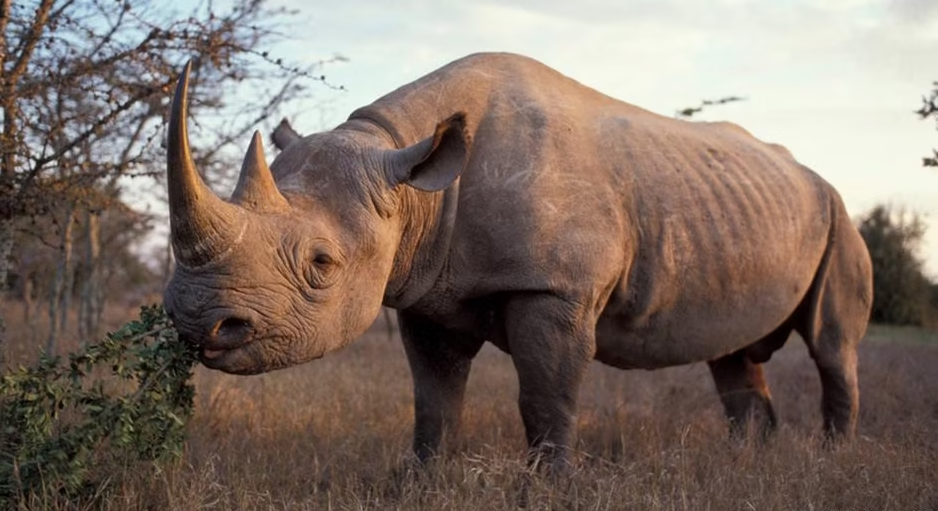
Travel Guide
Explore how Rwanda reintroduced five critically endangered eastern black rhinos from Europe to Akagera National Park and reignited wildlife tourism.
The black rhino translocation Akagera conservation project represents one of the most significant wildlife restoration efforts associated with Rwanda’s modern tourism story. In 2019, five eastern black rhinos were transported from European zoos to Akagera National Park, strengthening a population that Rwanda had already begun rebuilding through an earlier reintroduction.
The importance of the operation extended beyond moving five animals from one continent to another. It was part of a longer effort to restore a species that had disappeared from Rwanda and to rebuild Akagera as a protected ecosystem capable of supporting some of Africa’s most iconic wildlife.
For travelers, the return of black rhinos also changed the character of an Akagera safari. Visitors could once again search for rhinos while exploring the park’s savannah, woodland, wetland, and lake environments. Combined with other large mammals, the rhino restoration strengthened Akagera’s position as an important wildlife destination within Rwanda.
Black rhinos were historically part of Rwanda’s wildlife heritage, but their numbers declined under intense pressure. The source explains that Akagera’s rhino population had disappeared by 2007, following years of poaching and instability.
The loss affected more than the presence of one famous animal. When a native large herbivore disappears, an ecosystem loses part of the ecological relationships that developed around that species.
Restoring rhinos therefore became both a conservation objective and a symbol of the broader recovery of Akagera National Park.
Rwanda first reintroduced 18 rhinos from South Africa in 2017. That project established a foundation from which the population could grow.
The arrival of five additional eastern black rhinos from Europe in 2019 strengthened this recovery.
The five rhinos involved in the black rhino translocation Akagera project came from European zoological institutions. The source identifies Safari Park Dvůr Králové in Czechia, Flamingo Land in the United Kingdom, and Ree Park Safari in Denmark among the institutions involved.
These were not simply five animals selected because they were available.
Conservation planning considered their genetic value and their potential contribution to the developing population in Rwanda.
Genetic diversity matters when conservationists are trying to establish a viable population. A small population made up of closely related animals can face long-term reproductive challenges.
Adding carefully selected individuals can broaden the genetic base and support future breeding.
This made the European rhinos valuable not only as individual animals but also as contributors to the future development of Akagera’s rhino population.
Moving a rhino internationally is considerably more complicated than ordinary wildlife transport.
The animals needed preparation before departure.
According to the source, transport teams conditioned the rhinos for the journey and monitored them carefully. They spent time in holding facilities where they could become accustomed to the environments and procedures associated with transportation.
The objective was to reduce unnecessary stress.
A rhino is a powerful animal, but that does not mean it can simply be placed into a transport crate without preparation. The process requires veterinary supervision, specialist handling, careful logistics, and coordination between numerous organizations.
Every stage needs to be planned around animal welfare.
The source describes a journey of more than 3,700 miles from Europe to Rwanda.
After arriving in Kigali, the rhinos still had another stage before reaching their final destination. They were transported by road to Akagera National Park and moved into secure temporary enclosures.
This transition period was important.
The rhinos were entering an entirely different environment from the European facilities where they had previously lived.
Rather than releasing them immediately into a large protected landscape, conservation teams allowed them time to adjust while monitoring their condition.
The temporary enclosures provided a controlled setting for this acclimatization.
Once in Akagera, the rhinos remained in secure bomas before being released.
This stage allowed park teams to observe the animals and ensure they were adapting successfully.
The move from managed European environments to an African national park represented a major change.
New vegetation, smells, temperatures, sounds, and wildlife surrounded them.
A gradual transition reduced the risks associated with immediate release.
When conservation teams were satisfied with their adjustment, the rhinos could move into the wider park and join the developing population.
The return of black rhinos demonstrates how wildlife restoration can sometimes reverse local extinction.
When Akagera lost its rhinos, simply protecting an empty habitat would not automatically bring them back.
Animals had to be physically reintroduced.
The earlier 2017 translocation and the five-rhino transfer in 2019 therefore formed important stages in rebuilding a population.
Reintroduction, however, is only the beginning.
Rhinos require continued protection, monitoring, habitat management, and breeding opportunities if the restored population is to persist.
The success of a translocation cannot be measured solely by whether animals survive the journey. Its real significance becomes clearer over years as animals adapt and reproduce.
One of the strongest conservation arguments for the 2019 transfer was genetic diversity.
The source notes that experts considered the genetic backgrounds of the animals when planning the operation.
A healthy wildlife population needs enough genetic variation to remain resilient over generations.
Introducing animals from different backgrounds can reduce the risks associated with a very small founding population.
This is particularly important for species such as eastern black rhinos, where conservationists are working with limited populations.
The five animals therefore represented valuable genetic additions to Akagera’s restoration effort.
Black rhinos are not simply attractions for safari vehicles.
They are part of the ecosystems they inhabit.
The source highlights their influence on vegetation and habitat structure.
As browsers, black rhinos feed on shrubs, leaves, and woody plants. Their movements and feeding patterns influence vegetation.
Over time, these interactions contribute to the changing structure of savannah and woodland habitats.
Restoring a species can therefore help restore ecological processes as well as wildlife diversity.
This is one reason conservation programs often seek to rebuild complete ecosystems rather than protecting only the species that remain.
Reintroducing valuable wildlife would achieve little without effective security.
The source emphasizes that rhino poaching remains a serious threat in Africa.
Akagera therefore strengthened protection through anti-poaching teams and other security measures.
Fencing forms part of the park’s management system.
The source also mentions technology and specialized resources such as drones and canine units.
These tools support ranger teams rather than replacing them.
Rangers remain essential because they understand the landscape, monitor animals, investigate signs of illegal activity, and respond to threats on the ground.
Rhinos introduced into a protected area require close monitoring.
Conservation teams need to know where animals are moving, whether they are feeding normally, and how they interact with the existing population.
Monitoring can also reveal health concerns quickly.
This information is particularly important after translocation because animals are adapting to unfamiliar surroundings.
Over time, monitoring contributes to a detailed understanding of the population.
Births become especially important indicators because successful reproduction suggests that animals are adapting to their environment and contributing to future generations.
The source highlights the birth of a wild calf as an encouraging sign following reintroduction efforts.
For conservationists, a calf represents far more than an appealing wildlife sighting.
Reproduction is fundamental to the long-term purpose of translocation.
An introduced population that never breeds cannot become self-sustaining.
Every successful birth adds to the population and provides information about how well the animals are adapting.
Calves also become powerful symbols for visitors because they show that restoration is an ongoing biological process rather than a one-time wildlife transfer.
The restoration of rhinos strengthened Akagera’s wildlife tourism appeal.
The park already offered landscapes and wildlife experiences, but the return of rhinos expanded what visitors could hope to encounter.
For travelers interested in classic African safari wildlife, this was significant.
Akagera could offer encounters with rhinos alongside elephants, buffaloes, lions, leopards, hippos, antelopes, and numerous other species.
This broader wildlife diversity strengthened the park’s place within Rwanda’s tourism circuit.
Rwanda is internationally associated with mountain gorilla trekking.
Volcanoes National Park remains central to that reputation.
Akagera adds a completely different environment.
Instead of misty mountain forests and primate trekking, travelers can experience open savannah, wetlands, lakes, and vehicle-based wildlife viewing.
The black rhino translocation Akagera project helped reinforce this contrast.
A visitor can therefore experience multiple sides of Rwanda’s natural heritage rather than viewing the country solely as a gorilla trekking destination.
Wildlife tourism can create financial support for protected areas.
Visitors pay park fees, use accommodation, hire guides, and purchase other tourism services.
When properly managed, this spending helps give wildlife economic value without requiring animals to be removed from their habitat.
The return of rare rhinos increased the appeal of visiting Akagera.
That increased interest can contribute to conservation financing.
Tourism alone does not solve every conservation problem, but it can become part of a system in which protecting wildlife generates benefits that support continued protection.
The 2019 transfer also demonstrated the international nature of modern wildlife conservation.
European institutions, Rwandan conservation authorities, veterinary specialists, transport teams, park managers, and other partners had to work together.
No single organization could have completed the operation independently.
This collaboration is particularly important for endangered species whose populations are distributed across different countries and conservation institutions.
Animals held in carefully managed populations outside Africa can sometimes contribute directly to conservation projects within historical range areas.
The Akagera transfer became an example of this approach.
The movement of rhinos from Europe back to Africa carried considerable symbolic importance.
Wildlife conservation is often discussed through stories of decline.
The black rhino translocation Akagera project offered a different narrative: an animal that had disappeared from Rwanda could be deliberately restored.
That does not mean the conservation challenge is finished.
Rhinos still require protection.
Habitats still require management.
Poaching remains a threat.
But restoration demonstrates that extinction from a particular landscape does not always have to be permanent when suitable habitat, security, expertise, and international cooperation remain available.
For visitors, searching for a black rhino can become one of the most exciting parts of an Akagera safari.
Sightings should never be treated as guaranteed.
Rhinos move through natural habitat, and their behavior is not controlled for tourism.
A professional guide can search productive areas while interpreting tracks, habitat, and wildlife behavior.
The experience becomes more meaningful when visitors understand the conservation story behind the animals.
A rhino seen in Akagera is not simply another species checked off a safari list. It represents years of planning, protection, translocation, monitoring, and cooperation.
Akagera can form part of a wider Rwanda itinerary.
Travelers may combine the park with Kigali and mountain gorilla experiences in Volcanoes National Park.
This creates a journey that moves from city experiences to savannah wildlife and then into mountain forest.
Such combinations demonstrate the diversity of Rwanda within relatively compact travel distances.
The rhino restoration project has strengthened this broader tourism offering by ensuring that Akagera contributes a distinctive large-mammal safari experience.
The five eastern black rhinos transported from Europe to Rwanda in 2019 became part of a much larger story of wildlife recovery.
They strengthened a population restored after black rhinos had disappeared from Akagera.
Their genetic contribution supported long-term conservation goals, while their presence increased the park’s importance for wildlife tourism.
The project also demonstrated what can happen when international institutions, park managers, veterinary teams, rangers, and conservation organizations work toward the same objective.
Today, the story of the black rhino translocation Akagera is not simply about moving five animals.
It is about restoring an ecological relationship, strengthening an endangered population, supporting tourism, and showing that carefully planned conservation can return wildlife to landscapes from which it had been lost.

Nshongi Gorilla Family in Bwindi: History, Location and Trekking Guide The Nshongi Gorilla Family holds an important place…
Read article →
Mishaya Gorilla Family in Bwindi: History, Trekking and What to Know The Mishaya Gorilla Family is one of…
Read article →
Semuliki Hot Springs Visit Guide: What to Expect Semuliki Hot Springs offers one of the most unusual natural…
Read article →
Kidepo Valley Remote Safari Guide: What to Expect Kidepo Valley National Park offers one of Uganda's most remote…
Read article →