

Nshongi Gorilla Family in Bwindi
Nshongi Gorilla Family in Bwindi: History, Location and Trekking Guide The Nshongi Gorilla Family holds an important place…
Read article →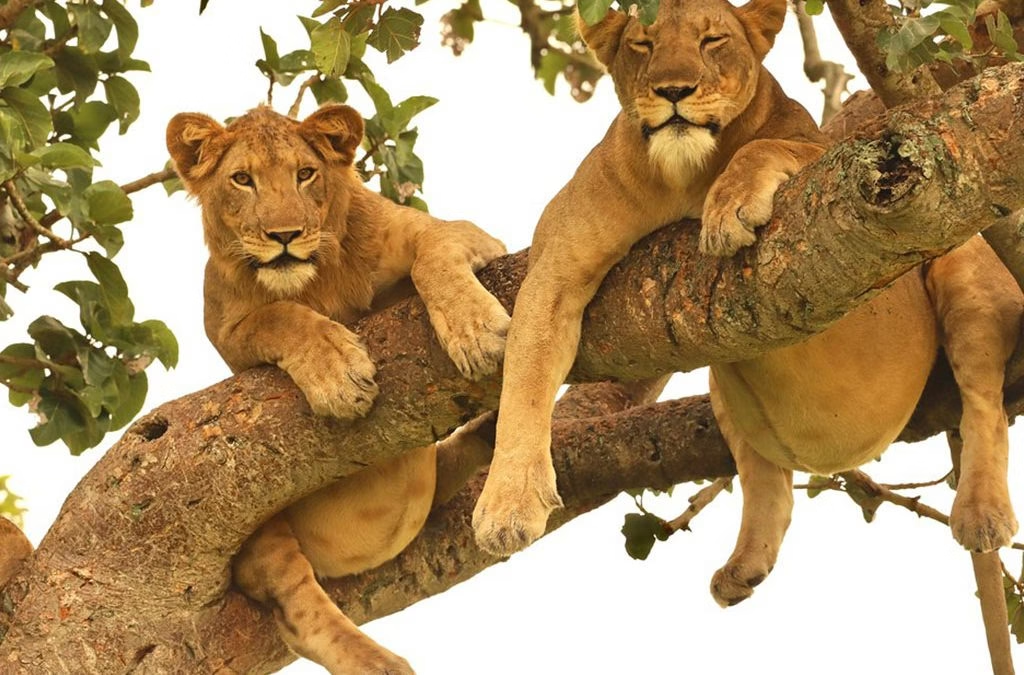
Travel Guide
Learn how to interact responsibly with wildlife in Queen Elizabeth National Park. Follow ethical safari tips to enjoy a safe, sustainable, and respectful wildlife experience in Uganda.
Practicing responsible tourism Uganda is especially important when visiting wildlife areas such as Queen Elizabeth National Park. The supplied source describes a varied ecosystem of savannahs, crater lakes, forests, elephants, lions, hippos, leopards, and more than 600 bird species.
Experiencing this biodiversity creates a responsibility to avoid disturbing the animals and habitats that make the park worth visiting.
Responsible wildlife interaction does not require complicated behavior. It begins with accepting that wild animals should control their own movements and that visitors are observers rather than participants in wildlife behavior.
Distance, silence, patience, professional guidance, responsible photography, correct waste disposal, and respect for park regulations all contribute to a safer and more sustainable safari.
The supplied source emphasizes that visitors should never approach wild animals simply because they appear calm.
Wildlife behavior can change quickly.
An elephant feeding quietly may become uncomfortable if a vehicle moves too close. A predator that appears to be resting may react differently if it feels surrounded.
Distance protects both the animal and the visitor.
Binoculars and camera zoom lenses provide a way to observe details without physically moving closer.
Animals need enough space to continue normal behavior.
When wildlife repeatedly stops feeding, changes direction, or focuses intensely on visitors, the quality of the encounter has already changed.
A responsible safari aims to observe animals behaving naturally.
The best sighting is therefore not necessarily the closest sighting.
A slightly more distant encounter where the animal remains relaxed can be more meaningful than an intrusive approach that causes stress.
The source recommends speaking softly and avoiding sudden noise or movement.
Wildlife is sensitive to changes in its surroundings.
Shouting, music, loud conversations, or abrupt movement can disturb animals.
Quiet behavior also improves the safari experience.
Visitors can hear bird calls, animal vocalizations, wind, and other natural sounds that disappear beneath constant conversation.
Silence is therefore both an ethical choice and a way of experiencing the park more fully.
Professional guides and rangers understand wildlife behavior, park regulations, and local conditions.
The supplied source emphasizes following their instructions.
A guide may notice warning signals that are not obvious to visitors.
They may also know when a particular road or area has restrictions.
Responsible travelers should avoid pressuring a guide to move closer to wildlife or break rules for a photograph.
The guide’s role includes protecting the integrity of the encounter.
The source warns against unnecessary off-road driving because it can damage habitats and disturb wildlife routines.
Tracks exist partly to manage the impact of tourism.
Leaving them without authorization can damage vegetation or place vehicles in areas where animals need space.
The desire for a closer photograph does not justify habitat disturbance.
Following designated routes helps concentrate vehicle impact and leaves more of the landscape undisturbed.
Feeding wild animals is one of the clearest behaviors visitors should avoid.
The supplied source explains that feeding can change natural behavior and create dependence on humans.
An animal that begins associating vehicles or people with food may approach future visitors more aggressively.
Human food may also be unsuitable for wildlife.
A seemingly harmless act can therefore create long-term consequences extending far beyond one encounter.
Visitors should avoid blocking wildlife paths.
If animals are trying to cross a road, reach water, or move between habitats, vehicles should allow space.
The supplied source specifically advises against remaining too long in a position that restricts animal movement.
Wildlife should determine where it goes.
Tourism becomes intrusive when animals must alter normal movement simply because visitors want a particular viewing angle.
The source highlights the need for extra caution around mothers with young animals.
A mother may respond defensively if she perceives a threat to her offspring.
Visitors should therefore avoid trying to position themselves between family members or approaching too closely.
Observing a mother with young can be a wonderful safari experience, but it requires patience and space.
Natural interaction between parent and offspring is more valuable than a photograph obtained by causing anxiety.
Responsible tourism also includes what visitors carry into the park.
The supplied source recommends reusable water bottles and reducing single-use plastics.
These choices help minimize waste.
Visitors should keep all rubbish with them until a proper disposal point is available.
Nothing should be thrown from the vehicle.
Protected landscapes remain healthy only when visitors avoid leaving evidence of their presence behind.
Waste can harm animals directly or alter their behavior.
Packaging may be investigated or swallowed.
Food waste can encourage wildlife to associate human areas with feeding opportunities.
Litter also reduces the visual quality of natural environments.
Responsible travel therefore requires visitors to manage even small items carefully.
A bottle cap, wrapper, or tissue may seem insignificant, but the cumulative effect of thousands of tourists would be substantial.
The supplied source advises visitors to turn off flash when photographing wildlife.
Sudden light can disturb animals, particularly under low-light conditions or around nocturnal species.
Photography should record an encounter rather than change it.
Travelers can prepare by understanding their camera settings before the safari.
Learning to work with available light is preferable to relying on a flash that may interfere with natural behavior.
Wildlife rarely positions itself exactly where a photographer wants it.
Branches may block the view. A lion may face away. An elephant may remain farther from the road.
Responsible photographers accept these limitations.
The objective should be to photograph genuine behavior within the environment.
Trying to manipulate wildlife through noise, food, or aggressive vehicle positioning undermines the authenticity of the image.
Patience usually produces more meaningful photographs.
The source warns against night walks without professional guidance.
Some wildlife becomes more active after dark, while human visibility decreases.
Moving alone can therefore increase risk.
Where authorized guided night experiences exist, professional supervision provides a safer and more informative way to explore nocturnal environments.
Visitors should never assume that a lodge or campsite area is free from wildlife simply because it contains buildings.
National parks remain wild environments.
The supplied source states clearly that visitors should not touch or handle wild animals, including smaller species.
Physical contact can stress animals and create health risks.
Wildlife is not present for human handling.
Even animals that appear harmless may defend themselves.
Responsible observation maintains separation between people and wild animals.
This principle applies whether the species is a large mammal, bird, reptile, or smaller creature.
The source encourages travelers to choose operators that support conservation and communities.
Tourism decisions have consequences.
The operator selected by a visitor influences how money moves through the destination and how safari activities are conducted.
A responsible operator should respect park regulations and wildlife rather than promising unrealistic encounters.
Community involvement can also help ensure that tourism benefits extend beyond the protected area.
Queen Elizabeth National Park includes water-based wildlife experiences, and the same principles of respectful observation apply.
Boats should maintain appropriate distances from hippos, birds, and other wildlife.
Passengers should remain calm and follow crew instructions.
A river or channel is not separate from the ecosystem simply because visitors are traveling by boat.
Aquatic animals require the same consideration as animals encountered during a game drive.
Responsible tourism Uganda extends beyond animal behavior.
Communities living around protected areas form part of the wider tourism landscape.
Using responsible operators, treating local people respectfully, and supporting appropriate community experiences can help create a more balanced tourism economy.
Conservation is stronger when wildlife protection and local benefits can exist together.
Visitors should therefore consider both environmental and social responsibility when planning a safari.
One of the simplest principles is to minimize evidence of the visit.
Do not leave rubbish.
Do not damage vegetation.
Do not remove natural objects.
Do not disturb wildlife simply to obtain photographs.
Do not encourage guides to ignore regulations.
These actions may seem small individually, but they determine whether tourism becomes compatible with conservation.
A responsible traveler should leave the park without creating unnecessary changes.
Responsible wildlife interaction is built around respect.
Maintain enough distance for animals to behave naturally, keep noise low, follow ranger instructions, stay on approved tracks, never feed wildlife, allow animals to move freely, avoid flash photography, dispose of waste correctly, and never touch wild animals.
The supplied source also emphasizes supporting conservation-friendly tourism and using professional guidance for activities that involve greater risk.
These practices do not reduce the quality of a safari. They improve it.
When visitors become quieter and more patient, they often observe more natural behavior. When animals are given space, encounters feel genuinely wild rather than controlled.
Practicing responsible tourism Uganda helps ensure that Queen Elizabeth National Park remains a place where wildlife can thrive and future travelers can continue experiencing the ecosystems that make the park special.

Nshongi Gorilla Family in Bwindi: History, Location and Trekking Guide The Nshongi Gorilla Family holds an important place…
Read article →
Mishaya Gorilla Family in Bwindi: History, Trekking and What to Know The Mishaya Gorilla Family is one of…
Read article →
Semuliki Hot Springs Visit Guide: What to Expect Semuliki Hot Springs offers one of the most unusual natural…
Read article →
Kidepo Valley Remote Safari Guide: What to Expect Kidepo Valley National Park offers one of Uganda's most remote…
Read article →