

Nshongi Gorilla Family in Bwindi
Nshongi Gorilla Family in Bwindi: History, Location and Trekking Guide The Nshongi Gorilla Family holds an important place…
Read article →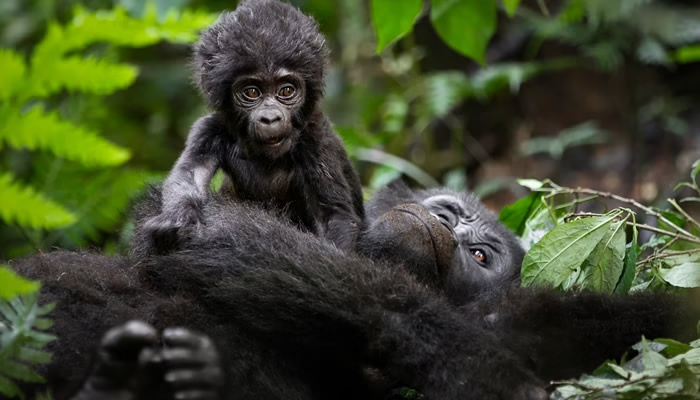
Travel Guide
Discover the Oruzogo Gorilla Family in Uganda’s Bwindi Impenetrable Forest. Learn about their history, members, and how to visit these majestic primates on a thrilling gorilla trekking adventure.
Oruzogo Gorilla Family: A Thrilling of Uganda’s Bwindi Forest introduces travelers to one of the named mountain gorilla groups historically associated with gorilla trekking in Bwindi Impenetrable National Park. The family has been connected with the Ruhija sector, one of Bwindi’s established gorilla tourism areas.
For travelers, learning about individual gorilla families makes trekking more meaningful.
A gorilla group is not simply a collection of animals sharing the same forest. It is a social unit with adult males and females, juveniles and, at different times, infants.
Its composition can change as animals mature, transfer, reproduce or die.
For this reason, historical descriptions of Oruzogo should not be treated as a permanent list of individuals. Current group composition and trekking availability should always be confirmed through the relevant park arrangements.
Ruhija lies within the eastern part of Bwindi’s tourism landscape.
The area provides access to mountain forest and gorilla trekking activities.
Travelers allocated to a family in this sector should select accommodation with practical access to the correct briefing location.
Bwindi’s sectors are separated by difficult terrain and winding roads.
A lodge advertised as being near Bwindi is not automatically convenient for Ruhija.
Mountain gorillas live socially.
A mature silverback can play a major role in group protection and movement.
Females provide intensive care to infants, while juveniles spend substantial time playing and developing.
Group members communicate through vocalizations, posture and physical interaction.
A one-hour tourism encounter offers only a short glimpse into relationships that continue every day.
Online descriptions sometimes provide exact numbers of individuals in a family.
Such figures can become outdated.
Gorillas are living animals, and group structure evolves.
Births add new members, females can move between groups and younger males eventually mature.
Leadership can also change.
Travelers should therefore treat current guide information as more relevant than an old article listing a fixed group size.
Tourism around the Oruzogo Gorilla Family: A Thrilling of Uganda’s Bwindi Forest depends on habituation.
Habituation is a gradual process through which selected wild gorillas become accustomed to controlled human observation.
It does not make them tame.
Habituated gorillas remain wild animals and can respond to behavior they perceive as threatening.
Visitors must therefore follow strict rules.
Uganda’s standard gorilla trekking permit costs USD 800 per person.
Permits should be booked in advance, especially for peak travel periods.
Four to six months ahead is a sensible planning window when demand is high.
The permit is central to the itinerary.
Accommodation and transportation should be coordinated around the confirmed trekking allocation.
Standard gorilla trekking limits visitors to a maximum of eight people around a habituated gorilla family.
The small group size reduces daily tourism pressure.
Once the family is located, visitors generally spend approximately one hour observing the gorillas.
The trek itself may take much longer.
The minimum age for standard gorilla trekking is 15.
Families traveling with younger children should arrange alternative activities and supervision.
The age rule should be considered before purchasing flights or accommodation.
Gorilla trekking is not designed as an activity for very young travelers.
The forest journey is an important part of the experience.
Trails can be steep and muddy.
Vegetation can be dense.
Trackers use their knowledge of the gorillas’ previous movements and signs within the forest to locate the assigned group.
No operator can guarantee an exact trekking duration.
Porters are highly recommended.
They carry daypacks and can help visitors negotiate difficult terrain.
Their assistance becomes particularly valuable after rain.
Hiring a porter also creates direct local employment linked with gorilla conservation tourism.
Travelers should view the service as part of the trekking experience rather than waiting until exhaustion sets in.
Strong hiking boots with reliable grip are essential.
Long trousers and long sleeves provide protection from vegetation.
A waterproof jacket should remain easily accessible.
Gloves can be useful when moving through thick vegetation or steadying yourself on muddy sections.
Pack water and protect electronics from rain.
Reaching a gorilla family after hiking through Bwindi can be an emotional moment.
Visitors may initially see only vegetation moving before individual gorillas become visible.
The group may be feeding, resting or traveling.
Young gorillas may play.
The silverback may remain partly hidden or move through the family.
Wildlife determines what happens.
Silverbacks naturally attract attention because of their size.
However, the gorilla experience becomes richer when visitors watch the entire family.
Females and young animals reveal important aspects of social behavior.
A silverback’s role can involve protection and group cohesion, but gorilla society is more complex than one dominant individual controlling every action.
Juveniles can be among the most active group members.
They may climb vegetation, wrestle or interact with one another.
Visitors should never encourage them to approach.
If a young gorilla moves closer, follow guide instructions and remain calm.
The animal’s curiosity does not make physical interaction appropriate.
Trekkers should maintain approximately seven meters from gorillas where conditions allow.
Dense vegetation and gorilla movement can occasionally complicate distancing.
In those situations, the guide provides instructions.
Visitors should never deliberately move closer because they want a better photograph.
Mountain gorillas can be vulnerable to human diseases.
Masks may be required during the encounter.
Visitors who are unwell should report their symptoms honestly.
Missing a trek is disappointing, but exposing gorillas to avoidable disease would undermine the conservation purpose of controlled tourism.
Flash photography is prohibited.
Forest light may be low, so photographers should prepare their camera settings in advance.
A rain cover is useful.
Avoid carrying excessive equipment.
A single versatile setup is often more practical than repeatedly changing lenses in wet forest conditions.
Ruhija’s forest environment can provide additional nature experiences depending on current activities.
Birding is particularly interesting in Bwindi because of the park’s biodiversity.
Travelers staying an additional night can experience the forest without making every day entirely about gorilla trekking.
This broader perspective strengthens appreciation of the habitat.
Protecting gorilla families requires protecting the forest around them.
Tourism generates employment through guiding, tracking, porter work, accommodation and transportation.
Community participation remains important because people living around protected areas experience both the benefits and restrictions associated with conservation.
Responsible tourism should strengthen those benefits.
Oruzogo Gorilla Family: A Thrilling of Uganda’s Bwindi Forest represents more than a name used to organize trekking permits.
Like every mountain gorilla family, the group has a changing social history shaped by individual animals.
Learning about that history encourages visitors to look beyond the silverback and notice mothers, infants, juveniles and interactions throughout the family.
A responsible encounter in Bwindi provides only one hour of direct observation, but it can create a lasting understanding of why protecting mountain gorillas requires preserving entire forests and maintaining carefully controlled tourism for generations to come.

Nshongi Gorilla Family in Bwindi: History, Location and Trekking Guide The Nshongi Gorilla Family holds an important place…
Read article →
Mishaya Gorilla Family in Bwindi: History, Trekking and What to Know The Mishaya Gorilla Family is one of…
Read article →
Semuliki Hot Springs Visit Guide: What to Expect Semuliki Hot Springs offers one of the most unusual natural…
Read article →
Kidepo Valley Remote Safari Guide: What to Expect Kidepo Valley National Park offers one of Uganda's most remote…
Read article →