

Nshongi Gorilla Family in Bwindi
Nshongi Gorilla Family in Bwindi: History, Location and Trekking Guide The Nshongi Gorilla Family holds an important place…
Read article →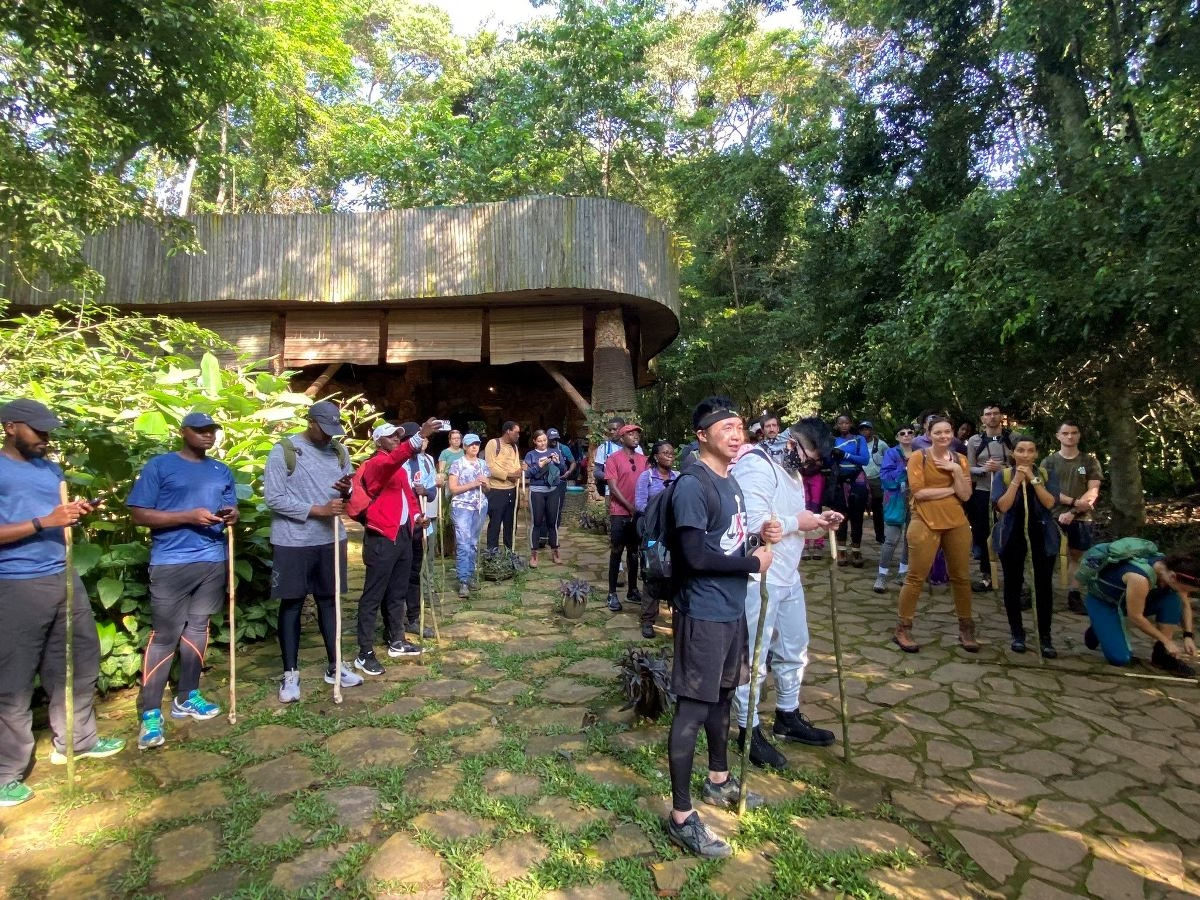
Travel Guide
Plan a Mabira Forest Ecotourism Centre tour in Uganda with forest walks, birdwatching, nature experiences and an easy stop between Kampala and Jinja.
A Mabira Forest Ecotourism Centre tour introduces travelers to one of Uganda’s accessible tropical forest environments without requiring a long journey from Kampala. Mabira Central Forest Reserve lies along the Kampala–Jinja corridor, making it convenient for travelers heading toward Jinja and the Nile or returning toward Uganda’s capital.
The forest experience differs considerably from the country’s better-known gorilla and big-game safaris. Visitors explore on foot, listening for birds and primates while learning about tropical forest ecology.
Mabira Forest is situated in central Uganda between Kampala and Jinja.
Its location along one of the country’s important tourism routes makes it relatively straightforward to include within a wider itinerary.
Travelers visiting Jinja for rafting, boat trips or Source of the Nile experiences can incorporate Mabira during the road journey.
It can also be visited as an excursion from Kampala depending on traffic, road conditions and the amount of time available.
Mabira is a tropical forest ecosystem containing diverse vegetation and wildlife.
Walking beneath its canopy creates a completely different atmosphere from traveling across Uganda’s savannah national parks.
Tall trees filter sunlight, vines and undergrowth occupy different forest layers, and sounds often reveal wildlife before visitors see it.
The forest is important as habitat while also providing ecological benefits to surrounding areas.
Responsible ecotourism can help visitors understand why maintaining such forest environments matters.
A guided walk is one of the most rewarding ways to experience Mabira.
Rather than moving quickly through the forest, visitors can follow trails while a knowledgeable guide interprets plants, animal signs and bird calls.
The pace allows travelers to notice details easily missed from a vehicle.
Different trails may provide varying walking durations and difficulty levels. Visitors should discuss their fitness, available time and interests before setting out.
Forest trails can become muddy after rain, making suitable footwear particularly important.
Birdwatching is one of the strongest reasons to explore Mabira.
Uganda has exceptional bird diversity because of its position between several major ecological regions.
Forest habitats support species different from those found on open savannahs or around large wetlands.
Successful forest birding requires patience. Birds may remain high in the canopy or concealed among leaves even when their calls are obvious.
A guide familiar with vocalizations can dramatically improve the experience.
Binoculars are strongly recommended.
Mabira also supports primate species.
Sightings are never guaranteed because animals move freely through dense vegetation, but the possibility adds excitement to forest walks.
Unlike dedicated gorilla or chimpanzee trekking, a Mabira excursion is a broader forest experience rather than an activity centered on locating one particular primate group.
Visitors should therefore appreciate the entire ecosystem.
Butterflies, insects, trees, birds and smaller animals collectively make the forest interesting.
Forest photography can be challenging.
Light levels beneath the canopy may be low, while birds and primates can move quickly between branches.
A camera capable of working at higher ISO settings is useful.
Photographers should also protect equipment against humidity and unexpected rain.
A small waterproof cover or dry bag can be particularly useful during wetter periods.
Landscape photographers can focus on tree trunks, forest trails, patterns of light and the dense layers of vegetation rather than concentrating only on wildlife.
Comfortable walking clothing is recommended.
Long trousers help protect the legs from vegetation and insects, while closed walking shoes or hiking boots provide better traction.
A lightweight long-sleeved shirt can offer additional protection.
Visitors should carry rain protection because tropical showers can occur even when the day begins with clear weather.
Insect repellent, drinking water and a hat are also useful.
Rain transforms the forest.
Vegetation becomes intensely green, streams can carry more water and the atmosphere can feel particularly lush.
The disadvantage is that trails may become slippery or muddy.
Travelers should not automatically avoid the forest during wetter periods, but they should arrive prepared for the conditions.
Good footwear and lightweight waterproof clothing can make a significant difference.
Drier periods can make walking more comfortable because trails may be less muddy.
However, tropical forest environments can still receive rainfall at any time.
Visitors should therefore avoid assuming that a particular month guarantees completely dry conditions.
Morning excursions can be pleasant because temperatures are generally cooler and wildlife activity may be greater.
One of the most practical ways to include Mabira is during a journey to or from Jinja.
Jinja is associated with the Nile and a variety of adventure activities.
Travelers may spend one or two nights in the area for rafting, kayaking, boat excursions or relaxation beside the river.
Adding Mabira creates an ecological contrast between forest and river environments.
A carefully timed itinerary avoids making the day too rushed.
Mabira can also form part of a longer itinerary including Uganda’s major national parks.
A traveler could begin in Entebbe or Kampala, visit Mabira and Jinja, and later continue toward destinations such as Murchison Falls National Park.
Alternatively, the forest can provide a gentle final nature experience before returning to Kampala or Entebbe.
Its accessibility makes it flexible.
The forest does not need to become the centerpiece of the entire safari to be worthwhile.
The idea behind ecotourism is not simply visiting a natural area.
Responsible tourism should contribute to appreciation of the environment while minimizing negative effects.
Visitors can support this principle by remaining on designated trails, following guides, avoiding litter and refraining from disturbing wildlife.
Noise should be kept at reasonable levels, especially during birdwatching.
Plants should remain in the forest rather than being removed as souvenirs.
Forest tourism can generate employment for guides and other people involved in visitor services.
Using trained local guides provides economic value while improving the quality of the experience.
Guides often possess detailed knowledge developed through repeated observation of the forest.
They may identify birds by calls that visitors barely notice or explain traditional and ecological uses associated with different plant species.
This human knowledge adds depth to a nature walk.
Travelers with limited time can experience part of Mabira during a half-day excursion.
A longer visit provides additional opportunities for birdwatching and exploring different trails.
The appropriate duration depends on personal interests.
Dedicated birders naturally benefit from more time than visitors simply looking for a pleasant forest walk while traveling between Kampala and Jinja.
A private itinerary can be adjusted around these preferences.
Mabira suits birdwatchers, photographers, nature enthusiasts and travelers interested in walking.
It can also work for visitors who want a nature experience without committing to a demanding multi-day trek.
Families should confirm which trails are appropriate for younger participants.
Older travelers or people with mobility concerns can discuss trail conditions before choosing a route.
The key is matching the walk to the visitor rather than assuming every traveler should complete the same trail.
Uganda’s tourism reputation is strongly associated with mountain gorillas, chimpanzees and traditional savannah safaris.
Mabira demonstrates that the country’s natural diversity extends beyond major national parks.
A Mabira Forest Ecotourism Centre tour provides an accessible introduction to tropical forest ecology, birdlife and guided nature walking.
Its position between Kampala and Jinja makes it particularly convenient for travelers already exploring central and eastern Uganda.
Rather than rushing through the area, taking several hours to enter the forest can reveal a quieter side of the country—one defined by towering trees, bird calls, forest paths and the intricate ecological relationships hidden beneath the canopy.

Nshongi Gorilla Family in Bwindi: History, Location and Trekking Guide The Nshongi Gorilla Family holds an important place…
Read article →
Mishaya Gorilla Family in Bwindi: History, Trekking and What to Know The Mishaya Gorilla Family is one of…
Read article →
Semuliki Hot Springs Visit Guide: What to Expect Semuliki Hot Springs offers one of the most unusual natural…
Read article →
Kidepo Valley Remote Safari Guide: What to Expect Kidepo Valley National Park offers one of Uganda's most remote…
Read article →