

Nshongi Gorilla Family in Bwindi
Nshongi Gorilla Family in Bwindi: History, Location and Trekking Guide The Nshongi Gorilla Family holds an important place…
Read article →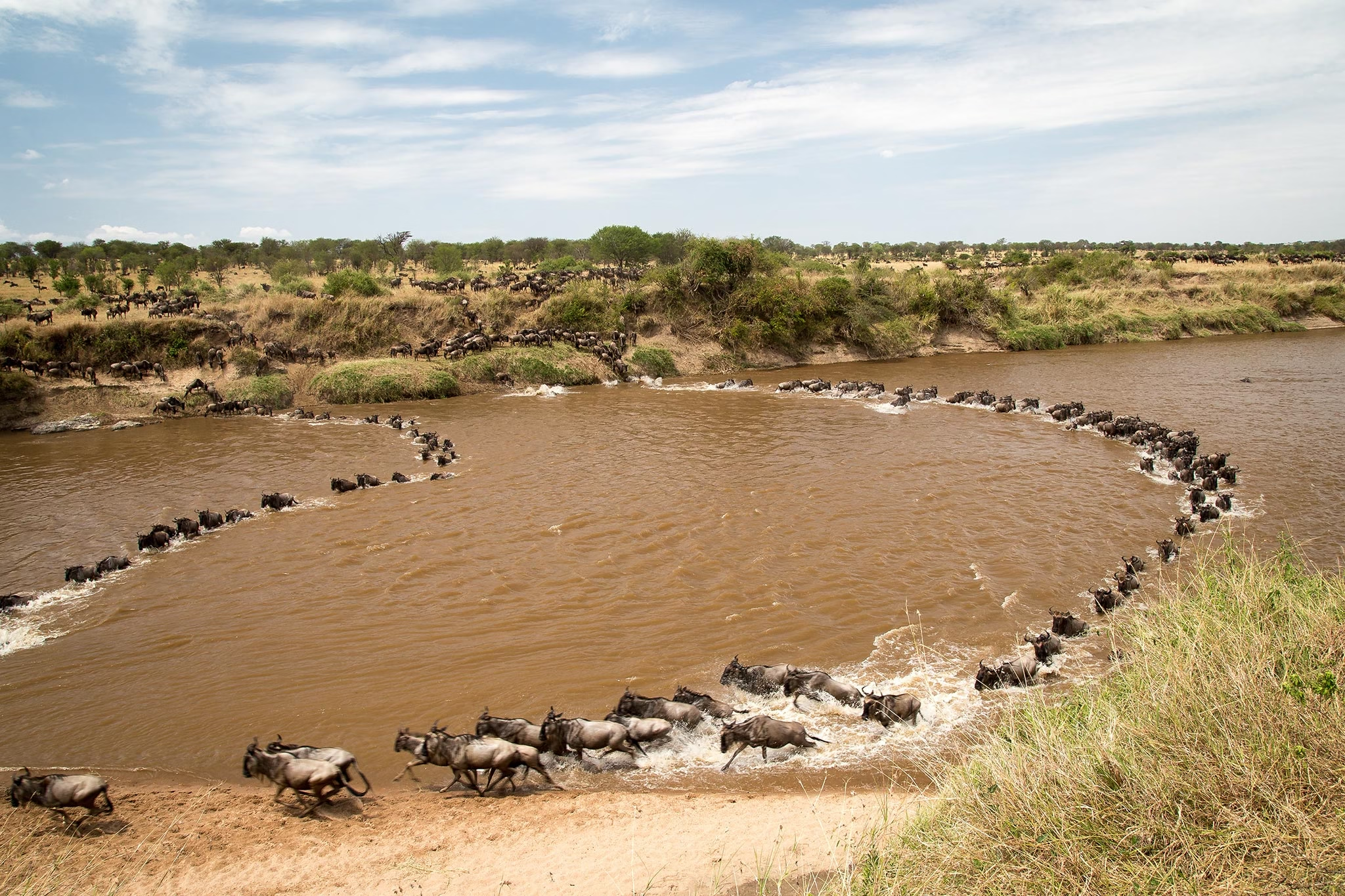
Travel Guide
Explore the breathtaking beauty of Kenya’s Maasai Mara in pictures. From the Big Five to golden savannah sunsets, discover the magic of Africa’s most celebrated safari park.
Exploring the Maasai Mara in pictures is one of the easiest ways to understand why this part of southwestern Kenya has become one of Africa’s most recognizable safari landscapes. Photographs of golden grasslands, lions resting beneath open skies, elephants crossing the plains and wildebeest gathering during seasonal movements have introduced generations of travelers to the Mara.
Yet photographs tell only part of the story. The Maasai Mara is a living ecosystem where weather, light, wildlife movements and seasonal conditions constantly change what visitors see.
A photographic safari therefore involves much more than simply pointing a camera at the Big Five. Landscape images, birds, animal behavior, Maasai cultural experiences and small details can all help create a richer visual record of the destination.
The Mara’s open landscapes immediately attract photographers.
Rolling grasslands create long sightlines, while scattered trees can provide strong focal points within an image.
Cloud formations frequently add drama.
During greener periods, vegetation can create completely different photographs from the golden tones associated with drier conditions.
Instead of concentrating exclusively on animals, travelers should occasionally use a wide-angle perspective and photograph the environment itself.
These landscape photographs provide context for later wildlife images and show where the animals actually live.
Early morning is one of the most rewarding times to photograph the Maasai Mara.
The light can be softer than during the middle of the day, while lower temperatures often coincide with increased wildlife activity.
Morning mist, where present, can transform ordinary landscapes.
Silhouettes of giraffes, trees or distant animals can create powerful compositions.
A photographer exploring the Maasai Mara in pictures should therefore be prepared before sunrise rather than waiting until the vehicle has already entered productive wildlife areas.
Keep cameras accessible and settings ready for changing light.
Lions are among the Mara’s most sought-after photographic subjects.
The open habitat can provide opportunities to observe prides resting, moving or interacting.
Patience is essential.
A sleeping lion may appear uninteresting initially, but behavior can change without warning.
Rather than pressuring a guide to approach too closely, photographers should use appropriate lenses and allow the animals space.
Natural behavior creates stronger images than an animal reacting to vehicle pressure.
The welfare of the wildlife should always come before the photograph.
Elephants can create some of the most memorable photographs in the Mara ecosystem.
A single elephant beneath a dramatic sky can be as compelling as a close portrait.
Family groups also provide opportunities to document social behavior.
Young elephants walking between adults, feeding interactions and herd movements tell stories that isolated portraits may not capture.
Use the surrounding landscape deliberately.
Showing the scale of an elephant against the vast plains can communicate something a tightly cropped image cannot.
Leopards can be more challenging photographic subjects.
They may rest in vegetation or trees, and sightings can attract considerable attention.
Branches and grass can obstruct clear photographs.
Instead of asking a guide to reposition repeatedly, wait for the animal to move naturally.
A partially concealed leopard can also produce an effective image because it reflects the species’ elusive character.
Responsible guides maintain appropriate distances and follow reserve regulations even when photographers want a closer angle.
The Mara’s open areas can provide excellent habitat for cheetahs.
Their slender bodies and distinctive markings make them particularly attractive photographic subjects.
A resting cheetah offers opportunities for portraits, while an animal scanning the horizon can create a stronger environmental composition.
High-speed action is much harder to photograph.
Visitors interested in wildlife action should understand shutter speed, autofocus and continuous shooting before arriving.
Practice beforehand so that technical adjustments do not consume the few seconds during which behavior unfolds.
African buffalo are sometimes overlooked because travelers concentrate on predators.
However, buffalo can produce dramatic images.
Large horns, textured faces and groups standing in dust or grass provide excellent subjects.
The Maasai Mara’s association with the Big Five encourages visitors to search for lion, leopard, elephant, buffalo and rhino.
A photographic safari should not become a race to complete this checklist.
The best image of a trip may involve an animal that was never on the original priority list.
Seasonal wildebeest movements are closely associated with images of the Mara.
Large herds can create extraordinary visual patterns across the landscape.
Photographers should capture both wide scenes and individual behavior.
A wide photograph communicates scale, while tighter compositions reveal expressions, dust and movement.
Migration timing varies with environmental conditions.
Travelers should avoid expecting a specific event on a precise date.
Wildlife movements are controlled by nature rather than safari schedules.
River crossings are among the most dramatic subjects associated with the Maasai Mara in pictures.
However, photographing a crossing requires patience and responsible guiding.
Wildebeest may gather near the river and then move away.
They may cross somewhere completely different from where vehicles are waiting.
When a crossing begins, photographers have only a limited time to respond.
Using a fast enough shutter speed can help freeze movement, while wider frames can show the scale of the event.
Vehicles should never obstruct the animals’ natural approach to the river.
Giraffes are excellent subjects for environmental photography.
Their height makes them particularly effective against open skies.
A distant giraffe beneath dramatic clouds can communicate the scale of the landscape.
Groups walking across ridgelines can create striking silhouettes.
Photographers should experiment with orientation.
Vertical compositions emphasize the animal’s height, while horizontal images provide more space for the surrounding environment.
The Mara is not only about mammals.
Birds add color, movement and behavioral variety to a photographic safari.
Raptors, ground birds, water-associated species and smaller birds can all provide interesting subjects.
A telephoto lens is useful because many birds are relatively small or distant.
Photographing birds also fills periods when major mammals are inactive.
Travelers who begin a safari with little interest in birds often discover that photography makes them pay much closer attention.
Vehicle positioning can strongly influence photographic opportunities.
Private vehicles provide greater flexibility because photographers can spend longer at a sighting without negotiating with other passengers.
However, even private vehicles must follow reserve rules.
Ask the guide to position the vehicle when it can be done responsibly.
Communicate the direction of the light and the type of image you want.
Experienced guides often understand photography well and can anticipate animal movement.
There is no single perfect camera setup for the Mara.
A telephoto lens is useful for wildlife at a distance.
A wider lens helps with landscapes, camps and environmental portraits.
Carrying two camera bodies can reduce the need to change lenses in dusty conditions, although it also increases weight.
Smartphones are increasingly capable for landscapes and nearby subjects.
Travelers should choose equipment they understand rather than bringing complicated gear they have never used.
Dust can be a major challenge.
Keep cameras covered when traveling quickly along dry roads.
Avoid unnecessary lens changes in dusty environments.
Carry a blower and suitable cleaning materials.
Batteries should be charged whenever electricity is available.
Bring more memory capacity than expected because wildlife sequences can generate large numbers of photographs.
Backing up images during the safari provides additional protection against card failure or accidental loss.
The Maasai people are an important part of the wider region’s cultural identity.
Travelers may have opportunities for community visits or cultural encounters.
People should never be treated as photographic props.
Ask permission before taking portraits.
Where organized photography is part of an experience, follow guidance from hosts and local guides.
Spend time learning about the people and their lives instead of concentrating exclusively on photographs.
Respectful interaction usually results in more meaningful images and experiences.
Late afternoon can produce beautiful warm light.
Animals illuminated against darker vegetation can create striking images.
Dust kicked up by moving herds may become visible in low sunlight.
As sunset approaches, photographers can shift attention from close wildlife portraits to silhouettes and landscapes.
Exposure can become challenging, so understanding basic camera controls helps.
Do not forget to occasionally stop photographing and simply watch the sunset.
The visual character of the Mara changes through the year.
Green landscapes produce a different photographic style from dry golden grasslands.
Clouds and rain can add atmosphere rather than ruining a safari.
Dark skies behind sunlit animals can produce particularly dramatic photographs.
Travelers should therefore prepare for the conditions they encounter rather than trying to recreate an image seen online.
Every season offers its own visual opportunities.
Ethics are fundamental when photographing the Maasai Mara in pictures.
Never pressure guides to leave permitted routes or crowd animals.
Do not use food or sounds to manipulate wildlife behavior.
Maintain appropriate distances.
At sensitive sightings, the number and behavior of vehicles can affect animals.
A responsible photograph records natural behavior without creating unnecessary disturbance.
The strongest wildlife photography respects the subject.
A successful photographic record of the Maasai Mara should extend beyond famous predators.
Photograph your camp, landscapes, birds, plants, changing weather and small details.
Include wide scenes showing wildlife within its habitat.
Document quiet moments as well as dramatic ones.
These images collectively create a more complete story.
Years later, a photograph of morning light outside the safari tent may evoke memories just as strongly as a lion portrait.
The Maasai Mara in pictures can include roaring lions, river crossings and spectacular sunsets, but the destination’s visual appeal is broader than its most famous images.
Every game drive brings changing light and unpredictable wildlife behavior.
The best approach is to arrive prepared but remain flexible.
Use appropriate equipment, listen to your guide and give animals space.
Photograph the celebrated wildlife, but also notice the landscapes and smaller moments between major sightings.
That combination creates a photographic record that reflects the real Maasai Mara: expansive, unpredictable, diverse and always changing.

Nshongi Gorilla Family in Bwindi: History, Location and Trekking Guide The Nshongi Gorilla Family holds an important place…
Read article →
Mishaya Gorilla Family in Bwindi: History, Trekking and What to Know The Mishaya Gorilla Family is one of…
Read article →
Semuliki Hot Springs Visit Guide: What to Expect Semuliki Hot Springs offers one of the most unusual natural…
Read article →
Kidepo Valley Remote Safari Guide: What to Expect Kidepo Valley National Park offers one of Uganda's most remote…
Read article →