

Nshongi Gorilla Family in Bwindi
Nshongi Gorilla Family in Bwindi: History, Location and Trekking Guide The Nshongi Gorilla Family holds an important place…
Read article →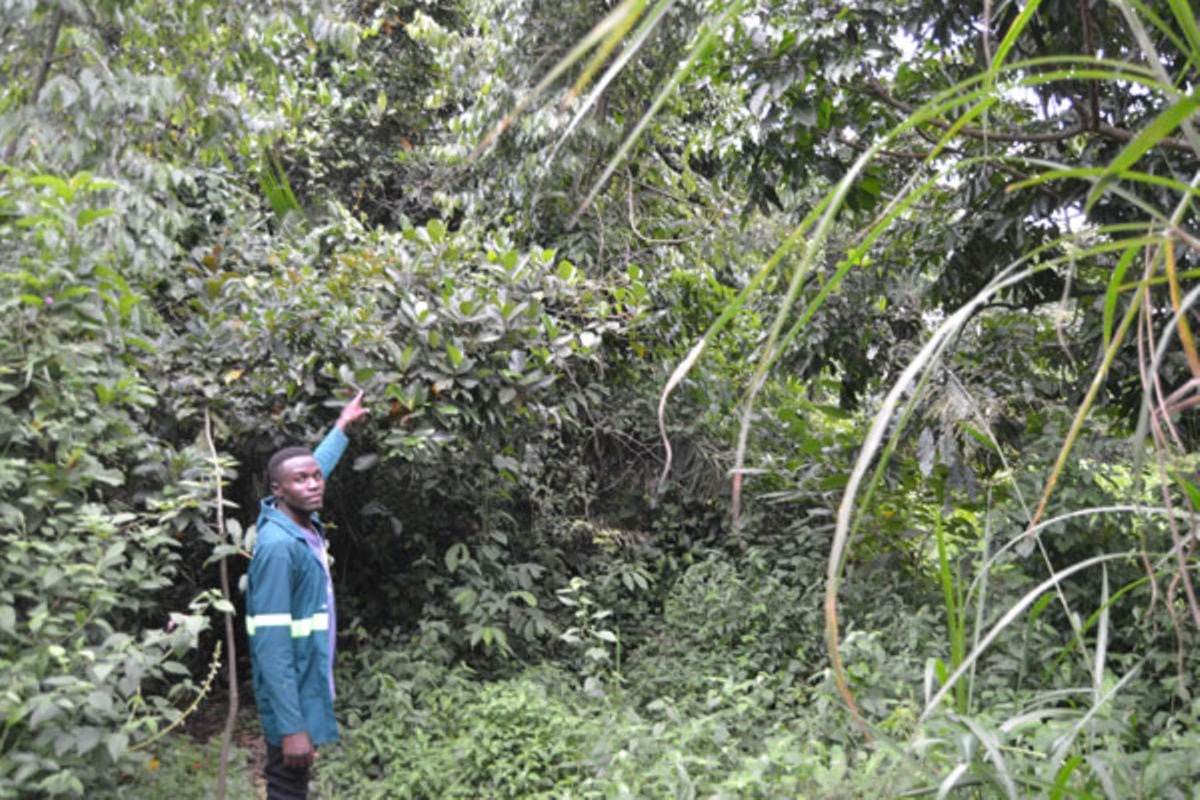
Travel Guide
Explore Lazarus Forest in Luwero, Uganda – a thriving reforestation project born from faith and community effort. Learn how to visit, what to expect, and why it matters.
Discover Lazarus Forest in Luwero: Uganda’s Reforestation Miracle introduces travelers to an environmental experience different from the national parks and wildlife reserves that dominate Uganda tourism. Rather than focusing on famous large mammals, the attraction lies in the story of trees, land restoration and community effort.
Reforestation projects demonstrate how landscapes can change when people commit to restoring vegetation over time.
Trees can contribute to habitat, soil protection, shade and broader environmental recovery, but meaningful restoration requires patience.
A forest cannot be recreated instantly by planting seedlings. Trees need to survive, mature and become part of an increasingly complex ecosystem.
For environmentally interested visitors, Lazarus Forest provides an opportunity to think about this process at landscape level.
Reforestation generally involves restoring tree cover to land where forests or significant tree populations have been reduced.
The reasons for degradation vary.
Agricultural pressure, timber harvesting, fuelwood demand, settlement and other land uses can contribute.
Successful reforestation therefore requires understanding why tree cover disappeared in the first place.
Planting without addressing underlying pressures may produce only temporary results.
Tree planting photographs often create the impression that restoration is completed the moment a seedling enters the soil.
In reality, that is the beginning.
Young trees may require protection and monitoring.
Some will not survive.
Competition, drought, fire and human activity can affect growth.
Long-term projects therefore depend on continued management.
The development of a functioning forest takes years.
Community involvement can determine whether restoration succeeds.
People living around a project interact with the landscape every day.
If restoration conflicts completely with local needs, maintaining it becomes difficult.
Community participation can create ownership and help align environmental objectives with practical livelihoods.
Local knowledge may also improve decisions about species, soils and land use.
The framing of Discover Lazarus Forest in Luwero: Uganda’s Reforestation Miracle connects the project with faith and community effort.
Faith-based environmental initiatives can encourage stewardship by linking ecological responsibility with moral or community values.
For visitors, this provides an opportunity to understand conservation from a perspective different from conventional national-park management.
Environmental protection can emerge from communities, religious organizations, private landholders and many other actors.
Forests perform multiple ecological functions.
Tree roots can help stabilize soil.
Vegetation influences local water processes and creates habitat.
Trees store carbon as they grow.
Forest environments can also support insects, birds and other animals.
These benefits depend on the quality and structure of the forest rather than simply the number of trees planted.
A diverse, functioning ecosystem is more complex than a plantation of one species.
As vegetation develops, wildlife may begin using restored habitat.
Birds can be among the most noticeable beneficiaries.
Insects, reptiles and small mammals may also find food or shelter.
The return of wildlife can provide evidence that restoration is creating ecological value.
Visitors should pay attention to these smaller organisms rather than expecting a conventional safari experience.
A forest visit can become particularly interesting for birdwatchers.
Different vegetation layers provide feeding and nesting opportunities.
Binoculars help visitors observe birds without approaching closely.
Even travelers without specialist knowledge can listen for calls and watch movement through the canopy.
A local guide can explain which species are commonly encountered and how the recovering habitat supports them.
Walking is one of the best ways to experience a reforestation project.
A slow pace allows visitors to notice differences in tree size, vegetation density and ground cover.
Guides can explain how particular sections developed.
The objective is not necessarily to complete a long hike.
A shorter interpretive walk may reveal more than rushing through several kilometers without understanding the landscape.
Not all trees perform the same ecological role.
Species differ in growth rate, canopy structure and relationships with wildlife.
A guide may explain which species were planted and why.
Visitors can ask how species selection was made and whether natural regeneration also occurs.
These questions help distinguish ecological restoration from simple commercial tree planting.
Vegetation and root systems can help reduce erosion.
This is especially important where land has been degraded or left exposed.
Leaf litter also contributes organic material to the soil.
Over time, these processes can improve environmental conditions for other plants.
Restoration therefore happens both above and below ground.
The visible trees are only one part of the ecological change.
Trees interact with water systems in complex ways.
Vegetation can influence runoff and soil moisture.
Healthy watersheds depend on appropriate land management across broader areas.
Visitors should avoid overly simple claims that planting any tree anywhere automatically produces identical water benefits.
The ecological outcome depends on species, location, climate and landscape context.
Reforestation is frequently discussed in relation to climate change because growing trees store carbon.
This is important, but restoration should not be reduced solely to carbon accounting.
Forests can provide biodiversity, soil and community benefits as well.
Protecting existing natural forests also remains essential.
Planting new trees cannot simply justify destroying mature ecosystems elsewhere.
Lazarus Forest can provide a useful setting for environmental education.
Students and visitors can see how land management decisions produce long-term effects.
A guide can explain the history of the site and how vegetation changed.
Seeing restoration directly often communicates more effectively than reading abstract environmental statistics.
Forest photography requires attention to light.
The contrast between bright openings and shaded vegetation can challenge cameras.
Wide images can show the landscape, while close details capture leaves, bark and regeneration.
Visitors should remain on designated paths where required.
Do not damage plants simply to create a clearer photograph.
A restoration site should be treated as an environmental project rather than an amusement park.
Do not litter.
Avoid picking plants.
Keep noise moderate where wildlife is present.
Follow instructions from local guides or managers.
If opportunities exist to support the project through legitimate fees or purchases, visitors can ask how funds contribute to ongoing work.
Luwero’s location makes the wider area accessible within central Uganda travel planning.
The exact arrangements for visiting Lazarus Forest should be confirmed before departure.
Travelers should check current access procedures, opening arrangements and whether advance coordination is required.
Do not assume that a conservation or community project operates with the same walk-in structure as a major public attraction.
A forest visit can complement cultural and historical exploration in central Uganda.
It can also provide a slower environmental activity before or after a longer safari.
Travelers arriving primarily for gorillas and national parks may appreciate seeing conservation outside a government-managed protected area.
This broadens understanding of who participates in environmental protection.
Visitors sometimes want to plant a tree as part of their trip.
If such activities are officially offered, they should be coordinated with project managers.
Planting random species in unsuitable places is not responsible restoration.
A meaningful contribution follows the project’s ecological plan and includes consideration of long-term survival.
Financial support for maintenance may sometimes be more useful than a ceremonial planting.
The importance of Discover Lazarus Forest in Luwero: Uganda’s Reforestation Miracle lies in the long-term story behind the landscape.
Restoration requires land, knowledge, community support and patience.
Trees planted today may take years before they provide mature habitat.
That timeline makes reforestation an investment in future generations.
For travelers, Lazarus Forest offers something different from seeing an elephant or mountain gorilla. The experience focuses on ecological recovery itself.
By walking through a landscape shaped by deliberate restoration, visitors can better understand that conservation is not only about protecting what remains. In some places, it is also about rebuilding what has been lost and creating the conditions for nature to recover.

Nshongi Gorilla Family in Bwindi: History, Location and Trekking Guide The Nshongi Gorilla Family holds an important place…
Read article →
Mishaya Gorilla Family in Bwindi: History, Trekking and What to Know The Mishaya Gorilla Family is one of…
Read article →
Semuliki Hot Springs Visit Guide: What to Expect Semuliki Hot Springs offers one of the most unusual natural…
Read article →
Kidepo Valley Remote Safari Guide: What to Expect Kidepo Valley National Park offers one of Uganda's most remote…
Read article →