
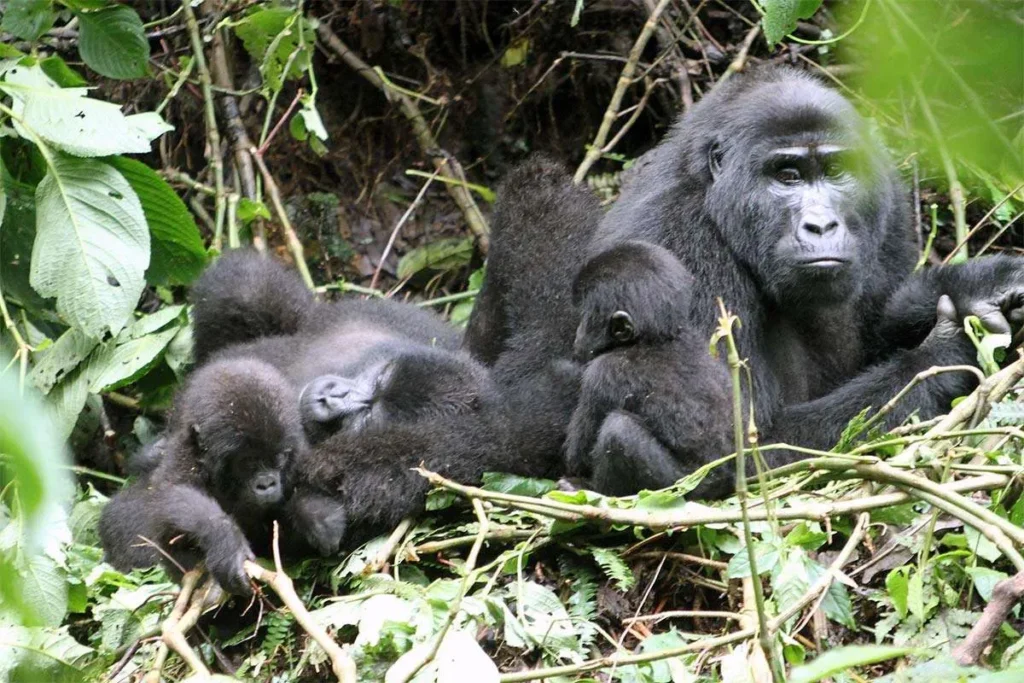
Nshongi Gorilla Family in Bwindi
Nshongi Gorilla Family in Bwindi: History, Location and Trekking Guide The Nshongi Gorilla Family holds an important place…
Read article →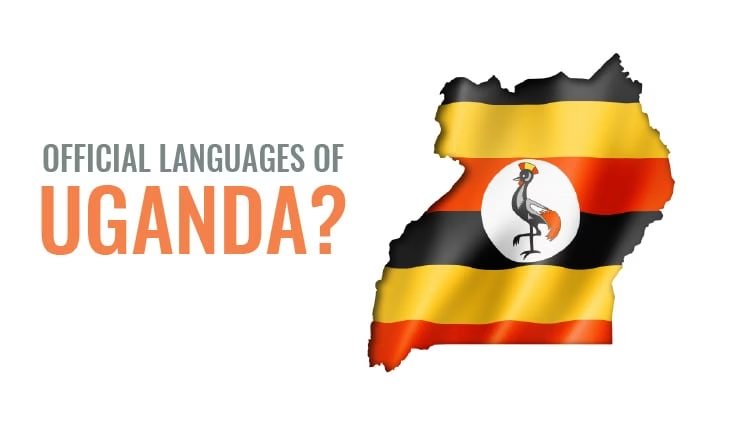
Travel Guide
Discover the key languages spoken in Uganda, including English, Luganda, and regional dialects. Learn essential phrases and cultural language tips for travelers.
Understanding language basics Uganda can make a journey through the country more personal and engaging. Uganda is a multilingual country where language reflects regional identity, cultural heritage, education, trade, and everyday social relationships. The supplied source states that more than 40 languages are spoken across Uganda, meaning travelers may hear different languages as they move between Kampala, Jinja, southwestern Uganda, northern Uganda, and other parts of the country.
Visitors do not need to become fluent in a Ugandan language before traveling. English is widely used in formal environments and many tourism situations, making communication relatively straightforward for English-speaking travelers. However, learning even a few local words can transform an ordinary interaction into a warmer cultural exchange.
A simple greeting in Luganda, for example, shows an effort to communicate beyond the minimum required for travel. Listening to how people communicate in markets, villages, shops, hotels, and public spaces can also help visitors appreciate Uganda’s linguistic diversity.
Uganda’s many languages reflect the country’s cultural diversity. Different communities have developed and maintained their own languages, expressions, greetings, and oral traditions.
This means there is no single local language that represents every region.
A traveler spending most of a holiday in Kampala may hear substantial Luganda, while someone traveling through southwestern Uganda can encounter Runyankole-Rukiga. In Jinja and the surrounding Busoga region, Lusoga becomes important. Northern and eastern regions introduce still more languages.
Understanding this regional character prevents visitors from assuming that the same local vocabulary will dominate everywhere.
The supplied source identifies English as Uganda’s official language and explains that it is used in schools, government, legal affairs, and much urban communication.
For international travelers, this can make practical communication considerably easier.
Safari guides, hotel staff, tour operators, and many people working within the tourism sector can communicate in English.
Travelers can therefore arrange transportation, discuss meals, receive safari briefings, ask questions, and handle many routine travel situations without speaking a local language.
English nevertheless represents only one part of Uganda’s everyday linguistic environment.
Luganda is described in the supplied source as the most widely used local language, particularly in central Uganda and around Kampala.
It is associated with the Baganda people, but its practical use extends beyond Baganda speakers.
The source notes that even some non-Baganda understand basic Luganda.
For a traveler spending time in Kampala, learning several Luganda greetings can therefore be particularly useful.
The objective does not need to be perfect pronunciation. Even an attempt can demonstrate curiosity and respect.
Greetings matter in many everyday interactions.
The supplied source gives Gyebale Ko as a greeting for hello and Oli otya? for asking “How are you?”
A response given in the source is Gyendi, meaning “I’m fine.”
These phrases are simple enough for travelers to practice before arriving.
Using them when meeting someone can immediately change the tone of an interaction. Instead of moving directly into a request or transaction, the visitor begins with a social acknowledgment.
This can be especially meaningful in markets, community visits, lodges, and other settings where travelers interact directly with local people.
The supplied source gives Webale for “thank you.”
This may be one of the most useful Luganda words for a visitor.
Travel creates repeated situations in which appreciation is appropriate. A guide explains something, a lodge employee assists with luggage, a shopkeeper helps find an item, or a community host welcomes visitors.
Using a local expression of thanks can add warmth to the interaction.
The traveler may still continue the conversation in English, but the Luganda word demonstrates an effort to recognize the local language.
The source gives Weeraba for “goodbye,” Ye for “yes,” and Nedda for “no.”
These basic words can help visitors recognize simple responses even when the wider conversation takes place in Luganda.
Language learning while traveling does not always mean speaking long sentences.
Recognition is also valuable.
Hearing a familiar word in a conversation can help a traveler understand context and gradually become more comfortable with the sound and rhythm of the language.
The supplied material gives Mwattu for “please.”
Polite expressions are useful because they soften requests and show consideration.
Travelers should also pay attention to how local speakers use particular words rather than relying only on literal translations.
Language carries social context, tone, and cultural meaning that cannot always be captured through a one-word equivalent.
Listening to guides or local hosts can therefore be as important as memorizing vocabulary.
The source includes Erinnya lyo ggwe ani? for asking someone’s name and Erinnya lyange… for beginning the phrase “My name is…”
Introductions provide a natural opportunity to practice language.
Rather than trying to memorize many complicated phrases, visitors can learn a small number that they are likely to use repeatedly.
A greeting, a thank-you, and a basic introduction can already make interactions more engaging.
The purpose is connection rather than linguistic performance.
The supplied source also discusses Swahili, describing it as a regional East African language used for trade and cross-border communication.
Swahili is especially important when considering Uganda within the wider East African region.
A traveler combining Uganda with Kenya or Tanzania may encounter the language in several countries.
The source notes that Swahili is not as dominant in everyday Ugandan communication as it is in Kenya or Tanzania.
Travelers should therefore avoid assuming that Swahili automatically replaces local Ugandan languages.
The source identifies Runyankole-Rukiga as important in southwestern Uganda, including areas around Mbarara, Kabale, and Bushenyi.
This is particularly relevant to safari travelers because many journeys toward southwestern wildlife destinations pass through this part of the country.
A traveler heading toward gorilla trekking regions, Lake Bunyonyi, or other southwestern destinations may therefore hear languages different from those commonly heard in Kampala.
The change in language becomes another sign that the traveler has moved into a different cultural region.
Lusoga is identified by the source as a language commonly used in the Busoga region, including Jinja.
Visitors may travel to Jinja for Nile-related experiences and adventure activities.
While tourism staff may communicate in English, hearing Lusoga in everyday community life helps reveal the regional identity of the area.
This demonstrates why learning about Uganda’s languages can add context to a travel itinerary.
A place is defined not only by landscapes and attractions but also by how people communicate.
The supplied source identifies Acholi and Lango among the languages used in northern Uganda.
Travelers exploring different parts of the north can therefore encounter linguistic environments distinct from Kampala and southwestern Uganda.
This regional diversity is important to appreciate.
Uganda should not be viewed as culturally uniform simply because visitors can use English in many tourism settings.
Every region contains its own historical and cultural influences, with language providing one of the clearest expressions of that identity.
The source identifies Ateso as another language spoken in eastern Uganda.
Its inclusion further illustrates the linguistic range travelers encounter as they move across the country.
A safari itinerary that covers several regions can therefore become a cultural journey as much as a wildlife journey.
The language heard in a market, village, restaurant, or roadside stop may change several times during the trip.
Visitors who pay attention to these changes gain a deeper understanding of the places through which they are traveling.
The supplied source describes many Ugandans as multilingual.
People may switch between English, Luganda, and another local language depending on the situation and the people involved.
This ability to move between languages is particularly noticeable in urban areas where people from different regions interact.
The language used at school may differ from the one spoken at home.
A person may use English professionally and a local language with family members.
In a market, another language may become more practical depending on the customer.
The source notes that local languages may dominate more strongly in rural communities.
Visitors traveling beyond major towns should therefore expect English usage to vary.
Guides can help bridge communication during community visits or more remote travel.
This is another reason a professional local guide contributes more than driving and wildlife knowledge.
The guide can interpret language, explain cultural context, and help visitors avoid misunderstandings.
One of the recommendations in the supplied source is simply to listen.
Markets, taxis, shops, lodges, and public places provide opportunities to hear how languages are actually spoken.
Pronunciation, rhythm, and conversational style are difficult to understand from written words alone.
Listening also helps travelers notice when people switch languages according to context.
Rather than treating unfamiliar speech as background noise, visitors can recognize it as an important part of Uganda’s cultural landscape.
The source encourages travelers not to be overly shy about trying a local phrase.
A visitor may pronounce a word imperfectly, particularly when hearing it for the first time.
The purpose is not to pretend to be fluent.
It is to demonstrate willingness to engage.
Travelers should remain open to correction and avoid becoming embarrassed if someone responds with a smile or helps improve the pronunciation.
Language learning during travel works best when approached with curiosity and humility.
The supplied material recommends carrying a small phrasebook or using a language application.
This can help travelers remember useful words while moving between regions.
However, technology works best as a support rather than a replacement for interaction.
A local guide or speaker can explain pronunciation and context more accurately than a simple word list.
Visitors can begin with a phrasebook and then improve their understanding by listening to how people actually use the language.
Learning language basics Uganda is ultimately about more than vocabulary.
A greeting acknowledges another person before asking for assistance.
A local thank-you shows appreciation.
Recognizing regional languages demonstrates that the traveler understands Uganda contains many different communities and cultural identities.
These small acts can make tourism feel less transactional.
The visitor becomes more attentive to the people who live in the destination rather than focusing exclusively on national parks, gorillas, hotels, and photographs.
Travelers can prepare by learning only a manageable number of words before departure.
There is no need to memorize a large vocabulary.
A few greetings, expressions of thanks, and simple introductory phrases provide a useful starting point.
Once in Uganda, visitors can ask their guide which language is most appropriate in the area being visited.
This is particularly useful when traveling outside central Uganda.
Learning one new greeting as the itinerary moves into another region can become part of the travel experience.
Understanding language basics Uganda adds an important human dimension to a journey through the country.
English provides a practical language for formal communication and much of the tourism industry, while Luganda plays a major role in Kampala and central Uganda. Swahili connects Uganda with the wider East African region, while Runyankole-Rukiga, Lusoga, Acholi, Lango, Ateso, and many other languages reflect the identities of different communities.
Travelers do not need fluency to benefit.
Learning how to greet someone, say thank you, introduce yourself, and listen respectfully can create warmer encounters.
Uganda’s wildlife and landscapes may provide the initial reason for visiting, but language can help travelers connect with the people who give those places their living cultural character.

Nshongi Gorilla Family in Bwindi: History, Location and Trekking Guide The Nshongi Gorilla Family holds an important place…
Read article →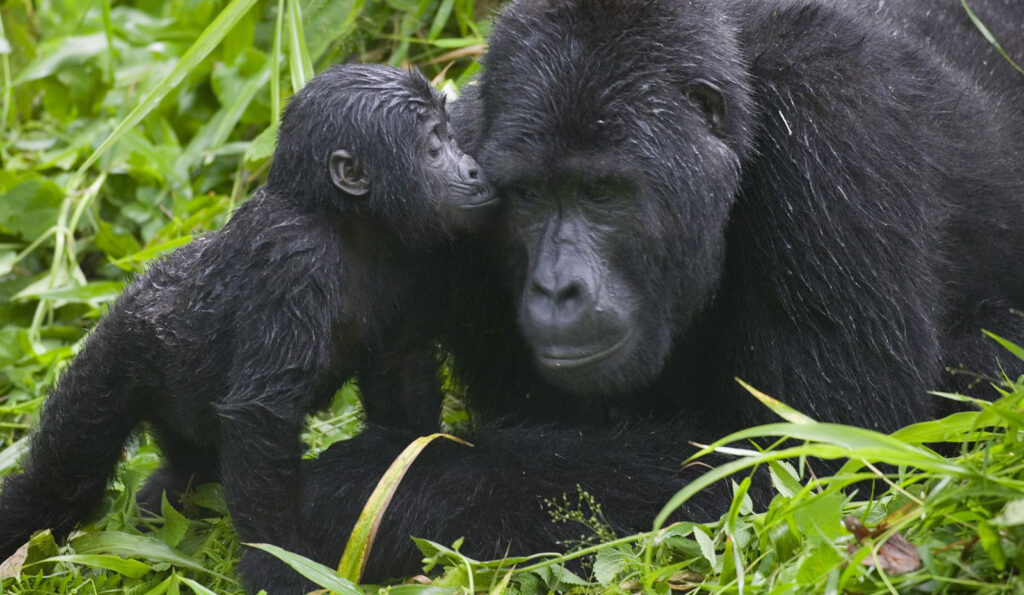
Mishaya Gorilla Family in Bwindi: History, Trekking and What to Know The Mishaya Gorilla Family is one of…
Read article →
Semuliki Hot Springs Visit Guide: What to Expect Semuliki Hot Springs offers one of the most unusual natural…
Read article →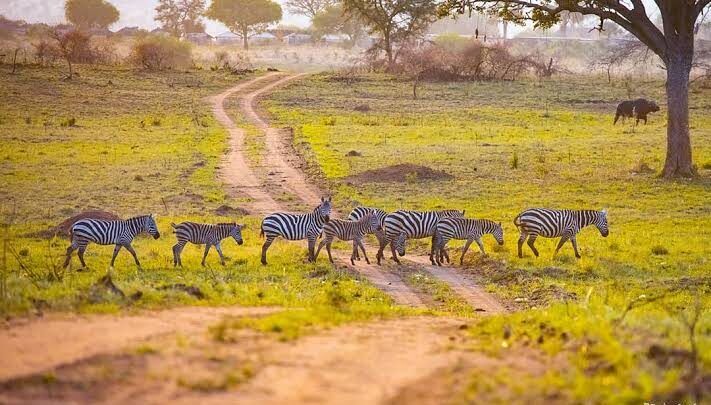
Kidepo Valley Remote Safari Guide: What to Expect Kidepo Valley National Park offers one of Uganda's most remote…
Read article →