

Nshongi Gorilla Family in Bwindi
Nshongi Gorilla Family in Bwindi: History, Location and Trekking Guide The Nshongi Gorilla Family holds an important place…
Read article →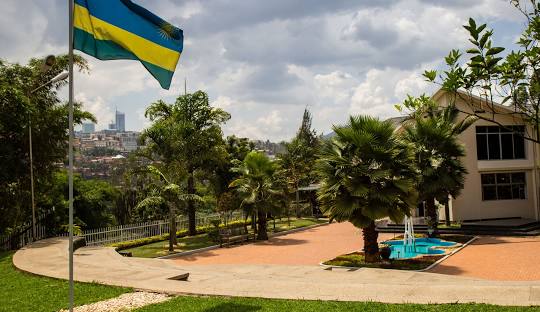
Travel Guide
The Kigali Genocide Memorial has three permanent exhibitions, Memorial gardens, educational facilities and the Genocide Archive of Rwanda
The Kigali Genocide Memorial is presented in the supplied source as a place of remembrance, education, documentation, and reflection on the 1994 genocide in Rwanda. Located at Gisozi in Kigali, the memorial commemorates people who were killed and provides visitors with historical material intended to explain the events that led to the genocide, its human consequences, and its aftermath.
The memorial is not an ordinary sightseeing attraction. The subject matter involves mass violence, loss, survivor testimony, and human remains. Visitors should therefore approach the site quietly and respectfully.
The supplied source describes memorial gardens, permanent exhibitions, educational facilities, survivor testimony, children’s displays, and the Genocide Archive of Rwanda as important parts of the experience.
According to the supplied source, Rwandan authorities and the Aegis Trust were involved in establishing the Kigali memorial.
The source describes a collaboration beginning in 2001 and states that the memorial opened in 2004.
These details are retained according to the supplied material.
The central purpose of the memorial is remembrance.
The source describes it as a place where victims are honored and where visitors can reflect on the lives lost during the genocide.
This purpose should shape how travelers behave throughout the visit.
The supplied material states that the remains of approximately 250,000 people are interred at the memorial.
This source-derived figure illustrates why the site is both a museum-like educational space and a burial place.
Visitors should remember this distinction when walking through the grounds.
The supplied source discusses the historical relationship between Hutu and Tutsi communities.
It frames earlier distinctions partly around socioeconomic roles, describing Tutsi as associated with cattle herding and Hutu with farming before later political and colonial processes hardened these categories.
The subject is historically complex, and the article retains the framing provided by the source rather than adding unsupported detail.
The source identifies both Germany and Belgium as colonial powers in Rwanda.
It states that colonial rule contributed to hardening social categories into stronger ethnic distinctions.
This background is presented as part of the historical context leading toward later conflict.
The supplied source describes 1994 as the year when long-standing tensions erupted into mass killing.
It emphasizes the extraordinary scale of loss and the international reporting that followed.
The memorial’s exhibitions provide visitors with a structured way to engage with this history.
The uploaded material describes Tutsi as the principal victims and refers to Hutu perpetrators.
It also states that members of the Batwa community were killed during the genocide.
The memorial experience is intended to document individual lives and historical events rather than reduce the tragedy to abstract statistics.
When discussing genocide, broad labels can obscure individual responsibility and individual suffering.
The supplied source focuses on Hutu, Tutsi, and Batwa identities as part of the historical context.
Visitors should allow the memorial’s documented exhibits and survivor accounts to guide their understanding.
The memorial is located in Gisozi, in the northwestern part of Kigali according to the supplied source.
Its location within the capital makes it possible to include the memorial in a wider Kigali itinerary.
Visitors should nevertheless allow enough time for a thoughtful visit.
The source states that the memorial can be reached by road from central Kigali.
It estimates a journey of approximately 10 to 15 minutes by taxi or bodaboda.
Actual travel time depends on traffic and the visitor’s starting point.
The supplied source also suggests that adventurous travelers may experience Kigali on foot.
Walking can provide a different perspective on the city.
However, the memorial visit itself can be emotionally demanding, so travelers should plan their day accordingly.
The source identifies the Kigali memorial as one of several major genocide memorial locations in Rwanda.
It specifically names Murambi, Bisesero, Ntarama, Nyamata, and Nyarubuye alongside Kigali.
Each location has its own historical context.
Murambi is listed among Rwanda’s major genocide memorial sites.
The supplied source does not provide a detailed history of Murambi in this particular article.
Travelers wanting to visit should research its specific context separately.
Bisesero is also named.
Again, the source’s purpose here is simply to identify it as another important memorial location.
No unsupported historical details should be added.
The uploaded material lists Ntarama among Rwanda’s genocide memorials.
It is separate from the Kigali site and should be approached with the same seriousness appropriate to places connected with mass violence.
Nyamata is another site identified by the source.
Travelers sometimes incorporate memorial visits into broader Rwanda itineraries, but these places should not be rushed merely to complete a checklist.
The source also lists Nyarubuye.
The article does not provide enough detail to develop its individual history accurately.
Its inclusion demonstrates that remembrance extends beyond Kigali.
The Kigali Genocide Memorial exhibitions are central to the visit.
The supplied material describes three permanent exhibitions alongside memorial gardens, educational facilities, and archival resources.
The exhibitions help visitors move from historical background toward the events and aftermath of the genocide.
The main exhibition is described as exploring Rwanda’s history and the country’s descent into genocide.
Visitors encounter information about causes and consequences.
Taking time to read rather than moving quickly through the displays can make the experience more meaningful.
The supplied source connects the genocide with a longer history of social division, colonial intervention, and ethnic tension.
The memorial provides a place where this history can be explored in greater depth.
The article itself should not oversimplify that history.
The exhibitions also address what happened after the genocide.
Survival, remembrance, rebuilding, justice, and national recovery form part of understanding the significance of the memorial.
The supplied source particularly emphasizes remembrance and education.
One of the most emotionally difficult sections described in the source is the children’s memorial.
It contains photographs and personal details about children who were killed.
The displays are intended to restore individuality to victims who might otherwise be represented only through numbers.
The source mentions photographs showing the children’s lives.
Images can create an immediate emotional connection.
Visitors should engage with these displays respectfully.
The supplied material says that displays include information such as children’s favorite toys.
These small personal details emphasize ordinary lives interrupted by violence.
They can be among the most difficult parts of the memorial to encounter.
Survivor testimony is another important element highlighted in the source.
First-person accounts help visitors understand events through lived experience.
Listening to survivors’ voices is essential to the memorial’s educational role.
The Genocide Archive of Rwanda is specifically named in the meta description and source content.
Archival documentation supports remembrance, education, and historical preservation.
The archive represents an important part of keeping records available for future generations.
The memorial also contains educational facilities according to the supplied source.
Education is central to its purpose.
The site is intended not only to remember the past but also to encourage reflection on the dangers of genocidal violence.
The gardens provide space for quiet reflection.
After viewing emotionally difficult exhibitions, visitors may appreciate time outside.
The gardens should still be treated as part of the memorial rather than a recreational park.
The supplied source connects documentation with the broader goal of preventing future genocidal violence.
Learning how propaganda, discrimination, political extremism, and violence develop can encourage visitors to think about prevention.
The memorial therefore looks both backward and forward.
The source refers to photographs, paintings, names, and other visual documentation.
Visitors should follow the memorial’s current photography rules.
Not every sensitive exhibit should automatically be photographed simply because a camera is available.
Quiet behavior is appropriate.
Visitors should avoid loud conversations, inappropriate posing, or treating memorial displays as conventional tourist backdrops.
Respect for survivors, victims, and other visitors should guide conduct.
The Kigali Genocide Memorial can be emotionally difficult.
Photographs, testimonies, personal stories, and burial grounds may affect visitors differently.
Allowing time after the visit can be preferable to scheduling a rushed sequence of unrelated activities.
Families should consider the age and emotional readiness of younger visitors.
Some exhibitions contain disturbing subject matter.
The supplied source does not provide age-specific visitor guidance, so families should consult current memorial information when planning.
The memorial can form part of a wider exploration of Kigali.
However, its significance deserves adequate time.
It should not be reduced to a quick stop between shopping, dining, and entertainment activities.
Dark-history tourism requires particular sensitivity.
A meaningful visit is centered on learning, remembrance, and reflection.
The objective should not be collecting dramatic photographs or sensational stories.
The memorial documents a defining tragedy, but visitors should avoid assuming that the genocide is the entirety of Rwanda’s identity.
Contemporary Rwanda has cultural, social, economic, environmental, and community stories extending far beyond the events commemorated here.
A broader itinerary can provide that additional context.
The supplied source encourages visitors to incorporate the memorial into a Rwanda tour.
Planning should allow enough time for the exhibitions and gardens.
Travelers should also check current visitor procedures before arrival because operational arrangements can change.
A knowledgeable guide can provide additional context before or after the memorial visit.
However, the memorial’s own exhibitions and documented testimonies should remain central.
Guides should avoid replacing documented history with speculation.
The Kigali Genocide Memorial is a place of burial, remembrance, historical education, and reflection on the 1994 genocide in Rwanda.
The supplied source places the memorial at Gisozi in Kigali and describes it as containing permanent exhibitions, memorial gardens, educational facilities, survivor testimony, a children’s memorial, and the Genocide Archive of Rwanda. It also states that the remains of approximately 250,000 victims are interred there.
The exhibitions explore historical background, the development of the genocide, the killings, and their aftermath. Personal photographs and survivor testimony ensure that visitors encounter human stories rather than statistics alone.
A visit should therefore be approached with time, quietness, and respect.
For travelers seeking to understand Rwanda’s history, the Kigali Genocide Memorial provides a significant place to learn about the consequences of division and mass violence while honoring those whose lives were lost.

Nshongi Gorilla Family in Bwindi: History, Location and Trekking Guide The Nshongi Gorilla Family holds an important place…
Read article →
Mishaya Gorilla Family in Bwindi: History, Trekking and What to Know The Mishaya Gorilla Family is one of…
Read article →
Semuliki Hot Springs Visit Guide: What to Expect Semuliki Hot Springs offers one of the most unusual natural…
Read article →
Kidepo Valley Remote Safari Guide: What to Expect Kidepo Valley National Park offers one of Uganda's most remote…
Read article →