

Nshongi Gorilla Family in Bwindi
Nshongi Gorilla Family in Bwindi: History, Location and Trekking Guide The Nshongi Gorilla Family holds an important place…
Read article →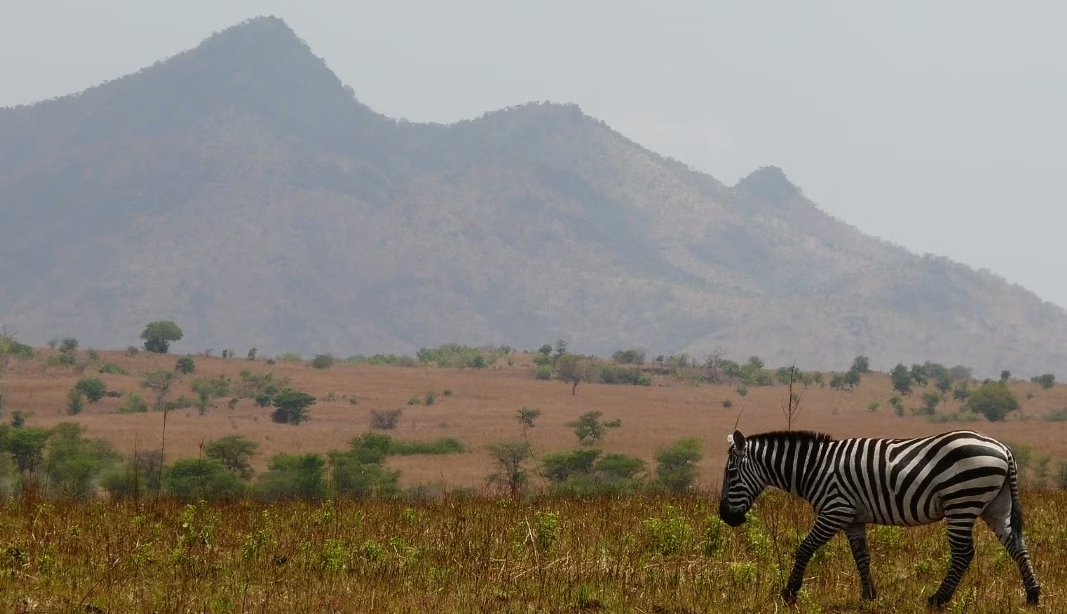
Travel Guide
Discover the Lonyili Summit hike in Uganda’s Kidepo Valley National Park. Get trail details, hiking tips, and what to expect from this scenic mountain adventure.
The Kidepo Lonyili Summit Hike takes travelers into one of the remote landscapes associated with Uganda’s Kidepo Valley National Park and the wider Karamoja region. Rather than focusing entirely on vehicle-based wildlife viewing, the hike allows visitors to experience the environment on foot, moving through savannah vegetation, bush, rocky sections, and higher terrain.
The supplied source places the Lonyili Mountains on the southeastern edge of Kidepo Valley National Park and describes the area as bordering South Sudan. The summit provides broad views across Kidepo Valley and toward distant landscapes.
For travelers already making the long journey to northeastern Uganda, the hike can add a physically active dimension to the safari.
The source describes a moderate-to-challenging route of approximately 10 to 12 kilometers for the round trip, with around five to seven hours required depending on hiking pace and conditions.
Kidepo is widely associated with broad valleys and rugged mountain surroundings.
The Lonyili hike moves away from a conventional game-drive perspective and places visitors directly within this terrain.
The source describes the route as climbing through savannah grassland, thorny bush, and rocky outcrops.
Vegetation changes as hikers gain elevation.
The temperature can also feel different higher on the route, with cooler air offering some relief after lower, warmer sections.
This progression through changing landscapes is an important part of the experience.
According to the supplied information, the Lonyili Mountains rise around the southeastern edge of Kidepo Valley National Park.
The source contrasts Lonyili with better-known Ugandan mountain destinations such as the Rwenzori and Mount Elgon.
Lonyili’s appeal is therefore not based on competing with Uganda’s highest mountains.
Instead, it provides a quieter hiking experience within a remote safari region.
From higher areas, the source describes views toward Kidepo Valley, South Sudan’s plains, and parts of Mount Morungole.
Remoteness is central to the character of the Kidepo Lonyili Summit Hike.
Kidepo itself lies far from Uganda’s busiest urban and tourism centers.
Travelers who reach this region have already made a deliberate journey away from more frequently visited routes.
The hiking experience extends that feeling.
The source emphasizes solitude and relatively low numbers of other hikers.
For visitors who prefer trails where the surrounding environment remains the dominant feature, this can be a major attraction.
The supplied source gives an approximate round-trip distance of 10 to 12 kilometers.
It suggests allowing approximately five to seven hours for the complete hike.
These figures should be understood in relation to terrain.
A 10-kilometer walk on a flat urban road is very different from a similar distance involving slopes, rocks, bush, and heat.
Hikers should therefore judge the challenge by both distance and environment.
The group pace, rest stops, weather, and time spent enjoying viewpoints can all affect total duration.
The source places the summit at approximately 2,100 meters, or about 6,890 feet.
This elevation contributes to the broad views and changes in vegetation encountered during the climb.
The hike is not described as requiring technical mountaineering.
Nevertheless, steady climbing can be physically demanding.
Travelers who walk regularly before their trip will generally find it easier to enjoy the scenery without concentrating entirely on fatigue.
The source rates the hike as moderate to challenging.
This makes it suitable for active travelers who are comfortable walking for several hours over natural terrain.
Steep or rocky areas require careful footing.
Heat can also add to the physical challenge, particularly during lower sections.
Starting early is therefore strongly emphasized.
The source suggests beginning at around 7:00 AM.
An early departure allows hikers to cover more of the route before daytime temperatures increase significantly.
The supplied information describes the starting point as near Karenga or through guided arrangements from Apoka Tourism Centre.
Because the hike occurs within a protected landscape, visitors should not treat it as an independent, unregulated trail.
The source states that the Uganda Wildlife Authority manages hikes within Kidepo Valley National Park and that the experience must be guided.
This provides both navigation and wildlife safety support.
A professional ranger can also interpret the landscape during the walk.
Walking in a wildlife area differs from hiking through an ordinary recreational park.
Large mammals can occur in the broader environment.
The source mentions elephants, buffaloes, and occasionally lions around lower hills.
A ranger guide understands how to respond to wildlife encounters and where hikers should move.
Following instructions is therefore essential.
The guide also provides local knowledge that turns the walk into more than a physical climb.
Landscape, wildlife signs, vegetation, and local geography can all be explained along the way.
The source states that visitors must pay a nature-walk fee and complete the hike with a professional ranger guide.
It lists the following categories within the supplied material: USD 50 for foreign non-residents, USD 40 for foreign residents, and UGX 50,000 for East African citizens.
These figures are reproduced from the source provided for this article.
The material states that the fees include a professional ranger guide.
It also notes that porters can be arranged locally.
A porter can make the hike more comfortable by carrying water, food, camera equipment, or other items.
The source notes that porter arrangements can be made locally.
Even travelers who are physically fit may appreciate assistance because the recommended water supply alone adds significant weight.
Using local porters can also provide direct economic participation in tourism.
Travelers should still carry essential personal items they may need immediately rather than placing everything in another person’s bag.
The source explains that wildlife is generally more concentrated in the valley but may still be observed from the lower slopes or summit ridges.
Elephants and buffaloes are among the large mammals mentioned.
Occasional lion sightings are also referenced.
Hikers should not choose the route with an expectation that these species will definitely appear.
Wildlife moves naturally.
The possibility of seeing animals should be treated as an additional feature of the hike rather than a guaranteed event.
The source describes birds calling from fig trees and klipspringers moving among boulders.
These smaller details are well suited to a walking experience.
From a vehicle, safari attention often gravitates toward larger mammals.
Walking slows the pace and makes vegetation, birds, tracks, insects, and smaller animals more noticeable.
Binoculars can be particularly useful for hikers interested in birdlife.
A compact pair adds relatively little weight while increasing observation opportunities.
One of the strongest attractions described in the source is the broad panorama available from higher areas.
Views extend across valleys, escarpments, and distant ranges.
The perspective helps visitors understand the scale of the Kidepo landscape.
Places that appear enormous from a game-drive vehicle can look even more dramatic when viewed from above.
Photography can be rewarding, but hikers should also allow time simply to appreciate the landscape without viewing every moment through a camera.
The source connects the hiking region with Karamojong culture and mentions possible encounters with Karamojong pastoralists.
Karamoja has a distinctive cultural identity closely associated with pastoral traditions.
A hiking trip can be combined with organized cultural experiences elsewhere in the itinerary.
These encounters are most meaningful when arranged respectfully and with local participation.
Culture should not be treated as a quick photographic stop.
Visitors benefit more when there is time for explanation, conversation, and context.
The supplied source recommends the dry periods of December to February and June to August.
These months are described as providing safer hiking conditions.
Rain can make natural trails slippery and reduce visibility.
Dry conditions do not remove every challenge, however.
The Karamoja region can become hot, making early starts and adequate hydration important.
Travelers should therefore prepare for both sun exposure and physical exertion.
During wetter periods, the source warns that trails may become slippery.
Rock and soil surfaces can become more difficult to negotiate after rain.
Cloud can also reduce distant views.
Travelers with fixed dates should discuss conditions with the ranger or safari operator before starting.
A hike should not be forced simply because it appears on an itinerary.
Local personnel are better placed to determine whether conditions are appropriate.
The source recommends durable hiking boots and lightweight long-sleeved clothing.
Boots should provide grip and enough support for uneven terrain.
Long clothing offers protection from sun and vegetation.
A sunhat and sunscreen are also included among the recommended items.
Because conditions can change with elevation and time of day, lightweight layers can be more practical than a single heavy garment.
Comfort matters when walking continuously for several hours.
The source recommends carrying at least three liters of water.
This reflects the potentially hot conditions and duration of the hike.
Travelers should begin properly hydrated rather than trying to compensate after becoming thirsty.
Packed lunch or energy-rich snacks are also recommended.
Food should be easy to carry and should not create unnecessary waste.
Everything brought onto the trail should be carried back unless the guide identifies an appropriate disposal arrangement.
Insect repellent is included in the source’s recommended packing list.
A camera or binoculars can help visitors document landscapes and observe wildlife.
A walking stick is described as optional but useful on steep sections.
The key is balancing preparation with weight.
Carrying too much unnecessary equipment can make a long climb more difficult.
Prioritize water, suitable clothing, sun protection, food, and essential personal items before adding heavy photographic equipment.
The source identifies Apoka as the main access point within Kidepo Valley National Park.
Travelers can reach the park by air or road.
Flights from Entebbe to Kidepo Airstrip are described in the source as operating several times a week.
Flying significantly reduces travel time and can be useful for shorter itineraries.
Overland travel provides a much longer journey but allows visitors to experience more of northern Uganda along the way.
The supplied source gives an approximate overland journey of 10 to 12 hours from Kampala and recommends using a 4×4.
This is a substantial transfer.
Travelers should plan accordingly rather than assuming they can arrive after a long drive and immediately begin demanding activities.
A well-designed itinerary allows time to rest before undertaking a five-to-seven-hour hike.
The return journey should also be considered when determining how many nights to spend in Kidepo.
The source recommends combining Lonyili with Kidepo’s other attractions.
Game drives provide a complementary experience because they allow travelers to cover much greater distances and explore the valley’s wildlife areas.
The hike focuses on physical activity, views, vegetation, and the feeling of moving through the landscape on foot.
Together, the two activities reveal different aspects of the park.
A cultural visit can add another dimension to the journey.
The Kidepo Lonyili Summit Hike offers active travelers a way to experience the remote Karamoja landscape beyond the safari vehicle.
The supplied source describes a 10-to-12-kilometer round trip taking approximately five to seven hours and reaching an elevation of around 2,100 meters.
Hikers should expect savannah, thorny vegetation, rocky sections, changing elevation, and expansive views.
A professional ranger guide is required according to the source, and an early start is recommended because temperatures can rise quickly.
With suitable boots, sufficient water, sun protection, food, and realistic physical preparation, the Lonyili hike can become a memorable part of a wider Kidepo itinerary combining walking, game drives, wildlife, landscapes, and cultural experiences.

Nshongi Gorilla Family in Bwindi: History, Location and Trekking Guide The Nshongi Gorilla Family holds an important place…
Read article →
Mishaya Gorilla Family in Bwindi: History, Trekking and What to Know The Mishaya Gorilla Family is one of…
Read article →
Semuliki Hot Springs Visit Guide: What to Expect Semuliki Hot Springs offers one of the most unusual natural…
Read article →
Kidepo Valley Remote Safari Guide: What to Expect Kidepo Valley National Park offers one of Uganda's most remote…
Read article →