

Nshongi Gorilla Family in Bwindi
Nshongi Gorilla Family in Bwindi: History, Location and Trekking Guide The Nshongi Gorilla Family holds an important place…
Read article →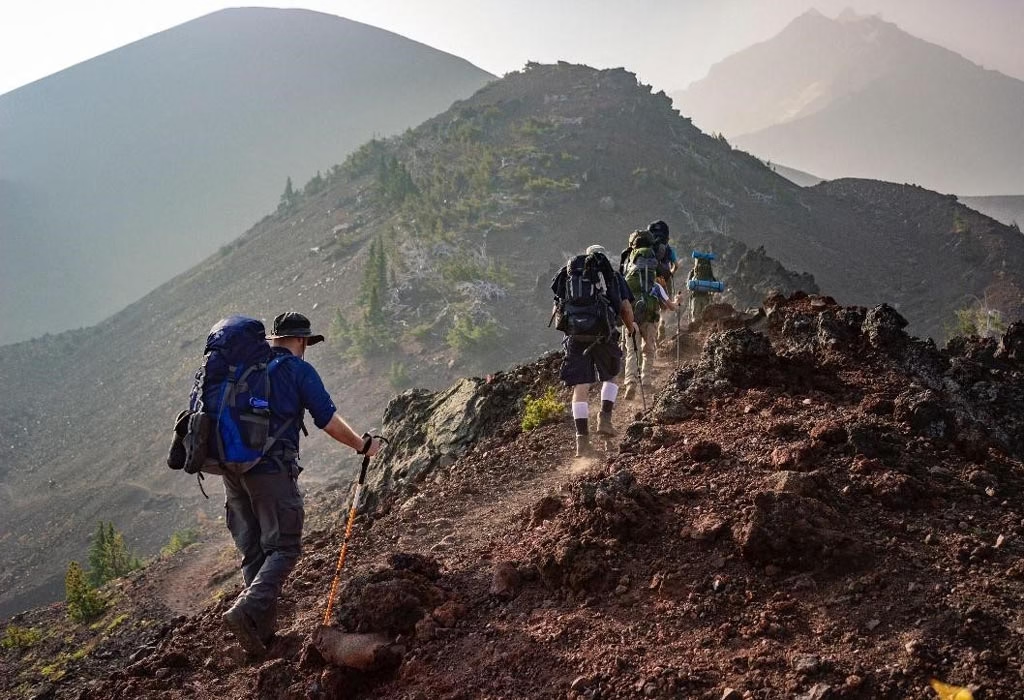
Travel Guide
Plan a sustainable hiking trip in Uganda with local guides, eco-lodges, and Leave No Trace practices. Discover how to explore responsibly.
Uganda offers hiking experiences ranging from mountain landscapes and volcanic terrain to waterfalls and tropical forests. Exploring these environments on foot creates an opportunity to experience nature closely, but it also places travelers directly within sensitive landscapes and communities. Practicing sustainable hiking in Uganda means enjoying these destinations while reducing unnecessary environmental impact and supporting the people involved in protecting them.
The supplied source emphasizes several practical principles: use responsibly managed trails, hire local guides, reduce waste, choose environmentally conscious accommodation, follow Leave No Trace practices, respect local cultures, support community projects, and consider the wider environmental impact of the journey.
Sustainability does not need to make a hiking trip complicated.
Many of the most effective actions involve simple decisions made before and during the journey.
The first step toward sustainable hiking in Uganda is deciding where to walk.
The supplied source recommends trails managed by the Uganda Wildlife Authority or community-run initiatives.
Using established and responsibly managed routes helps direct visitor fees toward conservation, ranger services, guiding, and environmental management.
It also reduces the temptation to create unofficial trails through sensitive vegetation.
Mount Elgon is one of the hiking destinations highlighted in the source.
Its mountain landscapes allow visitors to undertake longer walks and experience changing vegetation with elevation.
Using recognized routes helps concentrate foot traffic in areas intended for visitors.
Hikers should remain on the route identified by guides rather than taking shortcuts.
A shortcut may appear harmless but repeated use can damage vegetation and contribute to erosion.
The source also identifies the Rwenzori Mountains among Uganda’s important managed hiking areas.
Mountain environments can be particularly sensitive because trails cross wet ground, steep slopes, and fragile vegetation.
Longer expeditions also generate more waste and require greater logistical support.
Responsible hiking therefore begins with organized arrangements that account for guiding, porters, accommodation, food, and waste management.
Mgahinga provides another example in the supplied material.
The park combines mountain landscapes with protected forest environments.
Hikers should follow ranger and guide instructions carefully.
Protected areas may contain wildlife as well as sensitive plant communities.
Remaining on established routes helps reduce disturbance while also improving visitor safety.
The source includes Sipi Falls among well-managed hiking destinations.
Community involvement can be particularly important around such areas because trails may pass through landscapes where people live and farm.
Using local guiding services ensures visitors receive route information while supporting employment.
It also provides opportunities to understand how local communities relate to the landscape.
The supplied source places strong emphasis on traveling with local guides.
A guide does more than show the direction of the trail.
Local guides can explain plants, wildlife, landscapes, cultural traditions, and practical conditions.
Their knowledge can turn a walk from a purely physical activity into an educational experience.
Hiring locally also directs tourism income toward people living in or around hiking destinations.
Weather, trail conditions, river levels, and other circumstances can change.
A local guide is better positioned to understand current conditions than a traveler relying only on an online description.
This can improve both safety and environmental responsibility.
A knowledgeable guide can explain where visitors should walk, which areas should be avoided, and how to behave around wildlife or communities.
The source connects local guiding with meaningful employment.
This matters because conservation is easier to support when protected landscapes create practical economic opportunities.
Visitors who pay fairly for guiding services contribute to this relationship.
A sustainable hiking trip therefore considers not only environmental footprints but also how tourism expenditure is distributed.
What a traveler carries onto a trail influences the amount of waste produced.
The supplied source recommends reusable water bottles, reusable containers, and other alternatives to single-use plastics.
A carefully planned hiking kit can significantly reduce disposable packaging.
This is especially important in remote landscapes where waste collection and recycling may be limited.
A reusable bottle reduces the need to purchase repeated disposable plastic bottles.
For longer hikes, travelers should plan how they will access safe drinking water.
The exact system depends on the route and the arrangements provided by guides or accommodation.
The key principle is to minimize unnecessary packaging while remaining properly hydrated.
Snacks and packed meals can create considerable waste if every item is individually wrapped.
Reusable containers provide a practical alternative where suitable.
Travelers should also think about what happens to packaging after food has been consumed.
If there is no proper disposal point on the trail, waste should remain with the hiker until an appropriate facility is available.
The source recommends biodegradable soap and environmentally conscious products.
This is particularly relevant in areas where wastewater management is basic.
Even biodegradable products should be used responsibly rather than directly contaminating streams or other water sources.
The general principle is to reduce the amount of chemical and plastic waste introduced into natural environments.
Sustainable travel does not require buying an entirely new wardrobe marketed as environmentally friendly.
The source emphasizes keeping hiking equipment simple and functional.
Using durable gear repeatedly can be more sensible than constantly replacing equipment.
Travelers should prioritize appropriate footwear, weather protection, reusable containers, and equipment genuinely needed for the route.
Accommodation choices can extend sustainability beyond the trail.
The supplied source describes eco-lodges and community-run camps using practices such as solar power, recycling, and local food sourcing.
Choosing such properties can support businesses attempting to reduce environmental impact.
It can also direct tourism spending toward communities close to hiking destinations.
Solar energy is particularly practical in remote tourism areas.
The source identifies it as one characteristic of environmentally conscious accommodation.
Travelers can support such efforts by using electricity responsibly.
Even when a lodge generates renewable power, avoiding unnecessary consumption remains good practice.
Accommodation that sources food locally can create economic opportunities for nearby farmers and reduce dependence on long supply chains.
For travelers, locally prepared meals can also become part of the destination experience.
Guests with dietary requirements should communicate them early so that remote properties can plan appropriately.
The source places Leave No Trace at the center of sustainable hiking.
The basic idea is straightforward: visitors should avoid leaving evidence of their presence that damages the environment.
This means staying on trails, carrying out waste, respecting wildlife, and leaving plants and natural objects where they are found.
Leaving the trail may damage vegetation and contribute to erosion.
Repeated shortcuts can eventually become informal paths.
In forest or mountain environments, this can fragment vegetation and create management problems.
Hikers should therefore follow the route established by guides or protected-area authorities.
The supplied material specifically advises visitors not to pick plants.
A flower, branch, or other natural object may seem insignificant to one traveler.
The impact becomes much greater when many visitors behave similarly.
Protected landscapes should be experienced visually rather than treated as sources of souvenirs.
Wild animals should be allowed to continue natural behavior.
Hikers should maintain the distances and conduct required by guides.
Attempting to approach animals for photographs can create unnecessary disturbance and may also be unsafe.
Responsible wildlife observation places the animal’s behavior ahead of the visitor’s desire for a closer image.
The source explicitly includes wrappers, food scraps, and tissues among items that hikers should remove from the trail.
Food waste may be biodegradable, but leaving it behind can still affect wildlife behavior and create an untidy environment.
If an item was carried into the hiking area, travelers should be prepared to carry it back out.
Hiking routes may pass through villages or community land.
The supplied source encourages respectful greetings and appropriate interaction.
Travelers should remember that a village is someone’s home rather than an attraction created for tourism.
Courtesy matters.
Visitors should listen to guides and avoid behavior that would feel intrusive in their own communities.
The source specifically advises asking permission before photographing people.
This simple action recognizes personal dignity.
Not everyone wants to be photographed, and access to a camera does not create an automatic right to document another person.
Respectful photography can make cultural encounters more positive for both visitors and hosts.
The supplied source encourages travelers to learn basic greetings relevant to the communities they encounter.
Even a small effort can demonstrate interest and respect.
The broader principle is more important than memorizing particular phrases: travelers should communicate politely and follow local guidance.
Many hiking regions offer additional experiences such as coffee tours, craft visits, and village activities according to the source.
Including these experiences can spread tourism income beyond park gates and accommodation.
Travelers can choose activities that provide meaningful local participation rather than experiences designed only for quick photographs.
Purchasing locally made crafts can support artisans.
Visitors can ask where products were made and who benefits from the sale.
This makes souvenir shopping part of responsible tourism rather than simply consumption.
A locally produced item can also provide a more meaningful reminder of the journey.
The supplied material encourages fair tipping.
Guides, porters, drivers, and other staff contribute directly to hiking experiences.
Travelers should understand local tipping arrangements before the trip so that they can budget appropriately.
The objective is respectful recognition of service rather than using tips to encourage unsafe or environmentally damaging behavior.
International and domestic transportation contributes to the wider environmental footprint of a hiking holiday.
The source suggests using verified carbon-offset programs, including initiatives connected with reforestation and clean energy.
Travelers considering offsets should treat them as one component of a broader approach.
Reducing unnecessary consumption and making thoughtful travel decisions remain important.
Although not every sustainability decision concerns physical waste, the principles in the source support thoughtful trip design.
A rushed itinerary involving constant long-distance transfers can increase transportation demands and reduce the amount of time spent supporting individual destinations.
Staying longer in fewer places can create a more relaxed journey and allow deeper engagement with guides, communities, and landscapes.
Entry fees, guiding payments, accommodation, and community spending can all connect hiking tourism with conservation.
The source emphasizes that well-managed hiking supports rangers, guides, environmental protection, and local livelihoods.
Visitors therefore influence the destination through where they spend money as well as how they behave on the trail.
Protected landscapes do not exist separately from people.
Communities live around mountains, forests, and waterfalls.
When tourism provides employment and business opportunities, residents can gain practical benefits from maintaining the appeal of the landscape.
The source therefore treats community support as part of environmental sustainability rather than as a completely separate issue.
A successful approach to sustainable hiking in Uganda begins before stepping onto the trail.
Choose recognized routes managed by responsible authorities or communities. Hire local guides who understand the landscape. Carry reusable equipment, reduce single-use plastics, and choose accommodation that demonstrates environmentally conscious practices.
Once hiking, remain on established trails, avoid disturbing wildlife or plants, and remove all waste. Respect people living along the route, request permission before taking photographs, and support local projects, crafts, guides, and other community services.
The supplied source also encourages travelers to consider the wider carbon footprint of their journey.
Together, these practices allow visitors to experience Uganda’s mountains, forests, waterfalls, and volcanic landscapes while contributing more positively to the places they explore.
Sustainable hiking is ultimately about recognizing that the trail is not simply a tourism product. It is part of an ecosystem and often part of a community landscape. The goal is to enjoy it while helping preserve the qualities that made the journey worthwhile in the first place.

Nshongi Gorilla Family in Bwindi: History, Location and Trekking Guide The Nshongi Gorilla Family holds an important place…
Read article →
Mishaya Gorilla Family in Bwindi: History, Trekking and What to Know The Mishaya Gorilla Family is one of…
Read article →
Semuliki Hot Springs Visit Guide: What to Expect Semuliki Hot Springs offers one of the most unusual natural…
Read article →
Kidepo Valley Remote Safari Guide: What to Expect Kidepo Valley National Park offers one of Uganda's most remote…
Read article →