

Nshongi Gorilla Family in Bwindi
Nshongi Gorilla Family in Bwindi: History, Location and Trekking Guide The Nshongi Gorilla Family holds an important place…
Read article →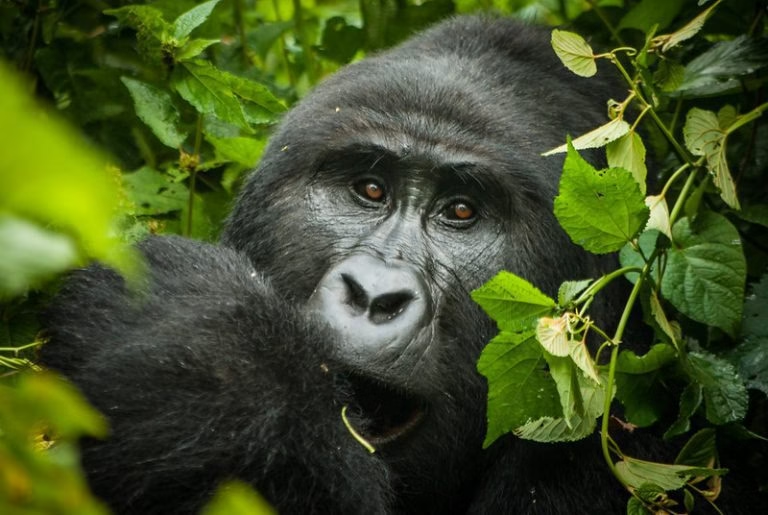
Travel Guide
Discover the best gorilla trekking safaris in Africa. Compare Uganda and Rwanda for gorilla permits, trekking experiences, and travel tips.
Gorilla safaris Africa provide travelers with an opportunity to enter protected mountain forests and observe habituated mountain gorilla families in their natural environment. Unlike a conventional savannah game drive, gorilla trekking requires visitors to continue on foot with professional guides and trackers, following forest trails until the assigned family is located.
The supplied source focuses on Uganda and Rwanda as leading destinations for this experience.
Uganda offers trekking in Bwindi Impenetrable National Park and Mgahinga Gorilla National Park, while Rwanda’s principal destination is Volcanoes National Park in the Virunga Mountains.
Both countries provide the fundamental experience of searching for mountain gorillas and spending a controlled period observing them. The differences arise in landscapes, access, safari combinations, accommodation choices, and the wider itinerary surrounding the trek.
A gorilla safari is built around an encounter that cannot be precisely scheduled beyond the day of the trek.
Visitors know when the activity begins, but the gorillas’ location determines how the forest journey develops.
Some groups may require a relatively shorter walk, while others can involve longer and more demanding trekking.
This uncertainty makes the experience feel genuinely wild.
The animals are not waiting at a permanent viewing location. Trackers use their knowledge of the forest and gorilla movements to locate them.
The supplied source identifies Bwindi Impenetrable National Park and Mgahinga Gorilla National Park as Uganda’s two key mountain gorilla trekking areas.
Bwindi receives particular attention because of its extensive forest and gorilla population.
The trekking experience involves moving through thick vegetation and terrain that can be steep or muddy.
Visitors should therefore prepare for a physical activity rather than treating gorilla trekking as a short wildlife walk.
Bwindi’s dense environment is an important part of the experience.
The forest can limit long-distance visibility, meaning visitors gradually move deeper into the habitat rather than seeing wildlife across open plains.
Guides and trackers lead the group while interpreting signs and managing the route.
The length and difficulty of the walk depend on where the assigned gorilla family is located.
Travelers should arrive prepared for changing terrain and weather.
The moment trackers locate the gorillas marks a major transition in the trek.
The physical search gives way to quiet observation.
The supplied source describes watching infants play, adults groom one another, and silverbacks demonstrate their presence.
Not every family will display the same behavior.
Some gorillas may feed, rest, move through vegetation, or interact socially.
Visitors should therefore observe what naturally occurs rather than expecting a predetermined performance.
One of the most interesting aspects of gorilla safaris Africa is the opportunity to see gorillas as social animals.
The encounter is not simply about seeing one large silverback.
Family relationships provide much of the fascination.
Young gorillas may remain close to mothers or become playful. Adults can groom or feed near one another. The silverback plays an important role within the family structure.
Watching these interactions gives the experience greater depth than simply obtaining a photograph.
The supplied source lists the Uganda gorilla trekking permit at USD 800 per person.
Because permit prices and regulations are operational information that can change, travelers should confirm the current amount and booking conditions with the relevant official authority or their authorized safari operator before making payment.
The important planning principle is that permits are limited.
A confirmed permit should therefore form the foundation of the safari itinerary rather than being treated as something to arrange after accommodation and transport.
Although Bwindi receives more attention in the supplied material, Mgahinga Gorilla National Park provides another Ugandan gorilla trekking setting.
Its location within the Virunga region creates a different mountain environment.
Travelers considering Uganda should therefore understand that the country provides more than one gorilla destination.
The final choice should reflect permit availability, itinerary design, accommodation, and the other activities being combined with the trek.
One of Uganda’s advantages highlighted by the source is the ability to combine gorilla trekking with other wildlife experiences.
Travelers can build a broader itinerary involving chimpanzees and conventional game viewing.
This creates substantial variety.
A visitor might begin with savannah wildlife, continue into a chimpanzee forest, and finish with mountain gorillas.
Each activity uses a different environment and style of wildlife observation.
Rwanda’s primary gorilla destination is Volcanoes National Park.
The park forms part of the Virunga Mountains, which extend across the region shared by Rwanda, Uganda, and the Democratic Republic of Congo.
The supplied source emphasizes Rwanda’s developed gorilla tourism infrastructure and lodge options.
For travelers building a shorter itinerary, the relationship between Kigali and the gorilla region can make logistics relatively straightforward.
Volcanoes National Park combines forest trekking with dramatic mountain scenery.
Visitors travel through a landscape influenced by volcanic slopes and highland vegetation.
The trek itself follows the same broad principle as Uganda: visitors join guides and trackers, enter the forest, locate an assigned habituated family, and then observe the gorillas under controlled conditions.
The exact trekking duration remains dependent on wildlife movement and terrain.
The supplied source lists Rwanda’s gorilla trekking permit at USD 1,500 per person.
As with the Uganda amount, permit fees and booking rules should be verified with the relevant official authority or authorized operator when planning a current trip.
Permit cost can represent a significant part of the overall safari budget.
Travelers comparing destinations should therefore consider the full journey rather than looking at the permit in isolation.
Accommodation, transportation, additional activities, and available travel time all affect the final safari.
The supplied material states that trekkers in both Uganda and Rwanda spend one hour with the gorillas during the standard trekking experience.
This period can pass surprisingly quickly.
Visitors should balance photography with direct observation.
It can be tempting to spend the entire encounter trying to create a perfect image, but watching the family without a screen often produces the strongest memory.
The hour is about observing behavior rather than simply documenting that the trek happened.
The source characterizes Uganda as the more budget-friendly option because of the lower permit figure it provides and the availability of different accommodation choices.
Rwanda is described as having higher pricing and strong luxury options.
Budget is therefore one practical distinction between the destinations.
However, travelers should calculate total itinerary cost.
A lower permit price does not automatically mean every possible Uganda itinerary will cost less than every Rwanda itinerary.
The route and accommodation choices remain important.
The supplied source contrasts road access to Bwindi from Kampala or Entebbe with access to Volcanoes National Park from Kigali.
Travel time can be an important consideration for travelers with limited days.
Rwanda can work efficiently within a compact itinerary centered on Kigali and Volcanoes National Park.
Uganda may appeal to visitors who want to use the journey to connect gorilla trekking with several other parks.
Neither approach is inherently the same; they serve different itinerary styles.
The fundamental wildlife encounter is compelling in both countries.
Visitors trek through natural mountain gorilla habitat, follow professional guidance, and observe habituated families.
Differences in terrain and the surrounding landscape can influence the experience, but gorilla movement introduces variability even within the same park.
Travelers should therefore avoid assuming that one destination always provides an easier or more dramatic trek.
The specific family location on the day matters considerably.
The supplied source recommends preparing physically for forest hiking in wet and rugged conditions.
This does not mean every traveler needs advanced athletic training.
It means recognizing that trekking can involve sustained walking, slopes, mud, and uneven ground.
Regular walking and general fitness preparation before travel can make the activity more comfortable.
Travelers with mobility concerns should discuss their circumstances with their safari operator before confirming the itinerary.
Practical clothing should reflect the forest environment.
Comfortable trekking footwear is particularly important.
Visitors should also prepare for changing weather and protect essential camera equipment.
The goal is not to carry excessive gear.
A lighter day pack containing genuinely useful items is usually easier to manage during the trek.
Travelers should follow any specific equipment guidance provided for their chosen destination.
The supplied source recommends arranging permits three to six months in advance.
Because availability can be limited, particularly around popular travel periods, early planning reduces the risk of building an itinerary around dates for which permits cannot be secured.
The permit date should guide accommodation and transportation arrangements.
Travelers should avoid making multiple non-refundable bookings before confirming the central gorilla activity.
The source recommends using a reputable operator to coordinate permits, accommodation, transportation, and guiding.
This can simplify a trip involving remote forest destinations.
A good operator should provide clear information about what is included, where the traveler will stay, how the permit is handled, and how transfers connect with the trekking date.
Visitors should understand the itinerary before making substantial payments.
A gorilla trek can stand alone within a short journey, but the supplied source encourages combining it with additional safari experiences.
Uganda provides opportunities for chimpanzee trekking and savannah wildlife.
Rwanda offers other wildlife, cultural, and landscape experiences that can be incorporated around Volcanoes National Park.
A longer itinerary allows the gorilla encounter to become one important part of a broader understanding of the destination.
Gorilla safaris Africa in Uganda and Rwanda share the extraordinary experience of entering mountain forest and observing gorillas in the wild, yet each country provides a different framework around that encounter.
Uganda offers Bwindi and Mgahinga together with opportunities to combine gorillas with chimpanzees and broader wildlife safaris. Rwanda offers Volcanoes National Park within a compact tourism circuit supported by established accommodation and access from Kigali.
Permit costs, logistics, accommodation style, available time, and additional safari interests all influence the decision.
Whichever destination forms the itinerary, careful preparation, advance permit arrangements, realistic expectations about forest conditions, and respect for ranger instructions are essential to making the gorilla encounter safe, responsible, and memorable.

Nshongi Gorilla Family in Bwindi: History, Location and Trekking Guide The Nshongi Gorilla Family holds an important place…
Read article →
Mishaya Gorilla Family in Bwindi: History, Trekking and What to Know The Mishaya Gorilla Family is one of…
Read article →
Semuliki Hot Springs Visit Guide: What to Expect Semuliki Hot Springs offers one of the most unusual natural…
Read article →
Kidepo Valley Remote Safari Guide: What to Expect Kidepo Valley National Park offers one of Uganda's most remote…
Read article →