

Nshongi Gorilla Family in Bwindi
Nshongi Gorilla Family in Bwindi: History, Location and Trekking Guide The Nshongi Gorilla Family holds an important place…
Read article →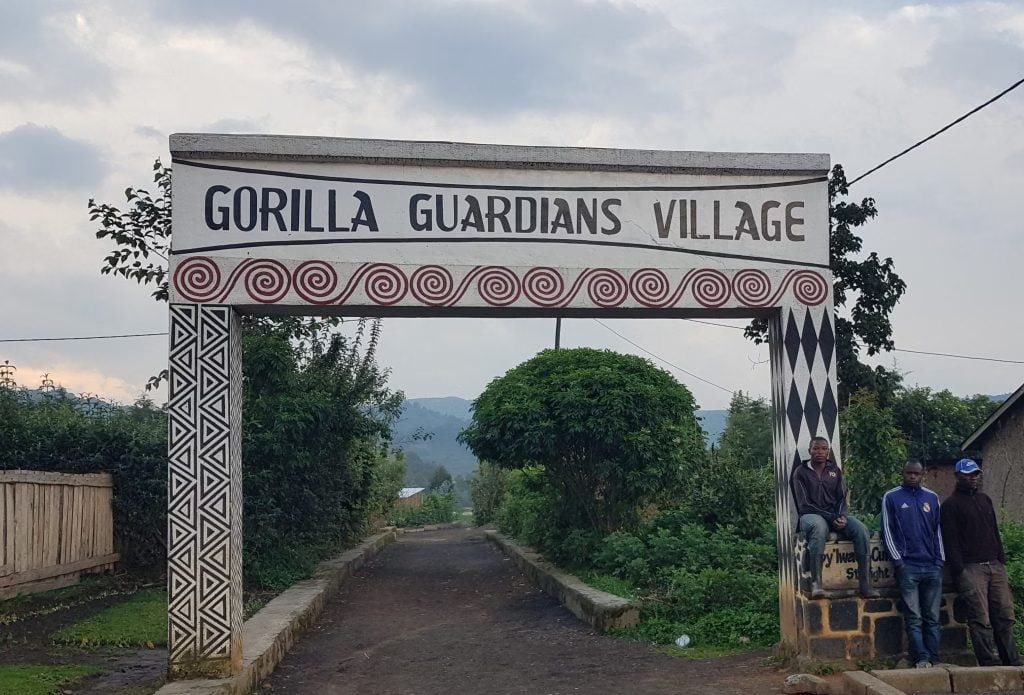
Travel Guide
Step into Rwandan culture at Gorilla Guardians Village. Discover traditional dances, ancestral stories, and local crafts while supporting community conservation near Volcanoes National Park.
A visit to Gorilla Guardians Village adds an important cultural dimension to a gorilla trekking journey in northern Rwanda. Travelers often arrive in the Volcanoes National Park region focused almost entirely on mountain gorillas, yet conservation is closely connected with the communities living around protected areas.
The village experience provides an opportunity to learn about Rwandan cultural traditions while also considering the relationship between tourism, community livelihoods and gorilla conservation.
For visitors, the experience can include traditional performances, storytelling, crafts and demonstrations of aspects of historical community life.
It is most meaningful when approached as an opportunity to learn rather than simply as entertainment after a gorilla trek.
Gorilla Guardians Village is located near Volcanoes National Park in northern Rwanda.
Its position makes it convenient to combine with gorilla trekking and other activities around the Musanze area.
Travelers can usually incorporate the experience into a day without requiring another long-distance transfer.
This is especially useful after a morning activity when visitors want something culturally engaging but less physically demanding than another mountain hike.
The story behind Gorilla Guardians Village is closely connected with conservation around Volcanoes National Park.
Mountain gorillas depend on protected habitat, but conservation cannot succeed in isolation from surrounding communities.
Tourism can create alternative sources of income linked to keeping gorillas and forests alive.
Community-based tourism demonstrates that wildlife can generate benefits beyond park boundaries.
When local people earn income through guiding, performance, crafts and related tourism services, conservation can become connected with everyday livelihoods.
Visitors should avoid oversimplifying the relationship between communities and conservation.
People living around protected areas have practical needs involving land, employment and household income.
Wildlife conservation may create opportunities, but it can also create restrictions and challenges.
A cultural visit provides an opportunity to learn about these realities.
The most useful question is not simply how communities “help gorillas,” but how conservation and tourism can be structured so that local people receive meaningful benefits.
Music and dance can form an important part of the village experience.
Performances provide an energetic introduction to cultural expression.
Visitors should look beyond the visual spectacle and ask about the meaning of songs, movements and instruments.
Cultural performances are more interesting when their context is understood.
Rather than simply recording an entire performance on a phone, spend time watching directly.
Participation may sometimes be encouraged, creating a relaxed interaction between hosts and visitors.
Demonstrations may introduce visitors to different aspects of historical Rwandan community life.
These experiences can include traditional skills and social practices.
The objective should not be to suggest that modern Rwandans live exactly as their ancestors did.
Culture changes.
Historical demonstrations provide insight into heritage while contemporary communities participate in education, technology, business and modern life.
Understanding both dimensions prevents cultural tourism from becoming a stereotype.
Some cultural experiences may introduce visitors to historical knowledge involving plants and traditional healing practices.
This can provide insight into how communities understood and used local vegetation.
Travelers should treat such demonstrations as cultural education rather than personal medical advice.
Traditional knowledge can be historically significant without replacing professional healthcare.
The broader lesson is that communities developed detailed relationships with the plants and landscapes around them.
Crafts provide another connection between culture and tourism.
Visitors may observe or purchase locally made products.
Buying directly from artisans can help tourism revenue reach households.
Ask about how an item was made and what materials were used.
The story behind a locally produced craft can make it more meaningful than a generic souvenir.
Travelers should also respect prices and avoid aggressive bargaining over small amounts.
Stories help preserve historical memory.
A guide or community member may explain traditions, social structures or experiences connected with the region.
Listening is an important part of cultural tourism.
Travelers sometimes become so focused on photography that they miss the information being shared.
Putting the camera away for part of the visit can lead to a deeper understanding of the people and the conservation landscape surrounding Volcanoes National Park.
The village’s proximity to Rwanda’s mountain gorilla tourism region makes conservation central to the experience.
Gorilla trekking brings international visitors and tourism revenue into northern Rwanda.
The long-term success of conservation depends partly on communities having reasons to support the protected area.
Tourism-related employment is one way benefits can spread beyond direct park management.
Visitors should understand that conservation is not achieved solely by trackers and rangers inside the forest.
A common approach is to visit Gorilla Guardians Village around the same period as a gorilla trek.
The activities complement each other.
Trekking shows visitors the protected forest and the gorillas themselves.
The village experience introduces some of the human context surrounding conservation.
Together, they provide a more complete picture of the Volcanoes region.
Travelers should avoid packing both experiences into an unrealistically rushed schedule.
Allow enough time to engage properly.
The village can work well as a later activity following gorilla trekking, depending on the trek’s finishing time and the traveler’s energy.
Some treks finish relatively early, while others take considerably longer.
Because gorillas move freely, nobody can guarantee exactly when trekkers will return.
The afternoon schedule should therefore remain flexible.
A good operator avoids creating stressful timing immediately after a forest activity.
Travelers interested in conservation history may also include experiences connected with Dian Fossey and mountain gorilla research.
These provide another perspective on the region.
The cultural village focuses more directly on community and heritage, while conservation-oriented attractions can explain scientific and historical aspects of gorilla protection.
Combining them creates a broader understanding of how research, tourism and local communities intersect.
Cultural tourism requires responsible photography.
Ask before taking close portraits.
Do not assume an entrance fee gives unlimited permission to photograph every individual.
If children are present, be particularly respectful.
During performances, follow guidance from hosts.
Travelers should also avoid viewing people solely through a camera lens.
Conversation and listening can be more valuable than photographs.
The appropriate duration depends on the activities included.
Visitors should avoid rushing through simply to check the experience off an itinerary.
Allow enough time to hear explanations and ask thoughtful questions.
A slower visit can reveal more than a tightly scheduled one.
If the day already contains gorilla trekking, keep the rest of the schedule manageable.
Northern Rwanda deserves more than a sequence of activities performed under time pressure.
Community tourism works best when local people participate meaningfully in the tourism economy.
Visitor spending can support performers, guides, artisans and other participants.
Travelers can contribute by booking legitimate experiences and purchasing local crafts when genuinely interested.
Support should preserve dignity.
Handing out random gifts or money can sometimes create unintended problems.
It is generally better to support organized community initiatives and local businesses.
Visitors may encounter customs or explanations that differ from their own experiences.
Approach them with curiosity.
Avoid mocking traditions or immediately comparing them with your own culture.
Questions are usually more constructive when asked respectfully.
Travel should create opportunities to understand how other people interpret their history and community.
The objective is not to decide which culture is superior but to learn how different societies have developed.
Comfortable, modest casual clothing works well for a village visit.
If the experience follows gorilla trekking, travelers may want to return to the lodge and change out of muddy hiking clothes first.
Comfortable shoes are appropriate because some movement around the site may be involved.
Weather around the Volcanoes region can change quickly, so carrying a light rain layer can be useful.
The Volcanoes region contains much more than gorilla trekking.
Travelers can explore cultural experiences, conservation history, mountain landscapes and other nature-based activities.
Spending several nights allows the region to feel like a destination rather than simply the location of a single expensive permit.
This slower approach also spreads tourism spending across more businesses and activities.
The Gorilla Guardians Village experience matters because it adds people to a tourism story often dominated by wildlife.
Mountain gorillas cannot be separated from the human communities living around their habitat.
Conservation works best when protected wildlife and community wellbeing are considered together.
Visitors who trek gorillas and then learn about local culture leave with a broader understanding of northern Rwanda.
The gorilla encounter may remain the emotional highlight, but cultural experiences explain more of the environment that makes conservation possible.
That combination of wildlife, community and heritage creates a more complete Rwanda journey.

Nshongi Gorilla Family in Bwindi: History, Location and Trekking Guide The Nshongi Gorilla Family holds an important place…
Read article →
Mishaya Gorilla Family in Bwindi: History, Trekking and What to Know The Mishaya Gorilla Family is one of…
Read article →
Semuliki Hot Springs Visit Guide: What to Expect Semuliki Hot Springs offers one of the most unusual natural…
Read article →
Kidepo Valley Remote Safari Guide: What to Expect Kidepo Valley National Park offers one of Uganda's most remote…
Read article →