

Nshongi Gorilla Family in Bwindi
Nshongi Gorilla Family in Bwindi: History, Location and Trekking Guide The Nshongi Gorilla Family holds an important place…
Read article →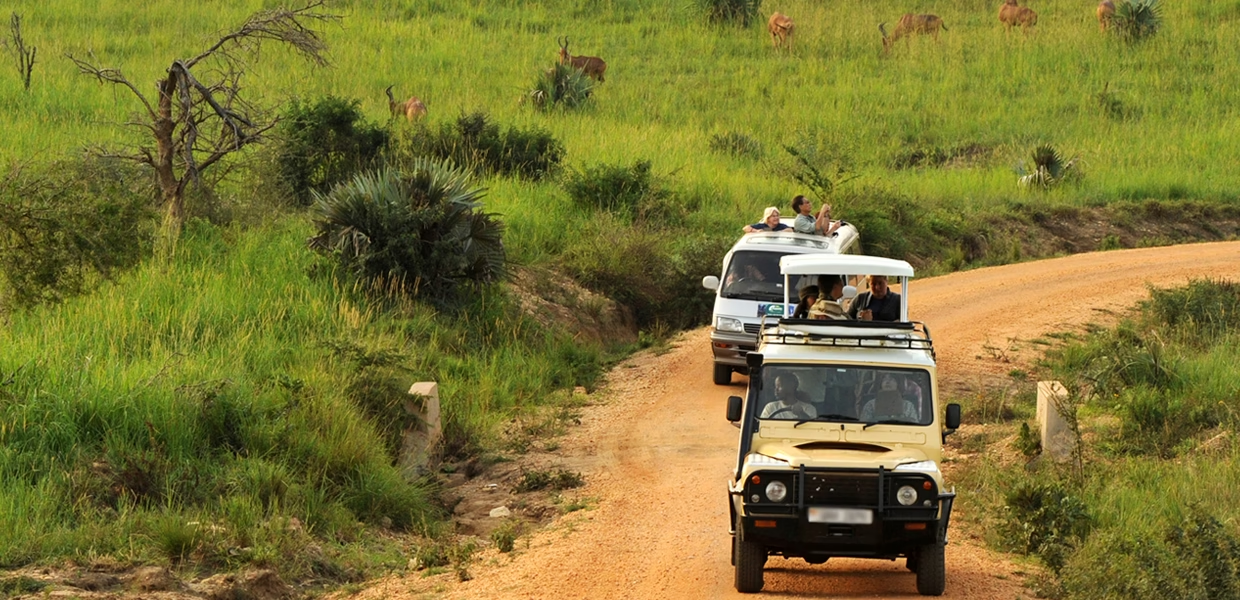
Travel Guide
Experience unforgettable game drives in Queen Elizabeth National Park. Spot lions, elephants, buffalo, and the famous tree-climbing lions of Ishasha. Focus Keyword: Game drives in Queen Elizabeth National Park.
Game Drives in Queen Elizabeth National Park provide travelers with an opportunity to explore one of Uganda’s major safari landscapes while looking for wildlife such as lions, elephants, buffalo, and the tree-climbing lions associated with Ishasha. The source presents wildlife viewing as the central attraction, making game drives an important component of a wider Uganda safari.
A successful game drive depends on more than the number of animals seen. Timing, guide knowledge, patience, landscape, weather, and wildlife movement all influence the experience.
Travelers should enter the park with realistic expectations. Wild animals do not follow a fixed schedule, and no responsible guide can guarantee every species on a single drive.
Game drives allow visitors to move through different habitats while observing wildlife from an appropriate safari vehicle. Early and later parts of the day are often important periods in safari planning, although the exact schedule should follow current park arrangements and professional guidance.
Travelers should prepare before leaving the lodge. Binoculars, cameras, sun protection, drinking water, and personal essentials should be accessible. Clothing should be comfortable, and an additional layer may be useful during cooler departures.
Lions are among the animals specifically highlighted in the source. Finding them can be exciting, but visitors should remain patient. Lions may be active, resting, or partly hidden by vegetation. A guide can interpret behavior and position the vehicle responsibly.
Elephants can create equally memorable encounters. Visitors should allow them space and avoid encouraging drivers to approach too closely. Watching elephants interact naturally can reveal far more than simply obtaining a close photograph.
Buffalo are another species identified in the source. They may be encountered individually or in groups depending on circumstances. Travelers should follow guide instructions around all large animals and remain inside the vehicle unless specifically told that it is safe and permitted to leave.
The broader landscape also deserves attention. A safari becomes more interesting when visitors observe vegetation, birds, smaller mammals, and the changing character of different areas. Focusing only on famous species can cause travelers to miss much of what makes the ecosystem interesting.
The source specifically highlights the famous tree-climbing lions of Ishasha. This association makes the area particularly interesting to many visitors, but travelers should remember that lions are wild animals and cannot be expected to climb a tree at a particular time for tourists.
A visit to Ishasha should therefore be approached as a broader wildlife experience rather than a guaranteed photographic appointment with a lion resting on a branch.
If tree-climbing lions are encountered, visitors should remain quiet and follow guide instructions. Vehicles should not crowd the sighting. Photography should be conducted from an appropriate position without attempting to alter the animal’s behavior.
A longer lens can help photographers work responsibly from a distance. Wider images can also show the lion within the tree and surrounding landscape, giving greater context than an extreme close-up.
Travelers should allow enough time when incorporating Ishasha into a larger Uganda itinerary. It should not be treated simply as a rushed stop between two distant destinations. Road conditions, park routes, and the location of the next accommodation all need to be considered.
Patience remains one of the most important safari skills. A traveler may spend time looking for lions and instead encounter elephants, antelope, birds, or other wildlife. These should not be treated as disappointing substitutes. They are part of the same ecosystem.
Game Drives in Queen Elizabeth National Park can form part of a broader itinerary that includes other wildlife and nature experiences. The exact combination should depend on the traveler’s interests and available time.
Multiple game drives can be more rewarding than attempting to see everything during one outing. Wildlife conditions change from morning to afternoon and from one day to another. Spending additional time in the park gives visitors more opportunities to experience those differences.
Choosing accommodation should be part of the logistical planning. Travelers should understand where the lodge is located relative to the game-drive areas they want to explore. A property that looks close on a general map may still require meaningful driving time.
Families should plan around children’s tolerance for long hours in a vehicle. Shorter drives or breaks may make the safari more enjoyable. Parents can bring binoculars and encourage children to look for birds and smaller animals rather than waiting only for lions.
Photographers should discuss vehicle arrangements before the safari. Window access, roof configuration, group size, and luggage space can affect photography. However, no vehicle arrangement should encourage irresponsible behavior around animals.
Visitors should also avoid excessive noise. Loud conversations can disrupt the atmosphere for other travelers and may influence wildlife behavior. Phones should be managed thoughtfully, particularly when multiple vehicles are gathered around a sighting.
The safari vehicle should never become a place from which litter is discarded. All waste should remain inside until it can be disposed of properly. Wildlife should never be fed.
Travelers combining Queen Elizabeth with gorilla trekking should consider the complete route. The contrast between open wildlife landscapes and dense forest trekking can create an excellent Uganda itinerary, but sufficient time should be allowed for transfers and rest.
A rushed schedule can reduce the quality of both experiences. Spending another night in a destination can sometimes provide more value than adding another park simply to increase the number of places visited.
Game Drives in Queen Elizabeth National Park offer opportunities to observe lions, elephants, buffalo, the tree-climbing lions associated with Ishasha, and many other elements of Uganda’s wildlife landscape.
The strongest safari is built around patience rather than guarantees. Travelers should allow their guide to interpret conditions, remain respectful around animals, and appreciate unexpected sightings.
By combining responsible wildlife viewing with realistic scheduling and enough time in the park, visitors can experience Queen Elizabeth National Park as a living ecosystem rather than simply a collection of famous animals.

Nshongi Gorilla Family in Bwindi: History, Location and Trekking Guide The Nshongi Gorilla Family holds an important place…
Read article →
Mishaya Gorilla Family in Bwindi: History, Trekking and What to Know The Mishaya Gorilla Family is one of…
Read article →
Semuliki Hot Springs Visit Guide: What to Expect Semuliki Hot Springs offers one of the most unusual natural…
Read article →
Kidepo Valley Remote Safari Guide: What to Expect Kidepo Valley National Park offers one of Uganda's most remote…
Read article →