

Nshongi Gorilla Family in Bwindi
Nshongi Gorilla Family in Bwindi: History, Location and Trekking Guide The Nshongi Gorilla Family holds an important place…
Read article →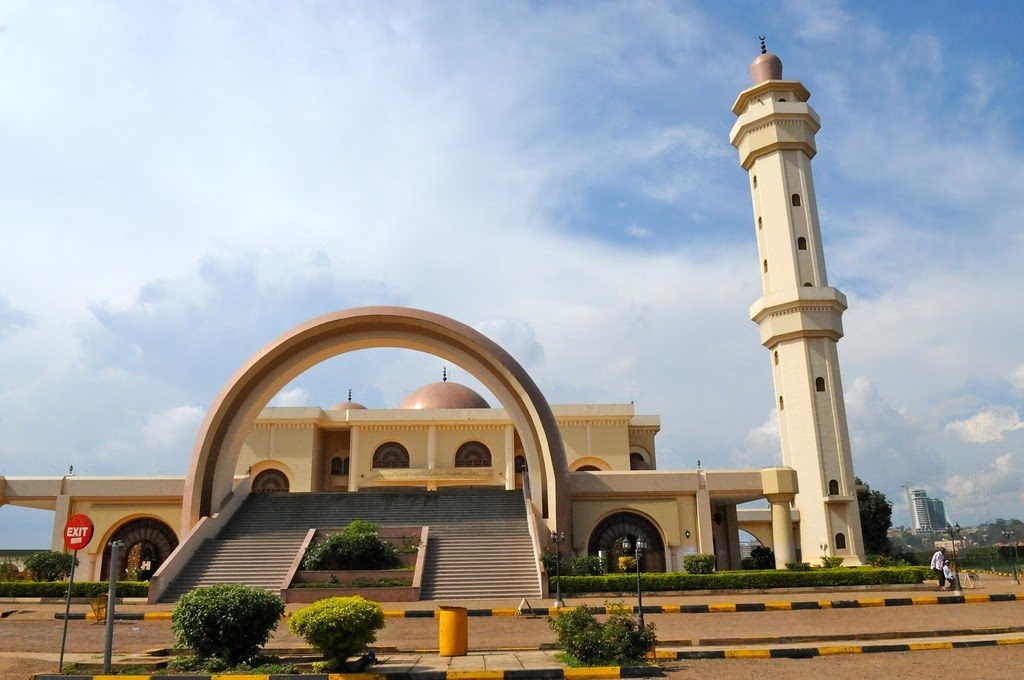
Travel Guide
Explore the iconic Gaddafi Mosque in Kampala, Uganda. Learn about its architecture, history, guided tours, and panoramic views from the minaret.
Gaddafi Mosque Uganda, also known in the supplied source as the Uganda National Mosque, is one of Kampala’s prominent religious and architectural landmarks. Rising from Old Kampala, the mosque combines religious importance with distinctive architecture, cultural interpretation, guided visitor experiences, and panoramic views across the capital.
For travelers interested in understanding Kampala beyond wildlife excursions and commercial districts, the mosque offers a different perspective on the city.
The supplied source emphasizes three major reasons for visiting: the architecture, the view from the minaret, and the opportunity to learn about Islamic beliefs and the Muslim community in Uganda through guided interpretation.
Because it remains a place of worship, respectful conduct and appropriate clothing are essential throughout a visit.
The mosque occupies a prominent position in Old Kampala, west of the central business district.
Its elevated location makes it visible from several parts of the city.
The source describes the site as standing on Kampala Hill and offering extensive views across the capital.
The position is important because visitors can appreciate both the building itself and Kampala’s wider urban landscape from the same attraction.
The supplied source presents the mosque as an important national Islamic landmark.
It serves worshippers while also receiving travelers interested in architecture, religion, and culture.
Visitors should therefore remember that tourism is secondary to the building’s religious function.
The most appropriate experience is one based on curiosity and respect rather than treating the mosque only as a photographic viewpoint.
According to the supplied source, the mosque was commissioned by former Libyan leader Muammar Gaddafi as a donation to Uganda’s Muslim community.
The source states that construction began in 2001, was completed in 2006, and the mosque officially opened as Uganda’s national mosque in 2007.
These details provide the historical framework behind the Gaddafi Mosque name used by many visitors.
The supplied material describes the mosque as accommodating more than 15,000 worshippers inside, with additional capacity on surrounding terraces.
Its scale becomes particularly apparent when visitors see the prayer spaces and wider complex.
The size reflects its national significance within the source’s framing.
Architecture is one of the strongest reasons to visit Gaddafi Mosque Uganda.
The supplied source describes a combination of Arabic, African, and European architectural styles.
This mixture gives visitors numerous details to examine rather than focusing solely on the building’s overall size.
Large chandeliers contribute to the interior character described in the source.
They draw attention upward and emphasize the scale of the prayer hall.
Visitors interested in architecture should take time to observe how lighting, height, decoration, and open space work together.
Photography rules inside the prayer hall should always be respected.
The source specifically mentions hand-painted mosaics.
Decorative details can easily be overlooked when visitors rush directly toward the minaret.
A slower visit allows time to appreciate craftsmanship within the building.
A guide can provide context for particular design features where interpretation is available.
Polished marble contributes to the mosque’s formal appearance.
The material reflects light and adds to the sense of scale within the structure.
Architectural travelers may find the relationship between surfaces, arches, decorative elements, and open prayer areas particularly interesting.
The supplied source also highlights the mosque’s arches.
These structural and decorative features contribute to what the material describes as an atmosphere of regal elegance.
Visitors should look at the building from different positions to appreciate how its design changes with perspective.
One of the mosque’s most distinctive visitor experiences is climbing the minaret.
According to the supplied source, reaching the viewpoint involves approximately 304 steps.
The climb requires some physical effort, but it rewards visitors with an elevated view of Kampala.
Travelers who have difficulty with stairs should consider their comfort before beginning.
From the top, the source describes a 360-degree view of the city.
The elevated position allows visitors to understand Kampala’s geography in a way that is difficult at street level.
Roads, buildings, hills, neighborhoods, and distant landscapes become part of a single panorama.
This makes the minaret especially interesting for first-time visitors trying to understand the shape of the capital.
The source refers to views across the seven hills of Kampala.
From an elevated viewpoint, visitors can better appreciate the city’s undulating landscape.
Kampala has expanded well beyond its historical core, but the hilltop perspective remains useful for understanding how topography influenced the city.
The supplied material also describes Lake Victoria as visible in the distance from the minaret.
Visibility naturally depends on atmospheric conditions.
On a clear day, the broader view can help travelers understand Kampala’s relationship with the surrounding region.
The minaret is particularly attractive to photographers.
Morning light and late-afternoon or sunset conditions can change the appearance of the city.
A wide view from above allows photographers to capture urban landscapes rather than focusing only on individual buildings.
Visitors should still follow all site instructions concerning cameras and movement.
The source states that guided tours are available and are an important part of the experience.
A guide can explain the building, visitor etiquette, Islamic beliefs, and the role of Uganda’s Muslim community.
This interpretation makes the visit more meaningful than simply climbing the minaret and leaving.
Travelers who are unfamiliar with Islam can use the guided experience to ask respectful questions.
Understanding the purpose of the prayer hall, patterns of worship, and appropriate behavior provides context for the architecture.
Religious tourism is most valuable when visitors approach unfamiliar traditions with genuine interest.
A guide can also explain how visitors should behave within the complex.
Places of worship often have expectations concerning clothing, movement, photography, and access to particular areas.
Following these expectations is part of responsible tourism.
The supplied source states that modest attire is required.
Scarves and wraps are described as being available at the entrance for visitors who need them.
Travelers can make the visit smoother by dressing appropriately before arrival.
Modesty requirements should be treated as respect for the religious setting rather than as an inconvenience.
According to the supplied material, photography is allowed outside and around the minaret but is limited inside the mosque hall.
Visitors should ask their guide if uncertain.
A photograph is never worth ignoring the rules of an active place of worship.
Respectful observation should remain the priority.
The source lists an approximate 2025 foreign tourist entry fee of UGX 20,000 and describes guided tours as included.
Because this figure is explicitly dated in the supplied material, travelers planning a later visit should confirm the applicable charge locally rather than assuming that an older amount remains unchanged.
The source recommends morning hours for cooler conditions and potentially fewer visitors.
Morning light can also be useful for photography.
Travelers who want to climb the minaret may find cooler temperatures more comfortable than the middle of the day.
The supplied material also highlights sunset as an attractive period for cityscape photography.
Warm evening light can create a different view of Kampala from the minaret.
Visitors interested in this experience should confirm access times so that their plans correspond with current site arrangements.
The source advises tourists to avoid Friday around noon, when large congregational prayers take place.
This recommendation recognizes the building’s primary religious function.
Visitors should plan sightseeing around worship rather than expecting worshippers to accommodate tourism.
The mosque’s location makes it possible to combine the visit with other Kampala attractions.
The supplied source specifically mentions Namirembe Cathedral, Kabaka’s Palace, and Owino Market.
Together, these places can create a broader cultural and historical city experience.
The source describes Namirembe Cathedral as Uganda’s oldest Anglican cathedral.
Combining religious landmarks can help visitors appreciate the diversity of faith traditions represented within Kampala.
Each site should be approached according to its own visitor rules and religious significance.
Kabaka’s Palace is another nearby attraction identified in the supplied material.
Its connection with the Buganda Kingdom adds a different historical and cultural theme to the day.
Travelers can therefore move from Islamic architecture to Buganda history within the same broader city itinerary.
The source also recommends Owino Market.
A market experience introduces a very different side of Kampala from the quiet interior of a religious building.
Crowded trading spaces, products, movement, and everyday commerce demonstrate the energy of the city at street level.
Many international visitors associate Uganda primarily with gorillas, chimpanzees, national parks, and the Nile.
The supplied source encourages travelers to include cultural landmarks such as Gaddafi Mosque Uganda for a more rounded itinerary.
This can be particularly useful when travelers have a free day before or after a wildlife safari.
The most important principle during a visit is respect.
The mosque is not simply a monument.
It remains an active religious site.
Visitors should dress appropriately, listen to guides, avoid interrupting worship, and follow photography restrictions.
These simple actions make cultural exchange more positive.
The supplied source presents Gaddafi Mosque Uganda as a major Islamic, architectural, and cultural landmark in Old Kampala.
Commissioned with support from former Libyan leader Muammar Gaddafi, the mosque is described as having been completed in 2006 and officially opened in 2007.
Its architecture combines Arabic, African, and European influences, with chandeliers, mosaics, marble surfaces, and prominent arches. The minaret, reached by approximately 304 steps according to the source, provides extensive views across Kampala.
Guided tours introduce visitors to Islamic beliefs, mosque etiquette, architecture, and the Muslim community’s place within Uganda’s cultural landscape.
For travelers exploring Kampala, the mosque can be combined with nearby historical and cultural attractions to create a city experience that extends far beyond the conventional safari route.

Nshongi Gorilla Family in Bwindi: History, Location and Trekking Guide The Nshongi Gorilla Family holds an important place…
Read article →
Mishaya Gorilla Family in Bwindi: History, Trekking and What to Know The Mishaya Gorilla Family is one of…
Read article →
Semuliki Hot Springs Visit Guide: What to Expect Semuliki Hot Springs offers one of the most unusual natural…
Read article →
Kidepo Valley Remote Safari Guide: What to Expect Kidepo Valley National Park offers one of Uganda's most remote…
Read article →