

Nshongi Gorilla Family in Bwindi
Nshongi Gorilla Family in Bwindi: History, Location and Trekking Guide The Nshongi Gorilla Family holds an important place…
Read article →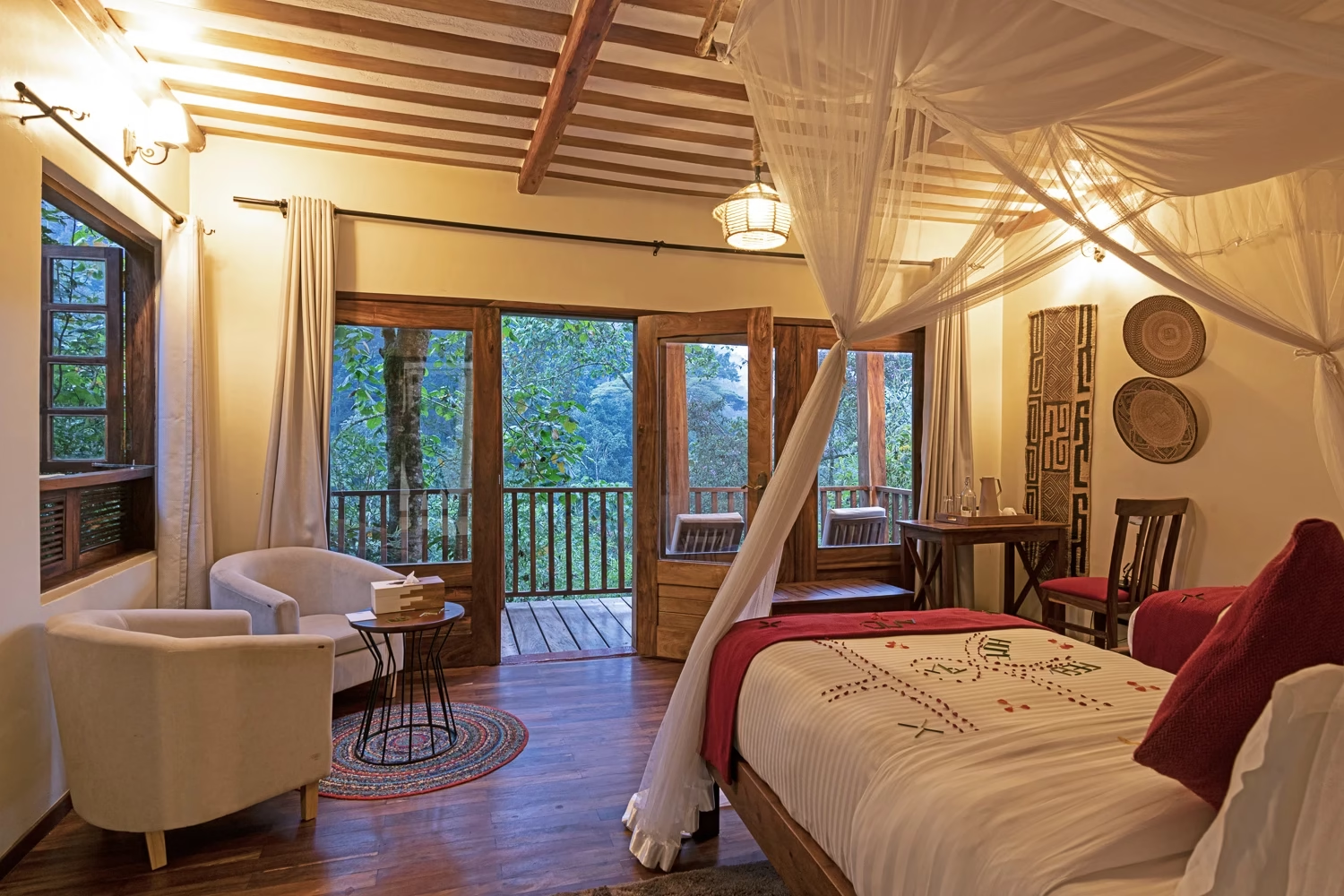
Travel Guide
Stay at Four Gorillas Lodge near Bwindi Impenetrable National Park. Enjoy luxury, breathtaking forest views, and easy access to gorilla trekking adventures.
Four Gorillas Lodge is presented in the supplied source as a luxury accommodation option in the Rushaga area of Bwindi Impenetrable National Park. Its position close to the Rushaga trekking sector makes it particularly relevant for travelers whose gorilla permits require them to report in this part of southern Bwindi.
The lodge combines access to the forest with comfortable cottages, views, dining, nature-based activities, and opportunities to explore nearby communities and landscapes.
For many guests, the advantage is simple: they can stay close to the primary wildlife activity without giving up the comfort expected from a higher-end safari property.
The Rushaga region is strongly associated with mountain gorilla trekking.
Staying close to the correct trekking sector simplifies the early morning schedule and reduces unnecessary transfers.
Visitors should always confirm the sector printed or assigned to their gorilla permit before booking accommodation.
Bwindi is geographically complex, and a lodge that is convenient for one sector may be impractical for another.
The supplied source describes Four Gorillas Lodge as being only a short distance from the Rushaga park gate.
This location can be especially valuable on trekking morning.
Instead of beginning the day with a lengthy drive, guests can focus on breakfast, checking equipment, and reaching the briefing point on time.
Guests should prepare their trekking clothing and equipment the previous evening.
Strong walking shoes, long trousers, rain protection, drinking water, and a suitable daypack are useful.
The forest can be muddy and wet even when the morning begins under clear skies.
Being organized reduces stress before departure.
A gorilla trek can involve several hours of walking through steep and uneven forest.
Returning to a comfortable lodge therefore becomes an important part of the day.
Guests can shower, change clothes, eat, and rest while still surrounded by the scenery of southern Bwindi.
This balance between adventure and recovery is one of the property’s main attractions.
The supplied source describes luxury cottages and deluxe rooms.
These are designed to maintain a connection with the natural setting while providing modern comfort.
Spacious interiors are particularly useful for travelers carrying safari luggage and trekking equipment.
Guests can organize their belongings without feeling confined.
The source refers to elegant African décor within the accommodation.
Thoughtful design can give a lodge a sense of place rather than making it resemble a generic hotel.
Travelers may notice local materials, colors, or decorative influences that complement the surrounding landscape.
Private verandas provide views toward the forest and hills.
They also give guests a place to enjoy the destination without scheduling another excursion.
An afternoon on the veranda can be used for reading, birdwatching, photography, or simply resting after trekking.
The supplied source highlights en-suite bathrooms with hot showers and environmentally conscious amenities.
A hot shower becomes particularly welcome after a wet or muddy trek.
Guests should also use water and lodge resources responsibly, especially in remote destinations where infrastructure differs from a city hotel.
Quality bedding and mosquito nets are also mentioned.
Adequate sleep is important before an early trekking day.
Travelers may arrive tired after a long road transfer, making a comfortable first evening especially valuable.
A quieter schedule on arrival day can help guests prepare for the main activity.
The source describes large glass windows that allow natural light and views into the surrounding landscape.
This design helps maintain the feeling of staying close to the forest.
Guests can appreciate changing mist, vegetation, and hills even while indoors.
Meals are described as combining international cuisine and Ugandan specialties.
This gives visitors an opportunity to enjoy familiar dishes while also experiencing local flavors.
Fresh ingredients sourced locally are emphasized in the source.
Dietary requirements should be communicated before arrival whenever possible.
A relaxed breakfast overlooking the surrounding landscape can be part of the lodge experience on non-trekking days.
On trekking morning, however, the priority may be timing.
Guests should confirm whether breakfast will be served early enough for their required briefing time.
After trekking, dinner provides time to reflect on the day.
Guests may compare experiences, review photographs, or simply enjoy a quieter evening.
A warm meal and comfortable lounge can feel particularly rewarding after several hours outdoors.
The supplied source highlights opportunities for encounters involving Batwa and Bakiga communities.
These can introduce visitors to the human side of the Bwindi landscape.
Responsible community tourism should create genuine benefits for participating residents and allow them to determine how their culture is represented.
Birdwatching around the lodge grounds is another activity mentioned.
Travelers do not necessarily need to undertake a long excursion to begin observing birds.
A quiet period around gardens, forest edges, or verandas may reveal considerable activity.
Binoculars are useful even for guests who are not specialist birders.
The Rushaga hills provide opportunities for guided nature walks.
These activities allow guests to explore the surrounding environment at a slower pace.
Walking with a guide can bring attention to plants, smaller wildlife, bird calls, and features of the landscape that may otherwise go unnoticed.
The supplied source suggests canoe excursions on Lake Mutanda as another possible activity.
The lake provides a scenic contrast with the dense forest of Bwindi.
A visit can be especially attractive for travelers spending several nights in the region and wanting a less strenuous day after trekking.
A guided canoe experience allows travelers to enjoy the water and surrounding hills from a different perspective.
Activities should be arranged with appropriate local providers and according to current weather conditions.
Guests should follow safety instructions and use any equipment provided.
The source places Kisoro Airstrip approximately 45 minutes away.
This is a source-provided estimate and actual transfer time can vary with road conditions and the precise route.
Flying can reduce the amount of time spent driving from central Uganda.
A vehicle transfer is still needed from the airstrip to the lodge.
The supplied source also describes access through Kigali, Rwanda, estimating approximately four to five hours by road.
Cross-border travel requires appropriate immigration arrangements and should be planned carefully.
Actual travel time depends on the border process, traffic, road conditions, and stops.
The source highlights June to September and December to February as periods associated with relatively drier trekking conditions.
These months can make forest trails more manageable, but rain remains possible.
Visitors should pack waterproof clothing regardless of season.
A wetter period can still provide an excellent stay.
The landscape may be particularly green and atmospheric, while mist can create dramatic forest views.
The main difference is that trails may be muddier.
Good footwear and realistic expectations become especially important.
The supplied source refers to the lodge’s support for local projects and conservation.
Travelers interested in responsible tourism can ask staff how these programs work.
Understanding specific initiatives provides more useful information than relying only on broad sustainability claims.
The source suggests itineraries combining gorilla trekking with Lake Bunyonyi.
A lake stay can provide a relaxing contrast after Bwindi.
Visitors may appreciate slowing down after the physical demands of trekking before continuing to another safari destination.
The supplied source also mentions itineraries linking Bwindi with Kibale chimpanzee experiences.
This creates a primate-focused Uganda journey.
The two destinations offer different forests and wildlife encounters, giving travelers a broader understanding of Uganda’s primates.
Four Gorillas Lodge is particularly relevant for travelers trekking from the Rushaga side of Bwindi who want a higher-comfort property.
Couples, honeymooners, photographers, and private safari travelers may appreciate the combination of privacy and scenery.
The surrounding activities also make the lodge suitable for visitors spending more than one night.
Four Gorillas Lodge combines a strategic Rushaga location with the comfort expected from a luxury Bwindi stay. The supplied source emphasizes spacious accommodation, private verandas, forest views, hot showers, locally influenced dining, cultural experiences, birdwatching, nature walks, and access to Lake Mutanda.
Its greatest practical advantage is proximity to the Rushaga trekking area for travelers holding the appropriate gorilla permit.
Rather than treating the lodge merely as somewhere to sleep before trekking, visitors can use it as part of the wider Bwindi experience.
The surrounding hills, forest views, communities, birds, and nearby lakes allow the stay to continue well beyond the unforgettable hour spent observing mountain gorillas.

Nshongi Gorilla Family in Bwindi: History, Location and Trekking Guide The Nshongi Gorilla Family holds an important place…
Read article →
Mishaya Gorilla Family in Bwindi: History, Trekking and What to Know The Mishaya Gorilla Family is one of…
Read article →
Semuliki Hot Springs Visit Guide: What to Expect Semuliki Hot Springs offers one of the most unusual natural…
Read article →
Kidepo Valley Remote Safari Guide: What to Expect Kidepo Valley National Park offers one of Uganda's most remote…
Read article →