

Nshongi Gorilla Family in Bwindi
Nshongi Gorilla Family in Bwindi: History, Location and Trekking Guide The Nshongi Gorilla Family holds an important place…
Read article →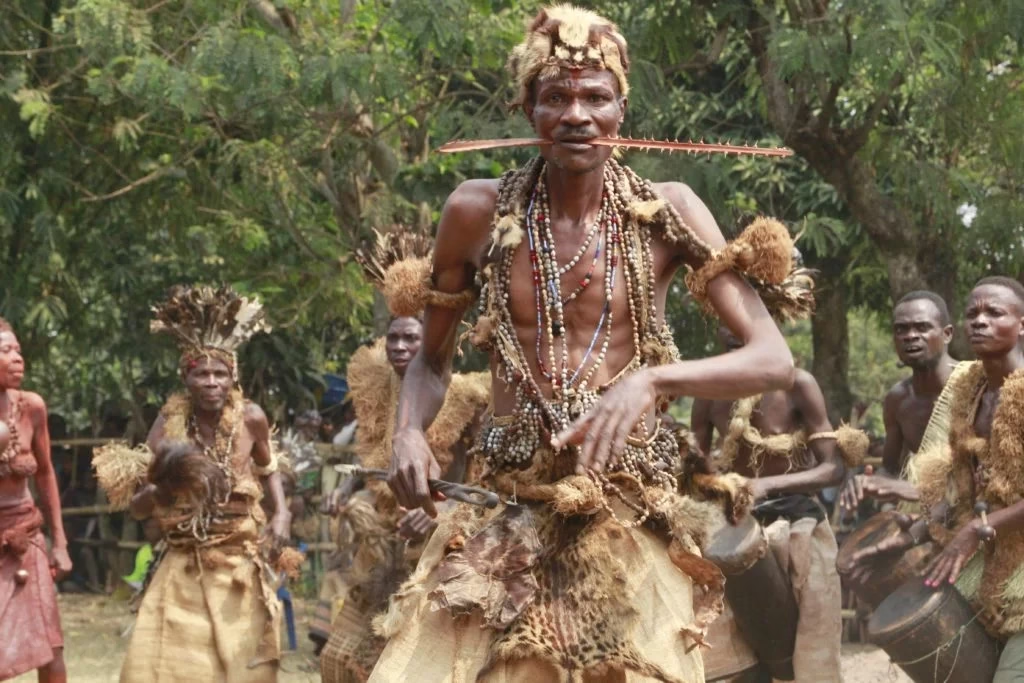
Travel Guide
Experience Festival De Gungu in Congo, a colorful celebration of music, dance, and culture. Discover its history, highlights, and tips for attending this unique festival.
Festival De Gungu—The Vibrant Celebration of Gungu, Congo highlights cultural expression through performance, music, dance and community participation. For travelers interested in African cultural tourism, festivals can provide a very different perspective from wildlife-focused itineraries because they bring living traditions into public spaces where communities actively celebrate and present their heritage.
Gungu is associated with the Democratic Republic of the Congo, a country containing extraordinary cultural and linguistic diversity.
A festival experience should therefore never be interpreted as representing every Congolese community.
Its value lies precisely in its specific local and regional context.
Visitors who approach the event respectfully can learn about performance traditions while also experiencing the energy of a community celebration.
Festivals are not simply staged attractions created for tourists.
They can provide spaces for communities to celebrate identity, preserve performance traditions and bring different participants together.
Music, costume and dance often carry meanings that are not immediately obvious to outsiders.
A visitor may appreciate the color and movement, but a local guide or knowledgeable participant can explain the deeper context.
This turns watching into learning.
Music can communicate history, social values and collective identity.
At a festival, rhythms and songs may be connected with specific communities or performance traditions.
Visitors should resist the temptation to describe everything simply as “African music.”
The continent contains enormous musical diversity.
Learning the name or background of a performance shows more respect than treating every drum rhythm as interchangeable.
Dance is often one of the most visually memorable elements of a cultural festival.
Movement, costume and music combine to create performances that may be celebratory, competitive or connected with particular traditions.
Travelers should watch how performers interact with musicians and audiences.
Even without understanding every symbolic detail, careful observation reveals patterns that are easily missed when visitors focus only on recording video.
Festival clothing can provide another expression of cultural identity.
Materials, colors and accessories may have meanings connected with specific communities or performance styles.
Visitors should avoid assuming that festival costumes represent what people wear every day.
Ceremonial or performance clothing has a particular context.
The same distinction exists in cultures around the world.
Understanding this prevents travelers from developing simplistic ideas about everyday Congolese life.
One of the most important ways to approach Festival De Gungu—The Vibrant Celebration of Gungu, Congo is to recognize that culture evolves.
Traditional performances can coexist with contemporary music, technology and modern lifestyles.
Authenticity does not require people to live exactly as previous generations did.
Festivals can preserve historical traditions while allowing new forms of expression to emerge.
This combination of continuity and change is part of what makes living culture interesting.
The atmosphere of a festival comes partly from the audience.
Residents may attend to support performers, socialize and celebrate.
For international visitors, being surrounded by local participation can make the experience feel far more meaningful than watching a cultural performance designed exclusively for tourists.
Visitors should remember that they are guests within that environment.
Local participants do not exist primarily to provide photographic subjects.
Festivals provide excellent photographic opportunities, but permission and respect remain important.
Wide photographs of public performances may be treated differently from close portraits of individuals.
When uncertain, ask.
Avoid pushing through local audiences simply to obtain a better camera angle.
A photographer should not interfere with other people’s ability to enjoy their own event.
If organizers establish designated photography areas or restrictions, follow them.
Video can capture music and movement more effectively than still photography.
However, recording an entire performance through a phone can prevent the visitor from actually experiencing it.
Capture selected moments and spend time watching directly.
Professional filming may require additional authorization.
Anyone producing commercial content should confirm permissions before arrival rather than assuming ordinary visitor access includes commercial recording rights.
Festival schedules can change.
Dates, venues and programs should be confirmed with current organizers or reliable local sources before travelers book an entire journey around the event.
This is particularly important when international flights and long overland transfers are involved.
Old travel articles can provide background, but they should not be treated as confirmation of a future event schedule.
Build flexibility into the itinerary.
Travel to the Democratic Republic of the Congo requires careful preparation.
Conditions vary significantly between regions and can change.
Travelers should review current official travel guidance, entry requirements and local security information relevant to the specific area they intend to visit.
A cultural festival should never be treated as justification for ignoring practical safety considerations.
Work with experienced local operators when appropriate.
Events can increase demand for accommodation.
Booking early can therefore be important.
Travelers should select lodging based on reliable transportation and practical access to festival activities rather than simply choosing the cheapest available option.
Confirm what services are provided.
Infrastructure can differ from what visitors are accustomed to in major international tourism centers.
Realistic expectations make travel more enjoyable.
Festival days may bring additional traffic and crowds.
Plan transfers with enough time.
Local drivers or guides familiar with the event can help travelers navigate changing road conditions and access arrangements.
Avoid creating a schedule in which missing one exact departure time causes the entire itinerary to fail.
Cultural events operate within living communities, and some flexibility is valuable.
Festival tourism can generate income through accommodation, food, transportation and crafts.
Visitors can contribute by using legitimate local businesses.
Purchasing directly from artisans or vendors can provide an economic connection with the event.
Fair pricing matters.
Bargaining practices differ, but negotiations should remain respectful.
The objective should not be to reduce every transaction to the lowest possible price.
Local food can add another cultural layer.
Travelers may encounter dishes or ingredients unfamiliar to them.
A guide can explain what is being served and how it is traditionally prepared.
Use ordinary food-safety judgment.
Choose food that is freshly prepared and served appropriately.
Visitors with allergies should communicate carefully, recognizing that ingredient information may not always be presented in the same standardized way found in large international restaurants.
A small amount of preparation can greatly improve a cultural visit.
Reading about the region’s history and communities provides context for performances.
Without that background, visitors may appreciate the spectacle but miss much of its meaning.
Learning does not require becoming an academic specialist.
Even basic knowledge can transform a festival from entertainment into cultural understanding.
Performers deserve the same respect visitors would give professional artists anywhere else.
Do not interrupt performances for photographs.
Do not touch costumes or instruments without permission.
If audience participation is encouraged, follow the instructions given.
If it is not encouraged, remain an observer.
Enthusiasm is welcome when it respects boundaries.
Public performance can help transmit cultural knowledge between generations.
Young participants may learn songs, dances and other traditions from older community members.
Festivals can provide visibility and pride around those traditions.
Tourism may contribute financially, but cultural preservation should not become dependent entirely on what international visitors find entertaining.
The community’s own relationship with its heritage remains central.
Travelers interested in the festival may wish to include other cultural or natural attractions according to current accessibility and conditions.
The itinerary should be based on realistic distances.
The Democratic Republic of the Congo is enormous.
Two destinations that appear within the same country may still require complicated travel.
Regional planning is therefore more useful than trying to cover too much territory.
Festival De Gungu—The Vibrant Celebration of Gungu, Congo offers visitors an opportunity to experience cultural expression through music, movement, costume and community participation.
Its strongest value comes when travelers look beyond visual spectacle.
Every performance exists within a cultural context, and every festival takes place within a living community.
By listening, asking respectful questions and supporting local participants, visitors can experience the festival without reducing it to a collection of photographs.
Cultural tourism is at its best when it creates understanding between hosts and guests. Festival De Gungu can provide exactly that opportunity when approached with preparation, curiosity and respect.

Nshongi Gorilla Family in Bwindi: History, Location and Trekking Guide The Nshongi Gorilla Family holds an important place…
Read article →
Mishaya Gorilla Family in Bwindi: History, Trekking and What to Know The Mishaya Gorilla Family is one of…
Read article →
Semuliki Hot Springs Visit Guide: What to Expect Semuliki Hot Springs offers one of the most unusual natural…
Read article →
Kidepo Valley Remote Safari Guide: What to Expect Kidepo Valley National Park offers one of Uganda's most remote…
Read article →