

Nshongi Gorilla Family in Bwindi
Nshongi Gorilla Family in Bwindi: History, Location and Trekking Guide The Nshongi Gorilla Family holds an important place…
Read article →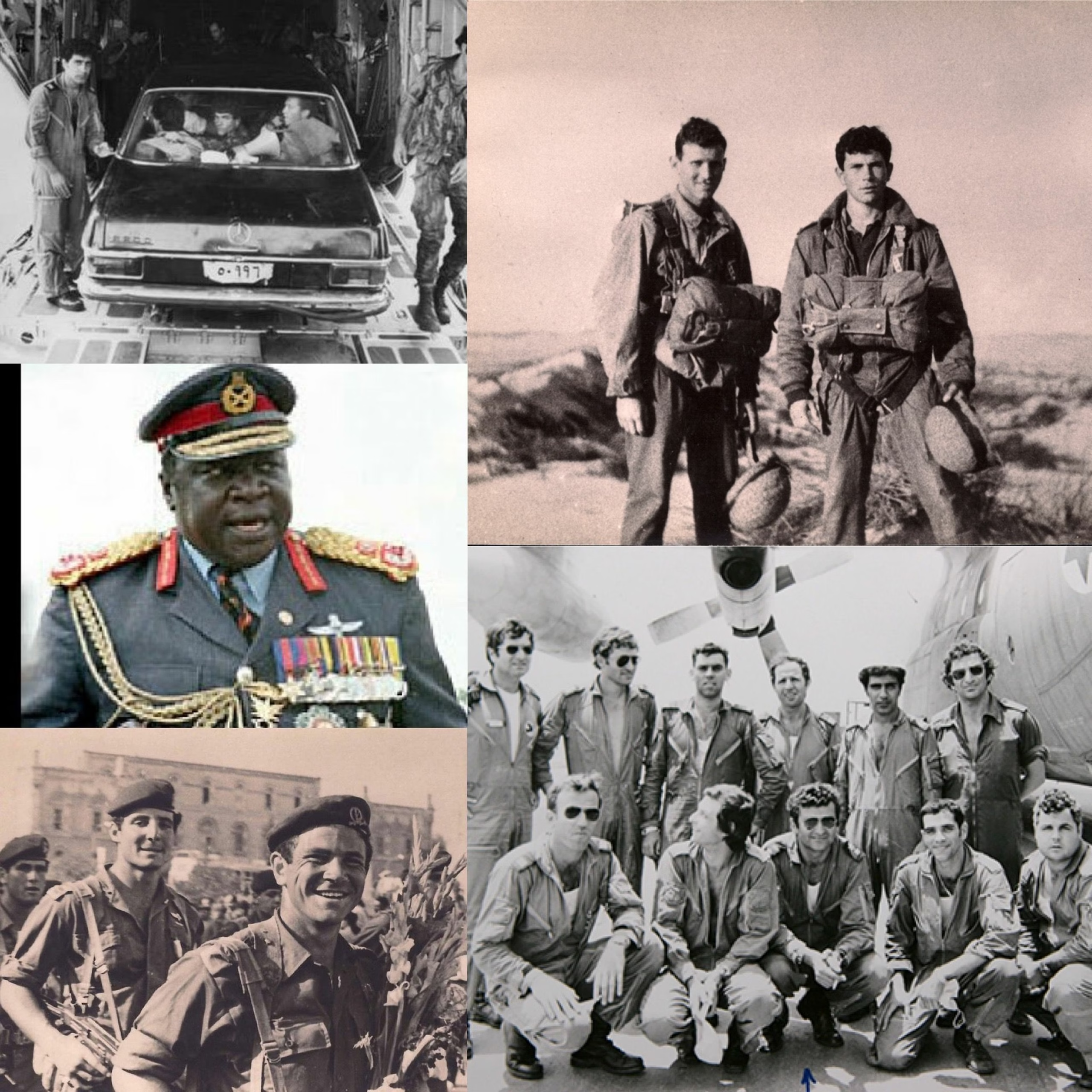
Travel Guide
Learn about the 1976 Entebbe Operation, Israel’s daring rescue mission in Uganda. Discover key facts, timeline, and how the raid shaped global counter-terrorism.
The Entebbe Operation 1976 – The Historic Israeli Hostage Rescue in Uganda remains one of the most widely discussed hostage-rescue operations of the twentieth century. The events unfolded after an Air France flight traveling from Tel Aviv toward Paris via Athens was hijacked and ultimately diverted to Entebbe Airport in Uganda.
The crisis became international because passengers and crew were held far from the aircraft’s original route while governments faced difficult decisions about negotiation and military intervention.
Israel ultimately launched a long-range rescue operation at Entebbe during the night of July 3–4, 1976.
The raid rescued most of the remaining hostages but also resulted in deaths among hostages, the Israeli force, hijackers and Ugandan personnel.
Understanding the event requires looking beyond the dramatic rescue itself to the hijacking, hostage separation, planning and political context.
Air France Flight 139 departed Tel Aviv on June 27, 1976, traveling toward Paris with a scheduled stop in Athens.
After leaving Athens, the aircraft was hijacked.
The hijackers forced the plane away from its planned route.
It eventually reached Entebbe in Uganda after an intermediate stop.
The long diversion transformed an aircraft hijacking into a major international hostage crisis.
Entebbe Airport became the central location of the crisis.
Uganda at the time was governed by Idi Amin.
The hostages were held in the old terminal area.
The situation created enormous logistical challenges for any rescue attempt because Entebbe was thousands of kilometers from Israel.
Distance was therefore one of the defining features of the operation.
One of the most consequential stages of the crisis involved the separation of passengers.
A number of hostages were released, while others—particularly Israeli and Jewish passengers—remained detained.
The Air France crew also remained.
The separation intensified the historical and political significance of the event and influenced Israel’s response to the crisis.
The hijackers made demands connected with prisoners held in Israel and elsewhere.
Governments faced the familiar dilemma of hostage crises: whether negotiation might save lives or encourage future hijackings.
At the same time, any military operation involved enormous risk.
The hostages were being held in a distant country under armed guard.
A successful long-range rescue required detailed information.
Planners needed to understand the airport, terminal layout, hostage location and forces likely to be encountered.
Former hostages and other available sources of information contributed to understanding the situation.
Intelligence was essential because a small error in assumptions could endanger both the rescue force and hostages.
Israeli planners developed a military operation capable of reaching Entebbe, landing forces and extracting hostages.
The distance created major aviation and logistical challenges.
Aircraft needed to travel a long route while maintaining operational surprise.
The rescue force also needed transportation on the ground after landing.
Speed became critical because once the operation was detected, defenders could react.
Israeli aircraft reached Entebbe during the night of July 3–4.
The assault force moved toward the terminal where hostages were held.
The operation relied heavily on surprise.
Fighting followed as the rescuers confronted the hijackers and Ugandan forces.
The entire sequence became famous partly because of how quickly the critical rescue phase unfolded.
Israeli forces entered the terminal and attempted to identify themselves to the hostages while engaging the hijackers.
The environment was extremely dangerous.
Hostages could not necessarily distinguish rescuers immediately, and armed confrontation was taking place in close proximity.
Most of the hostages being held at Entebbe were successfully rescued.
However, the operation was not without loss of life.
Lieutenant Colonel Yonatan Netanyahu, commander of the assault force, was killed during the operation.
His death became one of the most widely remembered elements of the raid in Israel.
The operation later became associated with his name in Israeli remembrance.
His role has been extensively discussed in accounts of the mission.
The rescue did not save everyone.
Hostages were killed during the operation, and another hostage who had been taken to a hospital before the raid was not rescued and was subsequently killed.
These deaths are important when discussing the event.
Describing the operation solely as a flawless action can erase the human losses involved.
Ugandan military personnel were also killed during the raid.
Israeli forces destroyed Ugandan military aircraft at the airport, reducing the possibility of interception.
This aspect of the operation contributed to the serious political consequences that followed.
The raid was not simply a confrontation between rescuers and hijackers; it also involved forces of the Ugandan state.
After the hostages were secured, the Israeli aircraft departed Uganda.
The long-distance nature of the operation required careful fuel and flight planning.
The rescued passengers were ultimately transported away from Entebbe.
The successful extraction completed a mission that had seemed extraordinarily difficult because of the distance and political circumstances.
The raid generated intense international attention.
Supporters emphasized the rescue of hostages and Israel’s willingness to act against international terrorism.
Critics raised questions involving sovereignty and the legality of military action within another state.
These debates illustrate the difficult legal and political issues surrounding cross-border hostage-rescue operations.
The Entebbe Operation 1976 – The Historic Israeli Hostage Rescue in Uganda took place during one of Uganda’s most turbulent political periods.
Idi Amin’s government had become associated with severe repression and violence.
Understanding this context helps explain the international relationships surrounding the crisis.
Modern Uganda should not be reduced to this historical period, but the events remain part of the country’s twentieth-century history.
Entebbe is now best known to international visitors as Uganda’s principal aviation gateway.
Travelers arrive here before continuing toward Kampala, national parks, gorilla trekking areas and other destinations.
The modern travel experience is entirely different from the events of 1976.
Nevertheless, the name Entebbe remains internationally connected with the rescue operation because of the enormous media and historical attention it received.
Military historians study Entebbe because it combined intelligence, aviation, surprise and a long-distance assault.
Security specialists also examine it within the development of modern hostage-rescue strategies.
However, later operations cannot simply copy Entebbe.
Every hostage situation has different geography, intelligence, political conditions and risks.
The event is therefore a historical case study rather than a universal formula.
Books, documentaries and films have retold the operation from different perspectives.
These accounts vary in emphasis and interpretation.
Dramatized versions may compress events or simplify individuals for storytelling purposes.
Travelers interested in the history should distinguish documentary evidence and historical research from entertainment adaptations.
Visitors passing through Entebbe can use the story as an entry point into Uganda’s broader modern history.
The country has undergone profound political, social and economic changes since the 1970s.
Learning about Entebbe 1976 should therefore be connected with understanding Uganda before and after Idi Amin rather than treating one dramatic incident as the country’s defining story.
The Entebbe Operation 1976 – The Historic Israeli Hostage Rescue in Uganda remains historically significant because of its unusual distance, complex planning and the rescue of most of the hostages held at Entebbe.
It also remains a subject of debate involving military strategy, sovereignty, counter-terrorism and political responsibility.
The operation is remembered differently by different participants and societies.
For travelers encountering the story while visiting Uganda, the most useful approach is historical rather than sensational. Entebbe today is a gateway to a very different Uganda, but the events of June and July 1976 remain an important chapter in both Ugandan and international history.

Nshongi Gorilla Family in Bwindi: History, Location and Trekking Guide The Nshongi Gorilla Family holds an important place…
Read article →
Mishaya Gorilla Family in Bwindi: History, Trekking and What to Know The Mishaya Gorilla Family is one of…
Read article →
Semuliki Hot Springs Visit Guide: What to Expect Semuliki Hot Springs offers one of the most unusual natural…
Read article →
Kidepo Valley Remote Safari Guide: What to Expect Kidepo Valley National Park offers one of Uganda's most remote…
Read article →