

Nshongi Gorilla Family in Bwindi
Nshongi Gorilla Family in Bwindi: History, Location and Trekking Guide The Nshongi Gorilla Family holds an important place…
Read article →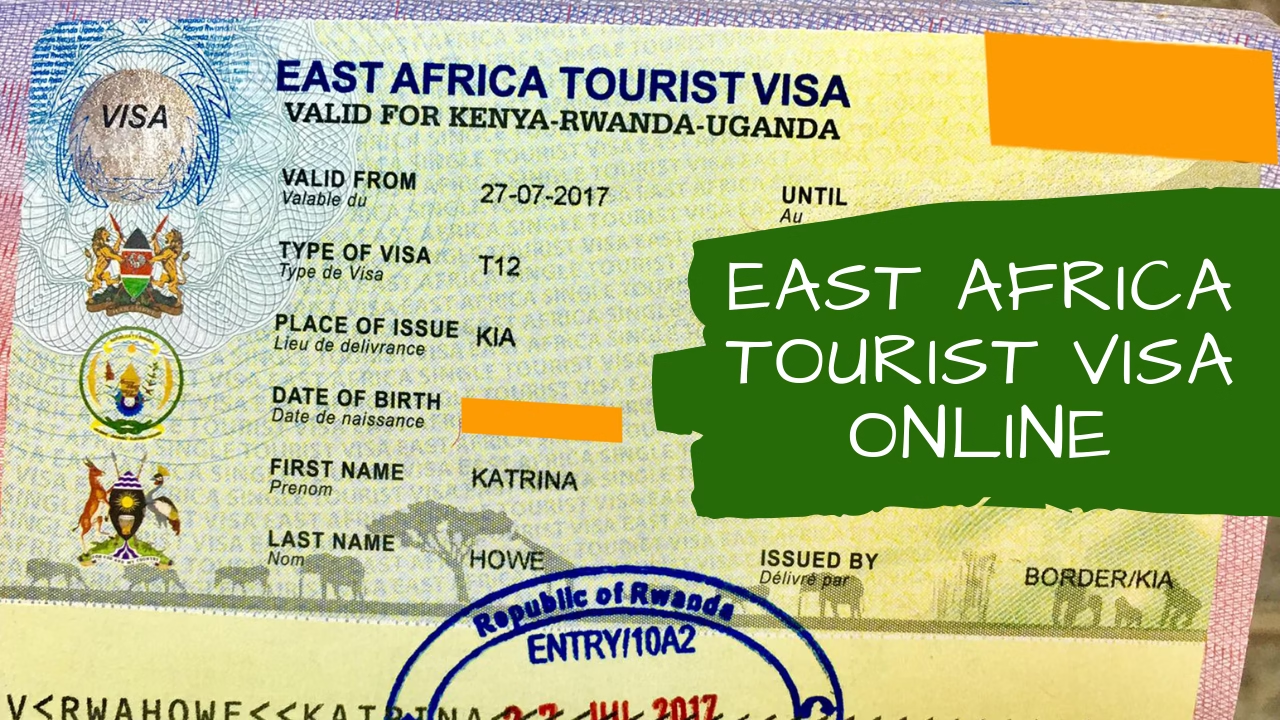
Travel Guide
The East African Tourist Visa (EATV) is a joint visa initiative that allows travelers to visit Uganda, Kenya, and Rwanda on a single visa.
The East African Tourist Visa, commonly shortened to EATV, is described in the supplied source as a joint visa initiative designed to facilitate tourist travel through Uganda, Kenya, and Rwanda using a single visa arrangement.
For safari travelers, this can simplify an itinerary that crosses borders.
A visitor may want to combine mountain gorilla trekking in Uganda or Rwanda with a wildlife safari in Kenya, or travel between several East African destinations as part of one longer journey.
Instead of treating each country as an entirely separate holiday, the East African Tourist Visa is designed to support eligible multi-country tourism within the participating countries.
Because immigration rules and procedures can change, travelers should confirm current requirements with the relevant official immigration authorities before making final travel arrangements. The information below follows the supplied source.
The source defines the East African Tourist Visa as a single visa arrangement covering Uganda, Kenya, and Rwanda for eligible tourism travel.
It was introduced to make cross-border tourism easier.
This is particularly relevant in East Africa because many popular itineraries naturally involve more than one country.
A traveler might begin with the Maasai Mara in Kenya, continue to Uganda for wildlife or primates, and finish with gorilla trekking in Rwanda.
Without a regional arrangement, each border can involve a separate visa process.
The EATV is intended to simplify that process.
The three countries identified by the supplied source are Uganda, Kenya, and Rwanda.
The visa should therefore not be assumed to cover every East African country.
Travelers adding destinations outside those participating countries need to check the separate immigration requirements that apply to those destinations.
This distinction is particularly important when planning a safari that extends beyond the three-country circuit.
The term “East African Tourist Visa” can sound broader than the actual participating-country arrangement described in the source.
Always build an itinerary with the exact countries in mind.
East African wildlife itineraries frequently cross national borders.
Animals and ecosystems do not follow tourism boundaries, and travelers often want to experience several different landscapes during one holiday.
Kenya can provide classic savannah experiences.
Uganda combines savannah wildlife with forest primates.
Rwanda is particularly associated with mountain gorillas and other tourism experiences.
A regional visa arrangement can therefore complement the way many travelers already design their trips.
It allows the journey to be planned as a connected East African experience rather than three completely independent holidays.
The supplied source states that the East African Tourist Visa is available to foreign nationals from most countries.
It also states that travelers should have a valid passport with at least six months of validity from the date of entry.
Because eligibility can depend on nationality and immigration rules can change, this is one area where travelers should verify the current official requirements before applying.
A traveler should not assume that another person’s experience applies automatically to them.
Passport nationality can affect visa rules.
The source emphasizes that the EATV is primarily intended for tourism.
This is an important distinction.
Someone entering the participating countries for a safari, gorilla trek, holiday, or cultural tour has a different purpose from a traveler entering for employment or business activity.
The supplied material notes that business visits may require separate visas or permits.
Travelers should therefore ensure that the visa category matches the actual purpose of the trip.
Using the correct immigration category helps prevent problems during application or entry.
The supplied source advises travelers to ensure their passport has at least six months’ validity from the date of entry.
It also recommends having blank pages available.
Passport validity is one of the easiest requirements to overlook when planning an international safari.
Flights, accommodation, and permits may be booked months in advance, while the passport itself receives little attention.
Checking the document early allows time to renew it if necessary.
Waiting until the final weeks before travel can complicate an otherwise well-organized trip.
The source states that the East African Tourist Visa is valid for 90 days from the date of issue.
It also describes movement between the three participating countries during the applicable period.
This makes the visa particularly suitable for travelers taking an extended multi-country journey.
Most safari itineraries are considerably shorter than 90 days, so the period described in the source provides flexibility for longer travel.
However, travelers should confirm current validity rules when applying rather than relying solely on older travel information.
One of the central benefits highlighted by the supplied source is the ability to travel among the three participating countries without repeatedly obtaining separate tourist visas.
For example, an itinerary may begin in Kenya, continue into Uganda, and then move into Rwanda.
This can be useful for overland journeys as well as itineraries involving regional flights.
The visa arrangement supports the idea of East Africa as a connected tourism circuit.
Travelers still need to complete border and immigration procedures, but the visa structure is designed to simplify the documentation associated with the journey.
The source states that travelers can apply online using the official immigration websites of participating countries.
The application process described in the supplied material may require a scanned passport bio page, passport-size photograph, itinerary or accommodation information, and payment of the applicable visa fee.
Applicants should use official immigration channels rather than assuming that every website appearing in search results is an authorized application portal.
Visa services can involve personal information and payment details.
Confirming the legitimacy of the application platform is therefore important.
Preparing documents before starting the application can make the process easier.
The supplied source lists a passport bio-page scan and passport photograph among the commonly required materials.
It also notes that travel itinerary or hotel information may be requested or useful.
Travelers planning a safari can keep their confirmed itinerary available during the visa process.
This may include accommodation names, arrival information, and the countries they intend to visit.
Having these documents organized reduces the need to interrupt an application while searching for missing information.
The source states that some travelers may be able to obtain the visa at designated airports or land borders, while recommending online pre-approval to reduce delays.
Because border procedures and nationality-specific eligibility can change, travelers should verify this point before departure rather than relying on the possibility of obtaining documentation on arrival.
Advance preparation is especially useful when a safari itinerary has a tight schedule.
A delayed border process can affect transfers, lodge arrival times, or other activities later in the day.
The supplied source quotes an approximate cost of USD 100 per traveler for the visa arrangement covering the three participating countries.
Travelers should treat this as the figure provided by the source and confirm the current official fee before making payment.
Visa fees can be revised.
Applicants should also check how payment is accepted through the official application process.
A current official immigration source should take precedence over older blog posts or forum discussions where fees differ.
The most obvious advantage is administrative simplicity.
A traveler planning three countries already has to manage flights or road transfers, accommodation, park activities, travel insurance, and other arrangements.
Reducing the number of separate visa applications can make the planning process easier.
The source specifically emphasizes the benefit of using one visa for Uganda, Kenya, and Rwanda.
For a multi-country safari, this can make the documentation feel more coherent.
The East African Tourist Visa can be particularly relevant to travelers building a gorilla itinerary across borders.
Uganda and Rwanda both feature prominently in regional primate tourism.
A traveler might arrive through one country and continue overland into another depending on the route.
This can be combined with other activities such as chimpanzee tracking, game drives, cultural experiences, or additional forest visits.
The visa arrangement described in the source supports this type of connected itinerary.
The supplied source also gives examples of travelers moving from Kenya to Uganda for wildlife adventures.
This combination can provide substantial variety.
Kenya is strongly associated with classic savannah safari landscapes, while Uganda can add forest primates and different national parks.
Regional flights and overland routes can connect the two countries.
When the immigration arrangements are considered from the beginning, the safari operator can build transfers around the planned border sequence.
A three-country itinerary can bring together several of East Africa’s major wildlife experiences.
Travelers might begin with a safari in Kenya, continue through Uganda, and finish in Rwanda.
Another itinerary may reverse the sequence.
The exact route depends on flights, available time, permits, accommodation, and personal interests.
The advantage of the East African Tourist Visa, as described in the source, is that eligible travelers can approach the immigration side of this multi-country journey through one regional tourism visa rather than separate applications for each participating country.
The supplied source recommends carrying a printed copy of the visa approval.
Even when travel documents are stored electronically, having a physical copy can be useful.
Phones can lose power, mobile connections can fail, and immigration processes may require documentation to be presented quickly.
Travelers can keep the printed approval together with their passport and other important travel documents.
A second electronic copy stored securely can provide additional backup.
The source advises travelers to check whether their nationality or itinerary requires additional health documentation, mentioning yellow fever vaccination as an example.
Health and entry requirements should be checked independently of the visa itself.
Receiving a visa does not necessarily mean every other entry requirement has been satisfied.
Travelers should review current official information for each country they plan to enter.
Medical advice should also be obtained from an appropriate health professional based on the itinerary and individual circumstances.
A multi-country safari works best when the border sequence is established before final bookings.
Travelers should know where they expect to enter the region and how they will move between participating countries.
Safari operators can then coordinate vehicles, flights, accommodation, and activities around those movements.
This is especially important when gorilla permits or other date-specific activities are involved.
A missed connection can affect more than one day of the itinerary.
Good planning turns the regional visa into part of a smooth travel system rather than an isolated document.
The East African Tourist Visa is most relevant to travelers who genuinely intend to visit more than one of the participating countries during the same journey.
Someone visiting only one country should compare the appropriate current entry arrangements rather than assuming the regional visa is necessary.
For multi-country travelers, however, the convenience can be significant.
Safari enthusiasts, gorilla trekkers, cultural travelers, and visitors taking extended East African holidays are among the audiences identified by the supplied source.
The East African Tourist Visa is presented in the supplied material as a practical solution for eligible travelers visiting Uganda, Kenya, and Rwanda within one journey.
It can support itineraries connecting wildlife safaris, mountain gorilla trekking, cultural experiences, and other regional attractions.
The source describes a 90-day validity period, online application options, passport requirements, and an approximate USD 100 fee.
Because visa rules, fees, application procedures, and nationality requirements can change, travelers should confirm these details with the appropriate official immigration authorities before travel.
With the correct documentation in place, the EATV can help make a multi-country East African safari easier to organize and navigate.

Nshongi Gorilla Family in Bwindi: History, Location and Trekking Guide The Nshongi Gorilla Family holds an important place…
Read article →
Mishaya Gorilla Family in Bwindi: History, Trekking and What to Know The Mishaya Gorilla Family is one of…
Read article →
Semuliki Hot Springs Visit Guide: What to Expect Semuliki Hot Springs offers one of the most unusual natural…
Read article →
Kidepo Valley Remote Safari Guide: What to Expect Kidepo Valley National Park offers one of Uganda's most remote…
Read article →