

Nshongi Gorilla Family in Bwindi
Nshongi Gorilla Family in Bwindi: History, Location and Trekking Guide The Nshongi Gorilla Family holds an important place…
Read article →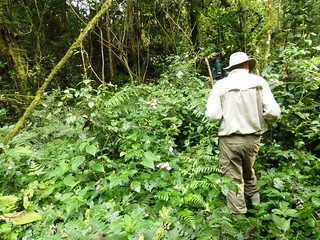
Travel Guide
Discover the magic of chimpanzee trekking in Nyungwe National Park, Rwanda. Encounter wild chimps and explore an ancient rainforest.
Chimpanzee Trekking in Nyungwe is one of Rwanda’s most engaging forest experiences, taking visitors into a dense rainforest to search for habituated chimpanzees in their natural environment. Rather than observing wildlife from a vehicle, travelers enter the forest on foot with experienced guides, following trails through hilly terrain while listening for primate calls and watching for movement in the canopy.
The supplied source describes Nyungwe National Park in southwestern Rwanda as an ancient rainforest supporting more than 500 chimpanzees and 13 primate species. Chimpanzees are the principal attraction for many visitors, but the trek also introduces travelers to other primates, birds, towering trees, dense vegetation, and the broader ecological character of the forest.
The experience requires an early start, patience, reasonable physical preparation, and respect for ranger instructions. Finding the chimpanzees is never simply about reaching a fixed location. The animals move through the forest, making the search itself an important part of the adventure.
Nyungwe’s extensive rainforest provides habitat for chimpanzees and many other wildlife species. According to the supplied source, the park contains habituated chimpanzee groups, allowing guided visitors to observe animals that have gradually become accustomed to the controlled presence of people.
Habituation does not make the chimpanzees tame. They remain wild animals living naturally within the forest.
This distinction is essential. The purpose of Chimpanzee Trekking in Nyungwe is to enter their environment responsibly and observe natural behavior rather than expecting the animals to approach visitors or perform for cameras.
The source identifies 13 primate species within Nyungwe.
This makes the forest especially attractive to travelers interested in primate-focused tourism.
While chimpanzees remain the primary objective of the trek, visitors may also encounter colobus monkeys, grey-cheeked mangabeys, and other primates while moving through the forest.
Looking beyond the principal target makes the trek more rewarding because every section of the trail has the potential to reveal something different.
Chimpanzee trekking begins early.
The supplied source states that activities may start at approximately 5:30 AM, beginning with a briefing at the relevant park meeting point.
Travelers should therefore prepare clothing and equipment the previous evening.
An early start can feel demanding, particularly after a long journey, but it allows trekkers to enter the forest during an important period of primate activity.
Breakfast arrangements should also be confirmed with the accommodation beforehand.
Before entering the forest, guides provide information about safety, chimpanzee behavior, and appropriate trekking conduct.
This briefing should be treated as part of the experience rather than a formality.
The forest contains uneven terrain and wildlife, and the guides understand both the environment and the requirements for responsible observation.
Visitors should ask questions if any instruction is unclear.
Following the guidance protects both the trekkers and the animals they have come to see.
Once the trek begins, the environment changes quickly from the more controlled surroundings of roads and lodges.
Dense vegetation, forest sounds, changing light, damp ground, and hilly terrain create a genuine rainforest experience.
The source emphasizes that trekking can involve challenging trails.
Travelers should therefore expect physical activity rather than a short walk on a paved path.
The amount of walking depends partly on where the chimpanzees are located.
Searching for chimpanzees involves more than looking directly ahead.
The forest canopy can conceal animals even when they are relatively close.
Calls and movement can therefore provide important clues.
Guides may listen for vocalizations and observe other signs while determining where the chimpanzees have moved.
For visitors, this creates anticipation.
A distant sound can suddenly transform an ordinary stretch of forest into the beginning of an encounter.
Once the chimpanzees are located, the supplied source describes visitors as spending up to one hour observing them.
During this period, the animals may forage, rest, move through trees, communicate, or interact socially.
No two encounters are identical.
Some chimpanzees may remain high in the canopy, while others may be easier to observe.
Travelers should accept the behavior that naturally occurs rather than expecting a particular scene.
Chimpanzees are especially fascinating because of their expressive behavior.
The source emphasizes their gestures, expressions, foraging, and social interactions.
Watching these activities in a natural forest creates a very different experience from observing wildlife in captivity.
Patience is important.
A quiet moment of grooming or communication can ultimately be more memorable than dramatic movement through the trees.
Photography is an important part of the experience for many travelers, but forest conditions can be challenging.
The supplied source specifically states that flash photography is prohibited.
Natural forest light may be limited, and chimpanzees can move rapidly.
Photographers should therefore understand their equipment before entering the forest.
Repeatedly adjusting unfamiliar settings during the encounter can cause visitors to miss the behavior taking place in front of them.
Nyungwe is a rainforest, so moisture should always be considered.
A lightweight waterproof cover or protective camera bag can help keep equipment dry.
Travelers should also avoid carrying unnecessary heavy gear if they are not comfortable hiking with it.
A manageable camera setup allows visitors to concentrate more fully on both trekking and wildlife observation.
The supplied source identifies colobus monkeys among other primates that visitors may encounter.
These monkeys add another dimension to the forest experience.
Rather than ignoring them while concentrating exclusively on chimpanzees, travelers can use the opportunity to appreciate Nyungwe’s wider primate diversity.
Binoculars can help when animals remain high in the canopy.
Grey-cheeked mangabeys are also mentioned in the source.
An experienced guide can help distinguish different primate species and explain their behavior.
This interpretation is valuable because visitors unfamiliar with African forest primates may otherwise notice movement without understanding which animal they are observing.
Nyungwe is not only a primate destination.
The supplied source states that the forest contains more than 300 bird species and specifically mentions the colorful Rwenzori Turaco.
Bird calls become part of the trekking atmosphere even when individual species are difficult to see.
Travelers with a strong birding interest may want a dedicated birding activity in addition to chimpanzee trekking.
A chimpanzee trek has a clear objective, and the group needs to follow guides searching for moving primates.
Stopping repeatedly for every bird may not always be practical.
A separate birdwatching walk allows travelers to slow down, listen carefully, and spend more time identifying species.
Combining both experiences creates a more complete understanding of the forest.
The source emphasizes lush landscapes and towering trees as part of the trekking experience.
Visitors should therefore pay attention to the forest itself.
Large trees, layers of vegetation, mist, changing light, and steep green hills create the habitat that makes chimpanzee life possible.
The landscape is not simply a background to the wildlife encounter. It is a fundamental part of it.
The supplied source identifies June to September and December to February as the preferred dry-season periods for chimpanzee trekking.
The principal advantage described is easier trail access.
Drier conditions can make steep forest paths less slippery and therefore reduce some of the physical difficulty.
However, Nyungwe remains a rainforest, and visitors should still be prepared for rain.
Rain does not make the forest irrelevant as a destination.
It supports the lush vegetation for which Nyungwe is known.
Visitors traveling during wetter periods simply need to prepare more carefully for muddy trails and changing weather.
A lightweight rain jacket and suitable footwear become especially important.
The source advises travelers to prepare physically for challenging trails.
This does not mean every trek will involve the same level of difficulty.
Chimpanzees move, so the route and duration vary.
General walking fitness can nevertheless make the experience more comfortable.
Travelers should be prepared for hills, uneven ground, and potentially several hours on foot.
Appropriate footwear is one of the most practical preparations.
Shoes or boots should provide reliable grip and remain comfortable over several hours.
New footwear should ideally be worn before the trip rather than tested for the first time on trekking morning.
Comfort can make a substantial difference when trails become steep or wet.
The supplied source recommends carrying water and snacks.
Even an early trek can become physically demanding.
Staying hydrated is important, particularly during longer searches.
Travelers should carry supplies in a manageable daypack and remove all packaging from the forest afterward.
Weather can change rapidly.
A lightweight rain jacket provides useful protection without adding excessive weight to a trekking bag.
It can also help protect the traveler while camera equipment and other sensitive belongings remain inside waterproof storage.
The source emphasizes maintaining a respectful distance from chimpanzees.
Wildlife tourism should never prioritize a close photograph over animal welfare.
Visitors must follow the instructions given by guides regarding movement, positioning, and behavior.
If chimpanzees move, trekkers should allow guides to determine how the group responds.
Guides understand the forest and the behavior of the animals.
Their instructions may sometimes require visitors to remain still, move quietly, or change position.
Following these directions helps maintain an organized encounter.
It can also improve observation because experienced guides often recognize behaviors that first-time visitors would miss.
Although chimpanzees are the focus of this activity, Nyungwe offers a broader forest experience.
Travelers with additional time can consider other walks and activities according to their interests.
Allowing several nights around the forest also reduces the pressure of arriving late, trekking early the next morning, and immediately departing afterward.
The supplied source connects chimpanzee tourism with conservation and local communities.
Responsible tourism can provide economic reasons to protect forest environments.
Guides, accommodation providers, drivers, and other tourism workers can benefit from visitors coming to experience Nyungwe.
The long-term value of the activity therefore depends on maintaining the habitat and treating wildlife responsibly.
Chimpanzee Trekking in Nyungwe combines wildlife observation with the physical experience of entering one of Rwanda’s major rainforest environments.
The supplied source describes Nyungwe as supporting more than 500 chimpanzees, 13 primate species, and more than 300 bird species. Treks begin early, often around 5:30 AM, with a ranger briefing before visitors enter the forest in search of habituated chimpanzees.
Once the chimpanzees are found, visitors can observe their natural behavior for up to an hour according to the source. Along the way, the forest may also reveal colobus monkeys, grey-cheeked mangabeys, birds, and impressive vegetation.
Proper footwear, water, snacks, rain protection, physical preparation, and careful attention to guide instructions all contribute to a better experience.
For travelers who want to experience Rwanda’s wildlife beyond the mountain gorillas, chimpanzee trekking in Nyungwe provides an immersive journey into a very different primate habitat.

Nshongi Gorilla Family in Bwindi: History, Location and Trekking Guide The Nshongi Gorilla Family holds an important place…
Read article →
Mishaya Gorilla Family in Bwindi: History, Trekking and What to Know The Mishaya Gorilla Family is one of…
Read article →
Semuliki Hot Springs Visit Guide: What to Expect Semuliki Hot Springs offers one of the most unusual natural…
Read article →
Kidepo Valley Remote Safari Guide: What to Expect Kidepo Valley National Park offers one of Uganda's most remote…
Read article →