

Nshongi Gorilla Family in Bwindi
Nshongi Gorilla Family in Bwindi: History, Location and Trekking Guide The Nshongi Gorilla Family holds an important place…
Read article →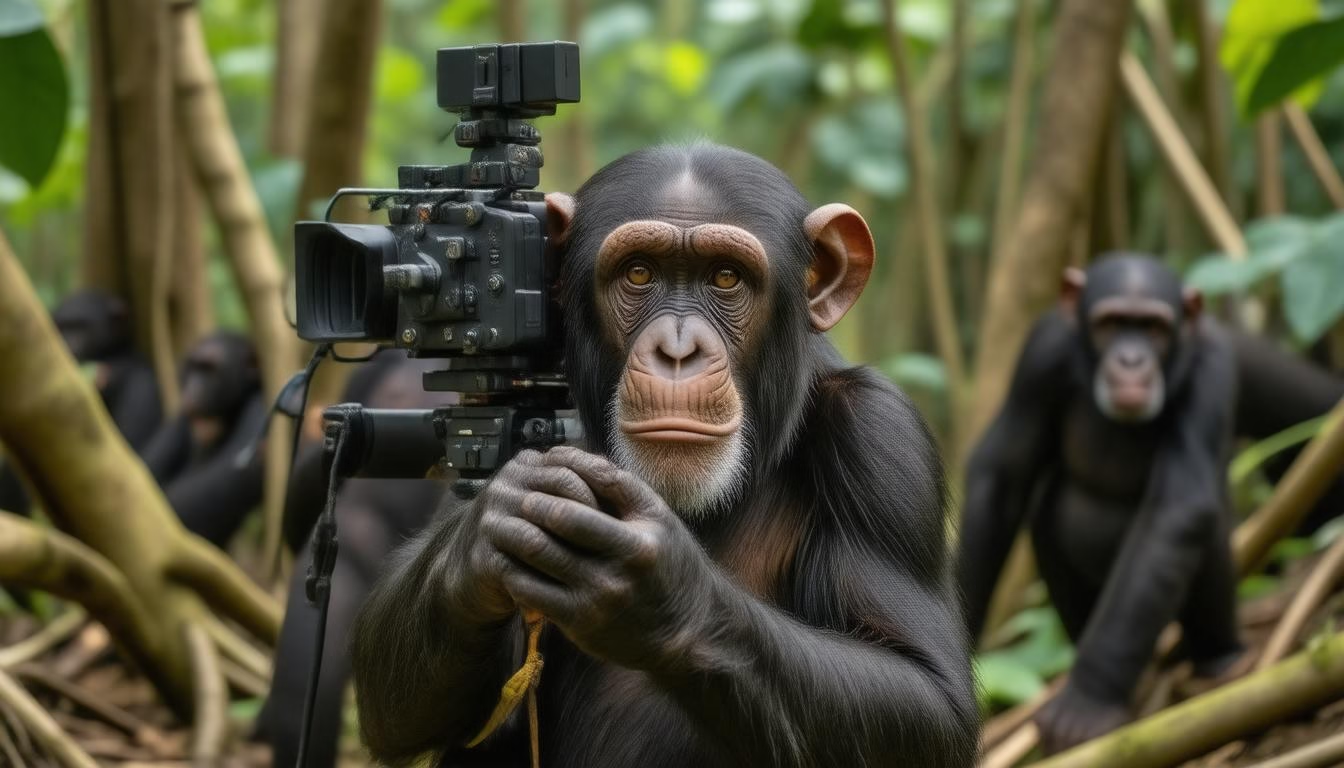
Travel Guide
Capture stunning footage of chimpanzees in Budongo Forest, Uganda. Discover the best time to visit, permits required, and essential filming tips.
A Chimpanzee Filming Tour in Budongo Forest: A Wildlife Experience combines primate observation with the technical challenges of filming inside a tropical forest. Budongo lies within the wider Murchison Falls conservation landscape in northwestern Uganda and is well known for its chimpanzees and forest biodiversity.
For filmmakers, photographers and specialist wildlife travelers, the attraction goes beyond simply recording a chimpanzee on camera.
The forest provides opportunities to document movement, feeding, social interaction, vocalization and the relationship between chimpanzees and their habitat.
Successful filming requires careful preparation. Chimpanzees are wild animals, forest light is difficult, equipment must be protected and professional filming may require permissions beyond an ordinary visitor activity.
Budongo represents an important forest ecosystem within Uganda.
Its mature trees and diverse habitats support primates, birds and numerous other organisms.
For visitors combining primates with a conventional safari, its position near Murchison Falls makes it particularly useful.
A journey can include chimpanzee experiences in the forest and then continue into savannah landscapes for game drives and Nile activities.
This contrast allows filmmakers to capture several Ugandan ecosystems within one itinerary.
Wildlife filming differs fundamentally from working with controlled subjects.
Chimpanzees decide where they move and how long they remain visible.
They may travel quickly through vegetation, feed high in trees or disappear into dense forest.
A filmmaker must therefore adapt to behavior rather than trying to direct it.
This unpredictability is challenging, but it is also what gives genuine wildlife footage its value.
The strongest sequences usually come from patience and observation.
Visitors should distinguish between ordinary chimpanzee tourism permits and permissions required for professional or commercial filming.
A standard visitor activity does not automatically authorize every form of commercial production.
Filmmakers should explain the nature of their project before traveling and confirm requirements with the relevant authorities and operators.
Additional permissions, fees or documentation may apply depending on the production.
Drone use is also subject to separate restrictions and should never be assumed to be permitted simply because the production team has ordinary camera equipment.
A serious Chimpanzee Filming Tour in Budongo Forest: A Wildlife Experience should be planned well before arrival.
Production teams may need to coordinate permits, accommodation, transportation, equipment and specialized guides.
International crews also need to consider customs and temporary import requirements for professional equipment where applicable.
Waiting until arrival to resolve these details can cause expensive delays.
Provide the operator with an accurate equipment list and production purpose during the planning stage.
Low light is one of the biggest technical challenges.
Dense canopy reduces the amount of light reaching the forest floor.
Chimpanzees may move between dark vegetation and brighter openings within seconds.
Camera operators need equipment capable of responding quickly to changing exposure.
Fast lenses and cameras with good performance at higher ISO settings can be valuable.
However, carrying too much equipment creates its own difficulties on forest trails.
A large cinema kit may offer excellent technical quality but become exhausting during a long forest session.
Every piece of equipment must be carried through uneven terrain.
Filmmakers should therefore distinguish essential gear from equipment that merely seems desirable in a studio environment.
A practical camera body, suitable lenses, batteries, memory and effective weather protection may produce better results than an oversized kit that slows the crew.
Chimpanzee filming is not only visual.
Forest sound can be extraordinary.
Chimpanzee vocalizations, bird calls, insects and movement through vegetation create a rich soundscape.
Recording clean natural audio presents challenges because forests are rarely silent.
Wind, rain, human movement and equipment noise can interfere.
A production focused on documentary storytelling should plan sound as carefully as images.
Tropical forest conditions can change quickly.
Even when the morning begins dry, camera equipment should be prepared for rain.
Use reliable waterproof covers and internal dry bags.
Lens cloths should remain easily accessible.
Humidity also needs consideration.
Moving equipment repeatedly between air-conditioned rooms and warm humid conditions can cause condensation.
Allow cameras to adjust gradually where practical.
Chimpanzees can move much faster than many first-time visitors expect.
A group resting or feeding may suddenly begin traveling.
Filmmakers need to be ready to move while still following guide instructions.
Heavy tripods and complicated rigs can become difficult in these situations.
Lightweight support equipment may offer greater flexibility.
The forest determines the production style.
Knowledge improves wildlife footage.
A filmmaker who understands basic chimpanzee behavior can anticipate moments rather than merely react.
Watch how individuals interact.
Notice grooming, feeding and communication.
Guides and researchers can provide valuable context.
Behavioral understanding also helps filmmakers construct a more accurate story during editing.
A dramatic image should never be given a misleading interpretation simply because it makes the film more exciting.
Chimpanzees are genetically close enough to humans that disease transmission is a serious conservation concern.
Visitors must follow current health and distancing rules.
Anyone experiencing relevant illness symptoms should report them honestly.
A production deadline never takes priority over primate welfare.
Masks or other protective measures may be required according to current protocols.
Filming teams should build these requirements into their production approach.
Wildlife should not be manipulated to obtain footage.
Do not use flash or other intrusive techniques when prohibited.
Do not ask guides to approach animals more closely than regulations allow.
Never feed chimpanzees or attempt to influence their movement.
Authentic behavior is more valuable than footage created by disturbing the subject.
Ethical standards should be part of the production plan from the beginning.
An experienced local guide can become one of the most valuable members of a filming team.
Guides understand trails, forest conditions and chimpanzee behavior.
They may recognize vocalizations and movement signs long before international crew members do.
Respect their expertise.
A production that treats local guides merely as logistical assistants loses an important source of ecological knowledge.
Porters can assist with carrying equipment where arrangements permit.
This is particularly valuable for crews using multiple lenses, audio equipment or support systems.
The goal is not simply to make the day easier.
Reducing the physical load helps camera operators preserve concentration for filming.
Local employment connected with production also allows wildlife tourism to generate broader economic benefits.
One of Budongo’s major advantages is the possibility of combining forest filming with Murchison Falls National Park.
A production can potentially capture primates, savannah wildlife, the Nile and the falls within the same broader region.
This creates visual variety.
Careful scheduling is still important.
Trying to film chimpanzees in the morning and rush through several major wildlife sequences in the afternoon can result in superficial coverage of everything.
Accommodation should be selected according to access, crew size and equipment requirements.
A production team may need secure storage, charging facilities and enough space for backing up footage.
These practical considerations can matter more than luxury.
Discuss power availability and communication needs before arrival.
Remote wildlife locations should not be expected to provide the same infrastructure as a city production studio.
A successful filming day can be lost through poor data management.
Bring sufficient storage and create multiple backups where practical.
Keep copies in separate physical locations.
Protect storage devices from humidity and impact.
Production teams working over several days should establish a consistent backup routine rather than waiting until the end of the trip.
Wildlife moments cannot simply be recreated if files are lost.
A single day can produce excellent footage, but wildlife never guarantees a specific behavior.
Productions requiring varied sequences should allow multiple days.
Additional time improves the chances of documenting different individuals, behaviors and environmental conditions.
It also reduces pressure on the crew to force results during one short session.
Patience is one of the most important resources in wildlife filmmaking.
The strongest chimpanzee films do more than show attractive primates.
Budongo provides an opportunity to discuss forest conservation, research and the ecological importance of chimpanzees.
Filmmakers should seek accurate information and avoid sensationalizing animal behavior.
Local voices can also add valuable perspective.
A story about chimpanzees becomes more complete when it acknowledges the people involved in protecting their habitat.
A Chimpanzee Filming Tour in Budongo Forest: A Wildlife Experience succeeds when technical preparation and ethical wildlife practice work together.
The forest provides the setting, but filmmakers must adapt to its conditions.
Light may be difficult, rain may arrive unexpectedly and chimpanzees may refuse to remain in convenient positions.
Those challenges are part of authentic wildlife filmmaking.
With proper permissions, suitable equipment, knowledgeable local support and enough time, Budongo can provide compelling footage while keeping chimpanzee welfare and forest conservation at the center of the production.

Nshongi Gorilla Family in Bwindi: History, Location and Trekking Guide The Nshongi Gorilla Family holds an important place…
Read article →
Mishaya Gorilla Family in Bwindi: History, Trekking and What to Know The Mishaya Gorilla Family is one of…
Read article →
Semuliki Hot Springs Visit Guide: What to Expect Semuliki Hot Springs offers one of the most unusual natural…
Read article →
Kidepo Valley Remote Safari Guide: What to Expect Kidepo Valley National Park offers one of Uganda's most remote…
Read article →