

Nshongi Gorilla Family in Bwindi
Nshongi Gorilla Family in Bwindi: History, Location and Trekking Guide The Nshongi Gorilla Family holds an important place…
Read article →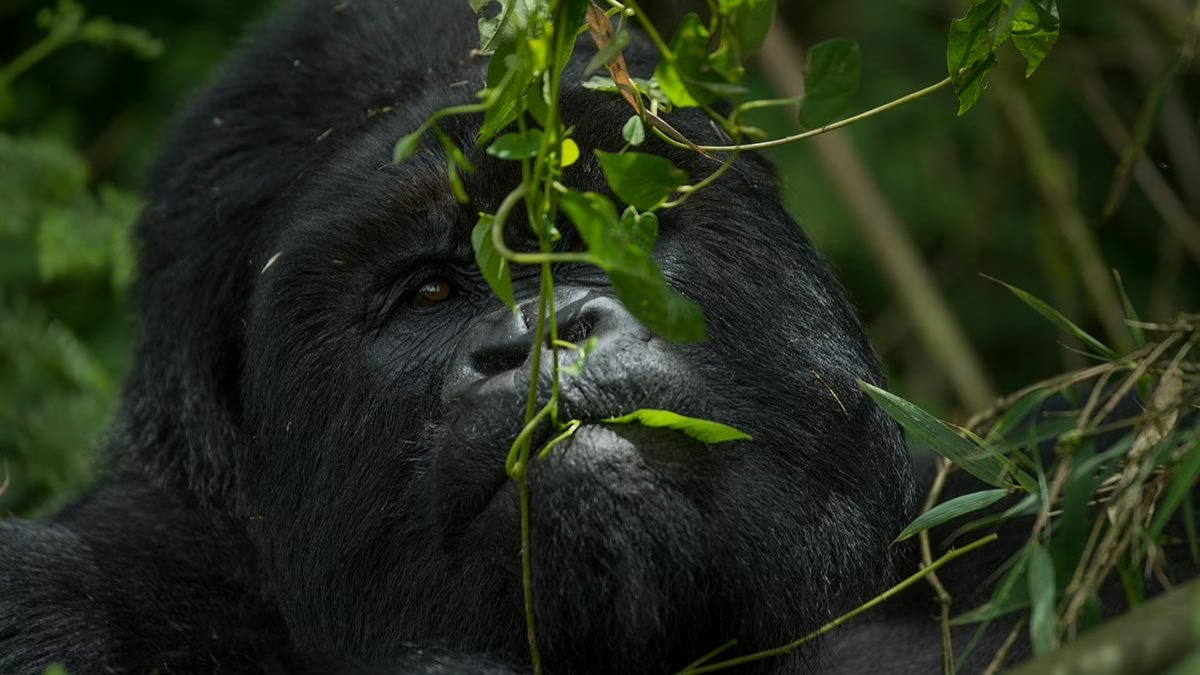
Travel Guide
Wondering if you will spot gorillas on your trek? Learn why sightings are over 95% guaranteed and how expert guides make it possible.
Travelers planning a gorilla trekking safari often ask the same important question: after purchasing a permit, traveling to the national park, and hiking into the forest, what are the actual chances of seeing mountain gorillas?
According to the supplied source, the chances are extremely high and exceed 95 percent. This high success rate separates gorilla trekking from many conventional wildlife experiences where travelers may spend several days searching for a particular species without finding it.
The reason is not simply luck. Gorilla trekking is supported by an organized system of habituated gorilla families, experienced trackers, guides, rangers, and ongoing monitoring.
Trackers look for signs such as footprints, dung, broken vegetation, and feeding remains. Information about gorilla movements helps trekking teams determine where an assigned family is likely to be.
Even with this preparation, mountain gorillas remain wild animals living in dense forests. They move according to their own needs, which means the duration and difficulty of each trek can vary considerably.
The source places the chances of seeing mountain gorillas above 95 percent.
This level of success is possible because trekking focuses on habituated gorilla families that are monitored regularly.
Habituation means that a gorilla family has gradually become accustomed to carefully controlled human presence. The gorillas remain wild and continue feeding, moving, resting, and interacting naturally, but they are less likely to flee simply because a managed group of people is nearby.
This process makes responsible tourism possible while allowing researchers and conservation teams to monitor individual families.
The trackers’ knowledge of the forest further improves the likelihood of finding the assigned group.
One of the most important details in the supplied source is the role of trained trackers.
Trackers can head into the forest early to locate gorilla families or establish their recent movements.
They look for evidence left behind as gorillas move through the vegetation.
Fresh footprints may reveal direction. Broken branches can indicate recent passage. Dung provides another clue, while partially eaten vegetation can show where gorillas have been feeding.
Individually, these signs may appear insignificant to an inexperienced visitor. To a trained tracker, they form a trail through the forest.
Communication between tracking and guiding teams then helps trekkers move toward the gorillas.
This system explains why gorilla trekking is more structured than simply entering a forest and hoping to encounter wildlife.
The source notes that trekking destinations maintain habituated gorilla families for research and tourism.
Habituation is essential to the modern trekking experience.
Without it, regular tourist visits could cause excessive stress or result in gorillas immediately moving away whenever humans approached.
Instead, carefully managed habituation allows specific families to tolerate limited human observation under strict rules.
Visitor numbers remain controlled.
This is why purchasing a permit is necessary. Gorilla tourism cannot operate like an unrestricted hiking attraction where unlimited numbers of visitors enter the forest.
The controlled system supports both conservation and the quality of the encounter.
The supplied source identifies mountain gorilla trekking opportunities in Uganda, Rwanda, and the Democratic Republic of Congo.
In Uganda, mountain gorilla trekking is associated with Bwindi Impenetrable Forest and Mgahinga Gorilla National Park.
In Rwanda, trekking takes place in Volcanoes National Park.
The source also identifies Virunga National Park in the Democratic Republic of Congo.
These protected areas contain the forest habitats on which mountain gorillas depend.
Although the general tracking principles are similar, the terrain and overall travel experience vary between destinations.
Bwindi Impenetrable Forest is one of the most famous mountain gorilla destinations.
The forest is dense and mountainous, creating the classic trekking experience many visitors imagine when planning a gorilla safari.
Different trekking sectors provide access to different habituated families.
Mgahinga Gorilla National Park provides another Uganda option within the Virunga landscape.
Uganda therefore allows travelers to combine mountain gorilla trekking with a wider safari involving chimpanzees, savannah wildlife, lakes, birding, and other national parks.
The current standard Uganda gorilla permit is USD 800 per person.
Rwanda’s gorilla trekking takes place in Volcanoes National Park.
The park’s volcanic landscape provides a dramatic setting of forest, bamboo, slopes, and mountain scenery.
Kigali serves as the main arrival point for many international travelers, and the Volcanoes region can be reached by road from the capital.
This makes Rwanda particularly convenient for shorter gorilla-focused itineraries.
The current standard Rwanda gorilla permit costs USD 1,500 per person.
As in Uganda, visitors are assigned to a habituated gorilla family and trek with guides and rangers.
The supplied source emphasizes that trek length varies.
Some gorilla families may be relatively close to the starting area, while others may have moved deeper into the forest.
The source gives a broad range from approximately 30 minutes to five hours for reaching gorillas.
This variation is one reason visitors should prepare physically even when their primary goal is wildlife observation rather than hiking.
A short trek can be relatively straightforward.
A longer trek may involve climbing slopes, moving through dense vegetation, crossing muddy sections, and walking for several hours.
The location cannot be guaranteed in advance because gorillas move naturally through their habitat.
Mountain gorillas do not remain at a permanent tourism viewing point.
They move in search of food and suitable places to rest.
Their movements are influenced by their daily requirements and the environment.
This is precisely what makes the experience authentic.
Visitors are entering the gorillas’ natural habitat rather than visiting captive animals.
The tracking system helps locate them, but the gorillas still determine where the encounter takes place.
One day a family may be relatively accessible. On another day, the same group may require a longer hike.
Reaching the gorillas is the defining moment of the trek.
After hours of listening to guides, watching the trail, and moving through vegetation, the first glimpse can appear suddenly.
A silverback may be resting among plants. A female may be feeding while carrying an infant. Juveniles may climb, play, or move through nearby vegetation.
Visitors must follow the instructions given by guides and rangers.
For the standard gorilla trekking experience in Uganda and Rwanda, visitors generally spend one hour with the assigned gorilla family after reaching it.
This time limit helps control the amount of human exposure experienced by the animals.
Standard gorilla trekking groups are controlled.
In Rwanda and Uganda, the normal maximum is eight trekkers visiting a habituated gorilla family.
Limiting visitor numbers reduces disturbance and makes it easier for guides to manage the encounter.
It also improves the experience for trekkers because large crowds would be inappropriate in dense forest.
Visitors should remain together and follow instructions about movement and positioning.
The objective is to observe rather than interact with the gorillas.
The source acknowledges that failing to find gorillas is possible, although uncommon.
Because the chances of seeing mountain gorillas are very high, most visitors complete their trek having encountered their assigned family.
However, wild nature cannot be guaranteed with absolute certainty.
Weather, animal movement, unexpected conditions, or other circumstances can influence a trek.
The supplied source states that refund arrangements may apply depending on park and permit terms.
Travelers should therefore rely on the official conditions applying to their specific permit rather than assuming a particular refund automatically applies.
The important point is that unsuccessful treks are unusual compared with the large number of visitors who do reach their assigned gorilla family.
Fitness does not determine whether trackers can locate gorillas, but it can strongly influence how comfortable the trek feels.
The source advises visitors to be prepared for uphill walking and dense vegetation.
Training before travel can be useful, especially for visitors who do not regularly hike.
Simple activities such as walking hills, climbing stairs, and increasing general endurance can make several hours in the forest more manageable.
Travelers do not need to be elite athletes.
However, arriving with realistic expectations and reasonable fitness allows more attention to be placed on the forest and gorillas rather than physical discomfort.
Good footwear is one of the most important pieces of gorilla trekking equipment.
Forest trails may be muddy, steep, uneven, or slippery.
Hiking boots with reliable grip provide greater confidence than smooth-soled casual shoes.
Long trousers and long sleeves also help protect against vegetation.
A waterproof outer layer is useful because rain can occur even when the broader season is considered relatively dry.
Visitors should dress for the forest rather than for photographs at the starting point.
Comfort and protection matter far more once the trek begins.
The supplied source emphasizes following the guide’s pace and instructions.
Guides understand the terrain and the procedures required around gorillas.
They also help visitors interpret what they are seeing.
A gorilla trek is much richer when travelers understand behavior, family relationships, vegetation, and conservation rather than simply taking photographs.
Instructions become especially important once the group reaches the gorillas.
Visitors should remain calm, avoid unnecessary noise, and respect the required distance as directed by the ranger team.
Most visitors want photographs of their encounter.
Preparing equipment before reaching the gorillas helps maximize the limited viewing period.
Cameras should be accessible rather than packed beneath other items.
Photographers should also be prepared for difficult forest light. Gorillas may sit beneath vegetation where conditions are considerably darker than expected.
The objective should never be to force an animal into a better photographic position.
A gorilla looking away, feeding behind leaves, or moving through vegetation is behaving naturally.
Observing that behavior is the essence of the experience.
On a savannah game drive, a vehicle may travel across a large landscape searching for lions, leopards, elephants, or other animals.
There is no tracker assigned specifically to ensure that a particular lion pride will be located.
Gorilla trekking operates differently.
Habituated families are known and monitored, while trackers and rangers understand their recent movements.
This dramatically increases the likelihood of an encounter.
The high chances of seeing mountain gorillas therefore result from conservation management, monitoring, tracker expertise, and controlled tourism rather than a guarantee that wild animals will remain in one predictable place.
Visitors should arrive knowing that the trek itself is part of the adventure.
Mud, rain, steep hills, vegetation, changing weather, and uncertain walking time are not flaws in the experience.
They are consequences of entering a genuine mountain forest.
The moment of reaching the gorillas feels more significant because visitors have traveled through their habitat to find them.
The encounter is not separated from the landscape.
Forest, trackers, guides, conservation rules, and gorillas are all parts of the same experience.
The supplied information places the chances of seeing mountain gorillas at more than 95 percent.
That remarkable success rate is supported by trained trackers, habituated gorilla families, ranger communication, and close monitoring of gorilla movements.
However, the animals remain wild.
The trek may take half an hour or several hours, and no responsible wildlife experience should be understood as completely predictable.
Travelers who arrive physically prepared, wear suitable hiking equipment, follow ranger instructions, and approach the experience with patience give themselves the best opportunity to enjoy every stage of the trek.
For most visitors, the reward is an extraordinary hour in the forest observing mountain gorillas at close range—an experience made possible by decades of conservation, research, and carefully managed tourism.

Nshongi Gorilla Family in Bwindi: History, Location and Trekking Guide The Nshongi Gorilla Family holds an important place…
Read article →
Mishaya Gorilla Family in Bwindi: History, Trekking and What to Know The Mishaya Gorilla Family is one of…
Read article →
Semuliki Hot Springs Visit Guide: What to Expect Semuliki Hot Springs offers one of the most unusual natural…
Read article →
Kidepo Valley Remote Safari Guide: What to Expect Kidepo Valley National Park offers one of Uganda's most remote…
Read article →