

Nshongi Gorilla Family in Bwindi
Nshongi Gorilla Family in Bwindi: History, Location and Trekking Guide The Nshongi Gorilla Family holds an important place…
Read article →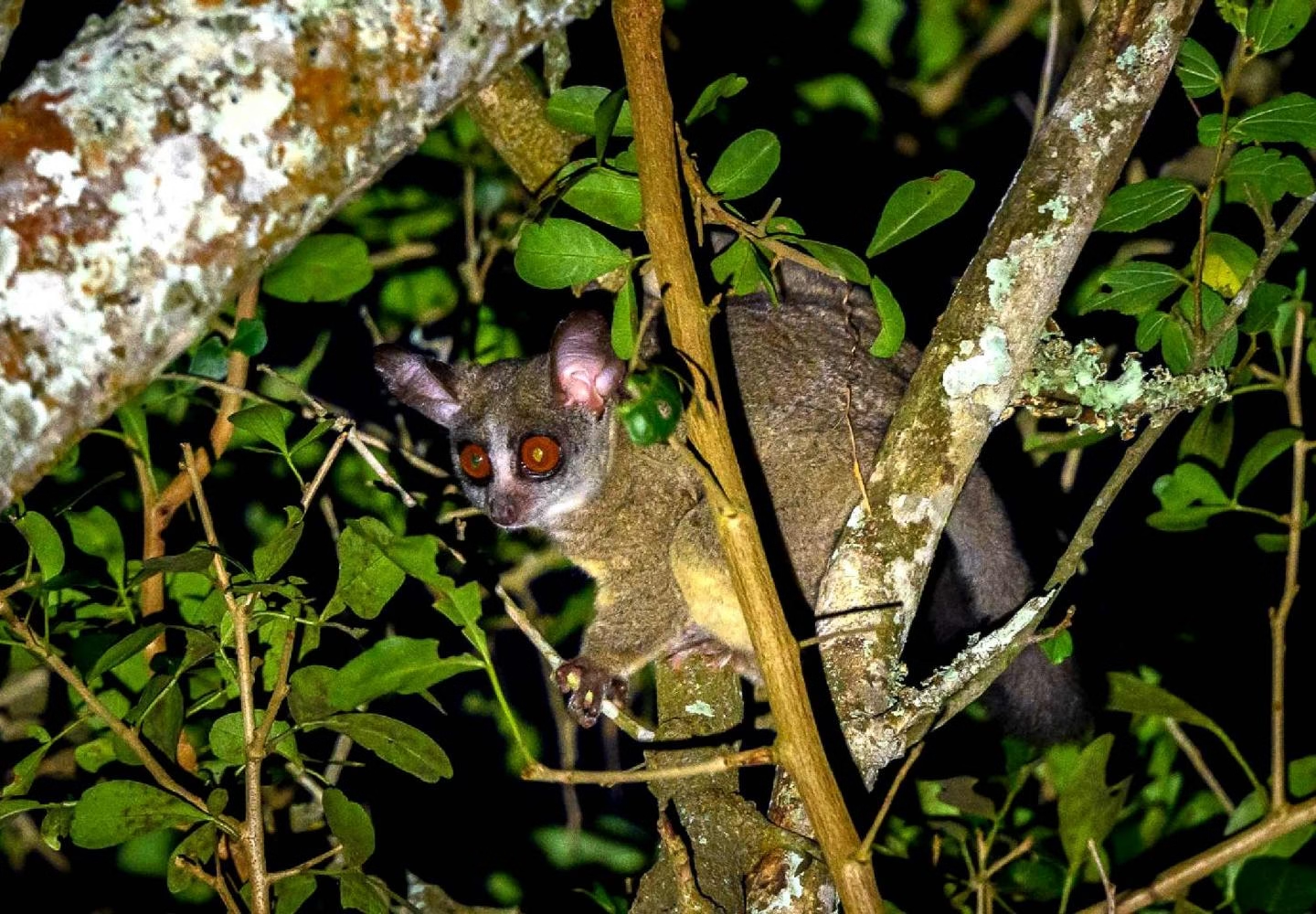
Travel Guide
Explore Uganda’s Bush Baby Galago Safaris for a thrilling night adventure. Learn about these elusive primates and the best safari spots to see them in Africa.
A Bush Baby Galago Safari introduces travelers to a side of Uganda’s wildlife that is easily missed during conventional daytime game drives and forest activities. Bush babies, also known as galagos, are small nocturnal primates that become active after daylight fades. Their large eyes, powerful hind limbs, distinctive calls, and ability to move rapidly between branches make them fascinating animals to search for during guided night experiences.
Uganda is widely associated with mountain gorillas, chimpanzees, elephants, lions, and other prominent safari animals, but the country’s ecosystems also support an important collection of nocturnal wildlife. Exploring these habitats after dark can therefore provide a completely different perspective on a familiar safari destination.
The supplied source identifies Kibale National Park, Queen Elizabeth National Park, Mabira Forest, and Bwindi Impenetrable Forest as places associated with opportunities to encounter bush babies. The experience may involve authorized night game drives or guided walks, depending on the destination and the activities permitted there.
Bush babies belong to a group of small African primates commonly called galagos. The supplied source describes them as nocturnal animals inhabiting forests and savannah environments across Africa.
Their appearance reflects their nighttime lifestyle.
Large rounded eyes help them function in low-light conditions, while strong hind limbs allow them to make impressive leaps between branches.
Their movements can be surprisingly fast. A visitor may hear an animal before getting a clear view of it, particularly in dense forest where vegetation restricts visibility.
This makes bush baby observation very different from watching larger primates during daylight.
The common name “bush baby” is strongly associated with the distinctive vocalizations produced by these primates.
The supplied source notes their high-pitched calls, which can help guides locate them during nighttime activities.
Listening becomes particularly important after dark.
During a daytime safari, travelers often depend heavily on sight. At night, the experience changes because sound becomes one of the main clues revealing what is happening in the surrounding habitat.
A guide may hear a call, stop the group, and then carefully search nearby branches for the animal responsible.
A bush baby’s large eyes are among its most noticeable features.
They support vision under low-light conditions and contribute to the animal’s recognizable appearance.
The supplied source also emphasizes the importance of strong hind limbs.
These limbs help galagos leap between trees and move through vegetation with agility.
Instead of walking continuously along branches, a bush baby can use powerful jumps to travel through its environment.
Watching this movement is one reason a nocturnal primate safari can feel so different from observing larger monkeys.
Uganda contains varied habitats capable of supporting different primates and other nocturnal wildlife.
The supplied source highlights four destinations for travelers interested in a Bush Baby experience: Kibale National Park, Queen Elizabeth National Park, Mabira Forest, and Bwindi Impenetrable Forest.
Each destination has its own broader tourism character.
Kibale is strongly associated with primates, Queen Elizabeth with savannah wildlife, Mabira with forest experiences, and Bwindi with mountain gorillas.
Adding nocturnal wildlife observation can therefore complement an existing itinerary.
The supplied source identifies Kibale National Park as an important primate destination where bush babies may be encountered.
Kibale is best known among many travelers for chimpanzees, but concentrating exclusively on chimpanzees can obscure the wider primate diversity of the forest.
A nocturnal experience changes the character of a Kibale visit.
The forest that visitors explore during daylight becomes a different environment after sunset.
Visibility decreases, unfamiliar sounds become more noticeable, and animals that remained hidden during the day begin becoming active.
Queen Elizabeth National Park is another location mentioned by the source.
The park is associated with savannah game viewing and varied wildlife, but nocturnal activities can reveal species that ordinary daytime drives may not encounter.
Searching for bush babies after dark adds another dimension to a wildlife safari.
Visitors should only participate in activities authorized for the destination and follow guide or ranger instructions carefully.
Night wildlife viewing requires additional discipline because darkness makes animal behavior and surroundings harder for inexperienced visitors to interpret.
The supplied material describes Mabira Forest as a destination suitable for guided nature experiences that may reveal galagos.
A forest walk at night creates a particularly immersive experience because travelers are no longer separated from the environment by a safari vehicle.
Every sound becomes more noticeable.
Branches moving overhead, insects, bird calls, and primate vocalizations can all contribute to the atmosphere.
Professional guidance is essential because the objective is to observe nocturnal wildlife without unnecessarily disturbing it.
The source also includes Bwindi Impenetrable Forest, a destination primarily known internationally for mountain gorilla trekking.
Bwindi’s inclusion demonstrates that its ecological value extends beyond gorillas.
The forest contains a broader wildlife community, including species active at different times of day.
Travelers who visit only for the main gorilla trek may experience the forest for a relatively limited period.
Additional nature-focused activities can reveal another side of the ecosystem.
A nighttime wildlife activity feels fundamentally different from a conventional game drive.
The supplied source describes specialized night safaris using spotlights and experienced guides to search for nocturnal animals.
The darkness limits how much visitors can see at one time.
Instead of scanning an entire open landscape, attention may focus on a small area illuminated carefully by the guide.
This narrower field of vision creates anticipation.
A pair of reflective eyes or sudden movement can quickly become the center of attention.
Artificial light needs to be used responsibly around nocturnal animals.
The supplied source specifically advises visitors to avoid bright lights that may disturb wildlife.
This is important because the animals being observed depend on darkness as part of their normal environment.
A night safari should not involve aggressively shining powerful lights directly at an animal for prolonged periods simply to obtain photographs.
Guides should control illumination according to appropriate wildlife-viewing practices.
The source also describes guided night walks as a possible way to experience bush babies.
Walking creates an especially close connection with the forest environment.
Without the sound and structure of a vehicle, visitors can become more aware of insects, leaves, distant calls, and movement overhead.
However, night walking should never be undertaken casually in wildlife habitat.
A trained ranger or guide is essential.
They understand the route, wildlife behavior, local regulations, and how to respond safely to encounters.
Photographing bush babies requires patience.
The source notes that their eyes can reflect light, making them easier to detect in darkness.
However, detecting an animal and producing a strong photograph are different challenges.
Galagos may move quickly, vegetation can obstruct the view, and available light is limited.
Travelers should prepare their cameras before beginning the activity rather than repeatedly experimenting when an animal has already been located.
The welfare of the animal should remain more important than the photograph.
Visitors should avoid excessive flash or bright illumination.
The source encourages responsible observation and specifically warns against disturbing nocturnal wildlife with light.
A technically imperfect photograph of natural behavior is preferable to an image obtained by stressing the animal.
Sometimes the most rewarding choice is to stop photographing and simply watch the bush baby move through the trees.
The supplied source identifies June to August and December to February as dry periods offering favorable wildlife-viewing conditions.
It also notes that bush babies remain active throughout the year and that night safaris can operate beyond these months.
This distinction is useful.
Travelers do not necessarily need to build an entire Uganda holiday around one narrow bush baby season.
The activity can potentially be incorporated into different seasonal itineraries where appropriate.
Wetter conditions can change the practical experience.
Forest paths may become muddier, and rain can affect comfort and photography.
However, the ecosystem remains active.
Travelers visiting outside the drier periods should prepare with appropriate clothing and realistic expectations rather than assuming nocturnal wildlife disappears.
Local guides can provide the most useful advice about conditions at the time of the visit.
The supplied source identifies habitat destruction and the illegal pet trade among threats facing bush babies.
These issues demonstrate why nocturnal wildlife should not be treated merely as entertainment.
Forest loss reduces the habitat animals need for feeding, movement, shelter, and reproduction.
Removing wild animals for the pet trade creates additional pressure.
Responsible tourism can help build economic value around keeping wildlife in functioning natural habitats.
Travelers should select operators and activities that respect conservation rules.
The source encourages supporting eco-friendly tours, following park guidelines, and minimizing environmental impact.
Visitors should never encourage a guide to chase, touch, capture, feed, or excessively illuminate a bush baby.
The objective is observation.
Wild animals should remain wild before, during, and after the encounter.
One of the strongest reasons to include a Bush Baby Galago Safari in Uganda is the contrast with daytime primate experiences.
A traveler might track chimpanzees during the day and search for galagos after dark.
Another itinerary could combine mountain gorillas with broader forest exploration.
These experiences reveal how different primates have adapted to different ecological niches and activity patterns.
The forest does not become inactive after sunset; its wildlife community simply changes.
Bush babies encourage travelers to broaden their definition of safari.
The most memorable animal does not always need to be the largest or most famous.
A small primate leaping between branches at night can provide an equally fascinating encounter because the setting and behavior are so distinctive.
Searching for galagos also teaches patience.
Visitors must listen carefully, watch the vegetation, follow guide instructions, and accept that nocturnal wildlife can be difficult to observe.
Bush Baby Galago Safaris reveal Uganda after daylight wildlife activities have finished. Kibale National Park, Queen Elizabeth National Park, Mabira Forest, and Bwindi Impenetrable Forest are among the locations identified in the supplied source for travelers interested in these nocturnal primates.
Large eyes, powerful leaps, nighttime calls, and elusive behavior make galagos particularly interesting to observe.
The strongest experience comes from responsible viewing rather than aggressive searching.
With professional guidance, controlled use of light, patience, and respect for the animals’ habitat, a bush baby safari can introduce travelers to a quieter but equally compelling side of Uganda’s biodiversity.

Nshongi Gorilla Family in Bwindi: History, Location and Trekking Guide The Nshongi Gorilla Family holds an important place…
Read article →
Mishaya Gorilla Family in Bwindi: History, Trekking and What to Know The Mishaya Gorilla Family is one of…
Read article →
Semuliki Hot Springs Visit Guide: What to Expect Semuliki Hot Springs offers one of the most unusual natural…
Read article →
Kidepo Valley Remote Safari Guide: What to Expect Kidepo Valley National Park offers one of Uganda's most remote…
Read article →