

Nshongi Gorilla Family in Bwindi
Nshongi Gorilla Family in Bwindi: History, Location and Trekking Guide The Nshongi Gorilla Family holds an important place…
Read article →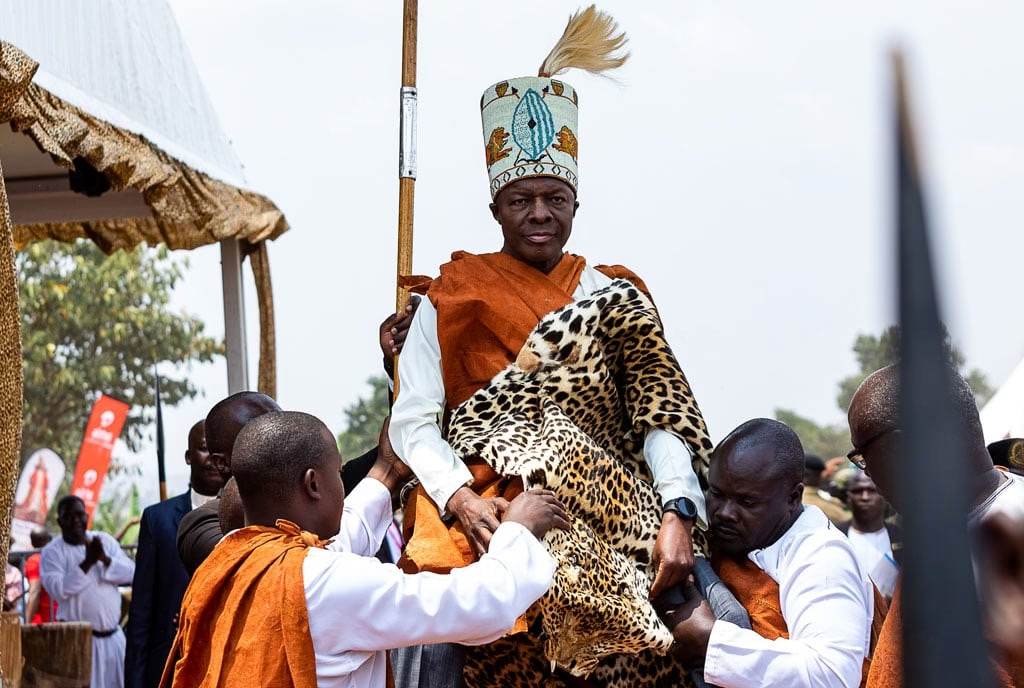
Travel Guide
Discover the history, rituals, and significance of the Buganda Kingdom coronation. Explore how this royal event shapes Uganda’s cultural identity and heritage.
The Buganda Kingdom Coronation is deeply connected with the traditions, royal institutions and cultural history of Buganda, one of Uganda’s most prominent traditional kingdoms. Understanding coronation traditions offers visitors a window into ideas of kingship, clan identity, ceremonial authority and heritage that have developed over generations.
The king of Buganda is known as the Kabaka.
The position carries enormous cultural significance, and traditions surrounding royal leadership extend far beyond a single public ceremony.
For travelers interested in Uganda’s cultural heritage, learning about coronation traditions can complement visits to royal palaces, tombs and other historic sites associated with Buganda.
Buganda developed around the northern shores of Lake Victoria and became one of the region’s influential kingdoms.
Its social and political systems include the monarchy, clan structures and established cultural institutions.
Today, Buganda exists as a traditional kingdom within modern Uganda.
Visitors should understand this distinction when exploring royal heritage.
The Kabaka’s cultural role belongs to a historical institution with traditions that predate the modern Ugandan state.
This context helps travelers interpret coronation sites and ceremonies more accurately.
The title Kabaka refers to the king of Buganda.
Kingship has historically represented more than the identity of an individual ruler.
It is connected with continuity, cultural authority and relationships among the kingdom’s institutions and clans.
Royal traditions have therefore developed around succession and the responsibilities of kingship.
A Buganda Kingdom Coronation should be understood within this broader cultural system rather than viewed simply as a formal event involving a crown.
Royal coronation traditions are often more complex than a single ceremony.
Different stages, places and cultural responsibilities can be involved.
This is one reason heritage tours focusing on Buganda may visit more than one royal site.
A knowledgeable guide can explain how individual locations fit into the larger story.
Visitors should avoid assuming that European concepts of coronation provide an exact model for understanding Buganda traditions.
The kingdom has its own historical practices and meanings.
Certain locations within Buganda are closely associated with royal traditions and succession.
These places may carry ceremonial, historical and spiritual significance.
Travelers interested in exploring them should use knowledgeable cultural guides.
Not every culturally important area is necessarily open for unrestricted tourism.
Follow instructions concerning access, photography and appropriate behavior.
Respect for these restrictions is essential because visitors are entering places that may remain meaningful to communities today.
Buddo is associated with important aspects of Buganda’s royal history and coronation tradition.
For heritage travelers, visiting areas connected with the monarchy can add depth to a Kampala-centered cultural itinerary.
A guide can explain historical context and the relationship between specific sites and royal traditions.
Travelers should check current visitor arrangements before making the journey.
Cultural sites may have different access conditions from conventional tourist attractions.
Buganda’s clan system is important to understanding the kingdom.
Royal traditions exist within a broader social structure in which clans have historical identities and responsibilities.
Learning about clans helps visitors understand why coronation traditions involve more than the Kabaka alone.
The wider cultural system contributes to continuity.
For travelers, this is one of the most interesting lessons from a detailed Buganda heritage tour.
Royal history becomes connected to family structures, community identity and social organization.
Royal institutions around the world use objects, spaces and rituals to communicate authority and continuity.
Buganda has its own traditions and symbols associated with kingship.
Visitors should rely on knowledgeable local interpretation rather than making assumptions based on other monarchies.
Objects or ceremonial practices may carry meanings that are not obvious to an outsider.
This is why guided heritage tourism is particularly valuable.
A guide can explain not only what visitors are seeing but why it matters.
A Buganda cultural itinerary can include sites associated with the Kabaka and royal administration.
The palace at Mengo is among the most recognizable royal landmarks in Kampala.
A visit provides an opportunity to learn about different periods of Buganda’s history.
The experience also demonstrates how royal heritage exists within modern Kampala.
Busy roads and contemporary neighborhoods surround sites connected with traditions extending back generations.
The Royal Mile links important institutions associated with Buganda in Kampala.
Exploring this route can help visitors visualize the relationship between royal and administrative spaces.
A guided visit is preferable because modern urban development can make historical context difficult to recognize independently.
The route can form part of a broader tour incorporating the palace and other cultural landmarks.
Together, these places help visitors understand the physical geography of Buganda’s royal heritage.
The Kasubi Tombs are closely associated with Buganda’s royal heritage.
They hold deep cultural and spiritual significance and are connected with former Kabakas.
The site demonstrates that kingship continues to matter after a ruler’s death through traditions of remembrance and ancestry.
Visitors should behave respectfully.
Photography and access instructions must be followed.
A tour should focus on understanding the site’s cultural meaning rather than treating it simply as historic architecture.
The Buganda Kingdom Coronation carries significance because royal traditions form part of a wider cultural identity.
Ceremonies can connect contemporary communities with inherited practices and historical memory.
For people outside Buganda, these traditions also provide an opportunity to understand Uganda’s internal cultural diversity.
Uganda contains many communities with distinct languages, histories and institutions.
Learning about Buganda is therefore one part of understanding the country’s broader cultural landscape.
Modern discussions of Buganda’s monarchy have long included Kabaka Ronald Muwenda Mutebi II and the restoration of the kingdom’s cultural institution in the post-abolition era.
His coronation in 1993 marked an important moment in the contemporary history of Buganda’s traditional monarchy.
For visitors, this provides historical context for understanding why modern coronation anniversaries and royal events have attracted considerable cultural attention.
When discussing current royal affairs, travelers should rely on up-to-date official information because contemporary institutional circumstances can change.
Anniversaries associated with royal leadership can become important cultural occasions.
They may attract participants, community representatives and people interested in Buganda heritage.
Visitors should remember that such events are primarily meaningful cultural occasions rather than performances staged for tourists.
Anyone attending should follow local guidance and behave appropriately.
Crowds, access controls and transportation arrangements may differ substantially from ordinary sightseeing days.
Ceremonial occasions may feature traditional clothing and other visible expressions of cultural identity.
For photographers, these events can appear highly attractive.
However, the visual character of an event should not override respect.
Ask before photographing individuals where appropriate.
Do not obstruct ceremonies or participants for a better angle.
Understanding what clothing and symbols mean is more valuable than simply collecting colorful photographs.
Music and drumming have important places within many Buganda cultural contexts.
Specific instruments and performance traditions may carry meanings connected with royal institutions or community events.
Visitors should avoid assuming that all traditional music serves the same function.
A knowledgeable guide can explain differences between ceremonial and entertainment contexts.
This deeper interpretation helps travelers appreciate cultural performances beyond their visual or musical appeal.
Travelers interested in Buganda Kingdom Coronation heritage can build a specialized cultural tour around Kampala and surrounding areas.
Start with major royal sites to establish historical context.
Then consider additional locations connected with kingship and coronation traditions.
A full day or more may be needed for a meaningful experience.
Traffic in and around Kampala can significantly affect travel time, so itineraries should not be overloaded.
Dress respectfully when visiting royal or culturally significant places.
Listen to guides and site custodians.
Do not enter restricted areas.
Ask before photographing people or sensitive spaces.
Avoid making jokes about traditions you do not understand.
Visitors do not need to know every cultural rule before arriving, but they should be willing to listen and adapt.
Respectful curiosity is generally more valuable than pretending to be an expert.
A cultural tour works well before or after a wildlife safari.
Many international visitors pass through Kampala and Entebbe, making Buganda heritage relatively easy to incorporate.
Travelers can explore royal sites before continuing toward Murchison Falls, Kibale, Queen Elizabeth National Park or Bwindi.
This creates a more complete journey.
Uganda’s wildlife is extraordinary, but the country’s human history deserves equal attention.
The Buganda Kingdom Coronation is not merely an isolated royal event.
It belongs to a much larger story of leadership, clans, ceremonial traditions, heritage and cultural continuity.
For travelers, learning about these traditions can transform Kampala from a transit city into a place filled with historical meaning.
Royal palaces, ceremonial routes, tombs and coronation-related sites become connected parts of one narrative.
Exploring that narrative with knowledgeable local guides provides a deeper understanding of Buganda and of Uganda itself.
A wildlife safari may reveal the country’s extraordinary natural heritage, while a Buganda cultural journey reveals another equally important dimension: the institutions, memories and traditions through which communities understand their own history.

Nshongi Gorilla Family in Bwindi: History, Location and Trekking Guide The Nshongi Gorilla Family holds an important place…
Read article →
Mishaya Gorilla Family in Bwindi: History, Trekking and What to Know The Mishaya Gorilla Family is one of…
Read article →
Semuliki Hot Springs Visit Guide: What to Expect Semuliki Hot Springs offers one of the most unusual natural…
Read article →
Kidepo Valley Remote Safari Guide: What to Expect Kidepo Valley National Park offers one of Uganda's most remote…
Read article →