

Nshongi Gorilla Family in Bwindi
Nshongi Gorilla Family in Bwindi: History, Location and Trekking Guide The Nshongi Gorilla Family holds an important place…
Read article →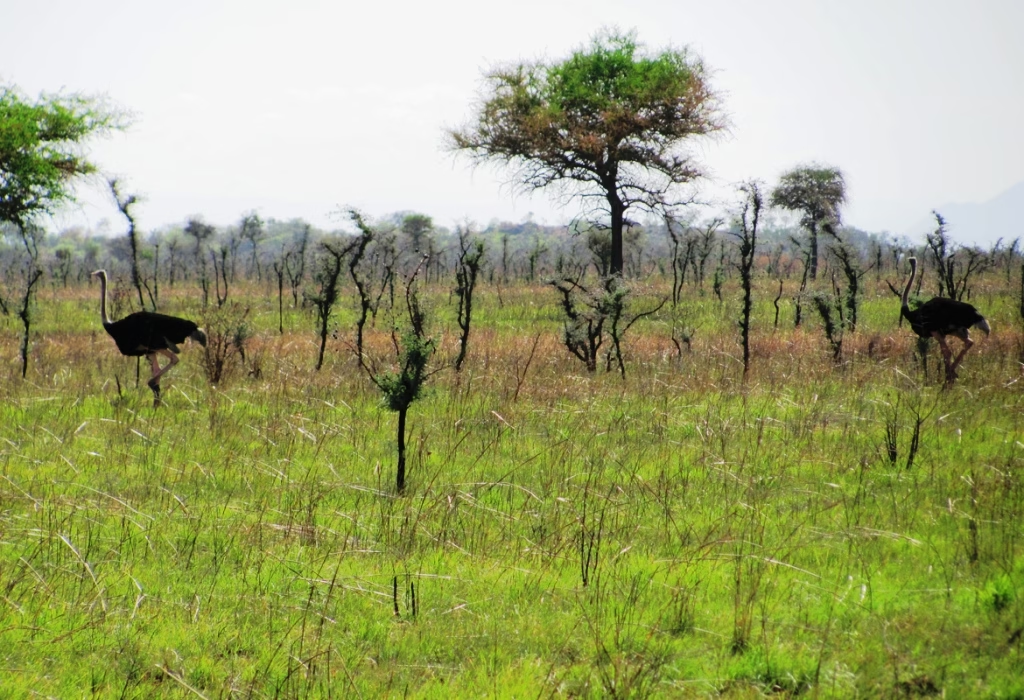
Travel Guide
Discover Bokora Wildlife Reserve in northeastern Uganda. Experience remote savannahs, diverse wildlife, and authentic cultural encounters in this lesser-known safari destination.
Bokora Wildlife Reserve Uganda offers travelers an opportunity to explore a remote savannah environment in northeastern Uganda. Compared with the country’s more established safari circuits, a lesser-known reserve can appeal to visitors who are interested in wilderness, open landscapes and travel beyond the most frequently visited national parks.
Remote travel requires a different approach from a conventional safari. Infrastructure may be more limited, travel times can be longer and visitors need reliable information about current access conditions.
The attraction is precisely this sense of exploration. Travelers interested in Bokora should approach the journey with flexibility and an appreciation for landscapes and cultural context rather than expecting the same tourism facilities found in heavily visited destinations.
Bokora Wildlife Reserve lies in northeastern Uganda and forms part of a broader landscape associated with the Karamoja region.
The environment is characterized by open spaces and savannah scenery.
For travelers accustomed to Uganda’s greener western regions, the northeastern landscape can provide a striking contrast.
The reserve’s relative remoteness is an important part of its identity.
Visitors should therefore prepare for a safari experience where logistics require more planning.
The journey can be rewarding for travelers who value wilderness and are comfortable traveling beyond established tourism centers.
Many safari travelers naturally prioritize famous destinations because information and infrastructure are easier to find.
However, lesser-known areas can provide a different perspective.
There may be fewer tourism vehicles, and the landscape itself can become a central part of the experience.
Visitors can spend more time appreciating space, vegetation and the wider ecosystem.
A remote reserve should not necessarily be judged according to the number of famous animals seen in a single drive.
The appeal often lies in the complete environment.
This style of travel particularly suits repeat safari visitors looking for something beyond conventional circuits.
Access is one of the most important elements to research before visiting.
Travelers should use current local information when planning the journey.
Road conditions can vary, and travel times may differ significantly from simple mapping estimates.
A suitable vehicle and experienced driver are valuable.
Visitors should also ensure that fuel and other logistical requirements are considered before entering remote areas.
The exact route depends on where the traveler begins and what other destinations are included.
A professional operator familiar with northeastern Uganda can help create a realistic plan.
The scenery is one of the main reasons to explore Bokora Wildlife Reserve Uganda.
Open savannah and broad horizons create a very different atmosphere from tropical forest destinations.
Landscape photographers can work with changing light, cloud formations and the scale of the environment.
Morning and later afternoon conditions may create particularly attractive photographs.
Travelers should also take time to observe the landscape without a camera.
Remote safari areas often create their strongest impression through silence and space rather than a continuous sequence of major wildlife sightings.
The reserve’s source description highlights diverse wildlife as part of its appeal.
Travelers should nevertheless maintain realistic expectations when entering a remote ecosystem.
Wild animals move according to natural conditions and are not guaranteed to appear near roads.
An experienced guide can help identify tracks, signs and habitats.
Binoculars improve the experience considerably.
Visitors should appreciate smaller wildlife and birds rather than focusing only on large mammals.
Patience is essential in areas where wildlife may be more widely dispersed.
Savannah landscapes can be rewarding for birdwatchers.
Different habitats attract different species, and open areas can make some birds easier to observe than in dense forest.
A dedicated birding guide can add substantial value for travelers with specialist interests.
Photographers should carry suitable lenses but remain aware of dust.
Camera equipment should be protected when traveling on unpaved roads.
Visitors who are not experienced birdwatchers can still benefit from binoculars.
Birds provide activity throughout the safari and help travelers understand the ecological character of the reserve.
A journey through northeastern Uganda also brings travelers into a region with distinct cultural identities.
Cultural interaction should be approached respectfully.
Visitors should avoid reducing communities to visual attractions.
A knowledgeable local guide can provide context and help arrange appropriate experiences.
Permission should always be requested before photographing individuals closely.
Travelers can support locally operated services and purchase legitimate crafts where appropriate.
Responsible cultural tourism should provide meaningful participation and benefits rather than simply creating staged photographs for visitors.
Remote destinations require careful accommodation planning.
Travelers should establish where they will sleep before beginning the journey.
Facilities may be simpler than those available in Uganda’s major tourism centers.
Visitors should ask about meals, bathrooms, electricity and charging arrangements.
Those expecting luxury infrastructure should clarify exactly what is available.
Travelers comfortable with simpler accommodation may find that it adds to the expedition atmosphere.
The key is arriving with accurate expectations.
Practical safari clothing is appropriate.
Lightweight neutral-colored clothes can work well during the day, while an additional layer may be useful according to conditions.
Sun protection is important in open landscapes.
Travelers should carry a hat, sunscreen and sufficient drinking water.
Insect protection and personal medication should also be packed.
Photographers need spare batteries and storage.
Dust protection for cameras can be useful.
Travelers should avoid relying on the assumption that forgotten items can easily be purchased once they enter a remote area.
A suitable safari vehicle is particularly important when traveling away from heavily developed routes.
The vehicle should be in good condition and appropriate for expected road conditions.
An experienced driver should understand the route and logistical requirements.
Travelers should not pressure drivers to travel at unsafe speeds simply because a transfer is taking longer than expected.
Remote safari planning should include realistic departure times.
Reaching the destination safely is more important than maintaining an overly ambitious schedule.
Bokora can be considered as part of a broader northeastern Uganda journey.
Travelers should structure the route according to realistic distances.
Trying to combine the reserve with distant western attractions in only a few days may result in excessive driving.
Visitors with enough time can create a wider Uganda itinerary that contrasts the northeast with other ecosystems.
The transition between regions can demonstrate the country’s environmental diversity.
However, the itinerary should include enough nights to justify the long distances involved.
Photographers may appreciate the opportunity to work in landscapes with fewer tourism vehicles.
Wide-angle lenses can capture the scale of the environment.
Telephoto lenses remain useful for wildlife and birds.
Dust is an important consideration, so unnecessary lens changes should be minimized in exposed conditions.
Photographers should also carry enough batteries and memory because charging or replacement supplies may be limited.
Responsible behavior remains essential.
Vehicles should not leave permitted routes or disturb animals merely to create a better image.
Remote environments can be particularly sensitive to careless tourism.
Visitors should remove all waste and avoid damaging vegetation.
Wildlife should be observed without disturbance.
Travelers should follow guide instructions and respect any access restrictions.
Water and other resources should be used thoughtfully.
Responsible behavior also extends to communities.
Visitors should avoid intrusive photography and treat local customs with respect.
Low visitor numbers do not make conservation rules less important.
In fact, responsible practices are essential if tourism is to develop sustainably.
Bokora Wildlife Reserve Uganda may be best suited to adventurous travelers who appreciate remote landscapes and are comfortable with limited infrastructure.
Repeat safari visitors may find it particularly interesting because it offers a different experience from Uganda’s more established parks.
Photographers, birdwatchers and travelers interested in the Karamoja region may also consider incorporating it into a longer journey.
Visitors seeking predictable luxury and dense tourism infrastructure should carefully evaluate whether the destination matches their expectations.
The strongest experience comes from understanding what makes Bokora different rather than expecting it to imitate another national park.
Travelers should confirm current access, accommodation and operating conditions before setting out.
Old travel reports should not be treated as guarantees that the same route or service remains available.
Insurance should be appropriate for remote travel.
Visitors should carry necessary personal medication and essential supplies.
The itinerary should include enough time for delays and changing road conditions.
A specialist local operator can help coordinate these details.
Bokora Wildlife Reserve Uganda provides an opportunity to experience a remote part of northeastern Uganda through savannah landscapes, wildlife and cultural context.
Its lesser-known status is part of the attraction for travelers who want to move beyond heavily visited safari circuits.
The destination requires preparation.
Transport, accommodation and current access conditions should be confirmed before travel.
Visitors should also arrive with realistic expectations regarding infrastructure and wildlife sightings.
For travelers who appreciate wilderness, photography, birdlife and responsible cultural interaction, Bokora can add a distinctive dimension to a longer Uganda safari.
Rather than offering a conventional mass-tourism experience, it provides an opportunity to explore a quieter landscape where the journey, environment and sense of remoteness become central parts of the adventure.

Nshongi Gorilla Family in Bwindi: History, Location and Trekking Guide The Nshongi Gorilla Family holds an important place…
Read article →
Mishaya Gorilla Family in Bwindi: History, Trekking and What to Know The Mishaya Gorilla Family is one of…
Read article →
Semuliki Hot Springs Visit Guide: What to Expect Semuliki Hot Springs offers one of the most unusual natural…
Read article →
Kidepo Valley Remote Safari Guide: What to Expect Kidepo Valley National Park offers one of Uganda's most remote…
Read article →