

Nshongi Gorilla Family in Bwindi
Nshongi Gorilla Family in Bwindi: History, Location and Trekking Guide The Nshongi Gorilla Family holds an important place…
Read article →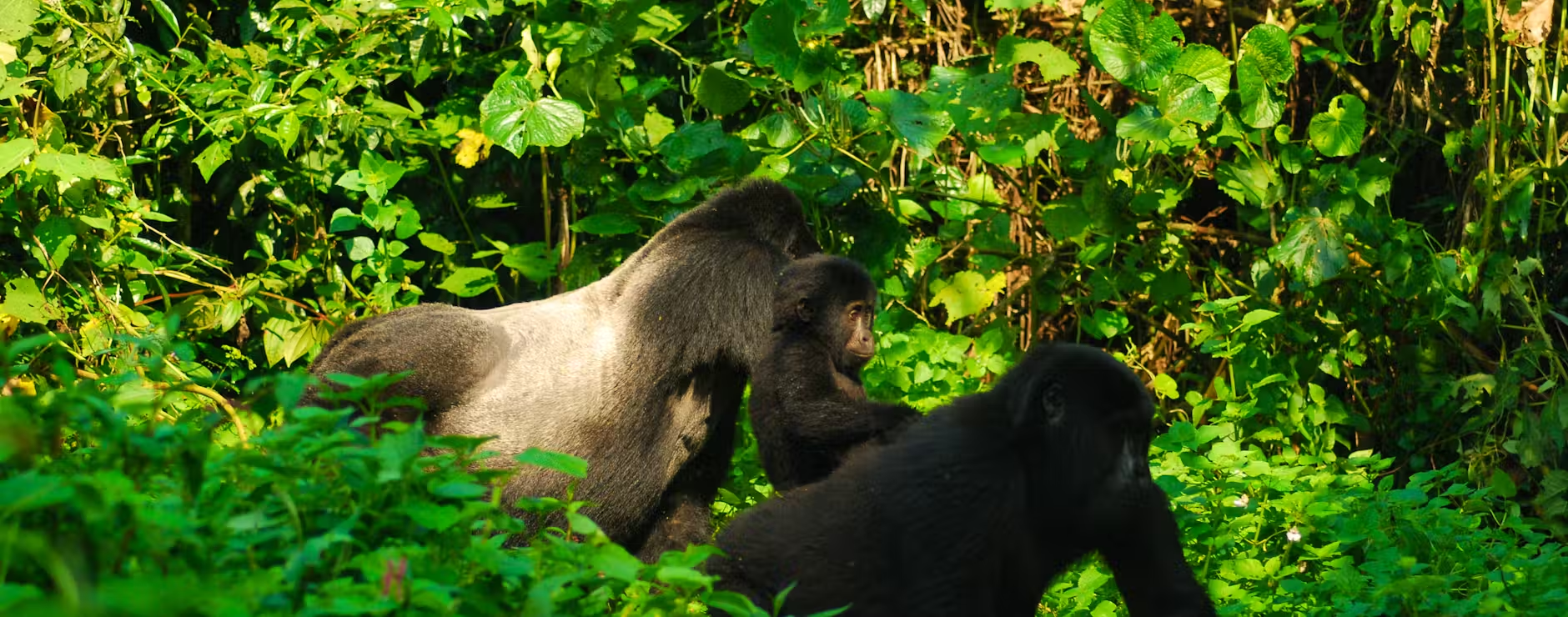
Travel Guide
Explore the best safari experiences in Uganda, including adventure safaris, wildlife encounters, primate trekking, hiking adventures, cultural tours, and photography safaris.
The Best Uganda Safari Experiences extend far beyond traditional game drives. The supplied source presents Uganda as a destination where travelers can combine wildlife viewing with gorilla and chimpanzee trekking, Nile adventures, mountain hiking, cultural encounters, birdwatching, and photography.
This diversity allows a Uganda safari to be shaped around individual interests.
A traveler looking for classic wildlife can explore Murchison Falls, Queen Elizabeth, or Kidepo Valley National Parks. Primate enthusiasts can focus on Bwindi, Kibale, and Mgahinga. Adventure travelers can spend time around Jinja, while hikers can explore the Rwenzori Mountains, Mount Elgon, and Sipi Falls.
Cultural and historical experiences add another layer through Buganda heritage, Karamoja, and the Batwa Trail.
The result is a destination where a safari can combine several forms of travel within the same journey.
Adventure tourism is one of the major categories emphasized in the supplied source.
Uganda’s rivers, landscapes, and outdoor environments provide opportunities for travelers who want physical activities alongside wildlife viewing.
Jinja and the Nile are particularly important within this adventure story.
The source highlights white-water rafting on the Nile River in Jinja as one of Uganda’s leading adventure experiences.
Rafting attracts travelers looking for an energetic contrast to game drives and lodge stays.
Trips can be organized through specialist adventure operators.
The supplied material describes Nile rafting as attracting both beginners and experienced rafters.
The exact suitability of any rafting section depends on the trip and operator.
Travelers should discuss experience level and physical requirements before booking.
Bungee jumping over the Nile is another activity identified in the source.
This experience is aimed at travelers seeking a stronger adrenaline element.
Anyone considering bungee jumping should follow operator safety procedures and review any health or participation requirements.
Quad biking provides a land-based adventure option.
It can introduce travelers to landscapes around Jinja from a different perspective.
Guided routes and responsible riding are important, particularly where trails pass through community areas.
The supplied source also includes horseback riding.
This can offer a slower way to experience rural scenery.
Travelers should select an experience suited to their riding ability.
Kayaking is another Nile activity highlighted in the material.
Being close to the water creates a different experience from viewing the river from a bridge or vehicle.
Instruction and appropriate safety equipment are essential.
Classic wildlife remains central to the Best Uganda Safari Experiences.
The supplied source focuses particularly on Murchison Falls, Queen Elizabeth, and Kidepo Valley National Parks.
Each park offers a different combination of landscapes and wildlife.
Murchison Falls is presented as one of Uganda’s major wildlife destinations.
The source highlights elephants, giraffes, and lions alongside the waterfall.
Visitors can combine game drives with river experiences and waterfall scenery.
The park’s attraction is not limited to individual animals.
Savannah, the Nile, riverbanks, and the waterfall create varied habitats and scenery.
This makes it particularly suitable for travelers who want wildlife and landscapes within one destination.
The supplied source highlights Queen Elizabeth National Park for its wildlife and water-based experiences.
The Ishasha area is associated with tree-climbing lions, while the Kazinga Channel is strongly connected with hippos and boat safaris.
Tree-climbing lions are one of the distinctive wildlife experiences identified in the source.
Sightings remain natural and cannot be guaranteed.
Experienced guides search appropriate areas while visitors observe from safari vehicles.
The Kazinga Channel introduces an aquatic dimension to a Queen Elizabeth safari.
The supplied source particularly emphasizes large hippo populations.
Boat experiences can also reveal birds and other wildlife using the shoreline.
For travelers interested in remote wilderness, the source recommends Kidepo Valley National Park.
Its distance from Uganda’s busiest tourism routes contributes to the sense of remoteness.
The material specifically mentions cheetahs and ostriches among notable wildlife.
Kidepo’s appeal lies partly in space.
Open landscapes and lower visitor concentrations can create a very different atmosphere from more accessible parks.
Travelers should plan transport carefully because remoteness also means longer journeys.
The supplied source describes Uganda as a major primate destination.
Gorilla trekking and chimpanzee tracking are central experiences.
Bwindi, Kibale, and Mgahinga are the principal destinations highlighted.
Bwindi Impenetrable National Park leads the gorilla trekking section of the source.
Visitors enter dense forest with guides to search for habituated mountain gorillas.
The source describes the experience as allowing visitors to spend an hour with mountain gorillas once the group is located.
Gorilla trekking is not only about the final encounter.
Walking through Bwindi introduces travelers to a dense tropical forest environment.
Terrain, vegetation, birdlife, and the anticipation of tracking all contribute to the experience.
The supplied source identifies Kibale Forest National Park as a leading chimpanzee-tracking destination.
It describes Kibale as the “primate capital of the world.”
Visitors can follow forest trails with guides while searching for chimpanzees and other primates.
Chimpanzee tracking can be highly auditory.
Calls moving through the forest may reveal the presence of a group before visitors see it.
This creates a different experience from scanning open savannah for wildlife.
Mgahinga provides another gorilla trekking opportunity.
The supplied source also highlights golden monkeys.
This allows travelers to experience more than one specialized primate activity within the same broader destination.
Golden monkeys inhabit the Virunga environment.
Tracking them can complement a gorilla trek.
Their movement through vegetation creates a faster-paced viewing experience than observing a gorilla family resting or feeding.
Uganda’s mountain and highland landscapes provide another major safari category.
The supplied source identifies the Rwenzori Mountains, Mount Elgon, and Sipi Falls as leading hiking destinations.
These experiences range from demanding mountain journeys to scenic walks.
The Rwenzoris are described as the Mountains of the Moon.
The supplied source highlights challenging trekking and snow-capped peaks.
Travelers considering longer routes should prepare carefully for the physical demands of mountain travel.
The Rwenzori experience differs fundamentally from a game drive.
Travelers move through changing vegetation and elevations on foot.
The journey itself becomes the main experience rather than transportation between wildlife sightings.
Mount Elgon provides another hiking environment.
The source highlights forest trails, caves, and waterfalls.
This variety makes the mountain attractive to travelers interested in nature as well as physical activity.
Walking through forest allows hikers to notice smaller environmental details.
Bird calls, vegetation, insects, rock formations, and changing weather become part of the experience.
Caves add geological interest to the Mount Elgon landscape.
A guided hiking itinerary can explain their relationship with the wider mountain environment.
Travelers should follow local guidance when entering any cave area.
The source describes hiking to Sipi Falls as offering attractive views and a peaceful atmosphere.
This makes it suitable for travelers who want scenic hiking without necessarily undertaking a major high-altitude expedition.
Uganda’s safari experiences are not limited to natural attractions.
The supplied source highlights Buganda heritage, Karamoja, and the Batwa Trail.
Cultural tourism can help travelers understand the people and histories connected with the landscapes they are visiting.
Visiting Buganda heritage sites can introduce travelers to royal history and cultural traditions.
The source specifically mentions the Kasubi Tombs.
These experiences provide context for Kampala and central Uganda beyond modern city sightseeing.
The Kasubi Tombs represent an important Buganda cultural and royal site.
Visitors should approach the area respectfully because it carries cultural and spiritual significance.
A guided experience can help explain its importance.
The supplied source highlights cultural experiences with Karamojong communities.
Travelers can learn about traditions and local ways of life.
Community visits should be organized in ways that respect the people being visited rather than treating everyday life as a spectacle.
The source specifically references traditional Karamojong dance.
Music and dance can provide an engaging introduction to cultural expression.
The strongest experiences are those in which communities determine how their culture is shared.
The Batwa Trail is identified as another cultural experience.
The source describes it as an opportunity to learn about Batwa forest history and traditions.
This can add human context to a journey otherwise focused on gorillas and golden monkeys.
Photography can be incorporated into nearly every Uganda safari category.
The supplied source highlights the golden savannah of Murchison Falls, misty forests of Bwindi, and scenery around Lake Bunyonyi.
Each environment requires a different photographic approach.
Open landscapes can provide opportunities for wildlife photography and wide scenic compositions.
Morning and evening light can produce attractive conditions.
Photographers should remain inside vehicles unless guides indicate otherwise.
Forest photography is more challenging.
Light levels may be lower, vegetation can obstruct subjects, and conditions may be humid.
Patience becomes particularly important.
The source identifies Lake Bunyonyi for scenic photography.
Hills, water, islands, and changing weather provide landscape subjects.
Elevated viewpoints can be particularly useful for wide compositions.
Bird photography is another major opportunity.
The supplied source states that Uganda has over 1,000 bird species and specifically highlights the shoebill.
This source-derived figure demonstrates the strong emphasis placed on birding within Uganda tourism.
The shoebill is one of Uganda’s most sought-after birds.
Its unusual appearance makes it especially attractive to photographers.
Sightings should always be approached responsibly without disturbing the bird.
One of Uganda’s strongest advantages in the supplied source is the ability to combine activities.
A traveler does not necessarily need to choose between wildlife, primates, adventure, hiking, culture, and photography.
A carefully planned itinerary can include several.
A classic combination might include savannah game viewing followed by gorilla or chimpanzee trekking.
The contrast is significant.
One experience involves scanning broad open landscapes, while the other takes place on foot inside forest.
Travelers can begin around Jinja with Nile activities before continuing into national parks.
This creates an energetic opening to a safari.
Game drives then provide a slower form of exploration.
Mountain destinations can also be paired with community experiences.
This helps travelers understand the people living around the landscapes they have come to explore.
Photography can connect every part of the itinerary.
Wildlife, landscapes, people, architecture, rivers, mountains, forests, and cultural activities all provide different visual subjects.
Respect and permission remain essential, particularly when photographing people.
The Best Uganda Safari Experiences reflect the variety emphasized throughout the supplied source.
Adventure travelers can raft, kayak, bungee jump, ride horses, or explore by quad bike around the Nile. Wildlife enthusiasts can search for elephants, giraffes, lions, hippos, tree-climbing lions, cheetahs, and other species across Murchison Falls, Queen Elizabeth, and Kidepo Valley National Parks.
Primate travelers can trek mountain gorillas in Bwindi or Mgahinga and track chimpanzees in Kibale. Hikers can explore the Rwenzori Mountains, Mount Elgon, and Sipi Falls.
Cultural experiences introduce Buganda royal heritage, Karamojong traditions, and Batwa history, while photographers can work with landscapes ranging from misty forests to open savannah and Lake Bunyonyi.
The strongest Uganda safari does not need to rely on a single attraction. By combining several experiences at a realistic pace, travelers can encounter wildlife, landscapes, adventure, culture, and communities within one journey through the Pearl of Africa.

Nshongi Gorilla Family in Bwindi: History, Location and Trekking Guide The Nshongi Gorilla Family holds an important place…
Read article →
Mishaya Gorilla Family in Bwindi: History, Trekking and What to Know The Mishaya Gorilla Family is one of…
Read article →
Semuliki Hot Springs Visit Guide: What to Expect Semuliki Hot Springs offers one of the most unusual natural…
Read article →
Kidepo Valley Remote Safari Guide: What to Expect Kidepo Valley National Park offers one of Uganda's most remote…
Read article →