

Nshongi Gorilla Family in Bwindi
Nshongi Gorilla Family in Bwindi: History, Location and Trekking Guide The Nshongi Gorilla Family holds an important place…
Read article →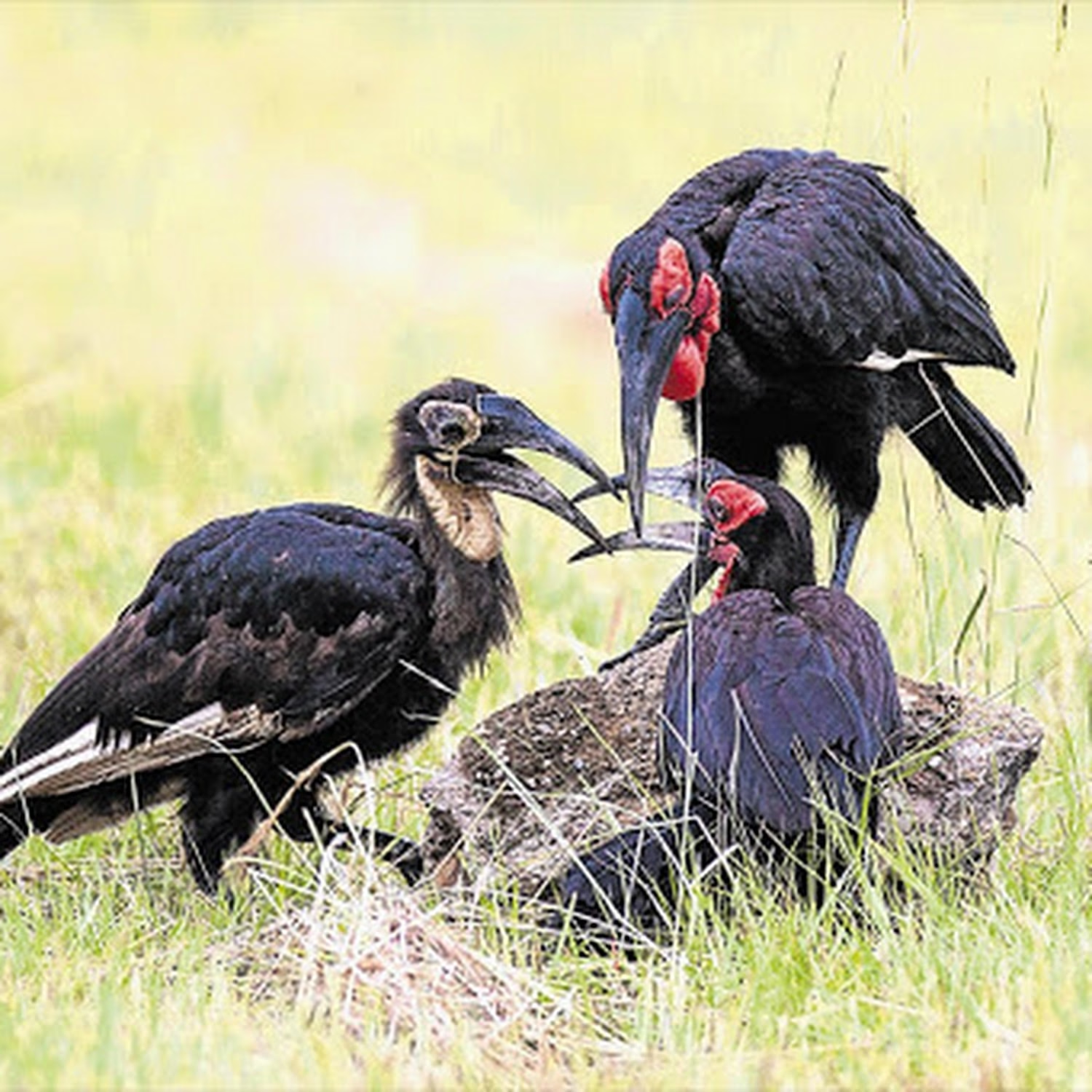
Travel Guide
Discover seven amazing facts about the ground hornbill. Learn about its size, hunting skills, booming call, and why this unique African bird needs protection.
The ground hornbill is one of Africa’s most distinctive birds. Its large body, strong bill, striking facial features and terrestrial behavior make it very different from the smaller birds many travelers expect to see during an African safari.
For wildlife enthusiasts, encountering a ground hornbill can become as interesting as seeing a large mammal. The bird spends substantial time moving across the ground and searching for food, giving patient safari visitors opportunities to observe its behavior.
The source description highlights seven particularly interesting aspects of the ground hornbill, including its size, hunting ability, booming call and conservation importance. Understanding these characteristics can make a sighting much more meaningful.
One of the first things visitors notice is the bird’s size.
A ground hornbill has a substantial body and powerful appearance.
Unlike many hornbills that are strongly associated with trees, ground hornbills spend considerable time walking across terrestrial habitats.
This makes them relatively conspicuous when conditions are favorable.
Their size also changes how travelers perceive them.
From a distance, an inexperienced observer may initially focus on the movement before realizing that the animal is a large bird rather than a small mammal.
Binoculars help reveal the details.
The name ground hornbill accurately reflects one of the bird’s most noticeable habits.
These birds spend considerable time moving on foot while searching for food.
Their strong legs support this terrestrial lifestyle.
Watching a ground hornbill walk deliberately through grass can be particularly interesting because its behavior differs from the constant short flights associated with many smaller birds.
This terrestrial movement also makes the species rewarding for photographers.
Visitors may have time to observe and anticipate the direction in which the bird is moving.
Ground hornbills are active foragers and hunters.
Their large bills allow them to capture different types of prey.
For safari visitors, this feeding behavior can be fascinating to watch.
Instead of seeing the bird simply perched in a tree, travelers may observe it searching carefully through the landscape.
Wildlife behavior is always more interesting when visitors understand what an animal is doing.
A knowledgeable guide can explain feeding techniques and identify the signs that the bird is actively hunting.
Patience may reveal behavior that a quick photograph would miss.
Birdwatchers should avoid approaching too closely when a ground hornbill is feeding.
Binoculars provide a better way to observe without disturbing natural behavior.
Photographers can use a longer lens where available.
The goal should be to document what happens naturally rather than influence the bird’s movement.
Safari vehicles should also maintain appropriate behavior around wildlife.
A bird that changes direction repeatedly because visitors are pursuing it is no longer behaving naturally.
Responsible viewing produces a more authentic experience.
The booming call is one of the most memorable characteristics associated with ground hornbills.
Travelers may hear the bird before they see it.
A deep call carries differently through the landscape from the higher-pitched sounds associated with many other birds.
This demonstrates why safari travel should involve listening as well as looking.
Guides often detect wildlife through sound before visitors notice anything.
Learning a few distinctive calls can greatly improve a traveler’s awareness of the surrounding environment.
Visitors often become so focused on spotting large mammals that they overlook sound.
Turning off unnecessary noise and listening carefully can reveal a much richer ecosystem.
Bird calls, alarm signals and other sounds can provide information about what is happening nearby.
The ground hornbill’s booming vocalization is a good example.
A guide familiar with the call may be able to help visitors locate the birds.
Even when they remain out of sight, hearing a distinctive species can become a memorable wildlife moment.
Ground hornbills can display interesting social relationships.
Observing more than one bird together provides an opportunity to watch interactions rather than focusing on an isolated individual.
Social behavior can include movement, communication and coordinated activity.
Visitors should give the birds enough space to behave naturally.
A longer observation often reveals more than repeatedly moving the vehicle in search of a different species.
For birdwatchers, understanding social structure can make an encounter considerably more rewarding.
A common safari mistake is to leave a sighting immediately after obtaining a photograph.
This may be enough for someone collecting images, but it often means missing the most interesting behavior.
Ground hornbills can reward patience.
Watching them move through the habitat may reveal feeding, communication or interaction between individuals.
Visitors should ask guides whether staying longer is practical.
A safari becomes richer when travelers focus on behavior rather than treating wildlife as items on a checklist.
The ground hornbill has a striking appearance.
Its substantial bill, dark body and distinctive facial coloration make it recognizable.
This combination is particularly attractive to photographers.
Good light can reveal details that are less obvious from a distance.
Visitors should carry binoculars even when using a camera.
Binoculars allow continuous observation without the narrow field of view created by a telephoto lens.
They are also easier to use when the bird moves unexpectedly.
A telephoto lens can help photographers create detailed portraits without approaching the bird too closely.
Faster shutter speeds may be useful when the bird is walking or hunting.
Photographers should also consider wider compositions that show the animal within its habitat.
These environmental images often communicate more about the species than a tightly cropped portrait.
Visitors should avoid asking drivers to position vehicles in ways that disturb the birds.
A natural image is more valuable than one created through harassment.
A ground hornbill should not be viewed in isolation from its habitat.
The bird interacts with the wider ecosystem through feeding and other natural processes.
Its presence can also encourage visitors to pay more attention to the less obvious wildlife surrounding famous mammals.
Savannah ecosystems depend on relationships between many species.
Birds, insects, plants, predators and herbivores all contribute to the landscape.
A traveler who learns to appreciate this wider system gains much more from a safari.
African safaris are frequently marketed around large mammals, but birds can transform periods when famous animals are difficult to find.
Instead of considering a game drive unsuccessful because lions or elephants are absent, visitors can focus on the variety around them.
Ground hornbills are particularly useful for introducing casual travelers to birdwatching because they are large and visually distinctive.
Once visitors begin observing them, they may become more interested in other bird species.
A knowledgeable guide can encourage this broader appreciation.
The source description emphasizes the importance of protecting this unique African bird.
Conservation is essential because wildlife populations depend on suitable habitat and protection from human-related pressures.
Travelers can contribute by supporting responsible tourism and avoiding activities that disturb wildlife.
Protected areas play an important role in maintaining habitat.
Visitors should follow park regulations and avoid littering.
They should also never purchase products made from illegally obtained wildlife materials.
Conservation begins with recognizing that even seemingly common sightings cannot be taken for granted.
Protecting wildlife means protecting the ecosystems on which species depend.
A bird cannot be conserved effectively if the habitat required for feeding, breeding and movement disappears.
This is why protected landscapes matter beyond the famous animals used in tourism marketing.
Visitors who pay park fees and use responsible tourism services can contribute economically to landscapes where conservation takes place.
However, tourism must itself remain well managed.
Vehicles and visitors should not damage the environment they have come to experience.
Birdwatchers should observe from a respectful distance.
Recorded calls or other methods intended to manipulate bird behavior should not be used carelessly.
Visitors should follow the guidance of responsible local experts.
Nesting areas deserve particular sensitivity.
Photography should never become more important than the welfare of the subject.
Travelers should also stay on permitted routes and avoid damaging vegetation while trying to obtain a better viewing position.
These principles apply to ground hornbills and every other bird encountered during a safari.
Travelers interested in seeing ground hornbills should discuss their interests with a knowledgeable safari operator or guide.
Wildlife distribution varies, and no sighting can be guaranteed.
The correct strategy is to visit suitable habitat and spend enough time observing.
A dedicated birding safari may provide more opportunities than a rushed general itinerary.
However, general wildlife travelers can also encounter remarkable birds unexpectedly.
Keeping binoculars ready makes it easier to take advantage of these moments.
The ground hornbill demonstrates why African wildlife experiences should extend beyond the most famous mammals.
Its large size immediately attracts attention, but deeper observation reveals much more.
Its terrestrial lifestyle, hunting behavior, booming call and distinctive appearance make it a fascinating safari subject.
The bird also provides an opportunity to discuss conservation and the importance of protecting entire ecosystems.
Travelers who slow down and observe carefully can transform a brief sighting into a meaningful wildlife experience.
Learning these seven interesting facts before a safari can help visitors recognize the ground hornbill not simply as another bird beside the road, but as a distinctive part of Africa’s natural heritage whose habitat and future deserve continued protection.

Nshongi Gorilla Family in Bwindi: History, Location and Trekking Guide The Nshongi Gorilla Family holds an important place…
Read article →
Mishaya Gorilla Family in Bwindi: History, Trekking and What to Know The Mishaya Gorilla Family is one of…
Read article →
Semuliki Hot Springs Visit Guide: What to Expect Semuliki Hot Springs offers one of the most unusual natural…
Read article →
Kidepo Valley Remote Safari Guide: What to Expect Kidepo Valley National Park offers one of Uganda's most remote…
Read article →