

Nshongi Gorilla Family in Bwindi
Nshongi Gorilla Family in Bwindi: History, Location and Trekking Guide The Nshongi Gorilla Family holds an important place…
Read article →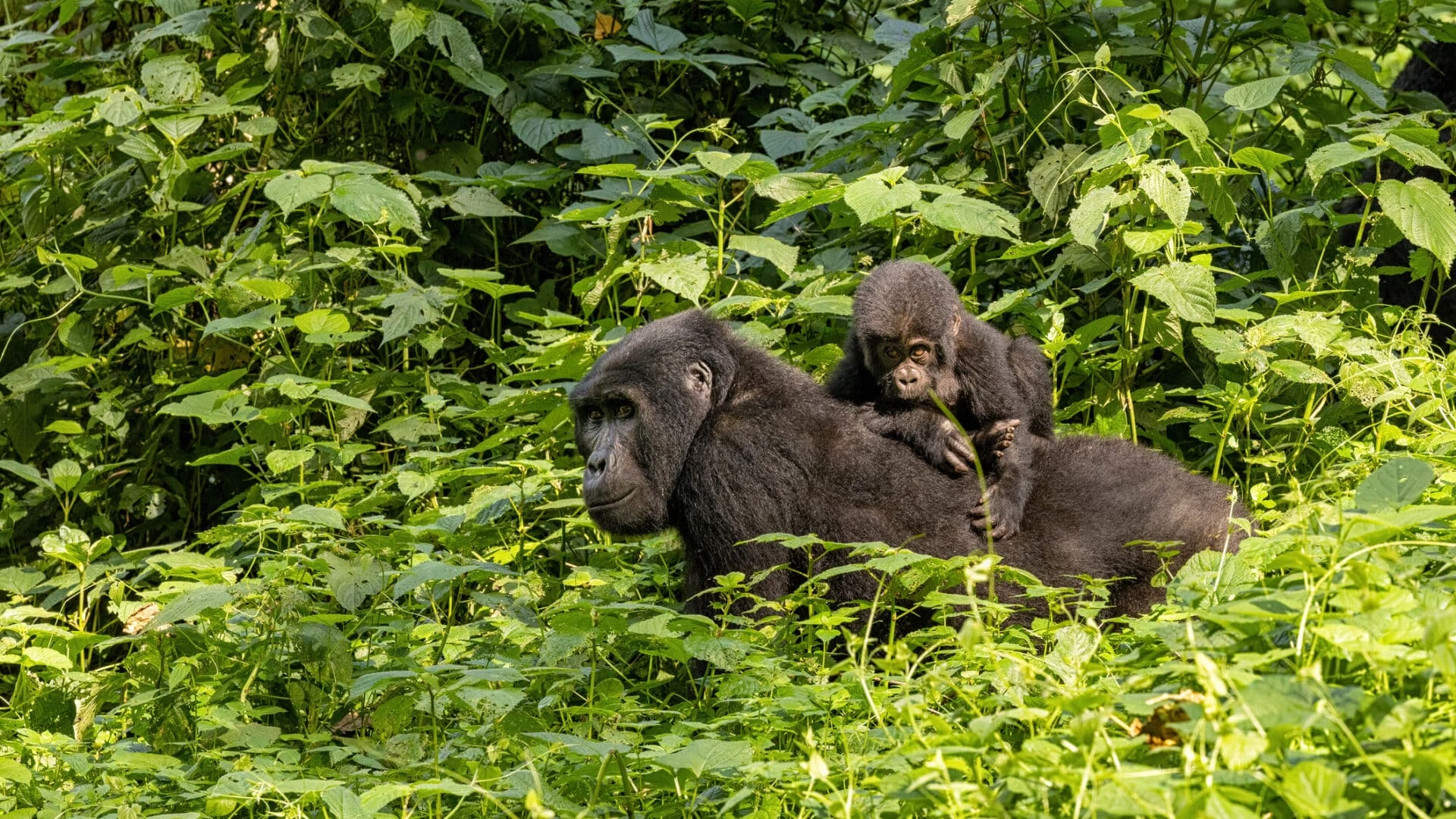
Travel Guide
Experience a 7-day East African adventure combining gorilla trekking in Uganda or Rwanda with a Maasai Mara safari in Kenya. Enjoy wildlife, cultural visits, and unforgettable landscapes.
A 7-day gorilla tour combined with a Maasai Mara safari brings together two very different East African wildlife environments within one journey. The supplied source presents the itinerary as beginning with mountain gorilla trekking in Uganda or Rwanda before continuing to Kenya’s Maasai Mara for game drives, large mammals, cultural experiences, and open savannah scenery.
The attraction lies in contrast.
Gorilla trekking is a forest experience undertaken on foot. Travelers move through dense vegetation with rangers while searching for a habituated gorilla family.
The Maasai Mara changes the setting completely. Wildlife viewing takes place mainly from a safari vehicle across open plains where lions, elephants, buffaloes, leopards, cheetahs, zebras, giraffes, and other animals may be encountered.
Seven days is a relatively compact period for combining these experiences, so transportation and timing need careful coordination.
The supplied source allows the gorilla portion to take place either in Bwindi Impenetrable Forest in Uganda or Volcanoes National Park in Rwanda.
The choice affects transportation, accommodation, permit arrangements, and the onward connection toward Kenya.
Travelers should therefore decide the gorilla destination early in the planning process.
The first day is dedicated primarily to arrival and transfer.
According to the supplied itinerary, travelers fly or drive toward Bwindi or Volcanoes National Park and check into their lodge.
This should be treated as a positioning day rather than an opportunity to add numerous activities.
Long international journeys and regional transfers can be tiring.
After arrival, travelers can prepare for the next morning.
Trekking clothes should be organized, cameras charged, rain protection checked, and walking shoes made ready.
A relaxed dinner and adequate sleep are more useful than filling the evening with additional excursions.
The source refers to a briefing about gorilla trekking rules and park regulations.
The formal briefing generally occurs as part of the trekking process.
Visitors should listen carefully because instructions are designed to protect both the gorillas and the trekking group.
Current ranger guidance takes priority over information read before the trip.
Day two contains the central primate experience.
Visitors begin early and join guides and rangers for the trek into the forest.
The length of the search depends on the current location of the assigned gorilla family.
The source does not present a fixed trekking duration because the animals move naturally.
Travelers should expect uneven and potentially muddy terrain.
Strong footwear, long trousers, rain protection, drinking water, and a manageable daypack can make the experience more comfortable.
Basic physical preparation before the safari is helpful.
Once trackers locate the habituated family, visitors transition from hiking to careful observation.
The supplied source states that visitors enjoy up to one hour observing the gorillas.
During that period, travelers may see feeding, resting, grooming, play, or other natural behavior.
Nothing specific can be guaranteed.
The gorilla encounter provides exceptional photographic opportunities, but travelers should avoid spending the entire observation period looking through a camera.
Equipment should be prepared before reaching the gorillas.
Ranger instructions determine where visitors stand and how they behave.
The supplied itinerary says a cultural visit may be included.
This can introduce travelers to communities living around the gorilla tourism region.
Such activities should involve respectful interaction and genuine local participation.
Visitors should ask permission before photographing people.
The source presents day three as potentially including an optional second gorilla trek or forest walk before beginning the journey toward Kenya.
In practice, travelers should evaluate the timing carefully.
A second trek requires its own arrangements and should not be assumed to fit easily alongside major cross-border travel on the same day.
A guided forest walk can provide a less demanding alternative to another gorilla trek.
Instead of focusing on locating one gorilla family, visitors can pay attention to vegetation, birds, smaller wildlife, and the wider ecosystem.
This can complement the previous day’s primate experience.
Moving from gorilla country to the Maasai Mara is one of the most important logistical parts of the itinerary.
The supplied source gives the general structure but does not provide detailed flight schedules or exact border-transfer arrangements.
Those elements should therefore be confirmed during booking rather than assumed from the article.
The fourth day marks the beginning of the Kenya safari.
Travelers reach the Maasai Mara National Reserve, check into their lodge or camp, and may take an evening game drive if time permits.
The change from forest to open grassland is immediate.
If arrival time allows, an evening drive provides an introduction to the Mara.
Travelers should not expect to see every famous species immediately.
A safari develops over several drives, with each outing providing different wildlife behavior and changing light.
Day five is devoted to wildlife viewing across the Mara plains.
The supplied source identifies elephants, lions, leopards, buffaloes, rhinos, zebras, giraffes, and cheetahs among the animals travelers may hope to encounter.
These remain wild animals, so individual sightings cannot be guaranteed.
An early game drive can offer cooler temperatures and changing wildlife activity.
Predators may still be active, while herbivores begin moving through feeding areas.
Morning light can also be attractive for photography.
Returning to the lodge during the middle of the day gives travelers time to eat and rest.
This is particularly useful after several consecutive early mornings.
A safari does not need to involve constant driving to be successful.
The afternoon drive provides another opportunity to explore.
Guides can respond to recent wildlife information while also introducing different habitats.
The goal should be understanding the ecosystem rather than racing between reported sightings.
The supplied source dedicates day six to more extensive exploration.
A full-day outing can reach areas that are less practical during a shorter morning or evening drive.
Travelers should discuss the plan with their guide according to wildlife conditions and personal preferences.
The source includes an optional Maasai village visit.
A responsible cultural experience can introduce travelers to aspects of Maasai life and traditions.
Visitors should choose arrangements where community members participate meaningfully and benefit directly.
The final day begins with an early morning wildlife drive according to the supplied itinerary.
Afterward, travelers return for breakfast, check out, and continue toward Nairobi or another onward destination.
Flight timing needs to be coordinated carefully with the transfer from the Mara.
The supplied source recommends booking gorilla permits well in advance.
The permit is central to the first half of the itinerary and should be confirmed before other non-refundable arrangements are finalized.
Accommodation should correspond with the actual trekking location.
The itinerary also requires Maasai Mara park arrangements and accommodation in both safari regions.
Using a reputable operator can simplify these components.
Cross-border journeys become considerably easier when one itinerary accounts for the connections between each segment.
Travelers need clothing suitable for both humid mountain forest and open savannah.
The source recommends hiking boots, rain gear, sun protection, binoculars, and cameras.
Packing should remain manageable because regional flights may have luggage restrictions that differ from long-haul international services.
The supplied source emphasizes passports, visas, permits, and vaccination documentation.
These requirements are time-sensitive.
Travelers should verify current official entry and health requirements for every country included rather than relying solely on an itinerary article.
Wildlife movement, weather, trekking duration, flight schedules, and border procedures can affect the itinerary.
Some flexibility is therefore essential.
Trying to schedule every day too tightly can create unnecessary stress.
The 7 Days Gorilla Tour and Maasai Mara Safari combines two of East Africa’s most contrasting wildlife experiences. The first section takes travelers into mountain forest to search for habituated gorillas in Uganda or Rwanda. The second opens onto the Maasai Mara’s grasslands for several days of game viewing.
The supplied source structures the journey around three days of gorilla-region experiences followed by four days connected with the Maasai Mara.
Because the trip crosses countries and very different landscapes, careful logistics are essential.
When permits, transportation, accommodation, and travel documents are coordinated properly, seven days can provide a concentrated introduction to both primate trekking and classic East African savannah wildlife.

Nshongi Gorilla Family in Bwindi: History, Location and Trekking Guide The Nshongi Gorilla Family holds an important place…
Read article →
Mishaya Gorilla Family in Bwindi: History, Trekking and What to Know The Mishaya Gorilla Family is one of…
Read article →
Semuliki Hot Springs Visit Guide: What to Expect Semuliki Hot Springs offers one of the most unusual natural…
Read article →
Kidepo Valley Remote Safari Guide: What to Expect Kidepo Valley National Park offers one of Uganda's most remote…
Read article →