

Nshongi Gorilla Family in Bwindi
Nshongi Gorilla Family in Bwindi: History, Location and Trekking Guide The Nshongi Gorilla Family holds an important place…
Read article →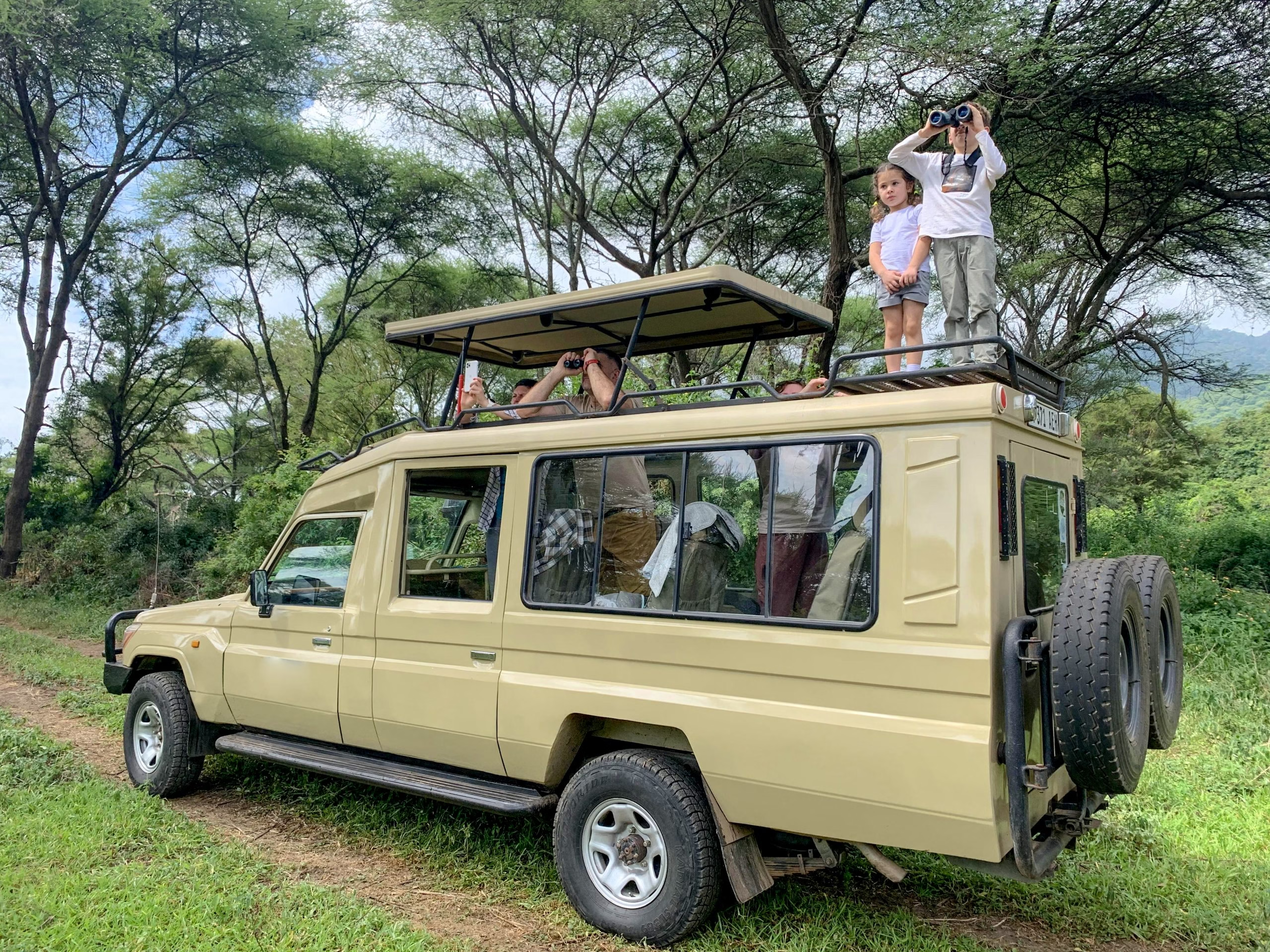
Travel Guide
Discover why a 4x4 safari vehicle is essential for your African safari. Explore the benefits of these rugged, reliable vehicles in navigating challenging terrain.
A 4×4 Safari Vehicle can significantly influence the comfort, reliability, wildlife viewing, and overall quality of an African safari. Unlike ordinary city journeys, safari routes may involve unpaved tracks, deep ruts, mud, sand, rocks, steep sections, dust, and long driving hours through remote landscapes.
The supplied source emphasizes four-wheel drive because safari destinations frequently contain roads that change with weather and terrain. A track that is straightforward during dry conditions may become difficult after heavy rain. Likewise, sandy or rocky sections can demand greater traction and ground clearance than an ordinary road vehicle provides.
Yet off-road capability is only part of the reason these vehicles are useful. Safari 4x4s are also designed around wildlife observation. Elevated seating, large windows, spacious interiors, and suspension suited to rough surfaces can make hours in the vehicle more comfortable and productive.
A four-wheel-drive vehicle can direct driving power in a way that improves traction across difficult surfaces.
For safari travelers, the practical significance is straightforward: the vehicle is better equipped to handle conditions beyond paved roads.
The supplied source specifically mentions muddy tracks, rocky paths, sandy areas, rugged roads, and deep ruts.
These conditions are common enough on safari that vehicle selection should form part of trip planning rather than being treated as an afterthought.
Many wildlife areas are intentionally remote.
Visitors may leave major highways and travel along tracks where surfaces are uneven.
A 4×4 Safari Vehicle combines traction with a construction suited to these environments.
This can reduce the likelihood that a rough section of road interrupts the journey.
No vehicle makes difficult terrain completely risk-free, but suitable equipment provides a much stronger starting point.
Rain can rapidly change road conditions.
Dry soil may become soft and slippery, while ruts can fill with water.
Four-wheel-drive capability helps a vehicle maintain traction in such circumstances.
Experienced driving remains essential.
A powerful vehicle should not encourage unnecessary risk or careless attempts to cross unsafe ground.
Rocky tracks create a different challenge.
Ground clearance becomes important because the underside of a low vehicle can be vulnerable.
Safari 4x4s are generally better suited to uneven surfaces.
Drivers familiar with the route can select appropriate lines through difficult sections rather than relying only on engine power.
Loose sand can reduce traction.
The supplied source specifically includes sandy terrain among the environments for which 4×4 vehicles are useful.
Driving technique, suitable tires, and four-wheel-drive capability work together.
This is particularly relevant on routes where conventional paved roads are absent.
The source emphasizes high-clearance suspension as a benefit.
Ground clearance allows a vehicle to pass over ruts and uneven terrain more effectively.
It can also contribute to the elevated seating position appreciated by wildlife viewers.
These practical and observational advantages make high clearance particularly useful in safari design.
A safari vehicle may become one of the spaces travelers use most frequently during a trip.
Some itineraries involve several hours of driving between destinations followed by game drives inside parks.
Comfort therefore matters.
The supplied source describes 4×4 safari vehicles as spacious and equipped with comfortable seating.
A small difference in seat quality can become very noticeable after several consecutive hours on rough roads.
Adequate interior space allows passengers to sit comfortably and organize essential items.
Camera equipment, binoculars, water, jackets, and small day bags may all need to remain accessible.
Overcrowding can reduce comfort and make wildlife viewing difficult.
Travelers should therefore consider not just how many seats a vehicle technically contains, but how much usable space each passenger receives.
The source highlights large windows for unobstructed views.
Visibility is crucial during game drives.
Wildlife may appear on either side of the vehicle with little warning.
A good safari design allows passengers to look outward without constantly competing for a narrow viewing position.
One of the strongest advantages described in the supplied material is the elevated seating position.
Height can improve visibility over grass and low vegetation.
This is particularly helpful when searching for wildlife at a distance.
A lion resting in grass may be difficult to notice from a low vehicle but easier to see from a raised position.
The supplied source uses the Big Five—lion, leopard, buffalo, elephant, and rhino—as examples of animals travelers may search for.
An elevated vehicle can assist with spotting these larger mammals.
However, good wildlife viewing should extend beyond the Big Five.
Antelopes, primates, birds, reptiles, and smaller mammals can be equally rewarding.
Height and good window access also help with smaller animals.
A guide may spot movement in grass or a bird perched some distance from the track.
Travelers with binoculars can use the elevated position to scan more effectively.
This makes the vehicle an observation platform rather than merely transportation.
The source identifies off-road capability as a major reason to use a 4×4.
Many parks and reserves contain extensive networks of unpaved tracks.
A suitable vehicle allows guides to navigate these environments more confidently where regulations permit.
However, “off-road capability” should not be interpreted as permission to leave designated routes wherever a driver wishes.
Park regulations still apply.
A capable vehicle must be used responsibly.
Wildlife areas may restrict where vehicles can travel to protect vegetation and animals.
Drivers should follow the rules of each destination.
A 4×4 provides the ability to handle difficult authorized routes; it does not remove conservation responsibilities.
Safari environments can expose vehicles to heat, dust, rain, vibration, and long distances.
The supplied source emphasizes the robust construction of 4×4 vehicles.
Reliability becomes especially important in remote regions where workshops and spare parts may not be immediately available.
Regular maintenance is therefore as important as the type of vehicle itself.
Dust is unavoidable on many dry-season safari routes.
It can enter mechanical components and affect passenger comfort.
Vehicles used regularly for safari operations need to be prepared for these conditions.
Travelers may also want to protect cameras and electronics when roads become particularly dusty.
Rain presents almost the opposite challenge.
Roads can become slippery while water tests seals and visibility.
A well-maintained vehicle provides greater confidence during changing conditions.
Drivers should still adjust speed and route choices according to weather.
High temperatures can place demands on both vehicles and passengers.
Reliable engines and cooling systems are important.
Travelers also benefit from carrying drinking water and appropriate sun protection.
Comfort features should complement rather than replace practical preparation.
The source stresses reliability because safari vehicles frequently operate far from major towns.
A mechanical problem in a city is inconvenient.
The same problem on a remote wildlife track can become much more complicated.
Professional safari companies therefore need to maintain vehicles carefully before and during trips.
A 4×4 Safari Vehicle can be used across several ecosystems.
The supplied source mentions grasslands, forests, and deserts.
Each landscape presents different driving conditions.
A versatile vehicle allows an itinerary to move between them without requiring completely different transportation for every section.
Open savannah may appear easy to drive across, but park tracks can still contain ruts, dust, mud, and seasonal water.
Elevated viewing is particularly useful in grassland because animals may disappear behind vegetation.
The combination of mobility and visibility makes a 4×4 highly suitable.
Forest roads can be narrow, uneven, and wet.
Branches and vegetation may reduce visibility.
A capable vehicle and experienced driver become important when navigating such routes.
Passengers should also expect wildlife viewing to differ from open plains because animals may be concealed by dense vegetation.
Sandy environments test traction.
The source specifically includes deserts among the ecosystems accessible with suitable 4×4 transportation.
Drivers need experience because sand conditions can vary significantly.
Vehicle capability should always be matched with local knowledge.
The supplied material describes 4x4s as suitable for national parks, reserves, and private game ranches.
This versatility makes them practical for multi-destination itineraries.
Travelers can move between different types of protected landscapes while retaining familiar seating and equipment.
The source describes 4×4 vehicles as suitable for families.
Ample seating allows family members to share wildlife experiences together.
Parents should still consider children’s ages, driving times, and tolerance for long periods in a vehicle.
A technically spacious vehicle cannot compensate for an itinerary containing excessive driving.
Groups of friends can also benefit from traveling together.
A private vehicle allows conversation and shared sightings without mixing with unrelated passengers.
The itinerary may also feel more flexible when one group controls the vehicle.
Actual flexibility still depends on park rules, distances, and the safari plan.
For wildlife-focused trips, seating configuration deserves attention.
A vehicle may accommodate many passengers, but travelers often prefer arrangements that provide everyone with reasonable window access.
This becomes particularly important for photographers.
Before booking, guests can ask how the safari vehicle is configured.
Photographers need space for cameras and lenses.
An elevated position and large windows can improve shooting opportunities.
Enough room to reposition safely is also useful.
However, photographers should remain considerate of other passengers and should never pressure a driver to violate wildlife rules for an image.
The supplied source does not specify particular roof designs, so exact configurations should be confirmed with the operator.
Safari vehicles can vary.
The key source-supported features are elevated viewing, large windows, comfortable seating, high clearance, and four-wheel-drive capability.
Travelers should ask what their actual vehicle provides rather than assuming every 4×4 is identical.
The source specifically mentions Uganda as one destination where a 4×4 can be valuable.
Safari itineraries may involve long transfers between parks as well as unpaved roads within wildlife areas.
A robust vehicle therefore contributes to both transportation and game viewing.
Comfort becomes particularly important on multi-day circuits.
Tanzania is also identified in the supplied material.
Safari routes may combine several ecosystems and substantial driving distances.
Using a vehicle designed for these conditions can make the difference between simply enduring transfers and enjoying the journey.
The vehicle effectively becomes part of the safari experience.
The source additionally mentions Botswana.
Different safari destinations have different road conditions and operating styles, but four-wheel-drive capability remains valuable where routes become sandy or remote.
Travelers should rely on local operators to determine the appropriate vehicle configuration for a particular itinerary.
A 4×4 is only as useful as the way it is operated.
The supplied source emphasizes safety, while its discussion of difficult terrain implies the importance of appropriate driving.
An experienced safari driver understands not only the vehicle but also route conditions and wildlife behavior.
This combination contributes significantly to a smooth safari.
Four-wheel drive does not make a vehicle impossible to get stuck.
Deep mud, flooding, mechanical problems, or extreme terrain can challenge even capable vehicles.
Responsible drivers assess conditions instead of attempting unnecessary crossings simply because they are driving a 4×4.
This practical judgment is part of safari safety.
Travelers can ask what type of vehicle will be used, how many passengers it carries, and what viewing access each passenger receives.
They can also ask about luggage arrangements on longer itineraries.
These questions are more useful than assuming that the phrase “safari vehicle” guarantees a particular level of comfort.
A safari may involve dozens of hours inside a vehicle.
Wildlife is observed from it, photographs are taken from it, and long distances are covered in it.
Poor visibility or uncomfortable seating can therefore affect almost every day of a trip.
Vehicle quality deserves similar attention to accommodation and itinerary design.
The supplied source presents a 4×4 Safari Vehicle as an essential component of many African safari experiences because it combines terrain capability, passenger comfort, elevated wildlife viewing, durability, and versatility.
Four-wheel drive helps on muddy, rocky, sandy, and deeply rutted routes. High clearance assists on uneven surfaces, while elevated seating and large windows improve wildlife observation.
The robust construction of safari vehicles helps them operate through heat, dust, rain, and remote landscapes. Their seating capacity can also make them suitable for families and small groups.
Whether traveling through Uganda, Tanzania, Botswana, or another safari destination, the vehicle should match the terrain and style of the journey.
A well-maintained 4×4 driven by an experienced safari guide is not merely transportation between attractions. It becomes the platform from which much of the African safari is experienced.

Nshongi Gorilla Family in Bwindi: History, Location and Trekking Guide The Nshongi Gorilla Family holds an important place…
Read article →
Mishaya Gorilla Family in Bwindi: History, Trekking and What to Know The Mishaya Gorilla Family is one of…
Read article →
Semuliki Hot Springs Visit Guide: What to Expect Semuliki Hot Springs offers one of the most unusual natural…
Read article →
Kidepo Valley Remote Safari Guide: What to Expect Kidepo Valley National Park offers one of Uganda's most remote…
Read article →