

Nshongi Gorilla Family in Bwindi
Nshongi Gorilla Family in Bwindi: History, Location and Trekking Guide The Nshongi Gorilla Family holds an important place…
Read article →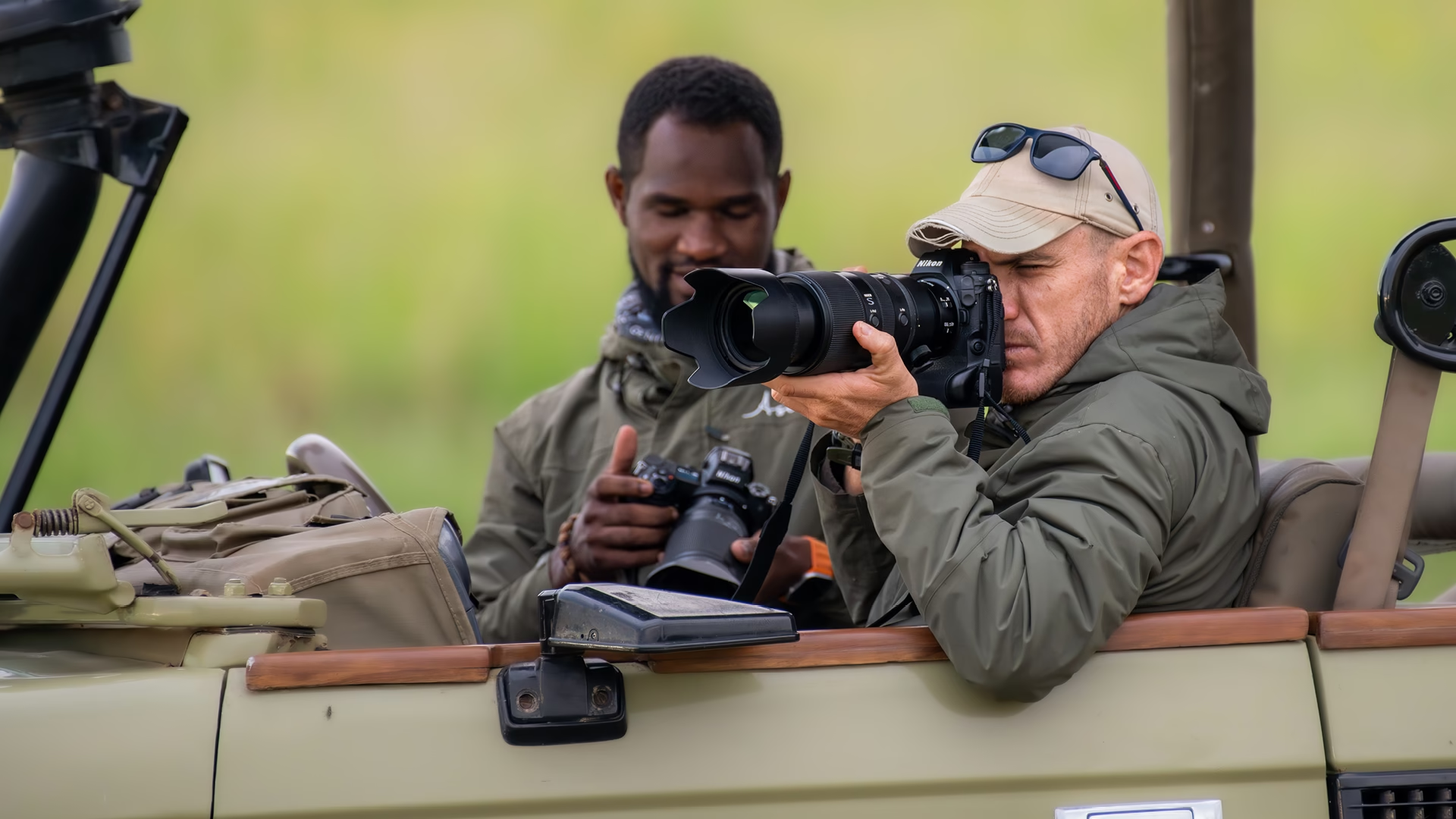
Travel Guide
Discover 3 top gadgets for African safaris, from binoculars and cameras to reliable power banks for wildlife viewing and photography.
Choosing the right equipment can significantly improve an African safari. Wildlife experiences often take place far from cities, electrical outlets, and reliable mobile connections, making practical technology especially valuable. The best gadgets for African safaris are not necessarily the most complicated devices. They are dependable tools that help travelers observe wildlife, capture memorable moments, and keep essential electronics operating throughout the journey.
Among the many devices travelers can pack, three are particularly useful: quality binoculars, a suitable camera, and a dependable portable power bank. Each serves a different purpose and can be useful on game drives, walking safaris, gorilla trekking journeys, birding trips, and remote lodge stays.
Binoculars are among the most valuable pieces of equipment to carry on an African safari. Wildlife does not always appear beside the safari vehicle. Lions may rest beneath distant trees, elephants may move across an open valley, and leopards can remain partially concealed among branches.
A good pair of binoculars allows travelers to appreciate details that would otherwise be difficult to see. They can reveal the facial markings of an antelope, the plumage of a distant bird, or the movement of predators across a plain.
For general safari use, binoculars around the 8×42 or 10×42 range are popular because they balance magnification, field of view, brightness, and portability.
An 8x magnification provides a relatively wide and stable view, making it useful for locating moving wildlife. A 10x model brings distant animals closer but may require steadier hands.
Lens diameter also matters. Larger objective lenses generally collect more light, which can improve viewing around dawn and dusk when wildlife activity is often high.
Travelers interested in African birdlife can gain even more from carrying binoculars. East and Southern Africa support extraordinary bird diversity, ranging from large raptors and colorful kingfishers to bee-eaters, turacos, hornbills, sunbirds, and waterbirds.
Binoculars make it possible to study plumage, bills, flight patterns, and behavior without approaching birds too closely.
This can be particularly rewarding in destinations such as Uganda, Rwanda, Kenya, Tanzania, Botswana, and South Africa, where birdwatching can complement traditional game viewing.
Safari conditions can expose equipment to dust, moisture, heat, and occasional rain. Durable binoculars with waterproof or water-resistant construction are therefore preferable.
Rubberized exterior coatings provide additional grip and protection. Travelers who wear glasses should also consider models with adjustable eyecups and sufficient eye relief.
Weight is another important consideration. Heavy binoculars can become uncomfortable during long walks or full-day excursions. A comfortable neck strap or harness can distribute the weight more effectively.
The second essential gadget is a reliable camera for African safari photography. Smartphones have improved dramatically and are excellent for landscapes, lodge photographs, and nearby subjects, but dedicated cameras still provide advantages when wildlife is far away.
Safari photography often requires flexibility. An elephant may approach within meters of a vehicle, while a leopard could remain hundreds of meters away. A versatile zoom lens helps photographers respond to these changing distances without constantly switching equipment.
For many travelers, a camera paired with a telephoto zoom lens provides a practical balance between image quality and portability.
Wildlife photography frequently benefits from focal lengths reaching 300mm, 400mm, or beyond. Longer lenses help fill the frame with animals while allowing photographers to remain at responsible viewing distances.
A zoom lens is often more practical for casual safari travelers than a fixed focal-length lens. Animals move unpredictably, and safari vehicles may not always be able to reposition immediately.
Travelers should also remember that the longest lens is not automatically the best option. Extremely large professional lenses can be heavy, expensive, and difficult to handle inside a vehicle shared with other guests.
African safari destinations can be dusty. Fine dust enters vehicles, settles on equipment, and can become particularly noticeable during dry-season game drives.
A protective camera bag helps reduce exposure when equipment is not being used. Lens cloths and a basic cleaning kit are also useful.
Rain protection is valuable in destinations where tropical showers can develop rapidly. A waterproof camera cover or simple protective sleeve can prevent an unexpected shower from interrupting photography.
Spare memory cards are another sensible addition. High-resolution photographs and video can consume storage surprisingly quickly.
Camera requirements differ slightly for gorilla trekking. Mountain gorillas are encountered within dense forests where light levels can be much lower than on open savannahs.
A lens capable of performing well in limited light can therefore be useful. Excessively long telephoto lenses are generally unnecessary because encounters can occur at relatively close distances under the direction of park guides.
Flash photography is not permitted around gorillas. Travelers should understand their camera settings beforehand so they can adjust ISO, shutter speed, and aperture without spending the encounter navigating unfamiliar menus.
The third essential gadget is a portable power bank. Modern travelers depend on electronics for photography, communication, navigation, travel documents, entertainment, and sometimes emergency information.
Safari itineraries can involve long days away from electrical outlets. Some camps and lodges operate using solar power or generators and may restrict electricity to particular periods.
A high-capacity power bank provides an additional source of energy for smartphones, action cameras, GPS devices, wireless headphones, and compatible camera batteries.
Power-bank capacity is normally measured in milliamp-hours. A compact unit may provide one or two smartphone charges, while larger models can recharge devices several times.
Travelers should balance capacity against weight. Very large power banks can become cumbersome, particularly when flying between safari destinations on small aircraft with strict baggage limitations.
Fast-charging capability can also be useful. Safari schedules sometimes provide only a short period between activities, and being able to replenish a device quickly can make a substantial difference.
Multiple USB ports allow several devices to charge simultaneously.
Power banks contain lithium batteries and are generally subject to airline safety restrictions. They typically need to be carried in cabin baggage rather than checked luggage.
Airline policies and permitted battery capacities can vary. Travelers should check current requirements with their specific airline before departure, particularly when carrying high-capacity units or traveling on multiple carriers.
Although binoculars, cameras, and power banks form the core three gadgets, a few simple accessories can improve their usefulness.
Universal travel adapters are helpful when crossing several African countries because electrical socket standards can differ. Charging cables should ideally be packed in duplicate when they are essential for cameras or phones.
A small waterproof pouch can protect electronic equipment during boat trips, canoe excursions, rainforest walks, or unexpected rainfall.
Travelers should also download important information for offline use. Maps, airline confirmations, lodge details, emergency contacts, and travel documents can remain accessible even when mobile connectivity disappears.
There is a temptation to carry numerous electronic devices on safari. In practice, too much equipment can become distracting.
Every additional gadget requires charging, protection, storage space, and attention. Travelers moving between lodges also need to pack and unpack repeatedly.
Selecting a few dependable devices is generally more effective than carrying multiple pieces of technology that perform similar functions.
The purpose of safari technology is to enhance rather than dominate the journey. Binoculars allow travelers to observe wildlife more closely. Cameras preserve exceptional moments. Power banks keep important devices operational.
Yet some of the finest safari experiences occur when travelers simply watch. A lion pride interacting at sunrise, elephants gathering around water, or mountain gorillas feeding quietly in a bamboo forest can be appreciated without looking continuously through a screen.
The 3 top gadgets for African safaris therefore combine practical value with simplicity. Pack dependable binoculars, a camera suited to the type of wildlife experience planned, and a reliable portable power bank. Together, they provide a strong technological foundation for exploring Africa while leaving enough space to experience the landscapes and wildlife directly.

Nshongi Gorilla Family in Bwindi: History, Location and Trekking Guide The Nshongi Gorilla Family holds an important place…
Read article →
Mishaya Gorilla Family in Bwindi: History, Trekking and What to Know The Mishaya Gorilla Family is one of…
Read article →
Semuliki Hot Springs Visit Guide: What to Expect Semuliki Hot Springs offers one of the most unusual natural…
Read article →
Kidepo Valley Remote Safari Guide: What to Expect Kidepo Valley National Park offers one of Uganda's most remote…
Read article →