

Nshongi Gorilla Family in Bwindi
Nshongi Gorilla Family in Bwindi: History, Location and Trekking Guide The Nshongi Gorilla Family holds an important place…
Read article →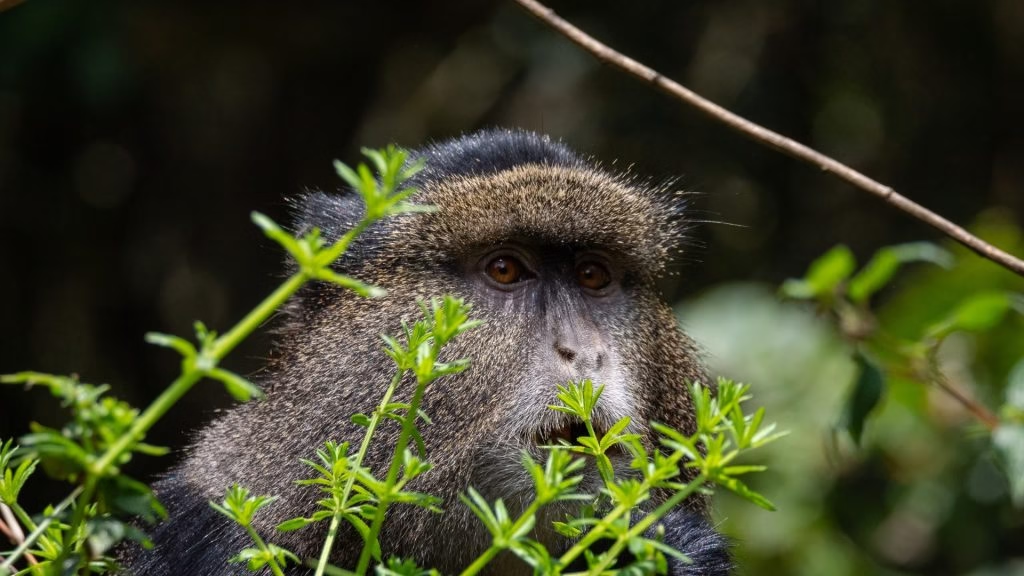
Travel Guide
Embark on a 3-day gorilla trekking safari in Mgahinga Gorilla National Park, Uganda. Experience close encounters with mountain gorillas, golden monkeys, and breathtaking volcanic scenery.
A 3 Days Gorilla Trekking Safari Mgahinga combines mountain gorilla trekking, volcanic scenery, and a golden monkey experience within a compact southwestern Uganda itinerary. The supplied source places the safari in Mgahinga Gorilla National Park near Uganda’s borders with Rwanda and the Democratic Republic of Congo and describes the park as part of the wider Virunga Conservation Area.
Mgahinga’s landscape provides an important part of the journey.
Mountain forests and bamboo occur beneath volcanic peaks, creating a setting that feels distinctly different from Uganda’s open savannah parks.
The itinerary is structured around three stages: arrival and preparation on the first day, mountain gorilla trekking on the second, and golden monkey tracking before departure on the third.
The supplied source describes Mgahinga Gorilla National Park as habitat for mountain gorillas, golden monkeys, birds, and other wildlife.
Its position within the Virunga landscape gives visitors views of volcanic peaks and highland vegetation.
Although gorilla trekking is the principal attraction for many travelers, the park’s scenery and other primates make it possible to create a broader experience.
A three-day itinerary uses this diversity efficiently.
The first day is dedicated primarily to reaching the Mgahinga region and preparing for the activities ahead.
The source allows for pickup from Kampala, Kisoro, or Kabale, meaning the character of the transfer depends greatly on where the traveler begins.
A journey from Kampala is a major overland transfer, while starting from Kisoro creates a much shorter arrival day.
Travelers should therefore understand the actual version of the itinerary being booked.
For travelers arriving overland, the journey introduces the hills, farmland, villages, and highland scenery of southwestern Uganda.
The source specifically highlights terraced farmland and traditional settlements along the route.
These landscapes help make the transfer part of the safari rather than merely transportation.
Photography stops can be incorporated when time allows, although reaching the lodge comfortably should remain the priority.
After arriving near Mgahinga, guests check into their accommodation and settle in.
The supplied itinerary suggests that visitors arriving with sufficient daylight may take a short walk or enjoy views of the Virunga volcanoes.
This should remain a gentle introduction.
The following morning is the main gorilla trekking day, so travelers benefit from resting rather than scheduling an unnecessarily demanding activity immediately after a long transfer.
The evening provides time to organize trekking equipment and receive information about the next day’s activity.
Boots, rain protection, clothing, camera equipment, water, and documents should be prepared before sleeping.
Travelers should also confirm breakfast and departure times.
Good preparation reduces stress during the early morning when everyone needs to reach the park headquarters for briefing.
The supplied source lists several accommodation examples.
Luxury examples include Mount Gahinga Lodge and Virunga Lodge. Mid-range examples include Mgahinga Gorilla View Lodge and Nkuringo Gorilla Camp, while budget examples include Kisoro Guest House and Mgahinga Lodge.
These are source-listed examples rather than a guarantee that every property is the most convenient or currently available for a specific itinerary.
Accommodation should be matched carefully with the activity location.
The second day is the central experience of the safari.
Guests wake early, eat breakfast, and transfer to the appropriate park headquarters.
The supplied source describes a ranger briefing covering trekking rules, safety, and appropriate behavior around the gorillas.
Visitors should pay close attention because these instructions protect both people and primates.
After briefing, the group enters the forest with professional rangers and trackers.
The supplied source describes trekking through bamboo and montane forest.
Terrain can be uneven, and conditions may change with weather.
The gorillas move naturally through their habitat, so the route cannot be predetermined with complete accuracy.
This uncertainty is part of the experience.
The source gives a broad estimate of approximately one to six hours depending on the gorillas’ location and terrain.
This should be treated as an illustration of variability rather than a guaranteed range for every trek.
Visitors need to prepare mentally and physically for the possibility of a longer walk.
Regular walking before travel can make the activity more comfortable.
The moment the trackers locate the gorilla family changes the character of the day.
The search ends and careful observation begins.
The supplied source emphasizes photographing interactions and appreciating gorilla social behavior.
Visitors may see feeding, resting, grooming, movement, or interactions between adults and younger animals.
What happens depends entirely on the family at that moment.
The supplied itinerary states that standard trekking allows one hour with the gorillas once the family has been located.
This period should be used thoughtfully.
Photography is important for many visitors, but constantly looking through a camera can reduce the direct experience.
Taking several photographs and then spending time simply watching can create stronger memories.
All ranger instructions regarding distance and behavior should be followed.
After the trek, visitors return to their accommodation for lunch and relaxation.
The forest activity can be physically tiring, particularly if the gorillas were located far from the starting point.
The afternoon should therefore remain flexible.
Some travelers will want to rest, while others may still have energy for a light additional activity.
The supplied source suggests nature walks, birdwatching, or cultural visits as possible afternoon additions.
These should depend on the trek’s duration and the traveler’s energy.
Trying to force another major excursion into the day can make the itinerary unnecessarily exhausting.
A quiet afternoon can be equally valuable after an important wildlife encounter.
Birdwatching allows visitors to focus on another element of the park’s biodiversity.
The forest and highland habitats support birdlife that can be observed during walks and around accommodation.
A dedicated bird guide can help travelers identify calls and species that might otherwise be missed.
Birding also provides a slower contrast with the intensity of gorilla trekking.
The third day introduces another primate experience: golden monkey trekking.
After breakfast, travelers enter the bamboo forest to search for these active primates.
Golden monkeys create a different experience from mountain gorillas.
They are smaller, quicker, and frequently move through vegetation, making observation and photography more dynamic.
The supplied source emphasizes bamboo habitat as an important setting for golden monkey tracking.
Moving through this environment reveals another side of Mgahinga.
The activity demonstrates why the park should not be considered solely a gorilla destination.
Different primates use different parts of the ecosystem, giving visitors a broader understanding of the protected landscape.
The source provides an approximate duration of two to four hours for the golden monkey activity.
Actual conditions can vary.
Visitors should still wear appropriate trekking footwear and prepare for forest weather.
Although many travelers consider golden monkey tracking less physically demanding than a long gorilla trek, it remains an outdoor wildlife activity rather than a guaranteed short walk.
Golden monkeys can be challenging photographic subjects because they move rapidly.
Visitors need to respond more quickly than during periods when gorillas are resting.
Forest light may also be limited.
Photographers should prepare camera settings before the animals are encountered rather than spending valuable observation time adjusting equipment.
Respectful behavior remains more important than obtaining a perfect photograph.
After golden monkey tracking, the supplied itinerary returns guests to the lodge for lunch before beginning the onward journey.
The final destination may be Kampala, Entebbe, or Kisoro depending on the travel plan.
A return to Kampala or Entebbe creates a long final transfer, while finishing in Kisoro is much shorter.
Travelers should account for this difference when arranging onward flights or accommodation.
The source mentions stopping for photographs along the route.
Where time allows, the return journey provides another opportunity to appreciate the highland landscape.
However, travelers connecting with flights should prioritize realistic scheduling.
Road journeys can be affected by traffic and other delays.
An international departure should not be planned too tightly after a long overland transfer.
The supplied source presents the itinerary as suitable for wildlife enthusiasts, primate lovers, and photographers.
It can also work for travelers who want a compact introduction to Uganda’s Virunga region.
The combination of gorillas and golden monkeys creates greater primate variety than a trip centered on one trek alone.
The Virunga scenery helps distinguish this safari.
Even when visitors are not actively tracking primates, volcanic peaks, bamboo forests, terraced hills, and highland views remain part of the journey.
Landscape photography can therefore be as rewarding as wildlife photography.
Travelers should allow themselves time to look beyond the primary target species.
The 3 Days Gorilla Trekking Safari in Mgahinga is a compact itinerary built around two distinctive primate experiences.
Day one introduces southwestern Uganda and the Virunga landscape. Day two is dedicated to entering Mgahinga’s forest in search of mountain gorillas, followed by time to rest or explore more gently. Day three adds golden monkey trekking in bamboo habitat before the onward journey.
The supplied source emphasizes gorillas, golden monkeys, volcanic scenery, birdlife, and cultural possibilities as the main strengths of the trip.
For travelers with limited time who want to experience Uganda’s smaller gorilla park while also exploring its broader primate diversity, the three-day Mgahinga safari provides a focused introduction to this remarkable highland region.

Nshongi Gorilla Family in Bwindi: History, Location and Trekking Guide The Nshongi Gorilla Family holds an important place…
Read article →
Mishaya Gorilla Family in Bwindi: History, Trekking and What to Know The Mishaya Gorilla Family is one of…
Read article →
Semuliki Hot Springs Visit Guide: What to Expect Semuliki Hot Springs offers one of the most unusual natural…
Read article →
Kidepo Valley Remote Safari Guide: What to Expect Kidepo Valley National Park offers one of Uganda's most remote…
Read article →