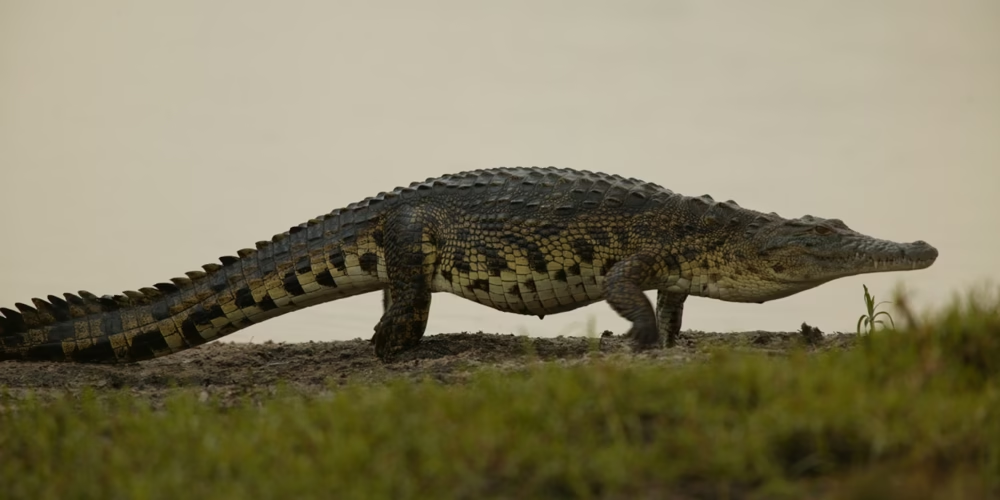

Nile Crocodile Facts
Nile Crocodile Facts: Behavior, Habitat & Safari Safety
Nile crocodile facts reveal why this ancient reptile remains one of Africa’s most impressive predators. Nile crocodiles live in rivers, lakes, wetlands, and waterways across much of Africa.
They can remain almost motionless for long periods. Their patience helps them ambush prey near the water’s edge.
Seeing a Nile crocodile during an African safari can be fascinating. However, travelers must always maintain a safe distance.
Where Do Nile Crocodiles Live?
Nile crocodiles occur across many parts of sub-Saharan Africa. They live in rivers, lakes, swamps, and other permanent water sources.
The species takes its name from the Nile River, although its range extends far beyond the Nile basin.
Uganda, Kenya, Tanzania, Zambia, Zimbabwe, Botswana, and South Africa provide opportunities to see them.
How Large Can Nile Crocodiles Become?
Nile crocodiles can grow to more than five meters in exceptional cases. Large individuals can weigh several hundred kilograms.
Their powerful tails help them move through water. Their jaws provide enormous strength for capturing prey.
Size varies depending on age, sex, food availability, and habitat.
What Do Nile Crocodiles Eat?
Young crocodiles mainly eat fish, insects, amphibians, and small animals. Adults can capture much larger prey.
Their diet can include fish, birds, antelope, and other animals that approach the water.
During the wildebeest migration, crocodiles can prey on animals attempting to cross rivers.
Nile Crocodiles and River Crossings
The Mara River provides one of Africa’s most famous crocodile viewing opportunities. Large crocodiles wait in the river during the annual wildebeest migration.
The Nile River also supports significant crocodile populations. Uganda’s Murchison Falls National Park provides opportunities to see them along the river.
Nile Crocodile Safety
Never swim in rivers or lakes known to contain crocodiles. Follow local safety instructions whenever you are near natural waterways.
Do not approach crocodiles on foot. Even a motionless crocodile can react quickly.
During boat safaris, remain inside the boat unless your guide gives clear instructions. Never attempt to touch or feed a crocodile.
Crocodiles and Conservation
Nile crocodiles play an important role in aquatic ecosystems. They help regulate fish and other animal populations.
Protected areas provide important habitats for healthy crocodile populations. Responsible tourism can help generate income for conservation.