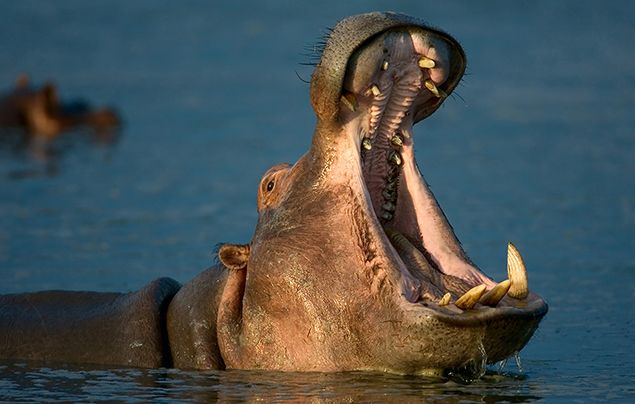

Hippo Facts and Safety
Hippo Facts and Safety: What Every Safari Traveler Should Know
Hippo facts and safety are important for anyone planning an African safari. Hippopotamuses may appear calm, but they can become highly aggressive when threatened.
Hippos spend much of their time in water. They usually emerge at night to feed on grasses.
Understanding their behavior helps travelers enjoy safe wildlife encounters.
Where Do Hippos Live?
Hippos live in rivers, lakes, wetlands, and other areas with permanent water. They occur across many parts of sub-Saharan Africa.
Uganda, Kenya, Tanzania, Zambia, Zimbabwe, Botswana, and South Africa offer excellent opportunities to see hippos.
The Kazinga Channel in Uganda provides particularly impressive hippo sightings. Boat safaris allow visitors to observe large groups from a safe distance.
How Much Do Hippos Weigh?
Adult hippos can weigh more than 1,000 kilograms. Large males can exceed 1,500 kilograms.
Their heavy bodies can move surprisingly quickly over short distances. This makes approaching them on foot extremely dangerous.
Are Hippos Dangerous?
Yes. Hippos can become dangerous when people approach too closely.
They may perceive boats, people, or other animals as threats. Mothers can also become highly protective around calves.
Hippos can move quickly on land despite their large size.
Hippo Safety During a Safari
Never approach a hippo on foot without an experienced guide. Maintain a safe distance from hippos both on land and around water.
Do not stand between a hippo and the water. A threatened hippo may try to return to the water quickly.
During boat safaris, follow the guide’s instructions at all times. Never attempt to feed or attract a hippo.
Hippos and Boats
Hippos can become defensive when boats approach their groups. Boat operators should maintain appropriate distances and avoid disturbing them.
Never lean over the side of a boat to get closer to a hippo.
A good guide knows how to position the boat safely for photography and viewing.
What Do Hippos Eat?
Hippos mainly eat grass. They leave the water after sunset and can travel several kilometers to find food.
Their powerful lips help them graze efficiently. Despite their size, they do not eat large quantities of meat.
Hippos sometimes consume aquatic plants, but grass forms the main part of their diet.
Why Are Hippos Important?
Hippos influence aquatic and grassland ecosystems. Their movements transport nutrients between water and land.
Their grazing also affects vegetation around waterways. Their presence therefore influences other species within their habitat.